The Gaming Industry Lost Its Middle Class
How rising budgets, bigger bets, and changing incentives quietly transformed video games — and why the industry’s missing middle may…
The Gaming Industry Lost Its Middle Class
How rising budgets, bigger bets, and changing incentives quietly transformed video games — and why the industry’s missing middle may finally be making a comeback.
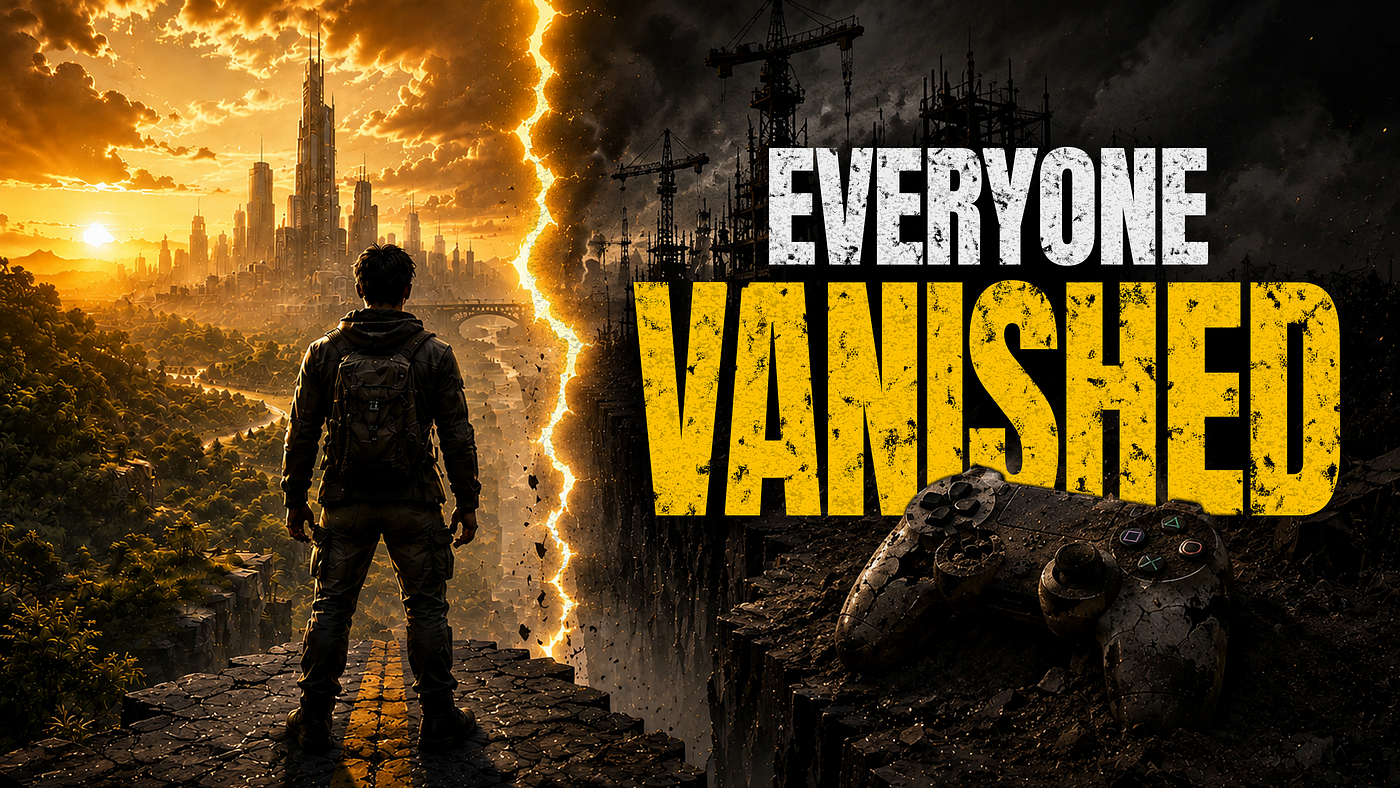
YouTube Video Link
“The gaming industry didn’t stop taking risks because developers ran out of ideas. It stopped because the economics of making games changed.”
For years, gamers have been asking the same questions.
Why does every major publisher seem obsessed with sequels? Why do so many promising studios end up closing after a single disappointing release? Why are publishers willing to spend hundreds of millions of dollars on blockbuster franchises while seemingly ignoring the kinds of original games that once filled store shelves?
The usual explanations are familiar. Publishers became greedy. Executives stopped caring about creativity. Live-service games took over. Players only buy the biggest franchises.
There’s some truth in each of those arguments. None of them explain the full picture.
The biggest change wasn’t a shift in imagination. It was a shift in economics.
Over the last two decades, the video game industry quietly lost an entire class of games — projects that sat between tiny independent titles and massive AAA blockbusters. They weren’t expected to redefine the medium or become billion-dollar platforms. They were ambitious enough to push ideas forward without carrying budgets so enormous that failure threatened the future of an entire studio.
Their disappearance changed far more than the games we played.
It changed how publishers invest, how developers build careers, how new franchises are born, and why today’s biggest studios often feel trapped in an endless cycle of sequels, remakes, and increasingly expensive bets.
The story of modern gaming isn’t really about creativity.
It’s about incentives.
And once those incentives changed, almost everything else changed with them.
The Mystery Nobody Noticed
When people talk about how gaming has changed over the last twenty years, the conversation usually revolves around what we’ve gained.
Graphics became photorealistic.
Open worlds grew to enormous sizes.
Online multiplayer became standard.
Games evolved into persistent services with years of updates and post-launch content.
Those changes are easy to see.
The thing we lost is much harder to notice.
Somewhere along the way, the industry lost its middle.
Not the biggest blockbuster franchises.
Not the indie scene.
The space in between.
Those mid-budget games that weren’t trying to become cultural phenomena or decade-long live-service platforms. They existed because someone had a compelling idea and enough resources to bring it to life.
For many players, they defined an entire era.
Think beyond the household names.
Forget Halo. Forget Grand Theft Auto. Forget Gears of War.
Instead, remember games like Psi-Ops, Freedom Fighters, Black, Mercenaries, TimeSplitters, The Suffering, and Beyond Good & Evil.
Some became cult classics. Others quietly faded into history. Most never sold tens of millions of copies.
They didn’t need to.
Their purpose wasn’t to dominate the industry. It was to deliver memorable experiences.
They weren’t built around endless content roadmaps, battle passes, or five-year engagement strategies. They had a beginning, a middle, and an end. Players finished them, recommended them to friends, and looked forward to whatever came next.
Collectively, these games represented something that barely exists today.
A healthy middle ground.
The Question Most People Never Asked
Many players assume these games disappeared because audiences stopped buying them.
That explanation feels intuitive.
If people wanted these experiences badly enough, publishers would still make them.
Except that’s not what happened.
The audience didn’t suddenly vanish.
The economics changed around them.
Twenty years ago, a publisher could release a game that sold one million copies and celebrate.
Today, that exact same result might be viewed as a commercial disappointment.
Nothing about the audience changed.
Nothing about the sales changed.
Only the financial expectations changed.
That single shift explains far more than it appears to.
It helps explain why AAA budgets have exploded, why publishers increasingly rely on established franchises, why original intellectual property has become harder to approve, and why one underperforming launch can suddenly lead to hundreds of layoffs.
These aren’t isolated problems.
They’re symptoms of the same underlying transformation.
Before we can understand why gaming’s middle class disappeared, we first need to understand what it actually was.
What Was Gaming’s Middle Class?
The term AA game has become increasingly popular over the past decade, but it was never an official industry classification.
There wasn’t a universal budget threshold.
No executive handbook defined what counted as AA.
It emerged naturally because people recognized a pattern.
These were games built by experienced teams with enough funding to create polished, ambitious experiences, but without the extraordinary financial pressure attached to today’s largest productions.
They occupied a space between two extremes.
Too large to be considered indie.
Too focused to compete directly with blockbuster franchises.
That middle ground gave the industry something invaluable.
Freedom.
Not unlimited creative freedom.
Financial freedom.
The freedom to experiment because failure wasn’t catastrophic.
Success Meant Something Different
Modern conversations around video game launches often sound remarkably similar.
Did it break sales records?
How many millions of copies did it sell?
Did it earn its budget back?
We’ve become accustomed to measuring success at an enormous scale.
That wasn’t always the standard.
Two decades ago, publishers understood that not every game needed to appeal to everyone.
A title selling one or two million copies could be considered a genuine success because it was built around realistic expectations.
That mindset shaped an entire generation of games.
Some prioritized inventive combat systems.
Others focused almost entirely on storytelling.
Many experimented with unusual mechanics that would struggle to survive today’s market research and focus testing.
Most lasted ten or fifteen hours.
They respected the player’s time because they weren’t designed to become permanent hobbies.
They simply wanted to leave a lasting impression.
That distinction mattered.
A memorable experience and an endless experience are not the same thing.
The healthiest periods in gaming weren’t defined by games that appealed to everyone. They were defined by an industry that could support many different kinds of games at once.
Why the Middle Was So Important
The real value of AA games wasn’t just the experiences they created.
It was the business model they made possible.
Imagine you’re running a publishing company with twelve games scheduled to release over the next two years.
One underperforms.
That’s disappointing.
But another launches a few months later.
Then another after that.
Your future doesn’t depend on any single release.
Failure costs money, but it doesn’t threaten the company’s survival.
That changes how decisions get made.
When failure is survivable, experimentation becomes affordable.
New ideas receive funding.
Unknown studios earn opportunities.
Original intellectual property has room to grow.
Some projects fail.
Some become cult classics.
A few evolve into the industry’s next major franchises.
That’s how creative ecosystems develop.
Not because every game succeeds.
Because failure isn’t fatal.
The industry’s middle wasn’t valuable because every project became a hit.
It was valuable because publishers could afford to keep trying.
When One Success Didn’t Have to Carry Everything
Imagine you’re deciding between two investments.
One spreads your money across fifteen different opportunities.
The other concentrates nearly all of it into three enormous bets.
Most investors instinctively understand which strategy carries greater risk.
Diversification creates resilience.
For years, the gaming industry operated much the same way.
Publishers released a steady stream of projects throughout the year.
Some became commercial successes.
Others barely broke even.
A few disappeared almost immediately.
That wasn’t viewed as a crisis.
It was simply part of doing business.
No single launch determined the future of an entire company.
That environment produced something modern publishers increasingly struggle to recreate.
Momentum.
Developers weren’t just shipping games.
They were accumulating experience.
Every completed project taught new production techniques.
Every moderate success funded another opportunity.
Every mistake became a lesson instead of a catastrophe.
Looking back, it’s easy to remember only the classics.
That’s survivorship bias.
For every beloved title, dozens of perfectly respectable games have faded from memory.
Those forgotten games mattered just as much.
They kept studios working.
They developed talent.
They gave designers, artists, programmers, and producers another chance to improve before tackling even larger ideas.
Without them, the industry’s creative pipeline slowly began to narrow.
And that narrowing would reshape everything.
When Everything Became More Expensive
At first glance, the explanation seems obvious.
Games became more expensive because graphics improved.
That’s true.
It just isn’t the whole story.
Higher-fidelity graphics certainly increased development costs, but they weren’t the event that transformed the business. They were the first domino.
The real shift happened when every technological leap created a new expectation — and every expectation became permanent.
Players didn’t just want games that looked better than the previous generation.
They expected every new release to meet the new standard.
That changed the economics of game development in ways that still shape the industry today.
Better Graphics Changed More Than Visuals
The leap from the PlayStation 2 era to the Xbox 360 and PlayStation 3 felt revolutionary.
Games suddenly looked cinematic.
Characters displayed convincing facial expressions.
Lighting became dramatically more realistic.
Worlds grew larger and more detailed.
From a player’s perspective, it felt like gaming had entered a new age.
From a developer’s perspective, every improvement visible on screen created an invisible mountain of work behind it.
A sharper texture wasn’t just a prettier image.
It demanded artists spend significantly more time creating assets.
More realistic characters required sophisticated animation systems.
Voice acting evolved from an occasional feature into an expected part of major releases.
Motion capture, once considered a luxury, became standard practice.
Entire departments that barely existed a generation earlier became essential.
Every technological improvement multiplied the amount of work required before a game ever reached players’ hands.
Graphics didn’t simply get better.
Production became exponentially more complex.
The Game Didn’t End at Launch Anymore
While developers were adapting to higher production values, another transformation was happening.
Online gaming stopped being an extra feature.
It became an expectation.
There was a time when multiplayer existed as a bonus mode.
A great single-player campaign could carry an entire release.
That standard slowly disappeared.
Players began expecting matchmaking systems, dedicated servers, downloadable content, balance updates, seasonal events, and ongoing support.
Eventually, the launch of a game stopped feeling like the finish line.
It became the starting point.
Entire live operations teams emerged to support games long after release.
Communities expected regular communication.
Content pipelines extended years into the future.
Games no longer shipped as finished products.
They became ongoing services.
For players, that meant richer experiences and communities that lasted for years.
For publishers, it meant development costs no longer stopped on launch day.
In many cases, they accelerated.
Building Great Games Was No Longer Enough
Making games became more expensive.
Selling them became just as demanding.
Twenty years ago, a strong game often had a reasonable chance of finding an audience.
Today, visibility has become its own battle.
Major releases arrive with cinematic reveal trailers, developer documentaries, influencer campaigns, convention appearances, livestreams, social media teams, preview events, and marketing strategies that begin years before launch.
Some publishers now spend almost as much promoting a game as they spend developing it.
That’s an extraordinary shift.
The modern blockbuster isn’t simply a game.
It’s a multimedia campaign designed to dominate the conversation before players ever pick up a controller.
None of these developments were inherently bad.
Players benefited from better graphics.
Online features connected millions of people.
Digital updates allowed developers to improve games after launch.
Marketing helped audiences discover new releases.
Each innovation solved a real problem.
The trouble wasn’t any one change.
It was that they all arrived within the same era.
The industry didn’t collapse under one expensive decision. It changed because dozens of reasonable decisions compounded into an entirely new business model.
The Rising Cost of Expectations
Every improvement raised the bar.
Longer development cycles became normal.
Teams expanded from dozens of developers to hundreds.
Budgets climbed into the hundreds of millions.
Marketing evolved into a massive financial commitment.
Players grew accustomed to bigger worlds, more content, better graphics, cinematic storytelling, online support, and constant updates.
None of those expectations were unreasonable on their own.
Together, they permanently changed what audiences considered “enough.”
A game that would have been viewed as remarkably ambitious during the PlayStation 2 era could suddenly appear modest a decade later.
Not because it became worse.
Because expectations had moved.
Once expectations move upward, they rarely return to where they started.
Neither do the budgets required to satisfy them.
That created a problem publishers had never faced before.
When the Math Changed, So Did Every Decision
Imagine you’re reviewing two proposals.
One game will cost $15 million to produce.
The other requires $300 million.
Both sell one million copies.
On paper, the sales numbers are identical.
Financially, they’re worlds apart.
The smaller project may be considered a success.
The larger one could become a disaster.
Nothing about the audience changed.
Nothing about demand changed.
Only the investment changed.
That single difference reshapes every conversation inside a publishing company.
When hundreds of millions of dollars are at stake, the question stops being:
What’s the most interesting idea?
Instead, it becomes:
What’s the safest investment?
That’s a subtle distinction.
It also explains much of modern gaming.
Publishers didn’t suddenly become less creative.
Developers didn’t run out of original ideas.
The financial consequences of failure became too severe to ignore.
Caution wasn’t replacing creativity.
It was replacing uncertainty.
Why Safe Bets Became the Smart Bets
Creative industries often celebrate bold decisions.
Business rewards predictable returns.
As budgets expanded, those two priorities drifted further apart.
A sequel already has brand recognition.
An established franchise already has an audience.
Familiar characters reduce marketing risk.
Known formulas reassure investors.
Original ideas offer none of those advantages.
That doesn’t mean publishers stopped believing in creativity.
It means creativity had to clear a much higher financial hurdle.
Every dollar added to a project’s budget increased the cost of being wrong.
Risk became more expensive.
Safe decisions became easier to justify.
Seen through that lens, the modern industry begins to make far more sense.
The rise of sequels wasn’t simply a creative trend.
It was a financial adaptation.
The growing reliance on recognizable intellectual property wasn’t evidence that developers had stopped imagining new worlds.
It reflected a business trying to reduce uncertainty in an environment where failure had become extraordinarily expensive.
The middle — the place where publishers once experimented with new ideas — began to disappear.
But the most significant consequence wasn’t fewer original games.
It was a complete change in how publishers managed risk.
Instead of spreading their investments across many projects, they increasingly concentrated them into a handful of massive productions.
That decision reshaped the industry more than any graphical leap or technological breakthrough ever could.
Every blockbuster became bigger. Every failure became costlier. And with every passing year, the industry’s future rested on fewer and fewer games.
When One Game Became Everything
Once development costs reached unprecedented levels, publishers faced a choice.
They could continue releasing a steady stream of mid-budget games, accepting that some would succeed while others would fail.
Or they could concentrate their resources into fewer, larger productions that had the potential to generate enormous returns.
Over time, most chose the second path.
On paper, the logic seemed sound.
A blockbuster franchise could sell tens of millions of copies, attract downloadable content sales, generate merchandise, and remain profitable for years after launch.
If one game could accomplish what several smaller games once did collectively, why spread resources across multiple projects?
The answer seemed obvious.
Until the consequences became impossible to ignore.
Diversification Disappeared
Imagine building an investment portfolio.
One strategy spreads your money across fifteen different companies.
The other places nearly all of it into three.
Most investors instinctively understand why diversification matters.
No single investment determines the outcome of the entire portfolio.
One company can struggle while others succeed.
The losses are painful, but manageable.
For years, that’s how many publishers approached game development.
During the PlayStation 2 era, companies released games throughout the year.
Some exceeded expectations.
Others sold modestly.
Some barely attracted attention.
That wasn’t considered failure.
It was simply the cost of operating in a creative industry.
The next project was already moving through production.
Another release was only months away.
Success wasn’t measured by one game.
It was measured by the health of the portfolio.
That distinction mattered more than most players realized.
Creativity Thrives When Failure Is Affordable
When people remember that era, they usually remember the classics.
The games that became household names.
The franchises that still exist today.
What they rarely remember are the dozens of respectable games that quietly came and went.
Those forgotten projects served an important purpose.
They kept studios working.
They gave designers opportunities to test new mechanics.
They allowed producers to refine production pipelines.
They gave writers, artists, programmers, and directors another chance to improve before leading even larger projects.
Not every game needed to become a phenomenon.
Some simply needed to succeed well enough to justify making another.
That’s how creative industries mature.
Progress rarely comes from uninterrupted success.
It comes from repeated opportunities to learn.
When a company can survive the occasional disappointment, experimentation becomes part of the business instead of a threat to it.
Innovation doesn’t require every idea to succeed. It requires an environment where unsuccessful ideas don’t end careers.
A Healthy Portfolio Built Healthy Studios
Publishers once understood that different games served different purposes.
Some generated significant profits.
Others expanded into new genres.
Some tested emerging technologies.
Others introduced original intellectual property that could eventually grow into something larger.
Taken together, those projects created a resilient ecosystem.
Consider publishers like THQ.
Its strategy wasn’t built around finding one game capable of carrying the company for a decade.
Instead, it built a portfolio.
Destroy All Humans.
Red Faction.
Darksiders.
MX vs. ATV.
The early Saints Row games.
Not every release became a cultural phenomenon.
None of them needed to.
Collectively, they allowed studios to grow, developers to gain experience, and new franchises to earn audiences over time.
THQ wasn’t unique.
Midway operated similarly.
Acclaim followed the same philosophy.
Sierra published an enormous variety of projects.
Codemasters balanced racing games with experimental ideas.
The industry wasn’t healthier because every publisher made masterpieces.
It was healthier because publishers could afford to take multiple chances every year.
That freedom slowly disappeared.
Fewer Games. Bigger Consequences.
The shift happened gradually enough that most players never noticed it.
Fifteen releases became ten.
Ten became six.
Six became four.
Eventually, entire studios devoted themselves to a single production.
That number sounds abstract until you consider what it means inside a company.
If your studio is building only one game, that project becomes far more than another entry on the release calendar.
It’s payroll.
It’s investor confidence.
It’s future hiring.
It’s the reputation of the studio.
It’s everyone’s job.
Suddenly, every design meeting feels different.
The question is no longer:
Would players enjoy this?
It’s:
Can we afford for this to fail?
Those questions lead to very different decisions.
One rewards originality.
The other rewards certainty.
And certainty usually comes packaged in familiar forms.
Established franchises.
Recognizable characters.
Sequels with proven audiences.
Ideas that investors already understand.
That’s why publishers didn’t simply become risk-averse.
They became predictably risk-averse.
The economics rewarded caution.
The Hidden Fragility of AAA Development
By the mid-2010s, it wasn’t unusual for hundreds — or even thousands — of developers across multiple studios to contribute to a single release.
When everything went according to plan, the rewards were extraordinary.
When things went wrong, the consequences spread throughout entire organizations.
A delay could cost millions.
A disappointing review cycle could weaken investor confidence.
A sales miss could trigger restructuring.
One unsuccessful launch could put years of work — and hundreds of careers — at risk.
Ironically, this system emerged as a way to reduce financial uncertainty.
Instead, it concentrated risk more than ever before.
The fewer games a publisher released, the more important each one became.
The more important each release became, the less room there was for experimentation.
Creative freedom wasn’t disappearing because someone prohibited new ideas.
It was disappearing because the financial model no longer supported repeated failure.
The fewer games you make, the more each one has to succeed. Once every project becomes “the one that has to work,” creativity begins answering to spreadsheets instead of imagination.
Why Publishers Keep Returning to the Same Franchises
Players often ask why publishers continue revisiting the same intellectual property.
Why another sequel?
Why another remake?
Why another reboot?
The simplest explanation is usually that companies lack imagination.
The evidence suggests something different.
Imagination has never been in short supply.
Confidence has.
Approving a brand-new franchise is difficult under any circumstances.
Approving one that requires an investment of hundreds of millions of dollars is something else entirely.
Every original property begins with uncertainty.
No audience exists yet.
No sales history exists.
No established fan base guarantees interest.
For publishers managing enormous budgets, uncertainty becomes increasingly difficult to justify.
Sequels solve many of those problems before development even begins.
They arrive with recognition.
Marketing becomes easier.
Forecasting becomes more reliable.
Investors feel more comfortable.
That doesn’t make sequels inherently bad.
Some of the greatest games ever made are sequels.
The problem emerges when the financial environment makes sequels feel like the only responsible choice.
Eventually, originality isn’t competing against better ideas.
It’s competing against lower risk.
That’s a contest very few pitches can win.
The Industry Lost More Than Mid-Budget Games
The disappearance of the middle wasn’t just about budgets.
It changed how talent developed.
It changed how studios evolved.
It changed where tomorrow’s creative leaders learned their craft.
As publishers concentrated their investments into fewer blockbuster productions, they unintentionally erased one of the industry’s most valuable training grounds.
That loss would reshape game development for years to come.
And its effects are still being felt today.
The Cost Nobody Talks About
When people mourn the disappearance of AA games, the conversation usually centers on the games themselves.
The franchises that never received sequels.
The genres that slowly faded away.
The kinds of experiences that don’t seem to fit neatly into today’s market.
That’s a real loss.
It just isn’t the biggest one.
The industry’s missing middle didn’t only produce memorable games.
It produced developers.
For decades, it served as the bridge between learning the craft and leading the next generation of blockbuster productions.
When that bridge disappeared, the consequences reached far beyond what players saw on store shelves.
Every Profession Has a Ladder
No one graduates from medical school and immediately performs the world’s most difficult surgery.
Architects don’t begin by designing skyscrapers.
Film directors rarely start with $300 million productions.
Experience is earned in stages.
Responsibility grows alongside it.
Game development once followed the same pattern.
A designer might begin on a smaller project, learning how production pipelines functioned without carrying the pressure of an enormous budget.
On the next project, they might own an entire gameplay system.
Later, they would lead a team.
Eventually, they might direct an entire game.
Each release became another step.
Each mistake became another lesson.
Progress wasn’t measured only by commercial success.
It was measured by accumulated experience.
AA studios gave developers room to grow before the stakes became overwhelming.
That environment proved remarkably valuable.
The Industry’s Classroom
Large studios are excellent at building massive productions.
Independent studios excel at creative freedom.
For years, the industry’s middle combined elements of both.
Developers worked on ambitious games with experienced teams while budgets remained manageable enough to tolerate experimentation.
That combination created an ideal training ground.
New ideas could be tested.
Leadership skills could develop.
Production mistakes could be corrected before they carried enormous financial consequences.
AA studios didn’t simply produce games.
They produced future creative directors, producers, writers, programmers, artists, and studio heads.
Many of the people who would eventually lead the industry’s largest franchises first learned to manage projects where success mattered — but perfection wasn’t required.
When the middle contracted, that classroom largely disappeared.
The industry’s greatest loss wasn’t a category of games. It was a generation of opportunities to learn before failure became catastrophic.
Two Paths Instead of Three
Today’s developers often find themselves choosing between two very different careers.
One path leads to a massive AAA production involving hundreds — or even thousands — of people.
The other leads to an independent studio with a small team, limited funding, and far greater creative freedom.
Neither path is inherently superior.
AAA development delivers extraordinary technical achievements that few industries can match.
Independent studios continue producing some of the most inventive games in the medium.
The problem isn’t that either option exists.
It’s that the middle largely disappeared.
That missing layer once offered something neither extreme could provide.
Projects large enough to be ambitious.
Budgets small enough to survive mistakes.
Teams experienced enough to mentor younger developers.
Studios willing to experiment because failure wasn’t existential.
Without that middle, many developers spend years contributing to enormous productions where individual ownership is limited, or they assume extraordinary responsibility inside small studios with very little financial security.
Both paths create exceptional talent.
Neither replaces the career ladder that once connected them.
Creativity Needs Room to Fail
People often describe creativity as inspiration.
An idea appears.
Someone builds it.
Players decide whether it succeeds.
Reality is rarely that straightforward.
Creative work improves through iteration.
Designers test mechanics that don’t quite work.
Writers abandon storylines.
Artists rebuild environments.
Programmers rewrite systems.
Every unsuccessful attempt teaches something valuable.
The process depends on having another opportunity.
AA development provided those opportunities.
A project could underperform without ending a studio’s future.
A promising mechanic could evolve into the foundation of the next game.
Developers could apply hard-earned lessons immediately instead of watching an entire team disappear after one disappointing launch.
As budgets climbed, those second chances became increasingly rare.
Failure stopped being part of the creative process.
It became something companies couldn’t afford.
Every Legendary Franchise Started Small
One of the strangest expectations in modern publishing is the belief that new intellectual property should perform like an established franchise from day one.
History suggests the opposite.
Many of gaming’s biggest series began as comparatively modest productions.
They weren’t billion-dollar investments.
They became larger because players embraced them.
Assassin’s Creed wasn’t born as one of Ubisoft’s largest productions.
It earned that position over time.
The original Mass Effect launched before anyone knew it would become one of gaming’s defining science fiction franchises.
BioShock established its reputation through critical acclaim and word of mouth before becoming a landmark series.
None of these games entered the market carrying decades of audience recognition.
They built it.
That’s how franchises usually grow.
One successful game creates confidence.
Confidence leads to larger investments.
Larger investments expand the audience.
The cycle repeats.
Today’s publishing environment often reverses that process.
Original games are increasingly expected to justify enormous budgets before they’ve earned players’ trust.
That’s an extraordinarily difficult standard.
Not because developers lack talent.
Because audiences don’t form overnight.
Every iconic franchise began as an unknown idea. Somewhere along the way, the industry started expecting new ideas to skip that step.
The Conversation Around Creativity Misses the Point
Whenever discussions turn toward originality, the same question usually appears.
Why don’t publishers make more original games?
It’s understandable.
It just points in the wrong direction.
The more revealing question is different.
What kind of business environment makes original games possible?
Those questions sound similar.
They lead to very different conclusions.
The first assumes creativity disappeared.
The second asks why creativity struggles to receive funding.
History offers a fairly consistent answer.
Talented developers never stopped having ideas.
Players never stopped wanting memorable experiences.
What changed was the financial environment surrounding those ideas.
When the cost of failure increases dramatically, businesses naturally become more selective about uncertainty.
That isn’t unique to gaming.
It’s true across nearly every creative industry.
Movies.
Television.
Publishing.
Music.
Whenever budgets expand, decision-making becomes more conservative.
Gaming followed the same pattern.
Understanding that distinction changes the conversation.
The problem wasn’t imagination.
It was incentives.
And incentives have a way of shaping industries more reliably than intentions ever do.
Signs of a Different Future
For years, that seemed like the end of the story.
Budgets kept rising.
Teams kept growing.
Publishers became increasingly dependent on fewer blockbuster releases.
The middle looked like a relic of another era.
Then something unexpected happened.
The same technological advances that helped make AAA games so expensive also began making smaller studios dramatically more capable.
Game engines became more powerful.
Development tools became more accessible.
Digital distribution removed barriers that once favored the largest publishers.
For the first time in years, the economics began moving in a different direction.
Not backward.
Forward.
Toward something the industry had been missing for a very long time.
A middle worth rebuilding.
The Middle Is Quietly Coming Back
For a long time, the future of game development seemed to be heading toward two extremes.
Become an independent studio.
Or become a AAA studio.
The space between them appeared to be shrinking every year.
Budgets climbed higher.
Development cycles stretched longer.
Teams expanded into the hundreds.
If you wanted to build something visually impressive, it seemed like there was only one path forward: hire more people, spend more money, and accept more risk.
Then the economics began shifting again.
Not because publishers suddenly embraced smaller games.
Because technology started changing the equation.
Ironically, many of the same advances that made AAA development so expensive also made ambitious projects far more achievable for smaller teams.
The tools improved.
The barriers fell.
And an industry that had spent years moving toward bigger productions started discovering that bigger wasn’t always necessary.
Modern Tools Have Changed the Math
Twenty years ago, creating a visually impressive game required resources that only the largest publishers could afford.
Advanced rendering technology.
Complex animation systems.
Professional lighting tools.
Sophisticated physics engines.
Entire departments existed to build technology before developers could even begin making the game itself.
That landscape looks very different today.
Modern game engines provide capabilities that once required years of proprietary development.
Photorealistic lighting.
Advanced animation frameworks.
Procedural world-building tools.
Powerful visual scripting systems.
Sophisticated physics simulations.
Many of these features are available to any studio willing to learn them.
The work hasn’t become easy.
Creating a great game still demands extraordinary talent, experience, and discipline.
What has changed is the starting point.
Small and mid-sized studios no longer begin the race miles behind the industry’s largest publishers.
The gap has narrowed.
That changes what becomes possible.
Digital Distribution Changed More Than Convenience
Technology didn’t only transform development.
It transformed how games reach players.
There was a time when launching a game meant manufacturing discs, negotiating with retailers, shipping inventory across the world, and competing for limited shelf space inside stores.
Physical distribution created enormous barriers.
Large publishers had advantages that smaller studios simply couldn’t match.
Digital storefronts rewrote those rules.
Today, a studio can release a game worldwide on the same day.
No warehouses.
No manufacturing.
No retail negotiations.
No convincing stores to dedicate shelf space to an unknown title.
That doesn’t guarantee success.
Discoverability remains one of the biggest challenges in modern gaming.
But removing those logistical barriers dramatically lowered the cost of reaching players.
For ambitious studios working outside the AAA system, that difference is enormous.
Smaller Teams Can Build Bigger Games
Studios have become more flexible in another important way.
Instead of permanently employing specialists for every stage of production, many teams now scale their workforce as projects evolve.
Motion capture.
Character art.
Cinematics.
Quality assurance.
Audio production.
Entire portions of development can be outsourced to experienced partners when needed, then scaled back once the work is complete.
That flexibility allows studios to concentrate resources where they create the most value.
The result is something that would have seemed almost impossible twenty years ago.
Games that feel remarkably polished despite being built by teams far smaller than their presentation suggests.
The connection between team size and perceived quality isn’t as direct as it once was.
That opens the door for a different kind of project.
One that sits comfortably between indie and blockbuster.
One that feels ambitious without requiring blockbuster economics.
Technology didn’t eliminate the middle. It gave the industry a chance to build it again.
Players Have Been Rewarding Focus
The most encouraging sign isn’t the technology.
It’s the audience.
Over the last several years, players have embraced a growing number of games that deliberately rejected the idea that every release needed to become an endless platform.
A Plague Tale delivered a focused, narrative-driven experience with striking production values.
It wasn’t trying to become a live-service ecosystem.
It knew exactly what experience it wanted to deliver — and delivered it exceptionally well.
Lies of P demonstrated that careful craftsmanship could compete with productions backed by much larger budgets.
Its success wasn’t built on overwhelming scale.
It was built on execution.
Then came Clair Obscur: Expedition 33.
One question appeared almost immediately after players saw it.
How much did this game actually cost to make?
The question itself says a great deal.
For years, audiences assumed visual quality and enormous budgets were inseparable.
Expedition 33 challenged that assumption.
It looked like a game requiring hundreds of millions of dollars.
It wasn’t.
That matters.
Not because every future game can be built the same way.
Because it reminds publishers that players respond to quality — not simply scale.
Scope Is Becoming a Competitive Advantage
For years, bigger became the industry’s default answer.
Larger maps.
Longer campaigns.
More collectibles.
More crafting.
More progression systems.
More content.
The assumption seemed obvious.
If players enjoyed twenty hours, surely they’d enjoy one hundred.
If one open world was successful, an even larger one would be better.
Yet somewhere along the way, “more” quietly stopped meaning “better.”
Players began asking different questions.
Does this game respect my time?
Does every mechanic serve a purpose?
Does the experience stay engaging from beginning to end?
A tightly designed twenty-hour game often leaves a stronger impression than an eighty-hour experience filled with repetitive objectives.
Scope isn’t measured only by size.
It’s measured by intention.
Knowing what not to build has become just as important as knowing what to include.
That discipline once defined many of the industry’s best mid-budget games.
It may define the next generation as well.
Restraint isn’t the opposite of ambition. Sometimes it’s the clearest expression of it.
A Different Signal From the Market
Publishers pay attention to technology.
They pay even closer attention to demand.
Every successful mid-budget game sends a message.
Players will support focused experiences.
They will pay for polished games that don’t ask for years of commitment.
They don’t require every purchase to become a live-service platform.
That doesn’t mean blockbuster games are disappearing.
Nor should they.
Some experiences genuinely benefit from enormous teams and extraordinary budgets.
The industry needs those games.
It also needs everything else.
Healthy ecosystems aren’t built around a single species.
They depend on diversity.
For years, the conversation centered on whether indie studios or AAA publishers represented gaming’s future.
That was always the wrong comparison.
The industry’s greatest strength has never been one end of the spectrum.
It’s the space connecting both ends.
The place where ambitious ideas can grow before they’re expected to become billion-dollar franchises.
That space is beginning to reappear.
Not because the PlayStation 2 era is returning.
It isn’t.
Development remains expensive.
Players still expect high production values.
AAA games will continue pushing technology forward.
What’s changing is something more important.
The industry is remembering that success doesn’t always require becoming the biggest game in the world.
Sometimes it requires becoming exactly the game you set out to make.
What Gaming Forgot
For years, I assumed the uneasy feeling many players shared came down to nostalgia.
Maybe we were only remembering the classics.
Maybe every generation eventually believes the games they grew up with were somehow better.
It’s an easy explanation.
It’s also incomplete.
Modern games are extraordinary achievements.
Their worlds are larger than ever.
Characters are more expressive.
Accessibility has improved.
Online play connects millions of people across the globe.
By almost every technical measure, games have never been more impressive.
And yet, many players still struggle to describe what’s missing.
Not because today’s developers are less talented.
Not because modern games are objectively worse.
Because something fundamental changed beneath the surface.
The industry’s incentives changed.
Everything else followed.
The Same Question, Asked Different Ways
Spend enough time around gaming communities and you’ll hear the same frustrations repeated in different forms.
Why are there so many remakes?
Why does every publisher want a live-service game?
Why do successful games still get called disappointments?
Why do studios lay off hundreds of employees after releasing games that sell millions of copies?
Those sound like separate conversations.
They’re really the same conversation.
Every one of those questions leads back to incentives.
When publishers rely on a handful of blockbuster releases to sustain entire organizations, familiar franchises become safer investments.
When budgets continue climbing, proven formulas become easier to justify.
When one launch can determine the future of a studio, avoiding uncertainty begins to feel responsible rather than unimaginative.
That doesn’t excuse every corporate decision.
It explains why so many companies make similar ones.
Understanding incentives doesn’t eliminate accountability.
It provides context.
And context often reveals problems that blame alone never can.
Creativity Was Never the Scarce Resource
It’s tempting to believe the industry simply stopped producing original ideas.
The evidence points somewhere else.
Creative people didn’t disappear.
Writers didn’t stop imagining new worlds.
Designers didn’t stop inventing mechanics.
Artists didn’t suddenly lose their vision.
Developers are solving problems today that would have seemed impossible twenty years ago.
Talent was never the limiting factor.
The environment surrounding that talent changed.
Ideas still exist.
Getting those ideas approved has become far more difficult.
That’s an important distinction because it changes how we think about the future.
If creativity were the problem, there would be no obvious solution.
Originality can’t be manufactured.
Inspiration can’t be scheduled.
Business environments, however, do evolve.
History shows they always have.
Industries rarely produce the outcomes they claim to value. They produce the outcomes their incentives reward.
The Industry Is Already Changing
One reason this story feels more hopeful than it did a decade ago is that the underlying economics are beginning to shift again.
The signs aren’t everywhere.
But they’re becoming harder to ignore.
Development tools continue improving.
Smaller teams are delivering games that rival productions once thought possible only inside the largest studios.
Players are rewarding focused experiences instead of endless checklists.
Publishers are beginning to notice.
Not because someone suddenly rediscovered creativity.
Because successful games have a way of changing business assumptions.
Every commercially successful mid-budget project challenges the belief that every premium release must become a decade-long platform.
Every focused game that earns both critical praise and commercial success makes the next pitch a little easier.
That’s how industries change.
Not through speeches.
Through examples.
This Was Never AAA Versus Indie
Discussions about the future of gaming often become arguments between extremes.
Blockbusters versus independent games.
Publishers versus developers.
Creativity versus profit.
Those comparisons miss the point.
The healthiest version of the industry has never depended on one side winning.
It depends on balance.
AAA productions push technology forward.
Independent developers experiment with ideas larger studios often can’t justify.
Between those two extremes sits the space where new studios mature, where developers gain experience, and where original franchises earn the opportunity to become household names.
Every part of that ecosystem serves a different purpose.
Remove one layer, and the entire structure becomes weaker.
The disappearance of the middle didn’t only affect one category of games.
It disrupted the entire pipeline that once connected bold ideas with blockbuster success.
Rebuilding that middle benefits everyone.
Players receive more variety.
Developers gain more opportunities.
Publishers reduce the pressure placed on individual projects.
Entire studios become less vulnerable to the outcome of a single launch.
That’s not nostalgia.
That’s resilience.
Every Classic Was Once a Risk
Think about some of gaming’s most influential franchises.
Mass Effect.
BioShock.
Dark Souls.
Today, it’s easy to view them as inevitable successes.
They weren’t.
Before players experienced them, they were simply ideas.
Unproven.
Uncertain.
Difficult to predict.
Someone approved those projects before anyone knew they would become landmarks.
Someone accepted the possibility that they might fail.
That’s how every legendary franchise begins.
Not as a billion-dollar phenomenon.
As a pitch.
As a prototype.
As an idea waiting for someone willing to believe in it.
The industry doesn’t need fewer blockbusters.
It needs more opportunities for ideas to reach that first step.
Because without that step, there is no second.
Every legendary franchise started as an investment in possibility rather than certainty.
The Missing Middle Was Never About the Past
It’s easy to read this as an argument for returning to another era.
It isn’t.
The PlayStation 2 generation isn’t coming back.
Nor should it.
Modern development has produced remarkable advances.
Players expect higher production values, better accessibility, richer worlds, and more polished experiences.
Those expectations are reasonable.
The goal was never to reverse progress.
It was to recognize what progress accidentally displaced.
The healthiest creative industries don’t survive on extremes.
They flourish because they create room for projects of different sizes, different ambitions, and different audiences.
Films need independent productions and blockbuster spectacles.
Publishing needs first-time authors and bestselling veterans.
Music thrives because local artists exist alongside global superstars.
Gaming is no different.
A strong middle doesn’t compete with AAA development.
It supports it.
Today’s mid-sized studio could become tomorrow’s blockbuster developer.
Tomorrow’s iconic franchise may begin as a project that would never receive funding inside a system built entirely around billion-dollar expectations.
Without that bridge, the future becomes narrower than it needs to be.
The Future Belongs to Better Ideas, Not Bigger Budgets
For years, success in gaming seemed tied to a simple equation.
Spend more.
Build bigger.
Add more content.
Hire larger teams.
Make the next release impossible to ignore.
That strategy produced remarkable games.
It also produced an industry where failure became increasingly expensive.
Today, a different lesson is beginning to emerge.
Players aren’t rewarding games because they’re the biggest.
They’re rewarding games because they know what they want to be.
A focused experience with a clear creative vision often resonates more deeply than an endless checklist of features.
Technology is lowering barriers.
Studios are becoming more agile.
Publishers are beginning to see evidence that ambitious games don’t always require blockbuster economics.
The companies that thrive over the next decade may not be the ones willing to spend the most money.
They may be the ones willing to create environments where great ideas can survive long enough to become great games.
Because that’s how nearly every classic in this industry began.
Not as a guarantee.
As a chance worth taking.
Final Thought
Gaming didn’t lose its middle because developers stopped taking risks.
It lost its middle because the cost of taking risks kept rising until only the safest bets made financial sense.
Now, for the first time in years, that equation is beginning to change.
The next generation of classics probably won’t look exactly like the last.
It doesn’t need to.
What matters is that the industry creates enough room for those ideas to exist in the first place.
Because the future of gaming won’t be defined by whoever builds the biggest world.
It will be shaped by whoever creates the conditions where the next unforgettable one has a chance to be made.
Thank You
메타데이터
- post_id
- 07340764f129
- slug
- the-gaming-industry-lost-its-middle-class-07340764f129
- url
- https://medium.com/@flippitydippitygames/the-gaming-industry-lost-its-middle-class-07340764f129
- canonical_url
- https://medium.com/@flippitydippitygames/the-gaming-industry-lost-its-middle-class-07340764f129
- author_url
- https://medium.com/@flippitydippitygames
- status
- ok
- fetched_at
- 2026-07-09 10:10:35



