🚗 How Toyota Built Agile Before Agile Existed — Lessons from the Lean Revolution
1. The Context — Japan’s Postwar Crisis and Toyota’s Constraint
🚗 How Toyota Built Agile Before Agile Existed — Lessons from the Lean Revolution
1. The Context — Japan’s Postwar Crisis and Toyota’s Constraint
In the late 1940s, Japan’s economy was shattered. Toyota, a small automaker compared to global giants like Ford, couldn’t compete in volume, scale, or capital.
But instead of copying Detroit’s assembly-line model, Toyota flipped the script: If we can’t be the fastest or the largest, we’ll be the smartest.
From that constraint emerged a new mindset — Lean Thinking — where the goal wasn’t to do more, but to waste less.
Every bolt, motion, and process step had to add value. If it didn’t, it was eliminated.
Lesson: Agility is born not from abundance, but from constraint.
2. Flow, Feedback, and Flexibility — The Birth of Lean Principles
Before Agile Manifestos or Kanban boards, Toyota engineers like Taiichi Ohno and Eiji Toyoda were experimenting with something new: a human-centered system where workers, machines, and information flowed harmoniously.
Let’s break down the principles that later became the foundations of Agile:
a) Just-In-Time (JIT)
Instead of stockpiling inventory, parts arrived exactly when needed.
- Reduced waste.
- Improved predictability.
- Forced collaboration between teams and suppliers.
This mirrored the Agile idea of incremental delivery — build only what’s needed now, not what might be needed later.
b) Jidoka (Autonomation)
If a problem occurred, the line stopped. Instead of pushing defective products forward, the issue was fixed immediately.
- Empowered employees.
- Improved quality.
- Encouraged ownership.
This is today’s “fail fast” mindset — identify issues early, correct quickly, and prevent systemic failures.
c) Kaizen (Continuous Improvement)
Every team member was expected to suggest improvements daily. It wasn’t management-led change; it was culture-led evolution.
In modern Agile terms:
- Every sprint = one Kaizen cycle.
- Every retrospective = one improvement opportunity.
Lesson: Agility is not a process. It’s a posture.
3. The Human System — Empowerment as a Management Tool
Most factories viewed workers as cogs. Toyota viewed them as craftsmen.
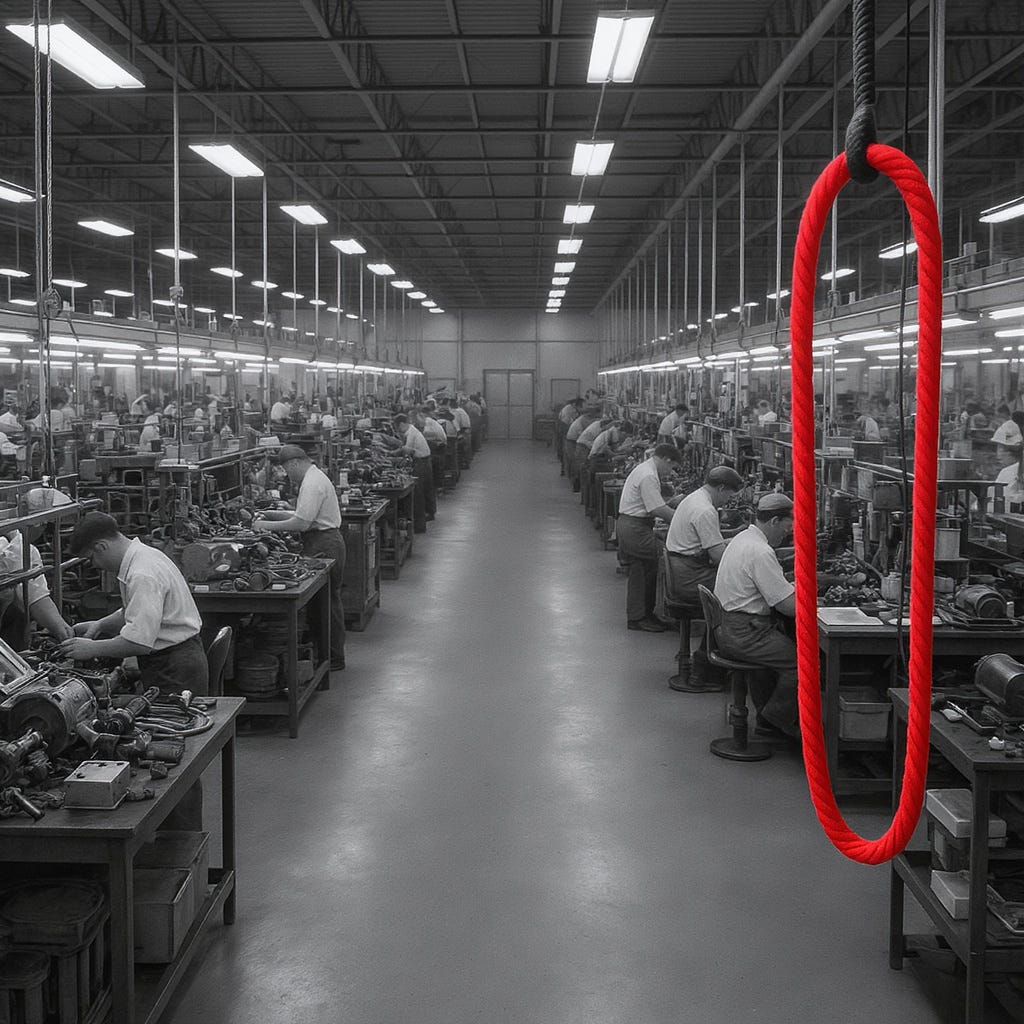
Every employee could pull the Andon cord — a bright red cord that stopped the entire assembly line when something seemed wrong.
That simple act redefined management philosophy:
- Trust over supervision.
- Learning over punishment.
- Team problem-solving over individual blame.
Today’s Agile ceremonies — daily stand-ups, sprint retros, swarming — all trace back to this principle of collective accountability.
Lesson: Agile leadership is not about control; it’s about creating safe spaces for correction.
4. Visualization and Transparency — The Original Kanban Board
Long before software teams used Jira or Trello, Toyota used visual management.
- Every workstation displayed performance metrics.
- Color-coded tags showed which tasks were pending, in progress, or complete.
- Deviations were visible instantly — no hiding inefficiencies.
This approach became Kanban, meaning “signboard” in Japanese. It turned invisible work into visible flow — the heart of Agile delivery today.
Lesson: Transparency isn’t a reporting tool — it’s a collaboration enabler.
5. The Cultural Revolution — From Factories to Philosophy
Lean wasn’t just an operational framework. It was a way of thinking that valued people as the center of process improvement.
Its cultural pillars — Respect for People and Continuous Improvement — are identical to Agile’s values:
Empowered Workers - Self-Organizing Teams
Continuous Improvement (Kaizen) - Iterative Delivery
Pull Systems - Demand-Driven Backlogs
Waste Reduction - Delivering Value Faster
Respect for People - Servant Leadership
Toyota didn’t “invent” Agile. They lived it — decades before Silicon Valley wrote it down.
Lesson: Culture eats methodology for breakfast.
6. The Global Ripple — How Toyota Redefined Industries
By the 1980s, Toyota’s methods had stunned the world. Western companies that once mocked “Japanese efficiency” began copying it.
- Ford introduced “Lean manufacturing.”
- Boeing used Lean in aircraft design.
- The software industry translated it into Agile methodologies.
Toyota’s DNA spread into every modern organization that values:
- Quick feedback loops.
- Cross-functional collaboration.
- Learning-driven adaptation.
What started as a survival strategy became a global framework for agility.
Lesson: Great revolutions start with humble constraints.
7. Lessons for Modern Project Managers — Leaning into Agility
In today’s project environments — AI, SaaS, cloud, and startups — Toyota’s lessons are timeless:
🔹 Embrace Constraints: They spark innovation. 🔹 Empower Teams: Autonomy breeds accountability. 🔹 Visualize Work: Make problems visible before they escalate. 🔹 Iterate Constantly: Small improvements compound faster than big leaps. 🔹 Respect the Human: Systems serve people, not the other way around.
If you strip Agile frameworks down to their core, what remains are Toyota’s timeless truths.
Lesson: The most Agile organizations are those that remember they’re human first, process second.
8. Final Reflection — From the Assembly Line to the Stand-Up Meeting
When you walk into an Agile team room today — sticky notes on walls, open collaboration, real-time dashboards — you’re seeing the spirit of Toyota alive and well.
Agile didn’t emerge from software. It emerged from respect, rhythm, and relentless refinement — the same values that made Toyota unstoppable.
So the next time someone asks,
“When did Agile begin?” You can tell them: “In a quiet factory in Japan, when a worker pulled a red cord and said — we can do better.”
메타데이터
- post_id
- 0f5483a591d6
- slug
- how-toyota-built-agile-before-agile-existed-lessons-from-the-lean-revolution-0f5483a591d6
- url
- https://medium.com/@himanshu.write/how-toyota-built-agile-before-agile-existed-lessons-from-the-lean-revolution-0f5483a591d6
- canonical_url
- https://medium.com/@himanshu.write/how-toyota-built-agile-before-agile-existed-lessons-from-the-lean-revolution-0f5483a591d6
- author_url
- https://medium.com/@himanshu.write
- status
- ok
- fetched_at
- 2026-07-22 08:21:35