Why Modern Men Are Obsessed With Aesthetics (And Why It’s About Time)
It was never really about the skincare routine. It was about finally being allowed to care.
Why Modern Men Are Obsessed With Aesthetics (And Why It’s About Time)
It was never really about the skincare routine. It was about finally being allowed to care.

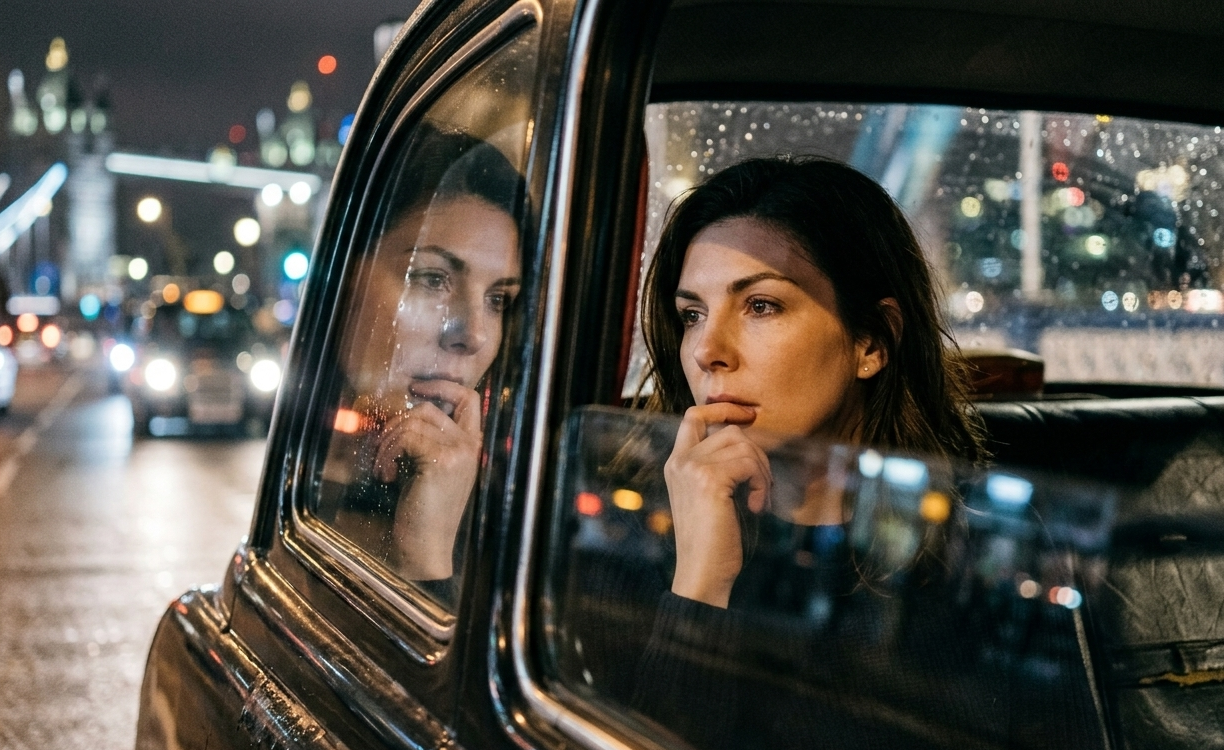
image by”SHVETS production” on pexels
My friend Arjun spent forty-five minutes last Saturday deciding which white t-shirt to wear.
Not which outfit. Which white t-shirt. He had four. He compared the weight of the fabric, the way each one sat on his shoulders, the exact shade of white — because apparently there are twelve shades of white and only two of them are acceptable. He ended up choosing one, then changed into a different one five minutes later.
When I asked him about it, he shrugged and said: “I just want to look right.”
I’ve been thinking about that phrase ever since. Because men have always wanted to look right. What’s changed is that they’re finally allowed to say it out loud.
The Old Story We Were Told
For the longest time, men who cared about how they looked were handed a very specific kind of suspicion.
Vain. Soft. Trying too hard. Not a real man’s man. The cultural script was clear: real men didn’t moisturize, didn’t spend time in front of mirrors, didn’t have opinions about their wardrobe beyond clean or dirty. Caring about appearance was feminine territory, and masculinity was defined in large part by what it was not.
So men who cared — and there were always men who cared — learned to care quietly. They hid the effort. They made it look accidental. The perfectly disheveled hair that took twenty minutes. The “casual” outfit assembled with surgical precision. The skincare disguised as “just washing my face.”
The obsession was always there. It just had to pretend it wasn’t.
Then the Internet Blew the Door Open
Something shifted around the early 2010s and accelerated into something unstoppable by the 2020s.
Men found each other online. In forums, in comment sections, in YouTube rabbit holes and Reddit threads and TikTok pages dedicated entirely to men’s style, grooming, fitness aesthetics, interior design, and the exact right way to fold a pocket square. Suddenly, the man who had quietly cared about these things his whole life discovered he wasn’t alone — he was part of a massive, global conversation that had been waiting to happen.
And the vocabulary exploded. Looksmaxxing. Mewing. Mogging. Glow-up. Aesthetic. A whole new language built around the idea that men’s appearance is something worth thinking about, talking about, and actively working on.
The internet didn’t create men’s obsession with aesthetics. It just finally gave it a room to exist in.
The Fitness Aesthetic Changed Everything
You can’t talk about male aesthetics without talking about the gym. Specifically — the shift from fitness as health to fitness as visual identity.
Men have always worked out. But somewhere along the way, the goal changed. It stopped being primarily about strength or sport and became about the look. The specific proportions. The “Greek god physique.” The camera angle that shows the V-taper. The lighting that catches the definition.
Fitness became an aesthetic project. And once that happened, everything else followed — because if you’re already curating your body, it’s a short step to curating the clothes that go on it, the grooming that frames it, the apartment that surrounds it, the Instagram feed that presents it.
The gym was the gateway. Aesthetics was the destination.
Skincare Is the New Handshake
Five years ago, a man admitting he had a skincare routine was mildly brave. Today it’s a baseline.
The men’s skincare market has exploded into a multi-billion dollar industry not because corporations convinced men to care about their skin — but because men already cared and finally stopped pretending they didn’t. Moisturizer, SPF, serums, under-eye patches on a flight — things that would have been aggressively mocked in a 2005 locker room are now just… normal.
And there’s something genuinely beautiful about this shift. For generations, men were taught to neglect themselves — physically, emotionally, aesthetically — as proof of toughness. The rise of male skincare isn’t vanity. It’s men learning, slowly and imperfectly, that taking care of yourself is not weakness.
It’s actually the opposite.
The “Aesthetic” as Identity Architecture
Here’s what makes this generation of men different from every previous one: they don’t just have a style. They have an aesthetic.
And an aesthetic is bigger than style. A style is how you dress. An aesthetic is a whole world — it’s the clothes, the grooming, the apartment, the coffee mug, the phone wallpaper, the playlist, the filter on the photos. It’s a coherent visual universe that says this is who I am in every direction simultaneously.
Men online don’t just buy a jacket. They commit to being a dark academia man, or an old money man, or a quiet luxury man, or a clean boy aesthetic. They build total visual identities with the same intentionality that previous generations built careers.
This is new. And it matters. Because for the first time, men are treating the question of how I present myself to the world as a serious, worthy, creative project — not something to be ashamed of or hidden behind irony.
But Let’s Talk About the Shadow Side
Because there is one, and it would be dishonest to ignore it.
Some corners of the male aesthetics internet have curdled into something darker. The looksmaxxing communities that started as self-improvement spaces have, in places, become obsessive and cruel — ranking faces, measuring bone structure, convincing young men that their worth is a fixed number determined by things they cannot change. The language of aesthetics has sometimes been borrowed by communities that use it to define hierarchy, to separate men into the “high value” and the worthless.
That’s not self-expression. That’s a new cage built from the same old anxiety.
And there’s a gentler shadow too — the pressure of the curated life. When every man with a following has a perfect morning routine, a perfectly designed apartment, a perfect “effortless” aesthetic that took enormous effort — it creates a standard that is quietly exhausting. The obsession with aesthetics can become another performance, another way of never quite being enough.
The question worth asking is: are you building an aesthetic that makes you feel more like yourself? Or one that makes you feel like you’re finally acceptable?
Those lead to very different places.
What’s Actually Driving All of This
Step back and look at the full picture, and a few things become clear.
Men’s aesthetic obsession is partly a response to a world that gave them fewer and fewer traditional ways to feel significant. Career stability, physical dominance, financial provision — the old pillars of masculine identity have been complicated, critiqued, or made inaccessible. In their place, aesthetics offers something achievable. Something within reach. I can’t afford a house, but I can build a wardrobe that feels intentional. I can’t control the economy, but I can control this.
It’s also, more hopefully, a sign of expanding permission. Men are slowly being allowed to care about beauty, craft, presentation, and self-expression without it being used against them. That’s not the end of masculinity — it’s masculinity getting bigger, getting more honest, getting more human.
And underneath all of it — the skincare routines and the outfit planning and the forty-five minutes choosing between white t-shirts — is the same thing that drives all human adornment, in every culture and every era:
The desire to be seen. Accurately. On your own terms.
Back to Arjun and the White T-Shirt
He wore the second one, in the end. And he looked good. Not because the t-shirt was remarkable — it wasn’t. But because he’d made a choice. A small, deliberate, I did this for me choice about how he wanted to move through the world that day.
That’s what the aesthetics obsession is, at its best. Not vanity. Not insecurity. Just men finally showing up for themselves — in the mirror, in the wardrobe, in the quiet daily act of deciding who they want to be.
It took long enough.
The most radical thing a man can do, in a world that told him not to care, is to care — carefully, intentionally, and entirely on his own terms.
If this resonated — with you, or with someone you know who takes too long choosing a t-shirt — share it. They’ll probably appreciate it more than they’ll admit.
메타데이터
- post_id
- 166e696759b7
- slug
- why-modern-men-are-obsessed-with-aesthetics-and-why-its-about-time-166e696759b7
- url
- https://medium.com/@bhumikabussiness/why-modern-men-are-obsessed-with-aesthetics-and-why-its-about-time-166e696759b7
- canonical_url
- https://medium.com/@bhumikabussiness/why-modern-men-are-obsessed-with-aesthetics-and-why-its-about-time-166e696759b7
- author_url
- https://medium.com/@bhumikabussiness
- status
- ok
- fetched_at
- 2026-06-09 15:37:30