AI in Sampling: The Future May Not Be Fraud Detection Alone; It May Be Intelligent Respondent…
For years, the market research industry has focused heavily on fraud prevention.
AI in Sampling: The Future May Not Be Fraud Detection Alone; It May Be Intelligent Respondent Infrastructure
For years, the market research industry has focused heavily on fraud prevention.
We introduced:
- Device fingerprinting
- Bot detection
- GEO/IP validation
- Red herring questions
- OE analysis
- CAPTCHA
- VPN/proxy detection
- Behavioral tracking
Yet bad sample still finds its way into the ecosystem.
Why?
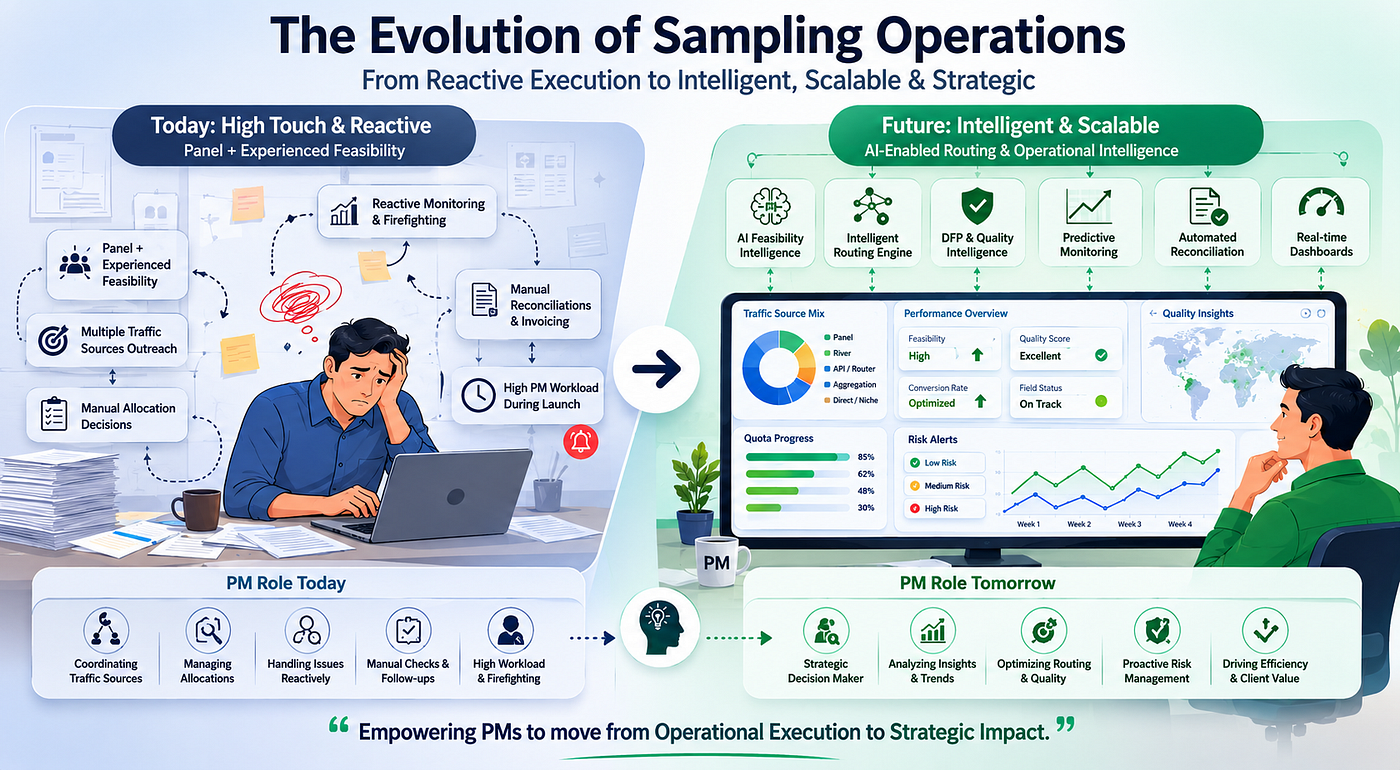
Because most systems today are reactive. We are still trying to identify fraud after respondents enter the survey ecosystem instead of intelligently validating and routing them before they reach the survey.
And I believe this is where AI could significantly change the future of sampling.
The Industry Already Has Strong Foundations
Today we already have strong Digital Fingerprinting Providers (DFPs) such as:
- DeviceForensics
- Research Defender
- Verisoul
- RelevantID
- TrueSample
These systems are already very effective at identifying:
- duplicate respondents
- suspicious devices
- emulators
- proxies/VPNs
- unusual participation behavior
Now imagine combining these systems with AI-powered validation layers.
Not to replace DFPs — but to strengthen them.
Smarter Respondent Routing
One of the biggest inefficiencies in the industry today is poor routing logic.
We still heavily rely on:
- broad profiling
- router blasting
- river traffic monetization
- high incidence filtering
Which creates:
- respondent fatigue
- overquota traffic
- lower conversion
- frustrated respondents
- increased fraud attempts
Instead, AI could help create:
intelligent respondent categorization.
Imagine a system where AI understands:
- prior profiling history based on device id
- device-level trust history
- OE quality
- survey completion behavior
- invalid/rejection history
- behavioral consistency
- topic expertise patterns
Now instead of blasting 1,000 respondents into random routers: AI routes:
- the right respondent
- to the right survey
- at the right time
- with the highest probability of quality completion.
This could fundamentally improve:
- conversion
- respondent experience
- client trust
- and panel economics.
B2B Sampling Could Evolve Significantly
B2B sample has always been difficult because of:
- low incidence
- fake professionals
- fabricated LinkedIn profiles
- panel farms
- poor recontactability
Now imagine this workflow:
A respondent enters a B2B survey through river traffic.
Before survey access:
- respondent verifies via LinkedIn
- AI evaluates profile maturity and consistency
- DFP validates device trust
- system creates a professional authenticity score
The system evaluates:
- career consistency
- network maturity
- title legitimacy
- digital footprint patterns
- behavioral consistency
- decision-making likelihood
Not to identify the person personally, but to validate:
“Does this respondent realistically fit this audience?”
That trust score could then strengthen:
- routers
- DFP systems
- supplier ecosystems
- client confidence.
Suddenly: river traffic starts becoming intelligent traffic.
Consumer Sample Can Follow Similar Logic
Even for consumer sample, similar workflows could exist through:
- DOI verification
- Gmail/email validation
- device reputation scoring
- response behavior history
- trust scoring models
Over time, AI could maintain:
- respondent quality history
- invalid trends
- trust decay scores
- fraud probability patterns
- recontact suitability
At that point: you are no longer just buying traffic.
You are gradually building:
a reusable trusted respondent ecosystem.
And this may become one of the biggest long-term opportunities for routers and sample providers.
But There Is A Real Challenge Here
Authentication at scale is expensive.
River traffic works on extremely high volumes. To find 1 high-quality validated respondent, we may need to process:
- dozens,
- sometimes hundreds,
- of incoming respondents.
Now imagine every validation layer carrying a cost:
- AI scoring
- DFP checks
- LinkedIn verification
- email trust scoring
- behavioral analysis
The cost of authenticating respondents can quickly become very high.
At the same time, there are also important questions around:
- respondent consent
- privacy
- profiling transparency
- opt-in rates
- dropout impact
Because if respondents feel they are being overly profiled or monitored, dropout rates could increase significantly.
And ethically, we should not validate or profile respondents beyond what they have explicitly consented to.
This Is Where The Industry Needs Innovation
The technology direction feels visible now.
The bigger question is:
How do we make respondent authentication scalable, privacy-compliant, cost-efficient, and sustainable for high-volume river traffic ecosystems?
Because solving that challenge may completely redefine:
- router economics
- panel quality
- respondent trust
- and the future of sampling itself.
Curious to hear how others in the industry are thinking about this balance between:
- authentication,
- respondent experience,
- privacy,
- and operational cost at scale.
메타데이터
- post_id
- 1923bb22adab
- slug
- ai-in-sampling-the-future-may-not-be-fraud-detection-alone-it-may-be-intelligent-respondent-1923bb22adab
- url
- https://medium.com/@aamodtyagi/ai-in-sampling-the-future-may-not-be-fraud-detection-alone-it-may-be-intelligent-respondent-1923bb22adab
- canonical_url
- https://medium.com/@aamodtyagi/ai-in-sampling-the-future-may-not-be-fraud-detection-alone-it-may-be-intelligent-respondent-1923bb22adab
- author_url
- https://medium.com/@aamodtyagi
- status
- ok
- fetched_at
- 2026-07-10 09:52:19