Future of Web Design in 2026: AI, Automation, and the Rise of Smarter Websites
Discover how AI tools and automation are shaping the future of web design. Learn emerging trends, benefits, challenges, and how businesses…
Future of Web Design in 2026: AI, Automation, and the Rise of Smarter Websites
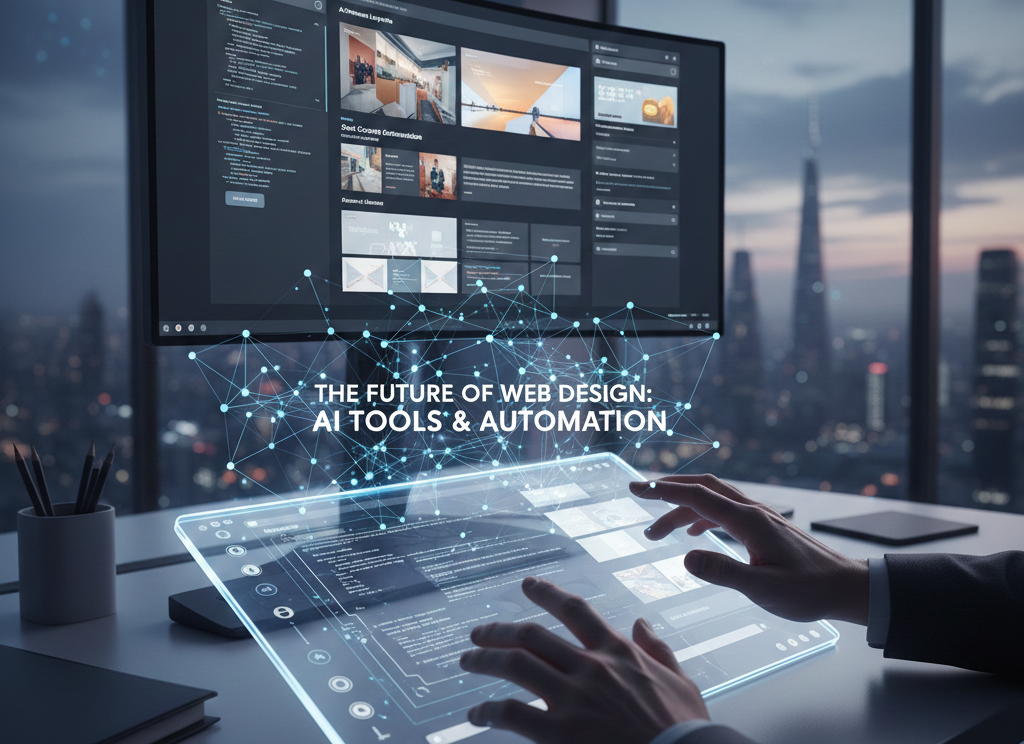
The Future of Web Design: A designer utilizes AI tools and automation through a holographic interface to seamlessly merge code and visual design, illustrating the advanced, data-driven workflow that is transforming website creation.
Web design is undergoing its most significant transformation since the advent of responsive design. Artificial intelligence and automation are no longer experimental add-ons but fundamental forces reshaping how websites are conceived, built, and optimized. This shift is happening now because the technology has finally matured beyond novelty, computational power has become accessible, and user expectations have evolved to demand experiences that feel intelligent and adaptive.
What’s changing isn’t just the tools designers use but the entire philosophy of **web design** itself. We’re moving from static, manually crafted experiences to dynamic, self-optimizing systems that learn from user behavior and adapt in real time. The designer’s role is evolving from pixel-perfect executor to strategic orchestrator of intelligent systems. This transformation raises critical questions about skills, workflows, and the future of the profession itself.
Why AI Is Becoming the New Backbone of Web Design
The integration of artificial intelligence into web design represents a fundamental shift in how digital experiences are created and delivered. AI is moving from a supporting role to becoming the infrastructure that powers modern web experiences, and this evolution is driven by three converging forces.
Data-driven design has replaced intuition-based decision making as the foundation of effective web design. Modern websites generate massive amounts of behavioral data that reveal how users actually interact with interfaces, not how designers think they should interact. AI systems can process this data at scale, identifying patterns invisible to human analysis. These insights inform everything from color scheme effectiveness to navigation structure optimization, transforming design from an art based on assumptions into a science grounded in evidence.
Smarter website behavior is becoming the baseline expectation for digital experiences. Websites powered by AI can now anticipate user needs, adjust interfaces based on context, and provide assistance before users even realize they need it. This intelligence manifests in chatbots that understand natural language, search functions that interpret intent rather than just matching keywords, and interfaces that reorganize themselves based on individual user patterns. The website stops being a static document and becomes a responsive entity.
Personalized user journeys have evolved beyond simple name insertion in email campaigns. AI enables websites to create unique experiences for each visitor based on their behavior, preferences, device, time of day, geographic location, and countless other variables. Two users visiting the same homepage might see entirely different layouts, content hierarchies, and calls to action, all optimized for their specific profile and likelihood to convert. This level of personalization was technically impossible just a few years ago but is rapidly becoming standard practice.
AI Tools Reshaping Web Design in 2026
The landscape of AI-powered design tools has exploded over the past two years, moving from experimental prototypes to production-ready platforms that are genuinely transforming daily workflows. These tools aren’t replacing designers but are dramatically amplifying their capabilities and speed.
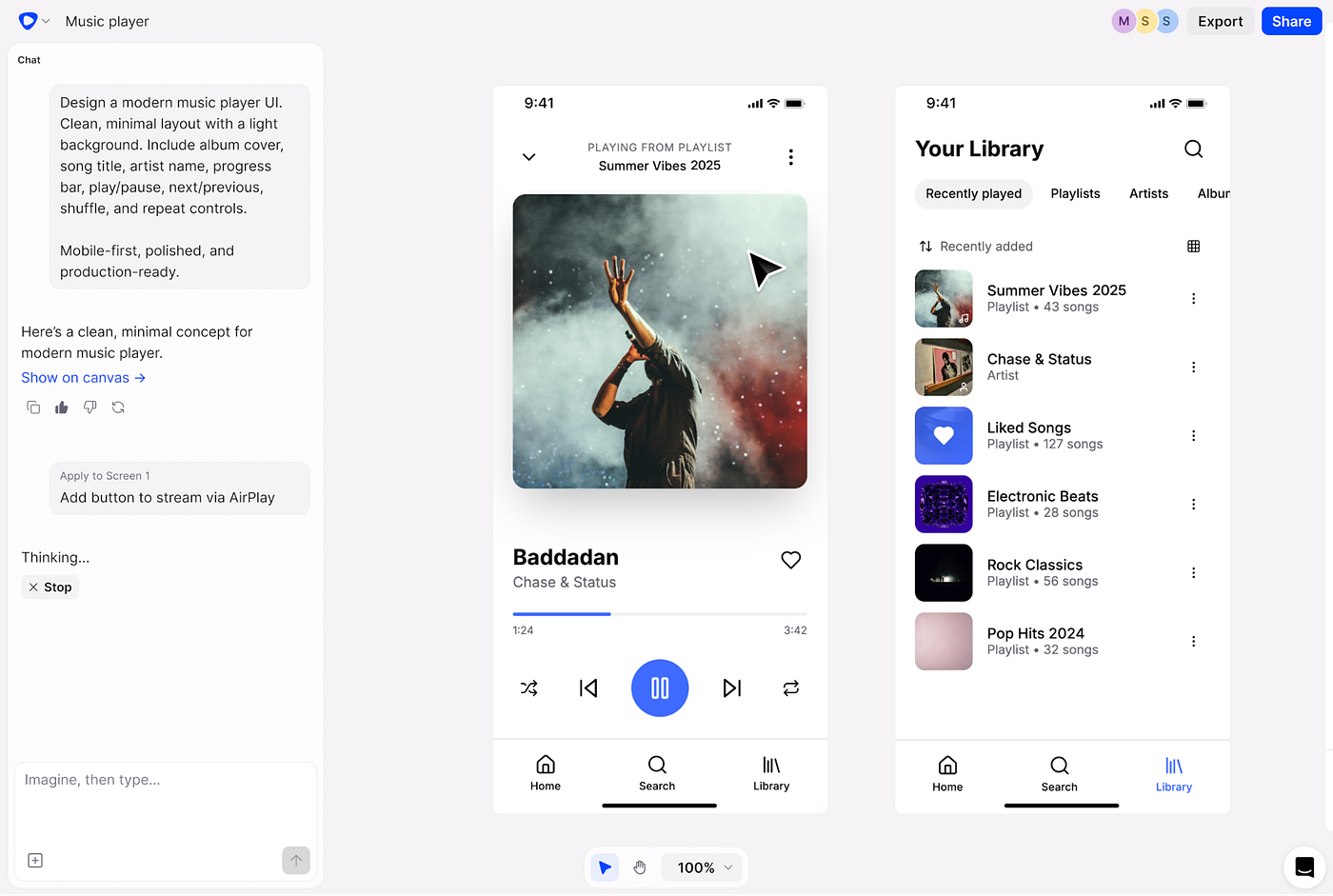
AI layout generators have evolved beyond simple template selection into sophisticated systems that understand design principles, brand guidelines, and user psychology. Tools like Framer AI, Figma’s AI features, and specialized platforms like Galileo AI can now generate complete page layouts from text descriptions, automatically handling typography hierarchy, spacing systems, and responsive breakpoints. These systems don’t just arrange boxes on a screen but apply genuine design thinking about visual weight, scanning patterns, and conversion optimization. Designers can now iterate through dozens of layout variations in the time it once took to create a single mockup.
AI content tools are solving one of web design’s most persistent challenges: the content-design disconnect. Platforms like Copy.ai, Jasper, and integrated solutions within design tools can now generate on-brand copy that fits design constraints, create alt text for images, and even suggest content structure based on SEO best practices and user intent. More importantly, these tools understand context, adapting tone and message based on where content appears in the user journey. The result is tighter integration between content strategy and visual design.
AI UX optimization tools continuously analyze user behavior and automatically test design variations to improve conversion and engagement. Platforms like Dynamic Yield, Unbounce Smart Traffic, and Optimizely’s AI features don’t just run traditional split tests but deploy machine learning algorithms that identify winning variations faster and automatically allocate traffic for maximum results. These systems can test dozens of variables simultaneously, something impossible with traditional methods, and they improve over time as they gather more data.
Real examples demonstrate this transformation in action. Wix’s AI design assistant can build complete websites from conversation, Adobe’s Sensei powers intelligent image editing and layout suggestions, and Shopify’s AI tools optimize product pages based on conversion data across millions of stores. These aren’t theoretical capabilities but deployed features that thousands of designers and businesses use daily.
Automation in Web Design: What Can Be Automated Today
Automation has moved beyond simple task shortcuts into comprehensive systems that handle substantial portions of the web design workflow. Understanding what can be automated today versus what still requires human judgment is critical for designers and businesses planning their workflows.
Repetitive design tasks that once consumed hours of designer time are now fully automatable. Asset resizing for different screen sizes, color palette generation from brand colors, icon creation and modification, background removal from images, and the creation of design system variants all happen instantly through AI tools. Plugin ecosystems in Figma and Adobe XD offer hundreds of automation options for tasks like generating realistic placeholder content, creating accessible color combinations, and batch processing design elements. These automations don’t just save time but reduce human error and ensure consistency across large projects.
Code generation has reached a tipping point where AI can produce production-ready code from designs with minimal manual intervention. Tools like Builder.io, Anima, and GitHub Copilot can convert Figma designs into clean React, Vue, or standard HTML/CSS code that respects best practices and maintains semantic structure. More impressively, large language models can now write custom functionality from natural language descriptions, handling everything from form validation to API integration. The gap between design and development is narrowing rapidly, with AI serving as the translator between visual intent and functional code.
Testing and accessibility automation ensures that websites meet standards without manual auditing. AI-powered tools like Accessibility Insights, axe DevTools, and integrated checkers in platforms like WordPress automatically identify WCAG violations, suggest fixes, and can even implement corrections automatically. Visual regression testing tools like Percy and Chromatic use AI to identify unintended design changes across browsers and devices. These systems run continuously, catching issues that would inevitably slip through manual testing processes.
Performance optimization is increasingly handled by AI systems that analyze site architecture and automatically implement improvements. Image optimization tools compress files while preserving quality, code minification and bundling happens automatically through build processes, and platforms like Cloudflare and Netlify use AI to optimize asset delivery and caching strategies. These systems make real-time decisions about how to serve content based on network conditions, device capabilities, and user location, ensuring optimal performance without manual configuration.
Future Trends: Where AI Is Taking Web Design Next
The current state of AI in web design is impressive, but emerging trends suggest we’re only seeing the beginning of this transformation. The next wave of AI capabilities will fundamentally change what websites are and how they function.
Predictive UI represents a shift from reactive to anticipatory interfaces. Future websites won’t just respond to user actions but will predict what users want to do next and prepare the interface accordingly. Imagine a website that preloads the exact product you’re about to search for based on your browsing pattern, or an interface that simplifies navigation to your most likely destination before you even move your cursor. This technology is emerging from companies like Google and Amazon, who have the data scale to train truly predictive models. As these capabilities democratize, even small websites will be able to offer experiences that feel eerily intuitive.
Hyper-personalized websites will take current personalization efforts to their logical extreme. Rather than adjusting a few elements based on user segments, future websites will generate entirely unique layouts, content hierarchies, navigation structures, and visual styles for each individual visitor. The homepage you see might be completely different from what another person sees, not just in content but in fundamental design structure. AI will determine whether you respond better to visual or text-heavy designs, whether you prefer detailed information upfront or progressive disclosure, and whether you’re driven by emotional or rational appeals. Every element will be optimized for your psychological profile and current context.
Real-time AI optimization will make websites that continuously evolve without human intervention. These systems won’t wait for designers to run tests and implement changes but will constantly experiment with micro-variations, learning what works and automatically deploying improvements. Websites will develop over time like living organisms, with successful design mutations surviving and spreading while unsuccessful ones disappear. This evolution will happen across timescales from milliseconds to months, with AI systems balancing short-term conversion optimization against long-term brand consistency.
No-code and low-code domination will accelerate as AI makes technical implementation trivial. The barrier between having an idea for a website and launching it will effectively disappear. Natural language interfaces will allow anyone to describe what they want and receive a functional, well-designed website in minutes. This doesn’t mean the death of custom development but rather a bifurcation of the market into AI-generated solutions for standard needs and high-touch custom work for unique requirements. The middle ground of semi-custom template-based websites will increasingly be handled entirely by AI.
Will AI Replace Web Designers? (The Brutal Truth)
The question of whether AI will replace web designers deserves a nuanced answer that goes beyond reassuring platitudes or alarmist predictions. The brutal truth is more complex than either extreme suggests.
AI will absolutely replace certain types of web design work. Template-based website creation, basic layout decisions, color scheme generation, and standard UI patterns are already being automated effectively. Designers who primarily execute predetermined solutions without strategic thinking or creative innovation are genuinely at risk. The market for commodity web design, where clients simply need a functional website that looks professionally acceptable, will increasingly be served by AI tools that cost a fraction of human labor.
However, AI is simultaneously creating new opportunities and expanding what’s possible in web design. The most successful designers are already using AI to amplify their capabilities, handling in hours what once took weeks and exploring creative territories that were practically inaccessible before. These designers aren’t competing with AI but collaborating with it, using automation to eliminate tedious work and focusing their energy on strategic thinking, brand storytelling, and solving complex UX challenges that require deep human understanding.
The design skills that remain valuable are shifting. Technical implementation skills become less critical as AI handles code generation, but strategic thinking, brand understanding, user psychology, and creative vision become more valuable. Designers who can prompt AI systems effectively, curate AI-generated options with discerning judgment, and synthesize AI insights into cohesive brand experiences will thrive. Those who resist these tools or focus exclusively on execution skills will struggle.
The profession isn’t disappearing but transforming. Web designers are evolving into AI-assisted experience architects who orchestrate intelligent systems rather than manually crafting every pixel. This mirrors historical transitions in design: desktop publishing didn’t eliminate graphic designers but changed what graphic design meant. The designers who adapted to new tools and redefined their value proposition thrived, while those who clung to obsolete workflows became irrelevant.
How Web Designers & Businesses Should Prepare for This Future
Preparation for the AI-driven future of web design requires concrete action across skills, workflows, and strategic thinking. Both designers and businesses need to adapt proactively rather than reactively.
Upskilling must focus on AI literacy and complementary human skills. Designers should gain hands-on experience with major AI tools, understanding not just how to use them but how they think and where they fail. This means experimenting with layout generators, content tools, and code assistants to understand their capabilities and limitations. Equally important is developing skills that AI can’t easily replicate: strategic thinking, brand storytelling, complex problem solving, user research and empathy, and the ability to synthesize insights from multiple sources into coherent experiences. Communication skills become more valuable as designers spend less time executing and more time guiding clients and collaborating with AI systems.
New workflows must integrate AI as a core component rather than an afterthought. This means restructuring design processes to leverage AI for initial exploration, rapid iteration, and automated optimization while reserving human judgment for strategic decisions and creative direction. Successful workflows use AI to generate multiple options quickly, human expertise to evaluate and refine those options, AI again to optimize and implement the chosen direction, and continuous AI monitoring for ongoing improvement. This collaborative approach between human and machine produces better results than either could achieve alone.
Using AI the right way requires understanding both its power and its limitations. AI excels at optimization, pattern recognition, repetitive tasks, and generating variations within established parameters. It struggles with true innovation, brand-appropriate creativity, understanding nuanced human emotions, and making decisions that balance multiple complex stakeholders. The key is deploying AI where it adds value while maintaining human control over strategic direction. This means using AI to explore possibilities but making final creative decisions yourself, letting AI optimize within your defined parameters but setting those parameters thoughtfully, and treating AI-generated insights as data points that inform judgment rather than dictates that replace it.
Businesses should invest in AI-powered tools while also investing in designers who know how to use them effectively. The combination of sophisticated tools and skilled human operators produces exponentially better results than either alone. This means budgeting for tool subscriptions and training, not just choosing between human labor and AI automation.
Conclusion: What the Future Really Looks Like
The future of **web design** is neither the dystopian replacement of human creativity nor the utopian enhancement of human capabilities without consequence. It’s a pragmatic evolution where AI handles increasingly sophisticated tasks while human designers focus on strategy, creativity, and the irreducibly human aspects of creating meaningful digital experiences.
Websites will become more intelligent, more personalized, and more effective at achieving their goals. The barrier to creating functional websites will drop dramatically, democratizing web presence for individuals and small businesses. At the same time, truly exceptional web experiences that solve complex problems and create emotional connections will require the synthesis of AI capabilities and human insight.
The designers who thrive will be those who embrace AI as a collaborator, continuously adapt their skills, and focus on the strategic and creative work that AI enhances rather than replaces. The businesses that succeed will be those that invest in both sophisticated tools and the human expertise to deploy them effectively.
The transformation is already underway. The question isn’t whether to adapt but how quickly and how thoughtfully you’ll embrace this new reality. The future of web design is being written now, and those who actively participate in shaping it will have tremendous advantages over those who passively wait to see what happens.
메타데이터
- post_id
- 1a1b993bf93a
- slug
- future-of-web-design-in-2026-ai-automation-and-the-rise-of-smarter-websites-1a1b993bf93a
- url
- https://medium.com/@debnathv922/future-of-web-design-in-2026-ai-automation-and-the-rise-of-smarter-websites-1a1b993bf93a
- canonical_url
- https://medium.com/@debnathv922/future-of-web-design-in-2026-ai-automation-and-the-rise-of-smarter-websites-1a1b993bf93a
- author_url
- https://medium.com/@debnathv922
- status
- ok
- fetched_at
- 2026-08-07 15:10:10