Spray Dryers: The Technology That Quietly Powers Modern Manufacturing
Take a moment to look around your kitchen, medicine cabinet, or even your laundry room. The instant coffee that dissolves in seconds, the…
Spray Dryers: The Technology That Quietly Powers Modern Manufacturing
Take a moment to look around your kitchen, medicine cabinet, or even your laundry room. The instant coffee that dissolves in seconds, the milk powder stored for months without refrigeration, the nutritional supplements mixed into your morning drink, and even the detergent used for washing clothes all have one thing in common. At some point during their production, many of these products passed through a spray dryer.
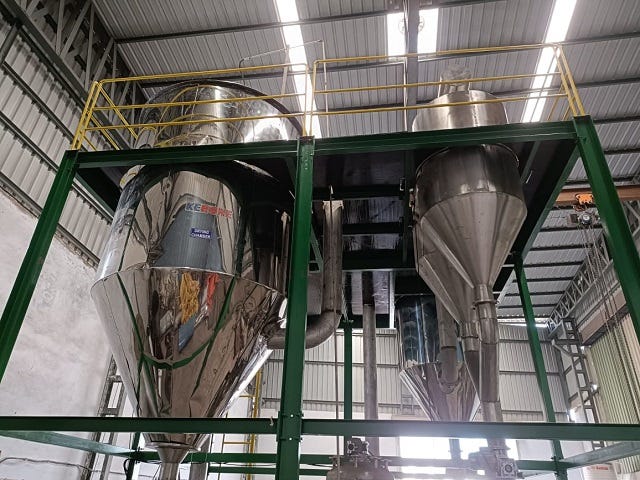
Despite being one of the most widely used industrial drying technologies, spray drying often remains behind the scenes. Many people working in manufacturing know the term, but far fewer understand why it has become such an essential part of modern production. This knowledge gap can lead to costly decisions, inefficient processes, and inconsistent product quality.
Understanding spray drying is not reserved for process engineers alone. Production managers, plant operators, quality professionals, entrepreneurs, and even students entering the manufacturing sector can benefit from knowing how this technology works. Once you understand its principles, you begin to see why so many industries rely on it every single day.
More Than Just Removing Moisture
At first glance, drying appears to be a straightforward task. Remove water from a product and the job is done. In reality, industrial drying is one of the most delicate stages in manufacturing because moisture affects almost every aspect of the final product.
A poorly dried material may lose its colour, develop an uneven texture, clump together during storage, or become difficult to transport. Some products lose their nutritional value, while others experience changes in chemical composition or physical properties. These issues not only reduce product quality but also increase waste, energy consumption, and production costs.
Spray drying addresses these challenges by treating drying as a carefully controlled engineering process rather than a simple evaporation step.
How Can a Liquid Become a Powder in Just Seconds?
The process is so fast that usually people are surprised when they watch for the first time, as it appears it would nearly be impossible. The first thing the journey starts with is a liquid. This may be a milk concentrate, a pharmaceutical solution, a ceramic slurry, food extract or a chemical suspension depending on the application. A spray drying process is a completely different way of doing this than a large container, in which it is heated until the moisture gradually evaporates. The liquid gets broken down into millions of tiny droplets by using an atomizer. These are very small droplets that are added into a chamber containing controlled hot air. Each droplet has a very large surface area in relation to its volume so that very little moisture will be lost through evaporation. The droplets dry in seconds to form fine dry particles, which fall as a fine powder. Although the incoming air is hot, the product itself does not necessarily experience damaging temperatures. Particles are constantly being cooled by the ongoing evaporation of moisture. Spray drying is used quite frequently in the processing of so-called “heat sensitive” products, in part because of this.
Why Industries Continue to Invest in Spray Dryers
The manufacturing sector has undergone significant transformation in the past few decades. Today’s customers demand a higher level of quality, more stringent safety requirements and quicker delivery than ever before. Meanwhile, manufacturers need to make energy-saving yet output-boosting efforts. Spray drying fits in quite nicely with these hopes. It is best known for its consistency. All manufacturers want each run of products to be identical to the previous run. Consumers demand the same product quality, flavor, look, and feel when they buy the product. Spray drying allows this to happen as it allows for control of the drying environment. Rather than relying on chance, manufacturers are able to manipulate key factors affecting the quality of the product, including particle size, moisture content, powder density, and its flow behaviour. This degree of control minimizes production variations and helps companies to ensure consistency in product quality.
Why Powder Quality Matters More Than Many Realize
People tend to look at the appearance of powders rather than focusing on other aspects. But any manufacturer who is experienced in the trade knows that powder quality is of critical importance in virtually every aspect of the manufacturing process. What do you think it would be like to package a powder that doesn’t flow correctly? Think about using ingredients that will get lumpy when mixed rather than blending them evenly. Imagine carrying in goods that are hard to dissolve when customers use them or goods that absorb moisture in the storage area. Typically, these issues start before packaging. They tend to occur in the drying phase. The characteristics of the powders are predictable if the spray drying process is well-designed. The particles flow more smoothly, they dissolve more easily, they can be stored without settling and they behave in the same way in subsequent processing. This means fewer production interruptions, lower material waste and improved customer satisfaction.
One Technology for Many Industries
Spray drying has been relevant to the science and technology scene for decades and one of the reasons for this is the versatility of the process. The technology is extremely flexible and can be used in a wide variety of products while maintaining the same principle of operation. Spray drying is used in the food sector to create milk powder, coffee powder, protein powders, fruit powder, flavourings and nutritive ingredients. These products need specific moisture content to maintain their taste, shelf life and nutritional content. The pharmaceutical industry relies on spray drying to produce powders with a very narrow size distribution for use in medicines and special formulations. It is especially crucial to maintain consistency, as even slight changes may affect the product’s performance. Spray drying is also used by chemical manufacturers to make catalysts, pigments, detergents, polymers, and many specialty chemicals. Craftly managed powders aid in the better moulding and sintering activity in the ceramic industry. Batteries, advanced materials, biotechnology applications, and agricultural products are other applications of spray drying technology. Though the industries are different, the common goal is to create a stable, high-quality powder as efficiently as possible.
The Cost of Choosing the Wrong Drying Technology
Selecting drying equipment should never be based solely on its purchase price.
A less expensive dryer may appear attractive during procurement, but operating costs often continue for decades. Poor energy efficiency, inconsistent drying, frequent maintenance, excessive downtime, and product losses can quickly outweigh the initial savings.
Experienced manufacturers evaluate drying systems differently. They look beyond installation costs and consider long-term productivity, operating efficiency, maintenance requirements, product recovery, process flexibility, and future production goals.
Spray drying frequently proves to be a worthwhile investment because it combines speed, quality, and process reliability within a single continuous operation.
Modern Spray Dryers Are Smarter Than Ever
The price of drying equipment is not the only factor to consider when making a selection. In the contracting phase, it may seem more economical to go with a less expensive dryer, but dryer operating costs can last for years. Initial savings can be quickly offset by poor energy efficiency, inconsistent drying, frequent maintenance visits, excessive downtime, and product losses. Their thinking extends beyond the initial installation prices to include long-term productivity, efficiency, maintenance, product recovery, process flexibility and future production objectives. Spray drying is often an economically advantageous process for producing a product that is both quick and reliable and good quality.
Knowledge Creates Better Decisions
One of the biggest differences between experienced process professionals and newcomers is not the equipment they own but the questions they ask.
Instead of asking, “Which dryer is the cheapest?” they ask, “Which technology will deliver the quality our product requires?”
Instead of focusing only on production speed, they consider moisture distribution, particle characteristics, operating costs, maintenance, and scalability.
This shift in thinking comes from understanding the drying process rather than simply operating the equipment.
Every hour spent learning the fundamentals of spray drying can prevent costly mistakes in equipment selection, process design, and plant operation. That knowledge becomes an advantage throughout an entire career because drying plays a role in countless manufacturing applications.
Final Thoughts
Spray drying has quietly become one of the most influential technologies in industrial manufacturing. It transforms liquids into stable powders within seconds, supports consistent product quality, improves production efficiency, and enables manufacturers to meet demanding market expectations.
Yet the true value of spray drying extends beyond the machine itself. It lies in understanding why the technology works, where it performs best, and how thoughtful process design influences every stage of production.
Whether you are an engineer, a production manager, a business owner, or someone beginning a career in industrial processing, building your knowledge of spray drying is an investment that will continue to pay dividends. The more you understand the science behind the process, the better equipped you will be to improve quality, reduce costs, and make confident decisions in an increasingly competitive manufacturing landscape.
메타데이터
- post_id
- 1a8adfbfb175
- slug
- spray-dryers-the-technology-that-quietly-powers-modern-manufacturing-1a8adfbfb175
- url
- https://medium.com/@shivam.kerone/spray-dryers-the-technology-that-quietly-powers-modern-manufacturing-1a8adfbfb175
- canonical_url
- https://medium.com/@shivam.kerone/spray-dryers-the-technology-that-quietly-powers-modern-manufacturing-1a8adfbfb175
- author_url
- https://medium.com/@shivam.kerone
- status
- ok
- fetched_at
- 2026-08-08 18:38:31





