Boredom Is Quietly Eating Senior Citizens Alive
We spend a lot of time worrying about what might kill older people.
Boredom Is Quietly Eating Senior Citizens Alive
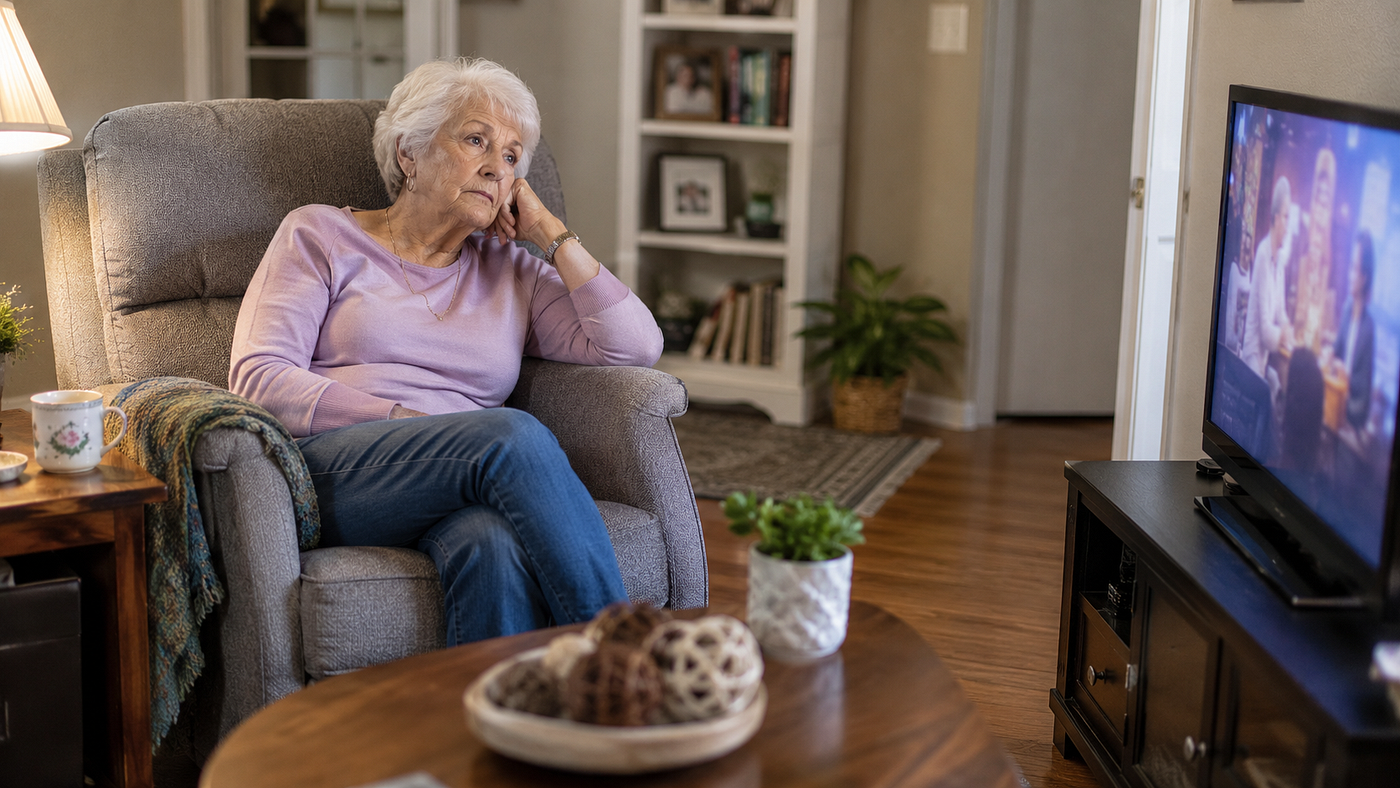
Source: Created by Author with ChatGPT
We spend a lot of time worrying about what might kill older people.
Heart disease. Cancer. Falls. Dementia. Bad diets. Prescription mistakes. Reckless drivers. Influenza. Loneliness.
But there is another threat that rarely appears on a medical chart. It does not trigger alarms, produce dramatic symptoms, or inspire charity walks. It simply settles into the room, takes a seat beside the recliner, and begins draining the life out of a person one empty afternoon at a time.
Boredom.
Not the temporary boredom of sitting through a bad television show or waiting too long at the dentist. This is chronic boredom, the kind that arrives after retirement, after the children stop calling as often, after friends begin dying, after driving becomes difficult, and after the world seems to move on without asking whether you are coming along.
For millions of senior citizens, boredom is not a minor inconvenience. It is the central fact of daily life.
And we are doing almost nothing about it.
Retirement Was Supposed to Be Freedom
For decades, Americans were sold a simple retirement fantasy.
Work hard. Save money. Pay off the house. Then spend your golden years relaxing.
The fantasy usually included a porch, a golf course, a cruise ship, or a smiling couple walking on a beach in matching white clothing. Nobody mentioned what happens on an ordinary Tuesday in February when there is nowhere to go, nobody to meet, and nothing that actually needs to be done.
Relaxation feels wonderful when it interrupts work. It feels much less wonderful when it replaces work entirely.
A vacation has an ending. Retirement does not.
Many people retire believing they are escaping obligation, only to discover that obligation was giving shape to their lives. The alarm clock was annoying, but it created a beginning. Meetings were tedious, but they required participation. Coworkers were irritating, but they supplied conversation, gossip, conflict, recognition, and the feeling that someone noticed when you did not show up.
Then retirement arrives, and the calendar suddenly becomes an empty field.
At first, that emptiness feels luxurious.
Six months later, it can feel like abandonment.
Television Is Not a Life
Our answer to senior boredom has largely been to provide older people with more screens.
Cable television offers hundreds of channels. Streaming services offer thousands of programs. Social media supplies an endless parade of arguments, advertisements, political panic, health scares, and photographs of other people’s grandchildren.
None of this is the same as having a life.
Watching other people travel is not travel. Watching chefs cook is not cooking. Watching a panel of strangers argue is not conversation. Clicking a heart beneath a photograph is not companionship.
Television can fill hours, but it cannot fill a person.
Yet many seniors spend most of their waking days moving between a television, a phone, and a kitchen table. They are entertained constantly and engaged almost never.
That distinction matters because human beings do not merely need stimulation. They need involvement. They need responsibilities, expectations, surprises, friction, and reasons to get dressed.
A person can consume twelve hours of content and still go to bed feeling that nothing happened.
Because nothing did.
We Have Confused Safety With Living
Families often respond to aging by slowly removing risk from an older person’s life.
Do not drive at night. Do not climb the ladder. Do not travel alone. Do not walk too far. Do not use the stove when nobody is home. Do not volunteer somewhere unsafe. Do not take public transportation. Do not go out in bad weather.
Every warning may be reasonable on its own. Together, they can reduce a life to a supervised waiting room.
We have created a culture in which the highest goal for senior citizens is not fulfillment, contribution, adventure, or pleasure. It is avoiding injury.
We want older people safe, medicated, seated, reachable by phone, and home before dark.
Then we are surprised when they become depressed.
A life with no risk is often a life with no movement. A life with no movement becomes smaller every year. The smaller it becomes, the more dangerous everything outside the house begins to feel.
Eventually, boredom and fear work together. The person stops going places because it feels uncomfortable. Staying home then makes the outside world feel even more unfamiliar.
The prison has no bars. It has a comfortable chair and a remote control.
Bingo Is Not a Social Policy
American society often treats senior boredom as though it can be solved with bingo, bus trips, and a monthly potluck.
There is nothing wrong with bingo. There is something deeply wrong with assuming every person over 65 should find meaning in it.
Older adults are not a single personality type. They are retired engineers, nurses, teachers, mechanics, executives, artists, factory workers, business owners, parents, immigrants, veterans, troublemakers, introverts, travelers, gardeners, gamblers, romantics, and cynics.
They do not suddenly become interchangeable because they qualify for Medicare.
Yet senior programming is frequently designed as though aging erases individuality. Activities are watered down, heavily supervised, and stripped of any real stakes. Everyone is invited to make a craft, watch an old movie, or attend a gentle exercise class.
Those things may be enjoyable, but they do not replace purpose.
Purpose requires more than being occupied. It requires being needed.
There is a difference between handing someone a puzzle and asking them to solve a problem that matters.
Boredom Is Often Disguised as Decline
A bored person may sleep too much, eat too much, drink too much, complain constantly, obsess over minor symptoms, or spend hours following political outrage.
They may call family members repeatedly. They may stop bathing regularly because there is nowhere to go. They may lose interest in cooking because nobody is coming over. They may become fixated on the neighbors, the mail carrier, the thermostat, or the price of groceries.
Some of this gets dismissed as normal aging.
It is not always normal aging. Sometimes it is what happens when a human mind has no meaningful place to put its energy.
People need challenges. Remove the real ones, and the mind will manufacture substitutes.
A delayed package becomes a crisis. A rude cashier becomes a three-day grievance. A minor ache becomes the focus of the week. A television personality becomes either a trusted friend or a mortal enemy.
The person is not necessarily becoming irrational. They may simply be starving for consequence.
When very little happens, everything that happens feels enormous.
Hobbies Are Not Enough
Whenever senior boredom is discussed, someone suggests hobbies.
Take up painting. Learn to knit. Try woodworking. Start a garden. Do crossword puzzles. Join a book club.
All fine ideas.
But hobbies are often presented as a way to keep older people quietly occupied, like handing a child crayons in a restaurant.
A hobby can be meaningful, but it becomes much more powerful when it connects a person to other people. Painting alone in a spare bedroom may be pleasant. Teaching painting at a community center creates relationships. Gardening in the backyard may be calming. Growing food for a neighborhood pantry creates purpose. Woodworking for amusement can pass the time. Repairing furniture for struggling families creates value.
The problem is not that seniors have too few hobbies.
The problem is that society has too few serious roles for them.
We tell older people to enjoy themselves when many of them would rather be useful.
The World Still Needs Older People
America has somehow decided that a person can spend 40 or 50 years accumulating knowledge and then become irrelevant the moment the retirement party ends.
That is an astonishing waste of human experience.
Schools need tutors. Small businesses need mentors. Nonprofits need administrators. Local governments need volunteers who understand budgets, contracts, logistics, and community history. Young adults need people who can explain how careers, marriages, mistakes, debt, grief, and recovery actually work.
Many seniors have exactly what society claims to lack: time, knowledge, patience, and perspective.
What they often lack is an invitation.
We praise older people for their wisdom while rarely giving them any authority. We tell them they have valuable experience while designing workplaces that treat them as obsolete. We encourage them to volunteer, then offer tasks that require almost none of their abilities.
Handing out name tags at a charity dinner may help someone pass an evening. It does not necessarily restore the feeling that their judgment matters.
Older adults should not be treated as decorative witnesses to the future. They should be helping shape it.
Families Cannot Solve This Alone
It is easy to blame adult children for not visiting enough.
Sometimes that criticism is deserved. Families can be selfish, distracted, and careless with older relatives. A five-minute phone call can mean more than people realize.
But children cannot become a parent’s entire social life. They have jobs, partners, health problems, financial pressures, and responsibilities of their own.
No 75-year-old should have to spend seven days waiting for a 20-minute Sunday phone call.
Senior boredom is not merely a family failure. It is a community design failure.
We built suburbs where people cannot function without driving. We eliminated benches, public gathering places, neighborhood shops, and reliable transportation. We replaced local clubs with online groups and replaced front porches with garages.
Then, when older people can no longer drive comfortably, we act surprised that they are isolated.
We designed communities that make independence nearly impossible without a car, then blamed seniors for staying home.
Retirement Needs Structure, Not Just Money
Retirement planning is obsessed with finances.
How much have you saved? When should you claim Social Security? What withdrawal rate should you use? Can you afford long-term care? How will you manage taxes?
These questions matter.
But a perfectly funded retirement can still become an emotional wasteland.
Every retirement plan should include more than an investment strategy. It should include a reason to wake up, places to go, people who expect you, and work that feels worthwhile.
Not necessarily paid work. Not necessarily full-time work. But something that creates accountability.
A weekly lunch is pleasant. Being responsible for organizing the lunch is better.
Attending church can be meaningful. Being asked to help run a program is often more meaningful.
Walking around the neighborhood is healthy. Walking a neighbor’s dog because they depend on you adds purpose.
The crucial question is not merely, “What will you do when you retire?”
It is, “Who will notice when you do not show up?”
Boredom Is Not Inevitable
Aging may change the body. It does not eliminate the need for novelty, challenge, recognition, or contribution.
Older people still need projects that might fail. They still need conversations that are not about medications. They still need flirtation, humor, argument, anticipation, and occasional foolishness.
They need new restaurants, new skills, new routes, new friends, and new reasons to leave the house.
Some of those experiences will carry risk.
That is part of being alive.
The goal should not be to keep seniors permanently safe from every possible scrape, disappointment, or bad decision. The goal should be to help them remain participants in their own lives.
A person who is protected from everything may eventually have nothing left to protect.
Stop Telling Seniors to Stay Busy
“Stay busy” is weak advice.
Busy can mean reorganizing a drawer for the fourth time. Busy can mean watching six hours of news. Busy can mean driving to the grocery store because it is the only available destination.
The better advice is to remain involved.
Join something that needs members. Teach something you know. Help someone who will expect you back. Start a project with a deadline. Take a class where your absence will be noticed. Make plans that require leaving the house. Create obligations worth keeping.
And communities need to stop treating this as a private lifestyle choice.
Libraries, schools, colleges, local governments, senior centers, nonprofits, and employers should be building serious pathways for older adults to contribute. Not symbolic jobs. Not childish activities. Real responsibilities with visible outcomes.
Senior citizens do not need to be endlessly entertained.
They need to matter.
Boredom is not just the absence of activity. It is the absence of anticipation. It is waking up and already knowing exactly how the day will end.
That is no way to spend the final decades of a life.
We should stop asking how to keep older people occupied until dinner.
We should start asking what might make them excited about tomorrow.
메타데이터
- post_id
- 1bc4a13d773a
- slug
- boredom-is-quietly-eating-senior-citizens-alive-1bc4a13d773a
- url
- https://medium.com/@troybreiland/boredom-is-quietly-eating-senior-citizens-alive-1bc4a13d773a
- canonical_url
- https://medium.com/@troybreiland/boredom-is-quietly-eating-senior-citizens-alive-1bc4a13d773a
- author_url
- https://medium.com/@troybreiland
- status
- ok
- fetched_at
- 2026-08-19 21:29:01





