Formatted difference
When I sit in a café and look around the room, the city changes, but the atmosphere often remains the same. Similar sneakers. Similar…
Formatted difference
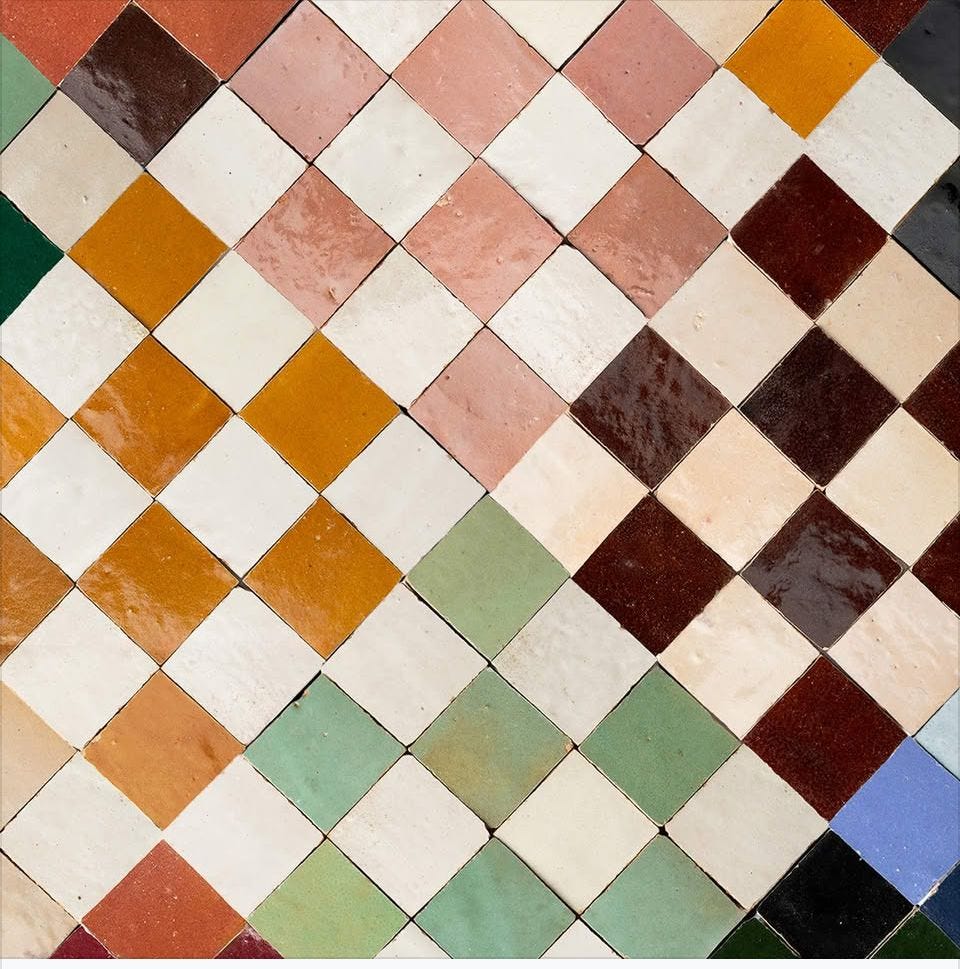
Zia Tile
When I sit in a café and look around the room, the city changes, but the atmosphere often remains the same. Similar sneakers. Similar laptops. Similar interior aesthetics. Similar conversations about taste, work, wellness, creativity, identity. People trying very hard to express themselves, yet often through the same references, platforms, products, and rituals.
I do not mean this cynically. That is what makes it difficult to untangle.
Part of me resists this sameness. Another part of me finds it strangely beautiful. There is something unsettling about a culture where individuality has never been more visible, while also feeling increasingly standardized. We are constantly encouraged to express who we are. To curate, distinguish, personalize, optimize, brand, refine. Yet so much of that expression seems to pass through the same systems before it becomes recognizable.
Maybe that is why I keep thinking about Andy Warhol. When Warhol painted Campbell’s soup cans, he captured something essential about America at the time. Industrialization had created a culture built on replication. The same products appeared in every supermarket. The same advertisements entered every living room. The system has moved, it no longer just manufactures products; it now manufactures the frameworks for our identities.
But Warhol’s work was never only judgment. There was admiration in it too. Humor. Fascination. He understood that there was something strangely poetic about mass culture. The soup can was ordinary, even banal, but repetition transformed it into something iconic. Mass production had created a new visual language. In Warhol’s era, sameness was easier to see. The same products moving through the same distribution systems into millions of homes.
Today, sameness is harder to locate. It is less tied to specific objects and more embedded in systems that shape behavior, taste, attention, and self expression. Instead of everyone seeing the same advertisement, people move through different feeds that often produce surprisingly similar aesthetics, desires, and ways of presenting themselves.
Culture no longer spreads only through television or magazines. It is continuously measured, refined, personalized, and redistributed back to us in real time. Sameness has become less visible as an object and more present as a structure. A set of conditions through which identity becomes legible.
In the 1960s, capitalism mass produced products. Today, it increasingly mass produces formats for identity. Even our attempts to resist sameness often happen through the same channels. We search for authenticity using identical platforms. We build curated uniqueness through shared aesthetics. We try to distinguish ourselves while absorbing the same visual languages, references, poses, opinions, and aspirations. And yet I do not think the story is as simple as saying individuality has disappeared.
Modern systems do not erase difference completely. In many ways, they encourage it. But the frameworks through which individuality becomes visible are increasingly standardized. A social profile promises self expression, but it also gives us the grid, the caption, the profile photo, the bio, the metrics, the performance of authenticity. Personal brands begin to share the same visual rhythms. Apartments begin to look as if they came from the same mood board.
The result is not pure sameness. It is formatted difference.
This is not entirely new. Culture has always depended on imitation and shared symbols. We copy each other because that is also how we belong to each other. Shared culture creates recognition, connection, memory, and style. Not all sameness is deadening. Some of it is how people find one another.
What feels different today is the scale, speed, and concentration of influence. A relatively small number of systems now shape how culture is distributed, what becomes visible, and what forms of individuality become legible. Difference still exists, but it often has to move through infrastructures designed elsewhere.
That is the part I find beautiful and disturbing.
It is beautiful because collective aesthetics can create belonging. They can create shared references, unexpected creativity, and a sense of being part of something larger than oneself. It is disturbing because the systems shaping those aesthetics have become so large, invisible, and deeply embedded into everyday life that they begin to structure not only what we consume, but how we imagine ourselves.
Warhol painted an era where capitalism replicated objects. The harder question now is what happens when systems begin replicating the frameworks through which people construct identity itself. We are not becoming identical. We are becoming different in increasingly similar ways.
The problem is not sameness alone. Humans have always influenced one another. We have always borrowed, copied, repeated, transformed. What disturbs me is how invisible the architecture of influence has become. Modern life has not simply shifted from one set of products to another. It has shifted from manufacturing objects to manufacturing the conditions under which identity is performed, recognized, and rewarded.
That does not mean the self is fake. People still try to express something real through these systems. Sometimes they succeed. Sometimes the format becomes a container for something honest. Sometimes shared aesthetics do become shared meaning. That is why I cannot see contemporary sameness as purely tragic. It is beautiful and disturbing at the same time.
Somewhere between conformity and connection, branding and selfhood, algorithms and human longing, we are still trying to recognize ourselves inside the culture we collectively create.
메타데이터
- post_id
- 1f0d86736be2
- slug
- formatted-difference-1f0d86736be2
- url
- https://medium.com/@lienegeidane/formatted-difference-1f0d86736be2
- canonical_url
- https://medium.com/@lienegeidane/formatted-difference-1f0d86736be2
- author_url
- https://medium.com/@lienegeidane
- status
- ok
- fetched_at
- 2026-06-09 15:37:30




