Beef Achar: Kerala’s Most Unapologetically Bold Pickle
Tender beef. Fierce spices. Generations of tradition in every jar. This is Erachi Achar — and once you’ve had it, nothing else quite…
Beef Achar: Kerala’s Most Unapologetically Bold Pickle
Tender beef. Fierce spices. Generations of tradition in every jar. This is Erachi Achar — and once you’ve had it, nothing else quite compares.
Key Takeaways
India’s pickle market reached USD 624 million in 2025, growing to nearly USD 988 million by 2034 at 5.09% CAGR — with meat pickles among the fastest-rising segments (IMARC Group, 2025).
Over 85% of Indian households consume some form of achar weekly, with regional meat pickles driving the premium artisanal segment (National Sample Survey Office).
Online pickle sales in India are growing at 25–30% annually — making quality beef achar more accessible than ever before (The India Watch, 2025).
Kerala’s beef pickle tradition, known as Erachi Achar, is rooted in centuries of coastal multicultural food history — and is entirely its own category of flavour.
There are pickles. And then there is Kerala beef achar.
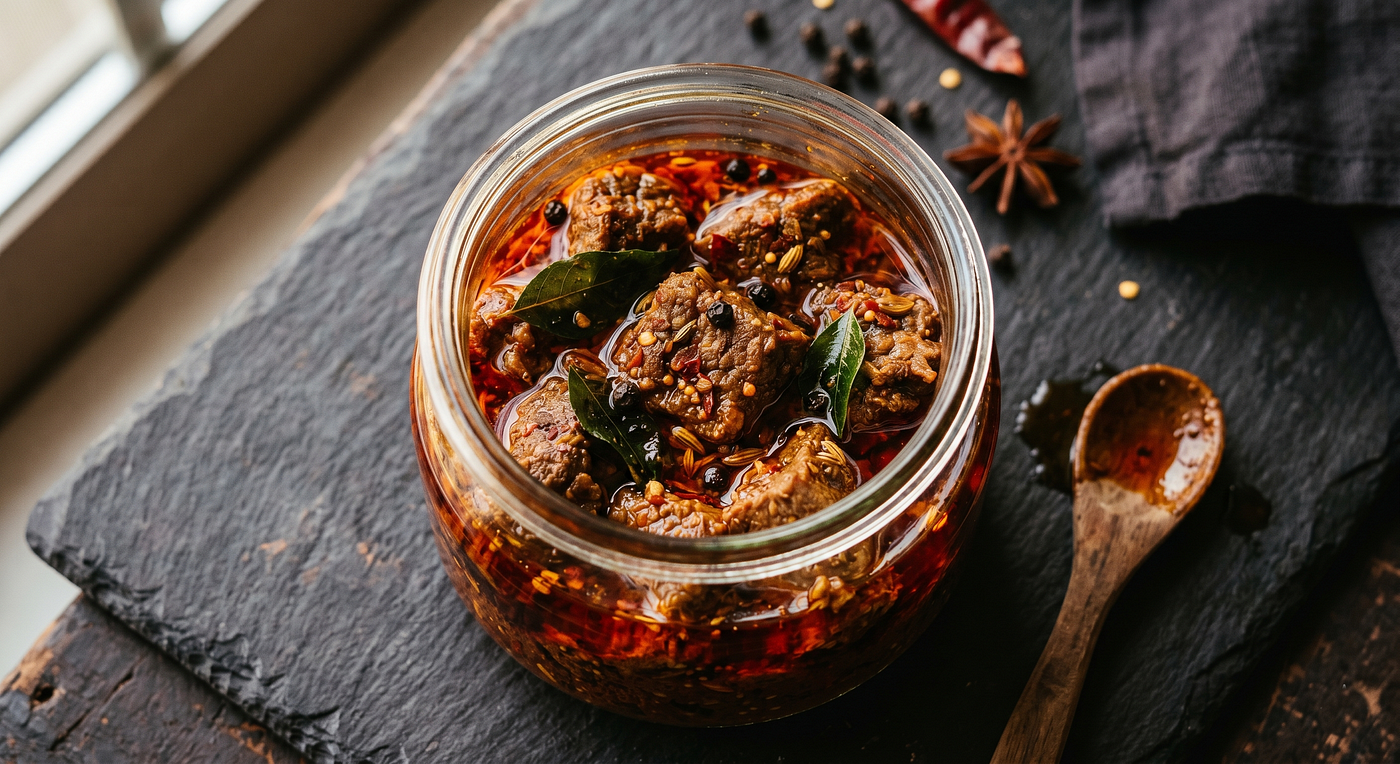
Most condiments sit quietly on the side of a meal. Beef achar doesn’t do quiet. It announces itself — in the oil glistening red from Kashmiri chilli, in the heat of curry leaves and cracked pepper hitting the pan, in the way the whole kitchen changes the moment you open the jar.
If you grew up in a Kerala household where beef was cooked, you already know this feeling. And if you didn’t — this is the introduction you’ve been missing.
The History Behind the Jar
Kerala’s relationship with beef is ancient, multicultural, and entirely unselfconscious.
As food historians note, Kerala has been a melting pot that accepted carnivores of all faiths since the time of seafarers. Arab traders, Portuguese colonists, Syrian Christians, and local communities all brought their food traditions together along the Malabar coast — and beef, in various forms, became deeply embedded in the cuisine that emerged from that meeting.
Erachi Achar — beef pickle in the traditional Kerala style — is particularly associated with the Syrian Christian community, whose culinary heritage is one of the oldest and most flavour-forward in the country. Their beef preparations are legendary, and the pickle is among the most iconic.
What makes it distinct from other meat pickles is the preservation method and the depth of the spice profile. The beef is cooked until tender, fried until the exterior crisps slightly, and then folded into a spiced base built from ginger, garlic, shallots, curry leaves, vinegar, and a layered blend of chillies — Kashmiri for colour, bird’s eye for fire. Fenugreek and mustard add an earthy sharpness that keeps the whole thing from being purely about heat.
The result develops over days, not hours. As the beef absorbs the marinade and the spices settle into the oil, the flavour deepens from bold to extraordinary.
What Beef Achar Actually Tastes Like
Spicy — yes. But not one-dimensional.
The heat in a properly made beef achar builds gradually rather than hitting all at once. There’s the warmth of black pepper and garam masala underneath. The acidity of vinegar cuts through the richness of the beef. Garlic and ginger give it that aromatic depth that makes you go back for more even as the heat climbs.
The texture matters too. Good beef achar has pieces that are tender enough to break apart easily but firm enough to hold their shape — never mushy, never dry. The oil should coat every piece generously, acting both as flavour carrier and preservative.
A jar of properly made beef achar smells, frankly, like ambition.
How to Eat It (Beyond the Obvious)
The classic pairing is steamed white rice and beef achar — a combination so good it barely needs explanation. But beef achar is significantly more versatile than most people give it credit for:
With Kerala parotta — flaky, layered, slightly chewy parotta with beef achar is a combination that defines roadside eating culture across Kerala. The richness of the parotta absorbs the spiced oil beautifully.
With appam and stew — a small spoonful of beef achar on the side brings a contrasting punch that elevates the coconut-milk delicacy of the stew.
In a sandwich or roll — a modern take that works. A few pieces of beef achar inside a soft roll with sliced onion and a squeeze of lime is a genuinely excellent lunch.
With curd rice — the cooling effect of curd rice against the fire of beef achar is one of those combinations that makes heat entirely worth it.
On its own as a snack — not everyone will admit to this, but no one stops at one piece directly from the jar either.

Why Small-Batch Beef Achar Is Worth Seeking Out
The premium artisanal pickle segment is growing across India — and for good reason. Mass-produced meat pickles face an inherent challenge: consistency at scale often means compromises on freshness, spice quality, and the time the preparation actually needs.
Authentic beef achar requires properly sourced beef, fresh whole spices that are toasted and ground rather than pre-blended, and enough time in the oil for the flavours to actually develop. These aren’t things that survive industrial shortcuts.
A small-batch brand that cares about the process — using quality cuts, coconut oil or gingelly oil, and no artificial preservatives — produces a fundamentally different product. The difference is obvious from the first spoonful.
India’s online pickle market growing at 25–30% annually reflects exactly this shift: consumers know what genuinely good achar tastes like, they know it doesn’t come from a factory, and they’re actively looking for the real thing.
Frequently Asked Questions
How long does beef achar last? Stored in a clean airtight glass jar, well-made beef achar lasts 3–4 weeks at room temperature and up to 2–3 months refrigerated. Always use a dry spoon — moisture is the enemy of any oil-based pickle.
Is beef achar very spicy? Traditional Kerala-style beef achar is bold and genuinely spicy by design. The heat level varies by recipe and brand. Pairing it with plain rice or curd rice is the classic way to enjoy it without being overwhelmed.
Can I eat beef achar with bread? Yes — and it works surprisingly well. Soft bread, particularly Kerala-style pav or even a plain white roll, pairs nicely with the spiced oil from the pickle. It’s a common tiffin combination in Kerala households.
What makes Kerala beef achar different from other meat pickles? The combination of vinegar-based preservation, coconut or gingelly oil, and the specific Kerala spice profile — particularly the use of bird’s eye chilli, curry leaves, and fenugreek — gives it a flavour signature that’s entirely distinct from Andhra or Chettinad-style meat preparations.

The Bottom Line
Beef achar isn’t trying to appeal to everyone. It’s deeply regional, unapologetically spiced, and built on a culinary tradition that goes back centuries along Kerala’s coast.
That specificity is exactly what makes it exceptional.
If you want a condiment that actually changes the character of a meal — that makes plain rice feel like a complete experience — Kerala beef achar is it.
Ready for the real thing? Try Pulipop Foods’ Beef Pickle — small-batch, properly made, and exactly what beef achar should be.
메타데이터
- post_id
- 2b8fd6781085
- slug
- beef-achar-keralas-most-unapologetically-bold-pickle-2b8fd6781085
- url
- https://medium.com/@gaznilpersonal/beef-achar-keralas-most-unapologetically-bold-pickle-2b8fd6781085
- canonical_url
- https://medium.com/@gaznilpersonal/beef-achar-keralas-most-unapologetically-bold-pickle-2b8fd6781085
- author_url
- https://medium.com/@gaznilpersonal
- status
- ok
- fetched_at
- 2026-06-15 20:49:13