What Happened When Claude and Codex Started Teaching Each Other My Writing Workflow
A reflective look at multi-LLM orchestration, skill files, and how human taste turns AI tools into a learning system.
What Happened When Claude and Codex Started Teaching Each Other My Writing Workflow
A reflective look at multi-LLM orchestration, skill files, and how human taste turns AI tools into a learning system.
For a long time, I treated AI tools as separate rooms.
Claude was one room. ChatGPT was another. Codex was the place where ideas became files, scripts, images, and commits.
Then something more interesting happened. A writing workflow did not just move from one model to another. It evolved across them.
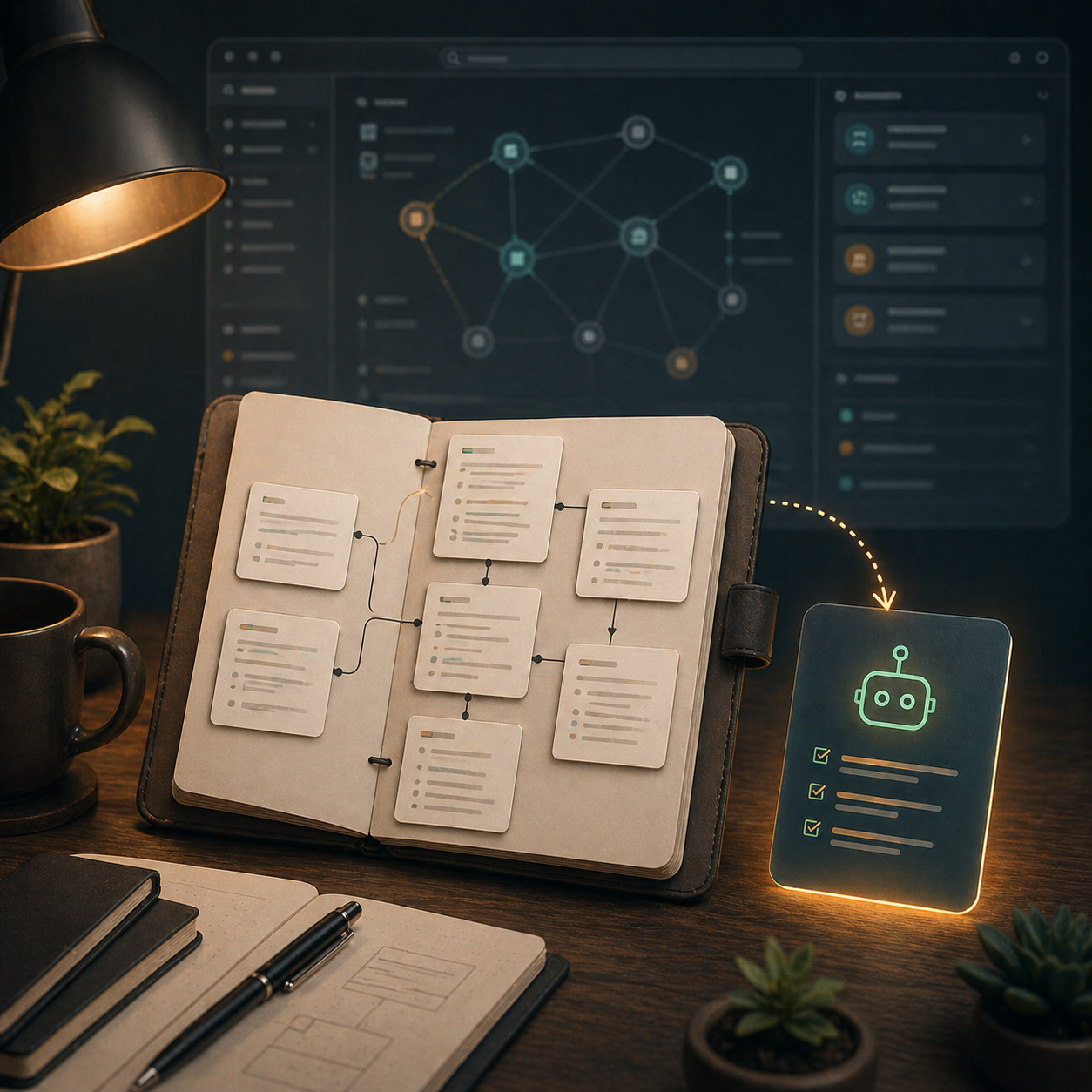
I asked Codex to develop a blog-writing playbook for me. Claude later learned from it, used it, improved it through real writing work, and tuned the workflow in ways that reflected its own strengths. Then I brought Claude’s improved version back to Codex. Codex compared both versions, kept what was better, rejected what did not fit this workspace, and patched itself.

That sounds small: two AI tools editing a SKILL.md file.
But I think it points to something larger. The future of working with AI may not be one perfect model that remembers everything and does everything. It may be an orchestration process where the user, the tools, and the workflows improve each other over time.
The Skill Started as a Workflow, Not a Prompt
The first shift was moving from prompting to process.
A prompt is often a request: “Write a Medium article about this topic.” A skill is closer to a repeatable way of working. It says: before writing, research. After research, interview the author. Before drafting, find angles. Before publishing, verify claims, review the structure, create metadata, and prepare the hero image.
That may sound procedural, but the goal was not bureaucracy. The goal was to stop outsourcing the whole cognitive burden to the model.
In my earlier writing process, I could ask AI to generate a full draft and then feel vaguely dissatisfied. The draft might be fluent, but it often lacked the thing that makes writing feel inhabited: personal stakes, taste, hesitation, and judgment.
So the playbook gradually became less about “make AI write better” and more about “make the human-AI collaboration harder to fake.”
The breakthrough was adding an interview step after research and before angle selection. Research gives the article facts. The interview gives it ownership.
Claude Improved the Skill by Using It
When Claude picked up the playbook, it did not merely copy instructions. It used the workflow in real writing situations.
That is where a skill becomes alive. A workflow written in the abstract is only a theory. A workflow used repeatedly starts to reveal its frictions.
Claude noticed what helped the article feel warmer, more grounded, and more portable. It strengthened the embedded house style so the workflow could still carry my voice even when supporting files were not loaded. It added guidance for past-post performance analysis: not just “edit this draft,” but “learn from what happened after publication.”
Those improvements reflected Claude’s strengths: tone, continuity, reflective framing, and a feel for the emotional surface of a piece.
Then the question became: should Codex simply copy Claude’s version?
No. And that “no” is where orchestration becomes important.
Codex Did Not Copy. It Curated.
When I brought Claude’s improved playbook back to Codex, Codex compared the two versions.
Some Claude changes were clearly useful. The embedded house style gave the skill more portability. The past-post performance framework added a new mode of learning from published work. A stronger hero prompt convention made image direction more consistent.
But other parts were specific to Claude’s workspace: different folders, different image-generation commands, different assumptions about where drafts and assets should live.
So Codex merged the durable improvements without importing the wrong environment assumptions.
That distinction matters. In a multi-LLM workflow, the goal is not to let one model overwrite another. The goal is to let each model contribute its strongest observations while the system preserves local truth.
In this case, local truth meant: this Codex workspace uses docs/blog/, meta/, and images/. It has repo conventions, an operating checklist, and an interview step that came from our earlier dissatisfaction with generic AI writing.
The best version was not Claude’s version or Codex’s version. It was the version that emerged after comparison.
The Human Moves Upstream
At first glance, multi-LLM orchestration can sound like automation replacing human judgment. One model writes. Another critiques. A third patches. The user disappears.
But in our process, the opposite happened.
Your role became more important, not less. You noticed when a draft felt generic. You explained that your real experience with ChatGPT memory contradicted the easy premise that “AI always forgets me.” You pushed the workflow toward interviewing. You trusted models to learn from each other, but kept asking the question that mattered: does this actually help me think and write better?
That is a different kind of AI literacy.
It is not just knowing which model is best at coding or writing. It is knowing how to build feedback loops around your own taste: this draft is smooth but not mine; this workflow is useful but missing a human checkpoint; this improvement is good, but only if it fits my environment.
The human becomes less like a typist and more like a systems editor.
What This Means for Orchestrating Multiple LLMs
The obvious way to compare LLMs is by ranking them.
Which model writes better? Which one codes better? Which one follows instructions more reliably?
Those questions are useful, but incomplete. A more powerful question is: how can different models help each other expose blind spots in a workflow?
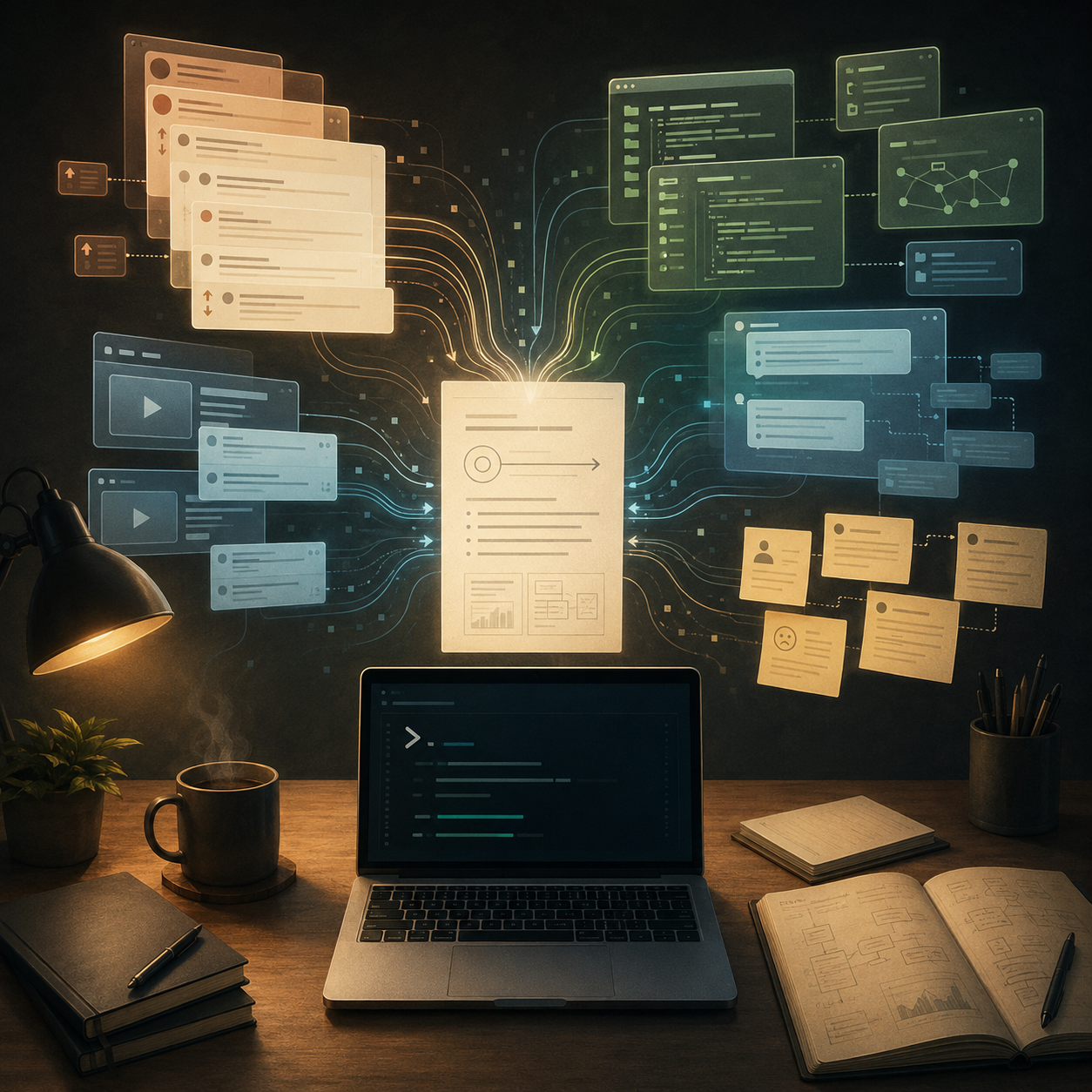
One model may be better at generating options. Another may be better at skeptical review. Another may be better at touching the filesystem and turning decisions into durable artifacts. Another may be better at emotional nuance.
In this process, Claude and Codex became less like competitors and more like specialized collaborators:
- Claude helped refine the feel and portability of the writing process.
- Codex preserved execution discipline and workspace correctness.
- The user supplied lived experience, taste, and direction.
- The skill file became the shared memory where improvements could accumulate.
That last point is crucial. If the learning stays inside a chat, it is fragile. If it becomes a maintained workflow, it can survive beyond one conversation.
Does This Make the User and the LLMs Better?
For the user, yes, if the process is designed carefully.
The workflow slows down the right moments. It asks for personal experience before angle selection. It separates research from interpretation. It forces a title to earn the click honestly. It turns vague dissatisfaction into repeatable improvement.
This creates a useful mirror. The AI does not only produce writing. It reveals where the author’s own judgment is strongest.
For the LLMs, the answer needs precision.
Claude and Codex are not permanently updating their neural weights because we edited a skill file. That is not model fine-tuning. It is environment tuning.
But inside this environment, they can become better collaborators. Their behavior improves because the operating context improves. The playbook becomes clearer, the constraints sharper, and the examples more personal.
A model with better workflow scaffolding, local conventions, and human checkpoints can feel more capable than a stronger model dropped into a vague prompt.
The Real Lesson
I do not think the future is one AI assistant that magically knows us perfectly.
I think the more realistic future is a small ecosystem: models, tools, files, memories, skills, audits, and human rituals. Each part catches what the others miss.
Claude can learn from Codex’s process. Codex can learn from Claude’s refinements. Both can learn from the user’s dissatisfaction, corrections, and taste. The user can learn by watching the system make its assumptions visible.
The center of gravity shifts from “Which model is smartest?” to “What kind of learning loop are we building?”
That feels like the real frontier.
Not just better prompts. Not just better models. Better collaboration surfaces.
And maybe the quiet magic is this: when we make the workflow visible enough for multiple LLMs to improve it, we also make our own thinking visible enough to improve.
메타데이터
- post_id
- 2e0573e48297
- slug
- what-happened-when-claude-and-codex-started-teaching-each-other-my-writing-workflow-2e0573e48297
- url
- https://medium.com/@markchen69/what-happened-when-claude-and-codex-started-teaching-each-other-my-writing-workflow-2e0573e48297
- canonical_url
- https://medium.com/@markchen69/what-happened-when-claude-and-codex-started-teaching-each-other-my-writing-workflow-2e0573e48297
- author_url
- https://medium.com/@markchen69
- status
- ok
- fetched_at
- 2026-06-09 15:37:30