I Added Fresh Docs to My Coding Assistant and the SDK Code Stopped Breaking
Last week I asked an AI coding assistant to generate a small Milvus ingestion script, and it gave me code that looked familiar in the worst…
I Added Fresh Docs to My Coding Assistant and the SDK Code Stopped Breaking

Last week I asked an AI coding assistant to generate a small Milvus ingestion script, and it gave me code that looked familiar in the worst possible way.
It used an older connection pattern, mixed in ORM-style calls I would not start with today, and skipped the newer MilvusClient interface I expected. Nothing was malicious or wildly wrong. It was just stale. That is often more annoying than a hard failure because the code looks close enough that you waste time debugging the last 20 percent.
This is one of the practical problems with AI-assisted coding. The model may be good at syntax and structure, but it does not automatically know what changed in a library after its training cutoff. If the SDK moved on, your assistant may still be living in an older version of the docs.
The fix I have been testing is not a bigger prompt. It is a documentation retrieval layer attached to the coding environment. The model can still generate code, but before it does, it gets current API examples from a controlled source.
The failure mode is stale context
Most AI coding tools fail in one of three ways when library APIs change:
• they call deprecated methods
• they use old model names or parameters
• they mix examples from several versions into one broken snippet
I have hit all three. The painful part is that generated code often compiles mentally even when it fails at runtime. You only notice the issue after installing dependencies, running the script, and seeing an attribute error or an API warning.
Here is a simplified version of the kind of stale pattern I still see in generated Milvus examples:
from pymilvus import connections

connections.connect("default", host="localhost", port="19530")
That style may still exist in older examples, but it is not the interface I would choose for a new small application. For most current Python examples, I prefer starting with MilvusClient because the connection and operations stay easier to reason about in one object.
from pymilvus import MilvusClient

client = MilvusClient(uri="http://localhost:19530")
print(client.list_collections())
The coding assistant did not need more creativity. It needed fresher context.
Why I would rather retrieve docs than paste docs
The manual workaround is simple: open the docs, copy the relevant page, paste it into the chat, and ask again. I did that for a while.
It works, but it does not scale. If I am switching between SDKs, model providers, and deployment tools all day, I do not want to become the retrieval layer myself. I want the IDE assistant to ask for the right docs, get a small set of relevant snippets, and then generate code from those snippets.
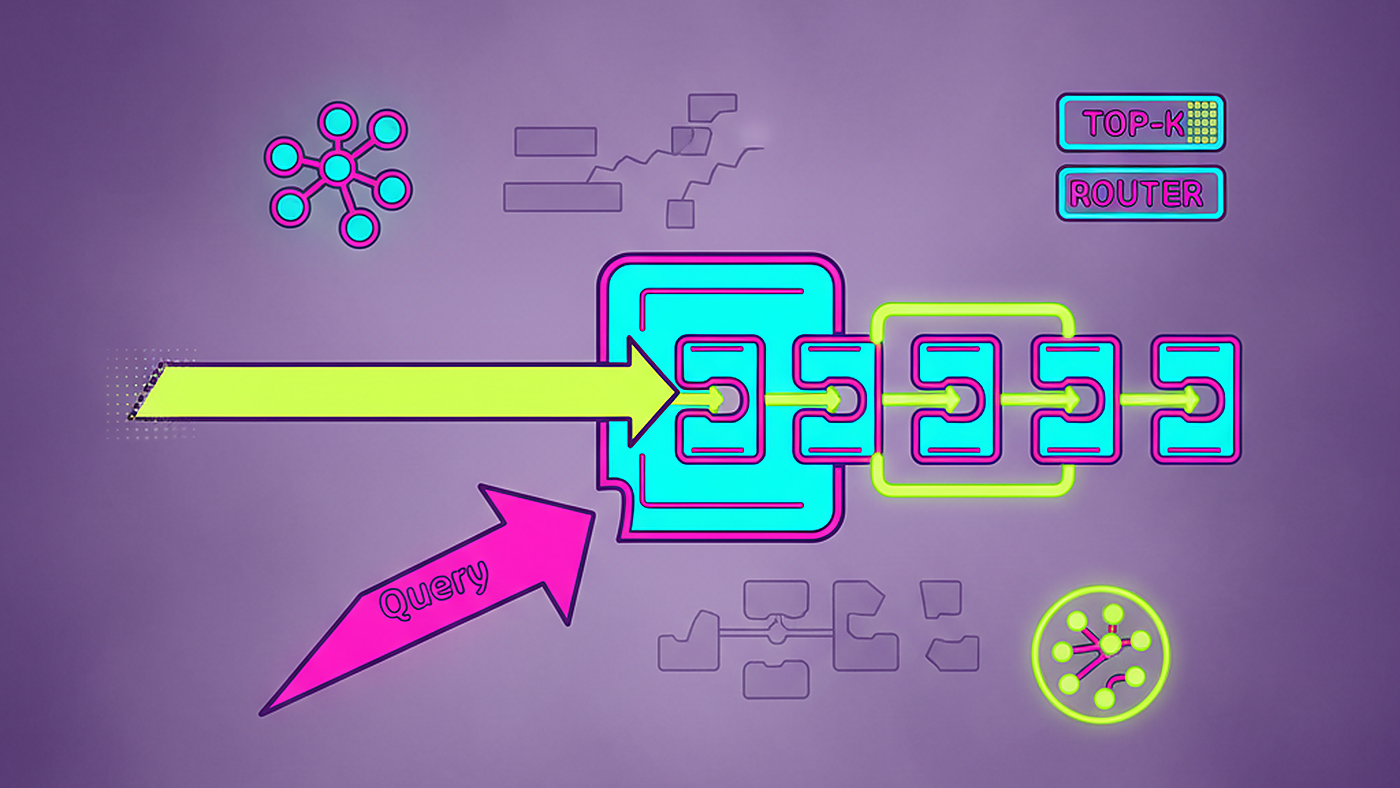
That is where retrieval augmented generation is a better fit. The documentation corpus is indexed ahead of time. At code generation time, the assistant sends a query like “create collection with MilvusClient and HNSW index” and receives a few current examples instead of relying only on model memory.
For coding assistants, the retrieval corpus should be boring and controlled:
• official docs
• versioned API references
• migration guides
• tested examples
• internal style guides if your team has them
I do not want random blog posts mixed into the code path unless I explicitly ask for them. When the goal is correct SDK usage, source quality matters more than broad coverage.
How I wired the retrieval step
The architecture I like has three pieces:
-
An MCP server or similar tool endpoint exposed to the IDE.
-
A small semantic search index over current documentation.
-
Tool handlers that return compact snippets and citations, not giant pages.
The IDE does not need to know how documents are chunked or embedded. It only needs a tool like search_docs or generate_sdk_example. The server owns ingestion, updates, ranking, and filtering.
Here is a minimal sketch of the retrieval side:
from pymilvus import MilvusClient

client = MilvusClient(uri="http://localhost:19530")

def search_docs(query_vector: list[float], collection: str = "sdk_docs"):
    return client.search(
        collection_name=collection,
        data=[query_vector],
        limit=5,
        output_fields=["title", "url", "snippet", "sdk_version"],
        search_params={"metric_type": "COSINE", "params": {"ef": 64}},
    )
In the real version, the query text is embedded first, the results are reranked, and the tool response is formatted so the coding assistant sees only what it needs:
• the matching API name
• a short example
• the SDK version
• a link back to the source page
• a warning if the result is from a migration guide
That last field is useful. If the retrieved snippet is from a “before and after” migration page, I want the model to know which side is current.
MCP is a convenient transport, not the whole solution
Model Context Protocol is useful because it gives coding tools a standard way to call external tools. In this setup, an MCP server can expose doc search, code conversion, and language translation tools to editors like Cursor or Windsurf.
But the protocol alone does not solve correctness. The hard parts are still engineering decisions:
• How often do you re-index docs?
• How do you handle multiple SDK versions?
• How do you prevent stale snippets from ranking first?
• How do you test generated code before showing it to the user?
• How do you keep the retrieved context small enough to be useful?
For public SDK docs, daily indexing may be enough. For internal platform code that changes several times a day, I would trigger ingestion from CI when docs or examples change.
I also like storing version metadata next to every chunk. If a project pins pymilvus==2.5.1, the assistant should not blindly return examples for a newer version. Version-aware retrieval is not fancy. It is the difference between helpful code and time-consuming almost-code.
A small code modernization example
One tool I find especially useful is a converter that rewrites older SDK patterns into current ones. The tool should not just run a regex. It should retrieve migration guidance, inspect the selected code, and produce a patch the user can review.
Here is a toy example of the transformation I expect:
import ast

class OldConnectionVisitor(ast.NodeVisitor):
    def __init__(self):
        self.uses_old_connect = False

    def visit_Attribute(self, node):
        if node.attr == "connect":
            self.uses_old_connect = True
        self.generic_visit(node)

def needs_migration(source: str) -> bool:
    tree = ast.parse(source)
    visitor = OldConnectionVisitor()
    visitor.visit(tree)
    return visitor.uses_old_connect and "MilvusClient" not in source
This is not a full migration tool, but it shows the pattern. Detect the risky shape first, retrieve the right migration docs, and only then ask the model to rewrite the code.
One thing I learned the hard way: if you let the model infer the migration from memory, it may produce a plausible hybrid of old and new APIs. If you force it to ground the rewrite in retrieved docs, the output becomes less imaginative and much more useful.
The production details that matter
For a local demo, stdio transport is fine. For a team tool, I prefer a hosted server because documentation ingestion and indexing should not depend on every developer’s laptop.
The deployment checklist I use looks like this:
• Re-index docs on a schedule and on release events.
• Keep separate collections or filters for SDK versions.
• Log retrieval queries, selected snippets, and generated tool calls.
• Add smoke tests that run generated examples in CI.
• Set a strict max context size for doc snippets.
• Prefer official docs over community content for API generation.
Latency also matters. If every code completion waits five seconds for retrieval, people will turn it off. In practice, I would cache frequent doc queries and keep the retrieval step under a few hundred milliseconds when possible.
The tradeoff is clear. A retrieval-backed assistant is more infrastructure than a plain chat window. You need ingestion jobs, an index, monitoring, and evaluation. But for SDK-heavy work, that cost is usually lower than repeatedly debugging stale generated code.
What changed in my workflow
I still use coding assistants for scaffolding, but I trust them more when they can call tools with current information. The assistant should not have to memorize every API change. It should know how to ask the right system for the current docs.
That shift made my generated code less surprising. Not perfect, but less stale. For me, that is the practical target: keep the fast flow of AI-assisted coding while removing the obvious version drift that sends me back into manual documentation hunting.
메타데이터
- post_id
- 3019cfd00db3
- slug
- i-added-fresh-docs-to-my-coding-assistant-and-the-sdk-code-stopped-breaking-3019cfd00db3
- url
- https://blog.gopenai.com/i-added-fresh-docs-to-my-coding-assistant-and-the-sdk-code-stopped-breaking-3019cfd00db3
- canonical_url
- https://blog.gopenai.com/i-added-fresh-docs-to-my-coding-assistant-and-the-sdk-code-stopped-breaking-3019cfd00db3
- author_url
- https://medium.com/@PriyaSingh325
- status
- ok
- fetched_at
- 2026-06-22 07:15:07