15 Years in IT Services: A Journey from Web Apps to Intelligent Data Apps
As I reflect on completing 15 years in the IT services industry, I find myself both humbled and energized. Humbled by the incredible…
15 Years in IT Services: A Journey from Web Apps to Intelligent Data Apps
As I reflect on completing 15 years in the IT services industry, I find myself both humbled and energized. Humbled by the incredible transformation this industry has seen over the last decade and a half. Energized by the possibilities that lie ahead — because it feels like the next big leap is not just coming; it’s already here.
This isn’t just a professional milestone — it’s a marker of an era of technology that has come full circle.
The Beginning: Web Apps and the Simplicity of Code

Like many of my peers, my journey started with web application development. In those early days, we were focused on building interfaces — pieces of logic wrapped in UI that solved one problem at a time. HTML, CSS, JavaScript, a bit of backend glue — it was simple, it was elegant, and it was foundational.
There was a sense of joy in seeing something tangible take shape with every line of code. You built it, you deployed it, you watched people use it. The impact was immediate, even if limited in scope.
But soon, the boundaries of web development began to blur. Applications needed to scale. They needed to handle more data, connect with more systems, and deliver insights — not just outputs.
The Shift to Big Data: The Rise of Engineering at Scale
This is where Big Data entered the scene. The scale of data exploded, and with it came the realization that traditional systems just weren’t enough anymore.
I found myself learning distributed systems, mastering frameworks like Hadoop and Spark, and thinking in terms of pipelines instead of pages. It wasn’t just about how the data looked anymore — it was about how it flowed, how it was stored, and how quickly it could be transformed and analyzed.
This phase was transformative. It taught me not just how to handle complexity, but how to design for it. The web was no longer just a front-end story — it became a gateway to a world of structured and unstructured information, streaming in from every direction.
Cloud Migration: Mobility, Elasticity, and Abstraction
Then came the cloud.
Suddenly, we were talking about moving petabytes of data across platforms, setting up cloud-native architectures, managing hybrid workloads, and ensuring scalability, security, and cost-efficiency in the same breath.
As organizations transitioned from on-premise to AWS, Azure, or GCP, I found myself deeply involved in cloud migration strategies — designing blueprints, building factory models, and enabling teams to shift not just workloads, but mindsets.
What cloud offered was more than just infrastructure — it was freedom. Freedom to experiment. To fail fast. To scale seamlessly. And to focus on value instead of plumbing.
The Age of AI: From Insight to Intelligence
And then came AI.
Where data gave us visibility, AI gave us vision. It wasn’t just about analyzing the past — it was about predicting the future, generating content, and making systems context-aware.
My role evolved yet again — from data engineer to Data and AI Architect. Now, it wasn’t just about building pipelines or optimizing storage. It was about creating intelligent systems — where every touchpoint, every query, every workflow could be augmented with smart decisions and automated insights.
The learning curve was steep. But it was also exhilarating.
Working with Generative AI, LLMs, agent-based architectures, and RAG pipelines changed the game. AI was no longer an academic field — it became a tool for every business, every function, every use case.
The Rise of Data Apps: The Circle Completes

And here we are today. In 2025, I find myself at an interesting juncture. The story that began with web apps has now come full circle — only this time, the applications are intelligent, real-time, and AI-native.
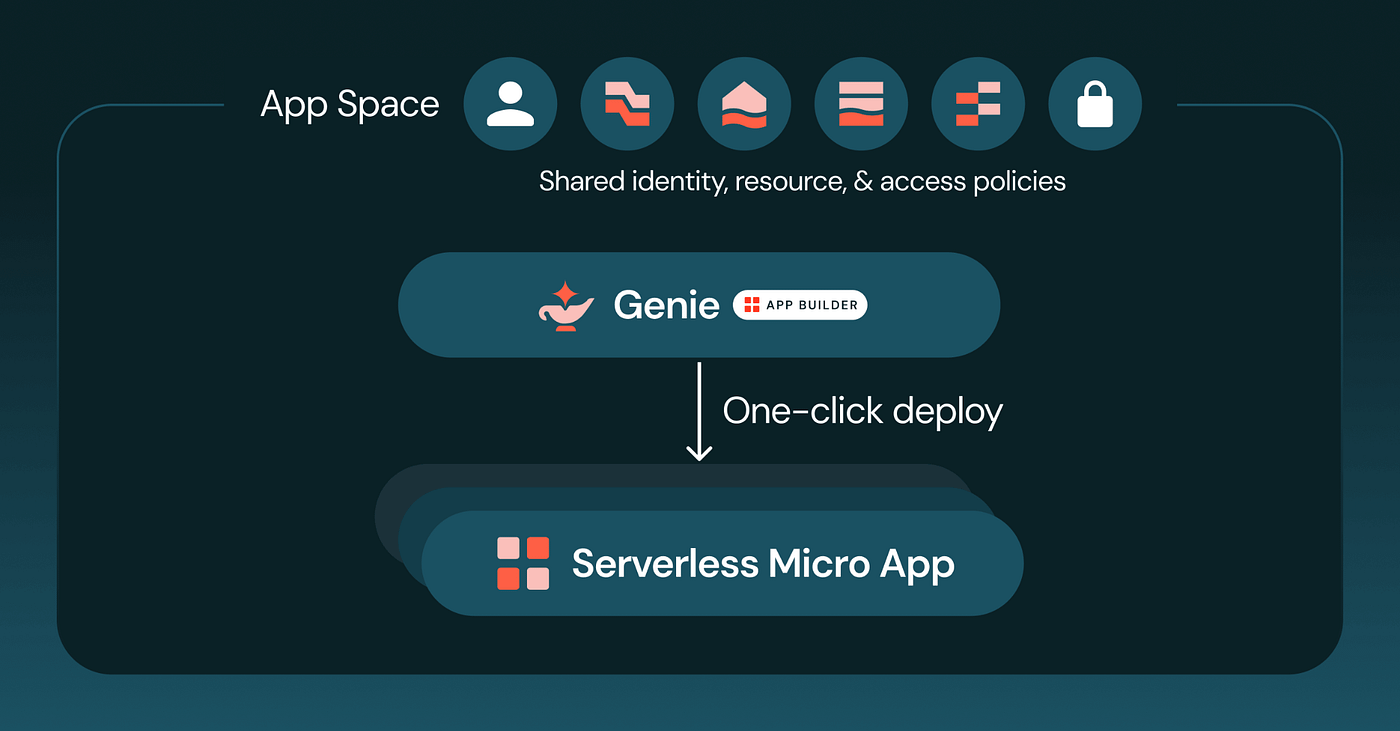
What we’re building now are not just dashboards or APIs. We’re crafting Data Apps — powered by Databricks, Lakebase, Agent Bricks, Superblocks, and Genie. These apps don’t just show data; they understand it. They reason with it. And they act on it.
Every component of this architecture — be it vector search, AI/BI dashboards, or ML-integrated metrics — is designed to bring data to life. It’s not about presenting data anymore — it’s about giving users the ability to converse with it, to extract meaning, and to make decisions faster than ever before.
What Lies Ahead
Looking back, I see a journey shaped by continuous learning, adaptation, and reinvention. Every chapter brought a new lens to view technology — from simplicity to scale, from infrastructure to intelligence.
But what excites me most is not what I’ve done — it’s what’s coming next.
As AI continues to evolve, and as the definition of “apps” expands into something far more dynamic and personalized, the role of architects like me will continue to evolve as well.
From being builders of systems to designers of intelligence. From managing pipelines to orchestrating decisions.
The future isn’t just technical — it’s transformative.
And I’m ready for it.
If you’ve been on a similar journey — starting with code and now standing at the intersection of data and intelligence — I’d love to connect and exchange notes.
Please comment your thoughts.
메타데이터
- post_id
- 3097137eadce
- slug
- 15-years-in-it-services-a-journey-from-web-apps-to-intelligent-data-apps-3097137eadce
- url
- https://medium.com/towards-data-engineering/15-years-in-it-services-a-journey-from-web-apps-to-intelligent-data-apps-3097137eadce
- canonical_url
- https://medium.com/towards-data-engineering/15-years-in-it-services-a-journey-from-web-apps-to-intelligent-data-apps-3097137eadce
- author_url
- https://medium.com/@infinitylearnings1201
- status
- ok
- fetched_at
- 2026-08-21 01:45:42