A tale of two tumors
The privilege of not going to the doctor
A tale of two tumors
The privilege of not going to the doctor
Last week, while working on the hospital ship in Dakar, I met a man I’ll call Amadou.
Amadou is from Senegal. Like many of the patients I see on that hospital ship, he has a tumor. Unlike many, however, he doesn’t have a very big tumor.
He’s had it for about five years, this benign overgrowth of fat cells called a lipoma. In that time, it’s grown to about the size of an apricot pit.
(It’s true; we Americans will do anything to avoid using the metric system).
Amadou’s lipoma may not be big, but it’s in a very visible position, just below his hairline on the right side, overlain by a poorly healed scar.
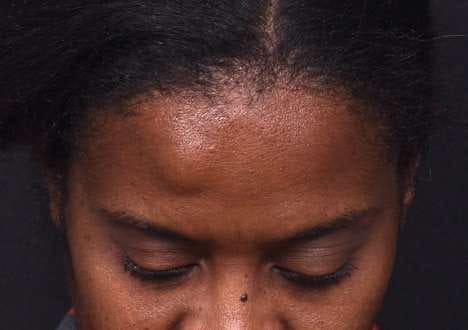
This is not Amadou (credit: avivaplasticsurgery.com)
“What’s this from?” I asked him, touching the scar. “Have you had surgery before?”
Over the last two and a half decades of working in medicine in hospitals across both North America and the African continent, I’ve heard an absolute raft of unexpected patient stories. The kid who got too drunk one night and told his friends push him backward out a second-story window. The other kid who went to a bar specifically to pick a fight with a stranger because he needed a story to tell the girl he wanted to impress. The patient who snuck out of the hospital two days after a free flap to get his cocaine fix. (The bar stranger, the second story window, and the cocaine all won).
I shouldn’t have been as shocked as I was when Amadou answered, “I tried to cut it out.”
I’m sorry?
“I took a knife and tried to take it out.”
He paused.
“My wife stopped me.”
Lipomas are incredibly common—1% of the population is currently walking around with one. They’re the most common tumor a clinician sees.
I’ve got one too. Like Amadou’s, it’s been there five years, this benign overgrowth of fat cells on my right shoulder. It’s about the size of a large egg.
And never once have I been tempted to cut it out with a kitchen knife.
The difference between Amadou and me has absolutely nothing to do with who we are—and everything to do with where we grew up.
Since the age of two, I’ve lived in countries with reliable (if sometimes inordinately expensive) health systems. I’ve always lived life with a surgical net.
So when I first noticed the shoulder lump, I got myself to an ultrasonographer, who not only confirmed that it was a benign lipoma, but could also tell me that it wasn’t very deep in my shoulder.
In other words, I could choose to do nothing about it. I could choose to—or not to—have surgery.
My tumor’s been growing as long as Amadou’s, is bigger (but less immediately visible) than his, and I’ve managed it conservatively.
Because I know that I can, and also that the minute I actually decide to go under the knife, I have access to surgery that’s safe, mostly affordable, and close to home.
Amadou had none of those things. My last five years have been a slight ly morbid fascination with this thing on my right shoulder. His last five years had been marked by a an unknown lump growing on his forehead, and there was nothing he could do about it.
Besides try to cut it out himself.
Amadou and I have the exact same tumor. For one of us, not getting surgery has been a choice. For the other, not being able to get surgery is an entrapment so powerful that he took a knife to his own head.
The same tumor. Unequal desperation.
All because of where we live.
메타데이터
- post_id
- 39d46742e96d
- slug
- a-tale-of-two-tumors-39d46742e96d
- url
- https://medium.com/@shrime/a-tale-of-two-tumors-39d46742e96d
- canonical_url
- https://medium.com/@shrime/a-tale-of-two-tumors-39d46742e96d
- author_url
- https://medium.com/@shrime
- status
- ok
- fetched_at
- 2026-07-11 16:43:18