Labour needs to distance itself from Lucy Powell’s remarks — and quickly.
Some may read this intervention from Lucy Powell and think: “Thank God. Labour has finally noticed the problem of disinformation.” But…
Labour needs to distance itself from Lucy Powell’s remarks — and quickly.
Some may read this intervention from Lucy Powell and think: “Thank God. Labour has finally noticed the problem of disinformation.” But, exasperatingly, she could not have approached it in a more damaging or counterproductive way if she had been trying.
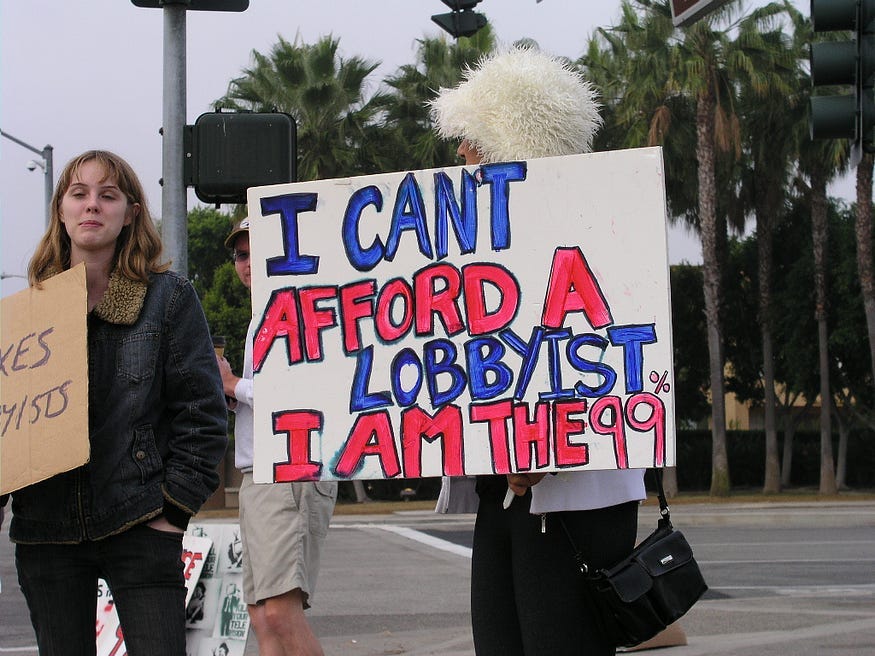
![Farage begs to be talked about as a persecuted plain-speaking outsider. And he prays that his critics will focus on party funding instead of the disinformation ecosystem that truly funds his politics. Lucy Powell has granted both of those wishes. [pic credit]](https://miro.medium.com/v2/resize:fit:960/1*0LRT0Lu6-D9jf6S1Bbd1iA.jpeg)
Farage begs to be talked about as a persecuted plain-speaking outsider. And he prays that his critics will focus on party funding instead of the disinformation ecosystem that truly funds his politics. Lucy Powell has granted both of those wishes. [pic credit]
She has misdiagnosed the problem of disinformation so badly that she will make it harder to address. Calling Reform “a threat to democracy” is a self-inflicted wound on the scale of Hillary Clinton’s “deplorables” remark.
And that is not a minor mistake. It is an incredibly damaging one.
It will certainly help to mobilise Reform. It also gives Nigel Farage the gift he begs for every day: the opportunity to dress up as a plain-speaking outsider persecuted by the liberal establishment. You could almost admire the sheer ineptitude of this if it were not so damaging.
Liberal democracies have always had mountebanks such as Enoch Powell, Ian Paisley, Gerry Adams and George Galloway. If anything, they are useful. They test the boundaries of public discourse, and you contain them through democratic institutions founded on sound democratic principles. Then you defeat them politically.
It is called pluralism. And it is a good thing. Calling a political grifter like Farage a threat to democracy makes legitimate concerns about genuinely poisonous anti-democratic forces sound like partisan hyperbole.
But let us get to the second problem: Powell’s focus on party funding.
Yes, party funding has been an open and corrupt sewer for as long as anyone can remember. It needs fixing, but it is a long way down the list of priorities at the moment.
Disinformation is the mountain. Party funding is the molehill.
Obviously, Reform is currently one of the main beneficiaries of disinformation, but there is little evidence that it is responsible for the entire ecosystem that drives support for it. Reform is merely one beneficiary of that ecosystem, and another beneficiary (such as Restore UK?) will be along in a minute.
The information environment is the problem. Social media companies openly reward outrage, lies, fear and division because all of it generates engagement. It is not just X. Facebook is also a sewer for users with certain targeted characteristics.
Foreign and domestic actors — including hyper-wealthy right-wing cranks — can then exploit those incentives, while Labour appears unable or unwilling to respond.
Many perfectly reasonable people are exposed to a constant stream of content suggesting that the United Kingdom is on the verge of social collapse or ethnic conflict. Liberal democracies cannot survive indefinitely with a news environment that is being manipulated so openly. So address that problem.
After all, Reform would be daft to create or fund material that is already being produced by deniable third parties at no cost to itself. The entire deniable outrider ecosystem has worked so effectively precisely because it is not directly connected to political parties.
Making party funding the target in this context risks making any attempt to curb the broader architecture of disinformation appear anti-democratic. As an act of self-delegitimisation, it is almost a work of art. A remarkable act of political incompetence.
Reform will now portray any future attempt to regulate disinformation, increase transparency or constrain platform behaviour as an attack motivated by partisan hostility rather than democratic concern. Indeed, it has already begun doing so in response to Powell’s comments.
This is so exasperating because there are serious, liberal and democratic arguments for tackling disinformation. Impeccably liberal and democratic strategies could address it without going anywhere near censorship or attempts by government to frustrate electoral opponents.
All decent governments should address the expensively capitalised, anti-pluralist and anti-democratic disinformation ecosystem that is distorting public debate. None of this requires censorship.
I have written elsewhere about some of these strategies, but these arguments deserve frontline advocates who understand the architecture of the problem rather than reaching for crude and counterproductive attacks on political opponents.
Labour’s Deputy Leader has framed the issue in such a confused and politically counterproductive way that sensible reforms may now be easier to dismiss as anti-democratic political spite.
The right response is to begin advancing impeccably democratic alternatives based on a serious understanding of how modern politics and the media work.
Labour should distance itself from Powell’s position as thoroughly and as quickly as possible.
메타데이터
- post_id
- 3b945bfac064
- slug
- labour-needs-to-distance-itself-from-lucy-powells-remarks-and-quickly-3b945bfac064
- url
- https://medium.com/@pauliewaulie/labour-needs-to-distance-itself-from-lucy-powells-remarks-and-quickly-3b945bfac064
- canonical_url
- https://medium.com/@pauliewaulie/labour-needs-to-distance-itself-from-lucy-powells-remarks-and-quickly-3b945bfac064
- author_url
- https://medium.com/@pauliewaulie
- status
- ok
- fetched_at
- 2026-06-21 07:44:09