Why Clash-Free Piping Design Is Critical for Modern Industrial Projects
Industrial engineering projects are becoming increasingly sophisticated as industries continue moving toward smarter infrastructure and…
Why Clash-Free Piping Design Is Critical for Modern Industrial Projects
Industrial engineering projects are becoming increasingly sophisticated as industries continue moving toward smarter infrastructure and digitally integrated engineering environments. Modern process plants, refineries, power facilities, pharmaceutical industries and manufacturing environments require precise coordination between multiple engineering disciplines to ensure successful project execution.

Among all engineering systems, piping networks play one of the most important roles in industrial infrastructure. Pipes are responsible for transporting fluids, gases, chemicals, steam and process materials throughout industrial facilities. However, designing efficient piping systems inside highly complex industrial environments is not a simple task.
One of the biggest challenges faced during industrial plant engineering is piping clashes.
A piping clash occurs when pipes interfere with structures, equipment, cable trays, HVAC systems, supports, or other engineering components inside a plant environment. These conflicts may seem minor during the design phase, but during construction they can lead to serious project delays, engineering rework, increased costs and operational inefficiencies.
As industrial facilities continue becoming more complex, clash-free piping design has become an essential requirement in modern engineering workflows.
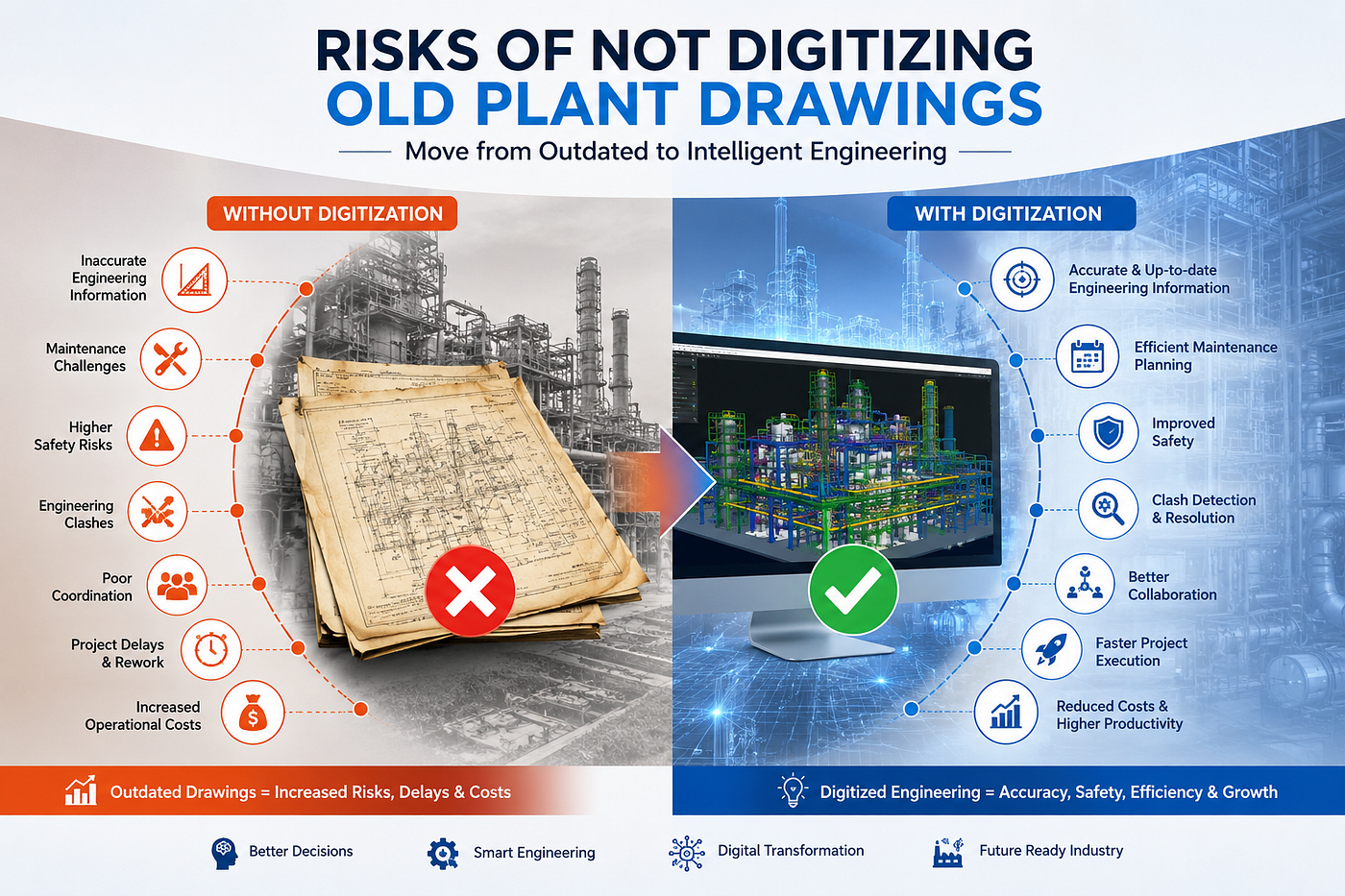
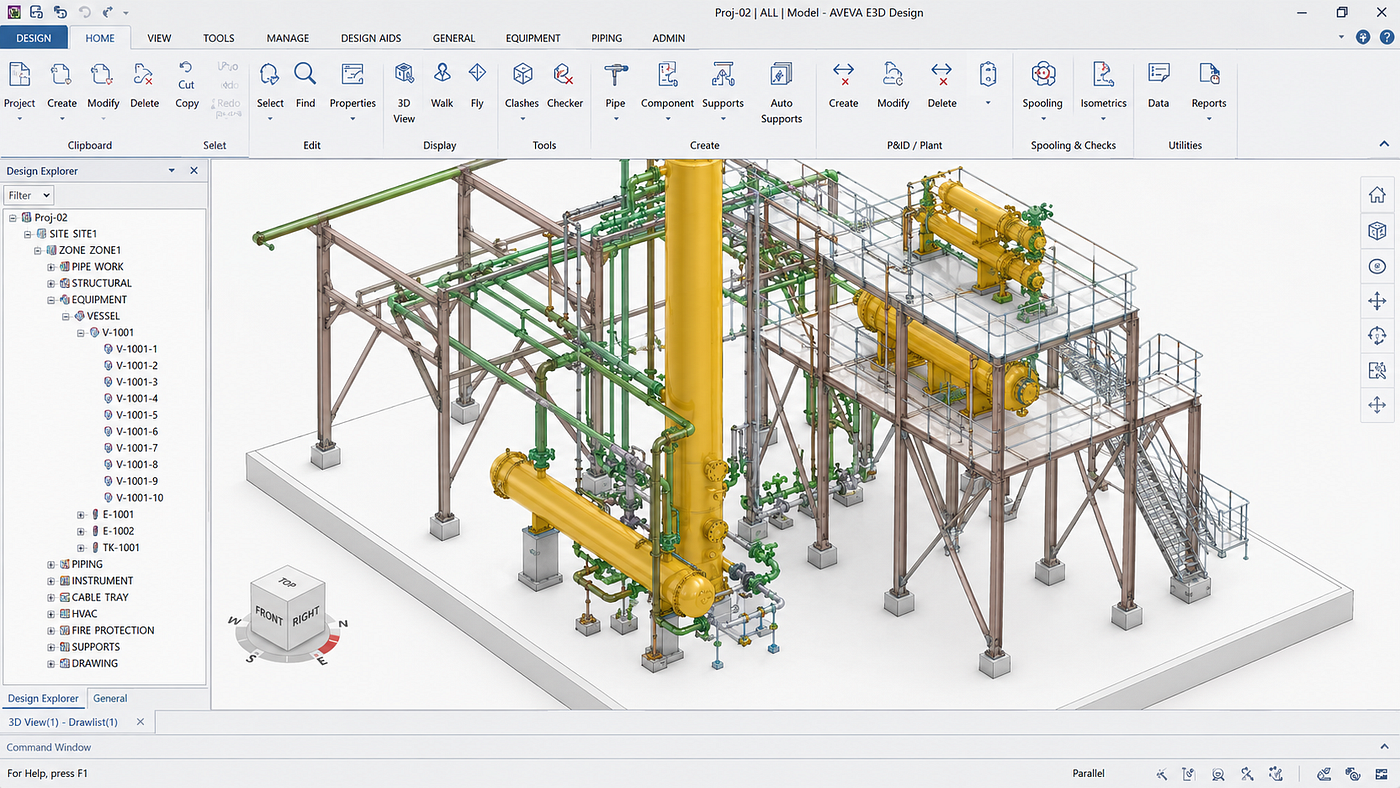
Today, intelligent engineering technologies such as AVEVA E3D are helping industries improve project coordination, detect engineering conflicts early and create construction-ready plant environments through advanced 3D engineering systems.
Understanding Piping Clashes in Industrial Engineering
Industrial facilities involve thousands of interconnected engineering components working together simultaneously. Piping systems must fit accurately around:
- Structural frameworks
- Equipment layouts
- Electrical systems
- Instrumentation networks
- HVAC systems
- Maintenance access zones
In traditional engineering workflows, especially in 2D drafting environments, identifying spatial conflicts between these systems was extremely difficult. Engineers often discovered clashes only after construction activities had already started onsite.
This created major engineering and construction challenges.
Common types of piping clashes include:
Pipe-to-Structure Clashes
Pipes interfering with beams, columns, platforms, or structural members.
Pipe-to-Equipment Clashes
Routing conflicts between pipelines and industrial equipment such as pumps, tanks, compressors, or vessels.
Pipe-to-Pipe Interference
Multiple pipelines occupying the same space or violating minimum clearance requirements.
Maintenance Accessibility Issues
Improper routing that blocks maintenance access for operators and technicians.
Support Coordination Problems
Pipe supports conflicting with structural elements or equipment foundations.
Without intelligent engineering coordination, these issues can negatively impact the entire project lifecycle.
Why Clash-Free Piping Design Matters
Reducing Engineering Rework
One of the most important advantages of clash-free piping design is reducing engineering rework during construction.
When clashes remain undetected during design stages, construction teams are forced to modify routing layouts onsite. This results in:
- Additional fabrication costs
- Material wastage
- Design revisions
- Construction delays
- Increased engineering hours
In large industrial projects, even small piping conflicts can affect multiple connected systems and delay project execution significantly.
By implementing clash detection early during engineering stages, organizations can avoid costly redesign activities and improve project efficiency.
Improving Construction Readiness
Construction teams depend on accurate engineering models for successful execution.
Clash-free piping systems improve:
- Pipe fabrication accuracy
- Installation sequencing
- Construction coordination
- Site productivity
- Engineering communication
Construction-ready models help reduce unexpected field modifications and support smoother project delivery.
Modern industries increasingly rely on intelligent 3D engineering environments because they allow construction teams to visualize the complete facility before physical installation begins.
Enhancing Engineering Coordination
Industrial projects involve multidisciplinary engineering collaboration.
Piping engineers must coordinate with:
- Structural engineering teams
- Mechanical departments
- Electrical systems
- Instrumentation engineers
- Civil engineering teams
Without proper coordination, engineering conflicts become unavoidable.
Intelligent engineering platforms help multidisciplinary teams work within connected digital environments where engineering data, routing information and spatial layouts remain synchronized.
This significantly improves engineering communication and reduces workflow inefficiencies.
The Role of Intelligent 3D Engineering
Modern industrial engineering has evolved far beyond traditional drafting workflows.
Advanced technologies such as AVEVA E3D provide intelligent 3D engineering environments that support:
- Smart piping design
- Automated clash detection
- Integrated engineering databases
- Real-time visualization
- Construction-oriented modeling
Unlike conventional design systems, intelligent engineering platforms allow teams to identify and resolve conflicts during early project stages.
This improves both engineering quality and project execution.
How Clash Detection Works in Intelligent Engineering
Intelligent clash detection systems automatically analyze engineering components within a plant model and identify spatial conflicts between systems.
These technologies help engineers:
- Detect pipe interference
- Validate clearance requirements
- Optimize routing paths
- Improve accessibility planning
- Coordinate multidisciplinary systems
By resolving clashes digitally before construction begins, industries can minimize project risks and improve overall engineering performance.
Benefits of Clash-Free Piping Design
Better Space Utilization
Industrial facilities often operate within highly constrained environments.
Smart piping coordination helps optimize:
- Pipe routing efficiency
- Equipment accessibility
- Structural alignment
- Maintenance pathways
Efficient space management improves both operational functionality and long-term maintenance planning.
Faster Project Execution
Engineering conflicts are one of the major causes of project delays.
Clash-free engineering workflows support:
- Faster design approvals
- Improved fabrication accuracy
- Reduced installation delays
- Smoother commissioning activities
Projects with better engineering coordination typically experience improved execution timelines.
Reduced Project Costs
Construction rework is expensive.
By identifying clashes early, industries can reduce:
- Material wastage
- Engineering redesign efforts
- Construction modifications
- Additional labor costs
This significantly improves project cost efficiency.
Improved Operational Safety
Proper engineering coordination improves:
- Maintenance accessibility
- Emergency access routes
- Equipment serviceability
- Safety clearance validation
Industrial safety becomes easier to manage when engineering systems are properly coordinated.
Clash-Free Design in Different Industries
Oil & Gas Facilities
Oil & gas plants involve highly dense piping systems where precise coordination is essential for operational safety and efficiency.
Chemical Processing Plants
Chemical industries require accurate routing for process lines, utility systems and maintenance accessibility.
Power Generation Facilities
Power plants involve complex structural and mechanical coordination where clash-free engineering improves installation workflows.
Pharmaceutical Industries
Pharmaceutical facilities demand highly organized layouts with efficient maintenance access and process coordination.
Manufacturing Industries
Modern manufacturing plants use intelligent engineering workflows to optimize industrial infrastructure and improve operational performance.
Digital Transformation in Industrial Engineering
Industrial engineering is currently undergoing major digital transformation.
Organizations are moving toward:
- Intelligent engineering databases
- Smart plant design systems
- Integrated digital workflows
- Construction-oriented modeling
- Data-driven engineering environments
Clash-free piping design is becoming a strategic part of this transformation.
Companies adopting intelligent engineering technologies gain significant advantages in:
- Project accuracy
- Construction readiness
- Engineering efficiency
- Operational reliability
The Future of Intelligent Plant Engineering
As industrial infrastructure becomes more advanced, engineering coordination will continue playing a major role in project success.
Future engineering workflows will increasingly focus on:
- Digital twins
- AI-driven engineering analysis
- Smart infrastructure systems
- Connected engineering ecosystems
- Real-time project collaboration
Clash-free engineering is no longer just a technical improvement it is becoming a core requirement for modern industrial development.
Conclusion
Piping systems are among the most critical components in industrial infrastructure and ensuring clash-free coordination is essential for successful project execution.
Engineering clashes may appear small during design stages, but their impact during construction can be extremely costly and time-consuming.
By using intelligent engineering technologies such as AVEVA E3D, industries can improve engineering coordination, reduce construction risks, optimize workflows and create construction-ready plant environments.
As industrial projects continue evolving toward smarter and digitally connected infrastructure, clash-free piping design will remain a key part of modern engineering success.
learn more with About RoboClick Infotech | CAD & Plant Engineering Experts
What is clash-free piping design?
Clash-free piping design is the process of designing piping systems without interference between pipes, structures, equipment, or other engineering components inside industrial facilities.
Why is clash detection important in industrial engineering?
Clash detection helps identify engineering conflicts before construction begins, reducing rework, delays and project costs.
How does AVEVA E3D help in piping design?
AVEVA E3D provides intelligent 3D engineering environments with advanced clash detection, smart routing, visualization and integrated engineering workflows.
Which industries benefit from clash-free piping design?
Industries including oil & gas, chemical processing, pharmaceuticals, manufacturing, petrochemicals and power generation benefit from intelligent piping coordination.
What are the benefits of intelligent 3D engineering?
Benefits include:
- Better coordination
- Improved construction readiness
- Faster project delivery
- Reduced engineering rework
- Enhanced operational efficiency
- Improved plant visualization
What causes piping clashes in industrial projects?
Piping clashes are usually caused by poor engineering coordination, limited spatial planning, outdated drafting workflows and lack of integrated design validation.
How can industries reduce piping clashes?
Industries can reduce clashes by implementing intelligent 3D engineering systems, integrated workflows, automated clash detection and multidisciplinary coordination processes.
메타데이터
- post_id
- 41503a60dd9c
- slug
- why-clash-free-piping-design-is-critical-for-modern-industrial-projects-41503a60dd9c
- url
- https://medium.com/@roboclicksocialmedia/why-clash-free-piping-design-is-critical-for-modern-industrial-projects-41503a60dd9c
- canonical_url
- https://medium.com/@roboclicksocialmedia/why-clash-free-piping-design-is-critical-for-modern-industrial-projects-41503a60dd9c
- author_url
- https://medium.com/@roboclicksocialmedia
- status
- ok
- fetched_at
- 2026-06-09 15:37:30