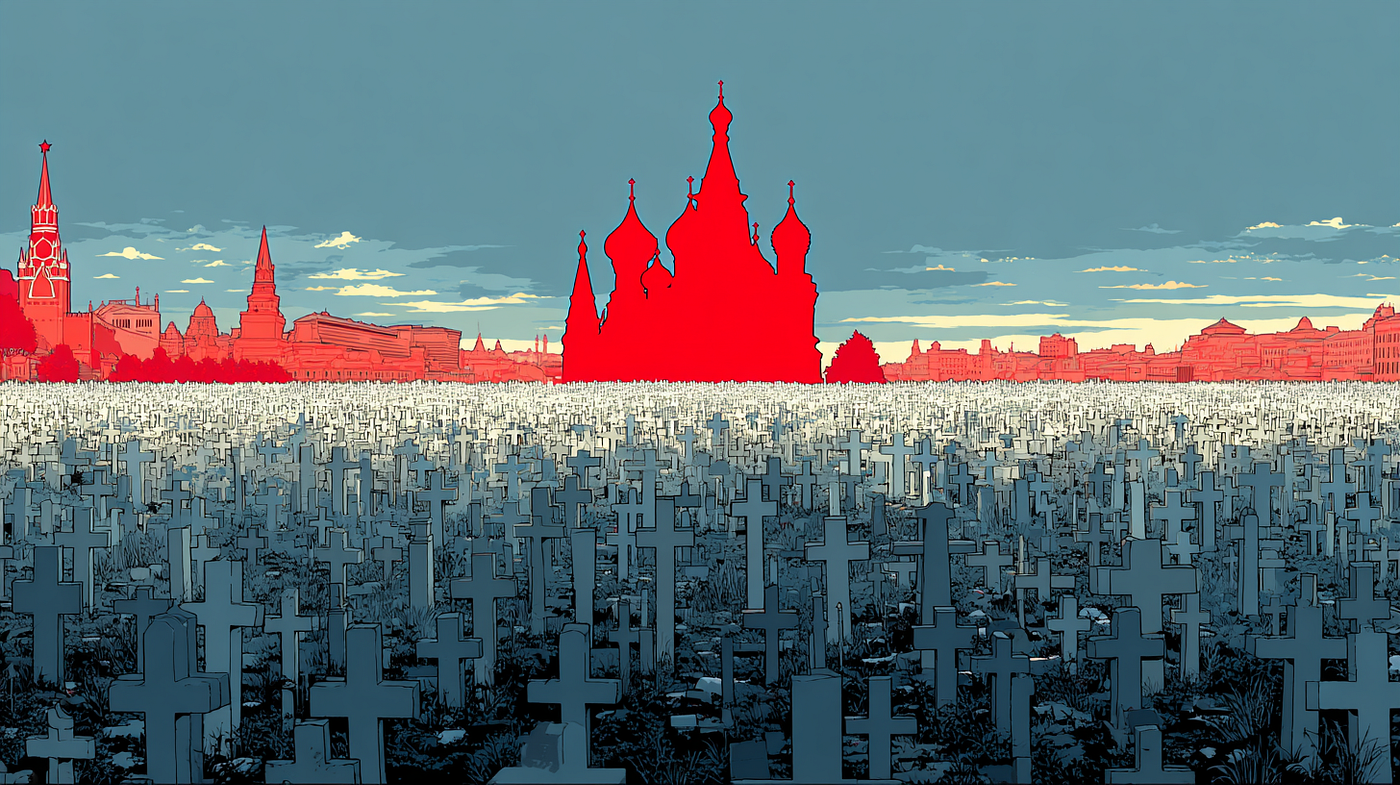
Mathematics and Language Games
“One can prove or refute anything at all with words. Soon people will perfect language technology to such an extent that they’ll be proving…
Mathematics and Language Games
“One can prove or refute anything at all with words. Soon people will perfect language technology to such an extent that they’ll be proving with mathematical precision that twice two is seven.” (Anton Chekhov)
If this video has your head spinning, then don’t worry: it is just a kind of “language game” in Mathematics which Wittgenstein would smile at!
[embed]
Cardinality, Bijection and the Paradox of Infinity
What Does “Size” Mean?
In mathematics, the idea of the “size” of a set is made precise through the concept of cardinality. For finite sets, this is straightforward: cardinality simply means the number of elements in the set. For example, the set {1, 2, 3, 4} has a cardinality of 4. This aligns with our everyday understanding of size — we count, and we get a number.
However, this intuitive idea breaks down when we move to infinite sets.
Counting relies on reaching a final number, but infinite sets never end. So how do we measure their size? Mathematicians resolve this by redefining cardinality in a completely different way: instead of counting elements, they compare sets using bijections : one-to-one correspondences.
Two sets are said to have the same cardinality if every element of one set can be paired with exactly one element of the other, with nothing left over.
This leads to a fundamental shift in meaning. For finite sets, “size” refers to a countable quantity. For infinite sets, “size” refers to a structural relationship between sets. As a result, two infinite sets can be considered the same size even if one is a proper subset of the other — a conclusion that challenges our intuition.
A Surprising Result: Natural Numbers vs Even Numbers
Consider the set of natural numbers:
ℕ = {1, 2, 3, 4, …}
and the set of even numbers:
E = {2, 4, 6, 8, …}
At first glance, the even numbers seem “smaller.” After all, they form only part of the natural numbers.
Now define a function: f(n) = 2n
This function pairs every natural number with exactly one even number:
- 1 → 2
- 2 → 4
- 3 → 6
- …
Every natural number has a unique partner, and every even number is matched.
This is a bijection. Therefore:
|ℕ| = |E| = ℵ₀
In other words, the set of even numbers has the same cardinality as the set of natural numbers — even though it is a proper subset.
The Philosophical Problem: Part vs Whole
In everyday reasoning, a basic principle holds:
The whole must be larger than its part.
But here, that principle fails. The set of even numbers is clearly contained within the natural numbers, yet they are considered the same “size.” This is not a mistake: it is a direct consequence of how size is defined for infinite sets.
This creates a tension between: human intuition (based on finite thinking and linking with real objects) and formal mathematics (infinite structures on abstract mathematical objects)
Language and the Source of Confusion
Part of the difficulty lies in the word “size.”
In ordinary language, “size” implies counting and magnitude. When we extend this word to infinite sets, we carry those expectations with us — and that’s where confusion arises.
Here, the philosophy of Ludwig Wittgenstein becomes relevant. He argued that:
“The meaning of a word is its use in the language.”
The issue is not the mathematics: it is how we are using the word “size.” We are applying a term shaped by finite experience to a context where it no longer behaves the same way.
Rethinking Numbers
This idea, introduced by Georg Cantor, represents a major shift in mathematics. Traditionally, numbers were the result of counting. In set theory, “numbers” like aleph-null ℵ₀ describe structure, not counts. Cardinality becomes a way of classifying sets based on relationships, not enumeration.
A Theory of Knowledge Perspective
The equivalence between ℕ and the even numbers shows that “size” is not a fixed concept, but one that depends on how it is defined. By shifting from counting to correspondence, mathematics resolves the problem of comparing infinite sets but at the cost of abandoning intuitive principles like “the part is smaller than the whole.”
This raises an important question:
To what extent does knowledge depend on the definitions we choose?
Resolving apparent paradoxes in mathematics often requires more than new techniques: it requires rethinking the language we use. This highlights the deep interplay between language, intuition and formal systems in shaping what we accept as knowledge.
“Why” these language games?
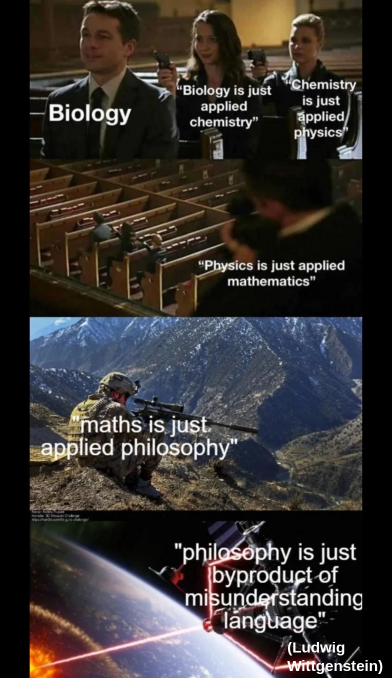
“Language Games!”
This example reveals something deeper about knowledge:
- Mathematical definitions can override intuition
- Language can obscure meaning when extended beyond its original context
- New frameworks may require redefining familiar concepts
Most importantly, it shows that mathematics is not just about discovering truths: it is also about deciding how to define them.
Before Georg Cantor, infinity was treated with caution and understood mainly as a process, not a completed thing. Philosophers like Aristotle argued that infinity is only potential : you can keep counting forever, but you never reach an actual infinite total. Because of this, mathematicians avoided treating infinity as something you could measure or compare, seeing it instead as something that keeps growing without end.
In calculus, this idea continued. Early mathematicians like Isaac Newton and Gottfried Wilhelm Leibniz used notions of infinitely small and infinitely large quantities to describe change, but these were more intuitive tools than precise objects. Later, mathematicians such as Augustin-Louis Cauchy and Karl Weierstrass made calculus more rigorous by introducing limits, treating infinity as something you approach rather than something that actually exists as a fixed value.
After Cantor, the view of infinity changed completely. He showed that infinities can be treated as real mathematical objects that can be compared and even have different sizes, using ideas like one-to-one correspondence. Earlier observations, like those of Galileo Galilei, which seemed paradoxical, now made sense within a clear system. This marked a major shift, turning infinity from a vague philosophical idea into a precise and structured concept, even though it still challenges our everyday intuition because you may not have updated your lexicon with the new definition of “size” through bijection than through counting.
Drink at the source:
-
Cantor, Georg. Contributions to the Founding of the Theory of Transfinite Numbers. Dover Publications, 1955.
-
“Infinity.” Stanford Encyclopedia of Philosophy, edited by Edward N. Zalta. https://plato.stanford.edu/entries/infinity/
-
“Set Theory.” Stanford Encyclopedia of Philosophy, edited by Edward N. Zalta. https://plato.stanford.edu/entries/set-theory/
-
“Hilbert’s Paradox of the Grand Hotel.” Encyclopaedia Britannica. https://www.britannica.com/science/Hilberts-paradox-of-the-Grand-Hotel
메타데이터
- post_id
- 43671300e7d9
- slug
- mathematics-and-language-games-43671300e7d9
- url
- https://medium.com/@sagark05/mathematics-and-language-games-43671300e7d9
- canonical_url
- https://medium.com/@sagark05/mathematics-and-language-games-43671300e7d9
- author_url
- https://medium.com/@sagark05
- status
- ok
- fetched_at
- 2026-06-27 18:20:27