A Practical Guide to Automated Transaction Assurance Frameworks
Automated transaction assurance is rapidly becoming a core component of modern governance because it evaluates transactions continuously…
A Practical Guide to Automated Transaction Assurance Frameworks
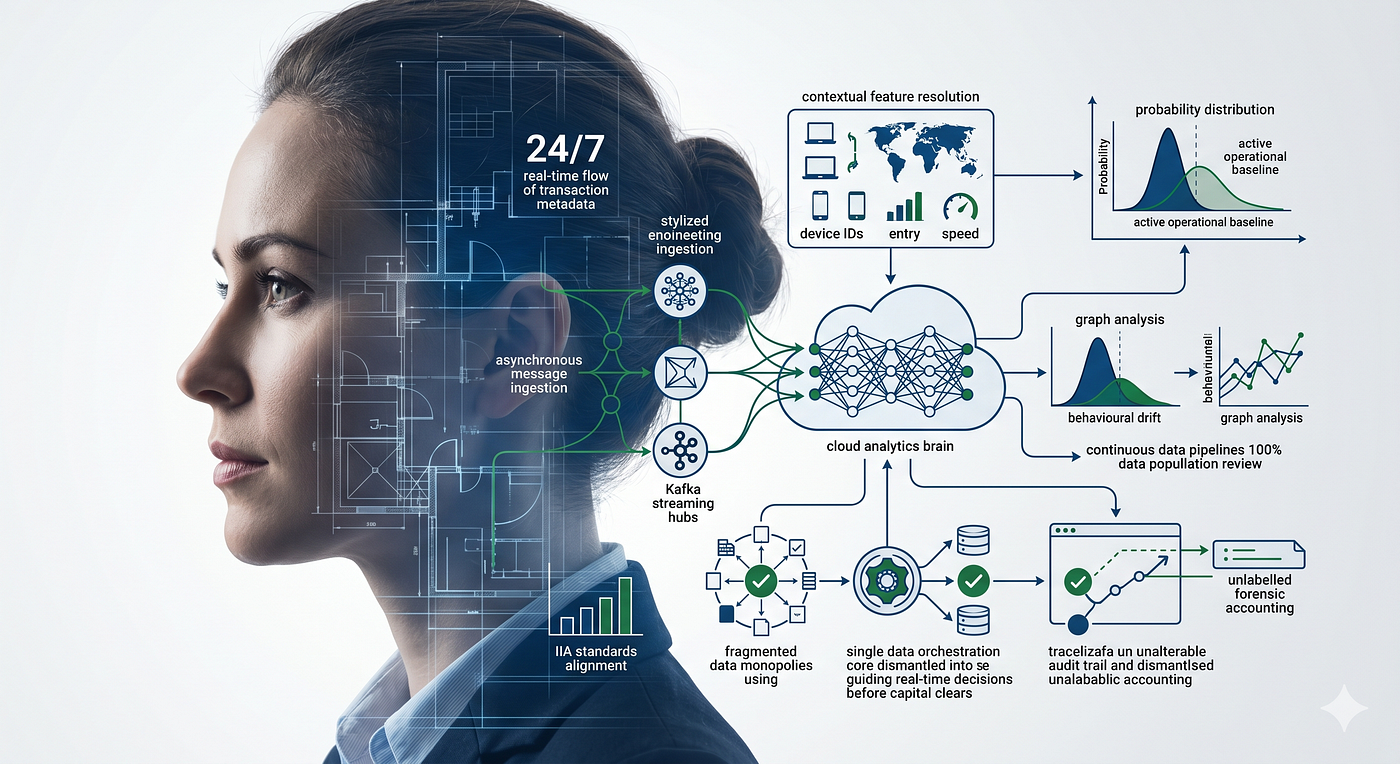
Automated transaction assurance is rapidly becoming a core component of modern governance because it evaluates transactions continuously, identifies anomalies early, and strengthens control monitoring across complex business environments.
Organizations that implement automated transaction assurance successfully are shifting attention away from after-the-fact investigations and toward continuous operational visibility.
One of the stranger things about corporate risk is how often organizations learn about their own problems from yesterday’s data.
A suspicious payment appears in a monthly review packet.
An approval exception surfaces during an audit cycle.
A procurement issue is discovered during a reconciliation exercise weeks after the event occurred.
The transaction happened. The business moved forward. The money changed hands. Then the organization started asking questions.
That sequence feels increasingly outdated.
Business operations produce thousands, sometimes millions, of transactions flowing through ERP systems, procurement platforms, treasury applications, and workflow engines. Yet many assurance programs still depend on periodic reviews designed for a different pace of business.
Internal audit teams have felt this tension for years. Technology groups have as well. The challenge is no longer collecting data. The challenge is determining which transactions deserve attention while activity is still unfolding.
That requirement sits at the center of transaction assurance programs that are built to scale.
The Problem Is Not Visibility. It Is Timing.
A few years back, I was part of a workshop reviewing a control exception tied to a vendor payment process.
Every participant had access to data.
Finance had reports.
Audit had findings.
Operations had transaction records.
Nobody lacked information.
The room still spent nearly an hour piecing together what happened.
The issue wasn’t visibility.
The issue was timing.
All the data arrived after the decisions had already been made.
By the time multiple teams understood the situation, the organization had already processed related transactions, approved follow-up activities, and moved resources elsewhere.
That experience reflects a reality many organizations face.
Data that arrives late often creates expensive conversations.
Data that arrives early creates options.
Automated assurance frameworks are designed around that distinction.
Why Continuous Observation Is Replacing Periodic Review
Most organizations are comfortable monitoring system uptime continuously.
Security events are monitored continuously.
Network activity is monitored continuously.
Transactions, strangely enough, are frequently reviewed in batches.
That disconnect deserves attention.
Financial transactions represent operational decisions. They affect reporting, compliance obligations, vendor relationships, purchasing activities, and cash movement.
Examining those activities long after execution limits the organization’s ability to respond.
Continuous assurance introduces a different model.
Transactions are evaluated against rules, controls, thresholds, and risk indicators as they occur.
Examples frequently include:
- Duplicate payment patterns
- Approval workflow deviations
- Vendor record modifications
- Segregation-of-duty conflicts
- Unusual purchasing behavior
- Access changes linked to sensitive transactions
The purpose is not creating more alerts.
The purpose is creating earlier awareness.
There is a difference.
Organizations often discover that eighty percent of generated alerts are routine operational activity. The remaining twenty percent deserve attention. Automated assurance helps separate those categories before risk becomes embedded in business processes.
An Unexpected Obstacle: Organizational Blind Spots
Technology projects often focus heavily on systems.
Risk tends to emerge between systems.
That sounds contradictory until you observe how large organizations operate.
Finance owns one set of information.
Procurement owns another.
Human resources maintains separate records.
Security teams monitor different data sources entirely.
Individually, each area may have strong controls.
Collectively, gaps begin to appear.
This is where data silos become a governance problem rather than simply a technology problem.
A transaction rarely tells its full story on its own.
A payment record might look perfectly legitimate.
Pair it with user-access changes, approval history, supplier modifications, and workflow activity, and a more complete picture emerges.
Organizations frequently underestimate how many control weaknesses remain invisible because relevant information resides in separate systems controlled by separate teams.
Assurance maturity grows when those barriers begin to disappear.
Building the Foundation Before Chasing Analytics
Many discussions about assurance programs start with dashboards.
That is understandable.
Dashboards are visible.
Dashboards generate enthusiasm.
Executives can immediately see metrics, trends, and indicators.
Yet dashboards do not solve assurance problems.
They expose them.
The difficult work takes place underneath.
That foundation increasingly depends on ERP data orchestration, a discipline focused on organizing, standardizing, and coordinating data moving across multiple enterprise systems.
Without orchestration, transaction monitoring becomes inconsistent.
Control definitions vary across business units.
Risk indicators generate conflicting results.
Investigation teams lose confidence in outputs.
A mature assurance framework typically requires alignment across several technical layers:
- Transaction ingestion and normalization
- Cross-system control mapping
- Data quality validation
- Exception management processes
- Governance ownership structures
- Audit evidence retention mechanisms
Organizations that skip these foundational steps often discover that sophisticated analytics amplify inconsistencies rather than resolve them.
The infrastructure matters more than the presentation layer.
Where Financial Integrity Actually Comes From
People often speak about financial integrity as if it were a reporting outcome.
It is not.
Financial integrity is produced incrementally through thousands of operational decisions.
Someone approves a purchase.
Someone creates a supplier.
Someone changes system access.
Someone processes payment.
Someone posts a journal entry.
These actions collectively shape the quality and reliability of financial information.
Internal audit professionals understand this instinctively because audit findings often originate from small control failures that accumulated quietly over time.
Rarely does a major risk event appear fully formed.
More often, warning signs appear long before the issue becomes visible.
A missed approval.
An access exception.
An unusual transaction pattern.
A policy override that gradually becomes habitual.
Automated assurance helps identify those signals closer to their source.
The value lies in shortening the distance between activity and awareness.
The Growing Importance of Risk Intelligence Inside ERP Environments
Organizations continue to invest heavily in ERP platforms because these systems remain central to business execution.
The transactions running through ERP environments influence procurement, supply chain operations, finance, manufacturing, and countless other functions.
As ERP environments expand, assurance expectations expand with them.
This explains growing interest in monitoring capabilities associated with SAP risk analytics and other risk-focused technologies that analyze operational behavior directly within transaction ecosystems.
The objective is becoming clearer across industries.
Organizations no longer want assurance processes that function separately from operations.
They want assurance embedded within operations.
That shift changes implementation priorities.
Monitoring moves closer to transactions.
Risk scoring becomes more dynamic.
Control validation becomes more continuous.
The separation between business execution and assurance starts to narrow.
For governance teams, that visibility can be transformative.
For operational teams, it often means fewer surprises.
Internal Audit’s Role Is Changing Quietly
One of the biggest shifts occurring within internal audit is not receiving widespread attention.
The profession is moving from retrospective analysis toward ongoing observation.
Traditional audits remain necessary. Regulatory expectations have not disappeared. Independent assurance remains a cornerstone of strong governance.
Yet internal audit groups increasingly contribute by helping organizations design monitoring frameworks, control architectures, and risk-detection models that operate throughout the year.
That evolution creates a different relationship with business functions.
The discussion becomes less centered on finding historical exceptions.
More attention shifts toward identifying emerging risks before they mature into audit findings.
It is a subtle transition.
Its impact is substantial.
Organizations gain a broader understanding of operational behavior rather than a periodic snapshot.
A Framework Is Only as Strong as Its Response Process
Monitoring without response quickly becomes noise.
Many organizations discover this lesson after implementing sophisticated detection capabilities.
The system identifies issues successfully.
Alerts accumulate.
Investigations stall.
Ownership becomes unclear.
Business units stop paying attention.
Technology alone cannot solve that problem.
Strong assurance programs establish clear pathways for escalation, review, remediation, and accountability.
The strongest frameworks share several characteristics:
- Defined ownership for exceptions
- Risk-based prioritization methods
- Documented investigation procedures
- Audit-ready evidence collection
- Consistent remediation tracking
These operational disciplines determine whether assurance programs become trusted governance assets or merely another source of notifications.
The Organizations Getting This Right Ask Different Questions
The most advanced organizations are no longer asking whether automation can support transaction assurance.
That debate is largely over.
Their questions sound different.
How quickly can unusual activity be identified?
How reliably can risks be prioritized?
How consistently can control performance be evaluated across business units?
How effectively can assurance activities scale alongside growth?
Those questions reflect a deeper understanding of governance.
The objective is not auditing more transactions.
The objective is understanding business activity at the speed it occurs.
That creates a stronger foundation for decision-making than any quarterly review cycle can provide.
Also Read: Protecting Capital with Proactive Fraud Risk Assessment
메타데이터
- post_id
- 4b20c686eef0
- slug
- a-practical-guide-to-automated-transaction-assurance-frameworks-4b20c686eef0
- url
- https://medium.com/@manish.pandey27/a-practical-guide-to-automated-transaction-assurance-frameworks-4b20c686eef0
- canonical_url
- https://medium.com/@manish.pandey27/a-practical-guide-to-automated-transaction-assurance-frameworks-4b20c686eef0
- author_url
- https://medium.com/@manish.pandey27
- status
- ok
- fetched_at
- 2026-07-16 05:02:48