Creative Technology in Experiential Marketing: From Interactive Spaces to Digital Experience…
When you walk into a well-designed experience center — one where the technology and the story are woven together so tightly that you stop…
Creative Technology in Experiential Marketing: From Interactive Spaces to Digital Experience Centers
When you walk into a well-designed experience center — one where the technology and the story are woven together so tightly that you stop thinking about one or the other and just feel it — something shifts. You stop being a customer evaluating a product. You become a person inside a world.
That shift is the whole point of **creative technology in experiential marketing**. It’s also extraordinarily hard to execute well.
Most brands manage one or the other. Great technology that tells no story. Or great storytelling delivered through underwhelming technology. The space where both are exceptional at the same time — that’s the narrow corridor where genuinely transformative brand experiences live.
Why Interactive Spaces Outperform Passive Ones
The neuroscience is clear on this: humans remember what they do far more reliably than what they see. The principle of enactive memory — memory formed through physical action — is why you can still remember how to ride a bicycle after twenty years but can’t recall most of last week’s meetings.
Brand experiences built on interaction — where the visitor does something, controls something, responds to something — generate the kind of memory that passive viewing never can. This is the scientific foundation under the ROI of experiential marketing.
Interactive spaces and experience centers are the physical manifestation of this insight. They are, at their best, memory machines.
The Star Sports CGI Campaign: When Creative Tech Moved at 240 Frames Per Second

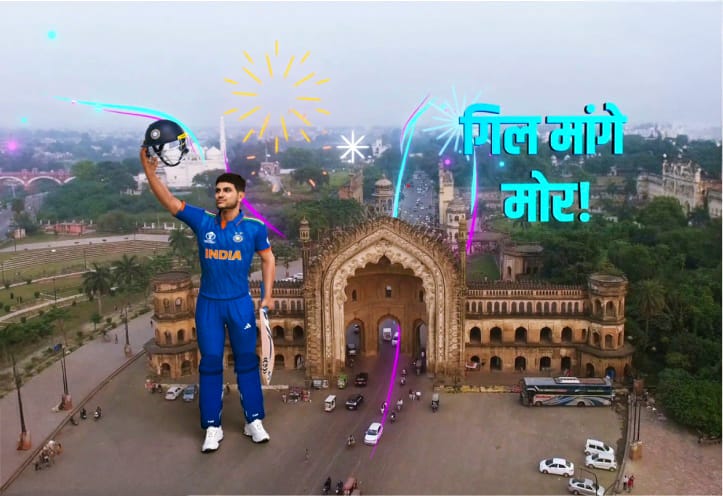
For the ICC World Cup, Star Sports had a vision that went far beyond what Indian sports broadcasting had attempted before. They wanted to replace the standard 2D cutout graphics used in broadcast with something genuinely different — dynamic 3D CGI segments featuring real Indian players, appearing larger than life in the cities where their fans actually lived.
The brief was clear. The execution was anything but simple.
**IIC Lab** built a campaign that combined photogrammetry-driven photoshoots, motion capture at 240 frames per second, and multilingual delivery across five languages simultaneously.
Here’s what the technical pipeline looked like:
Building the Players Data and photogrammetry-driven photoshoots of five Indian cricketers were conducted to capture the detailed facial and body data needed for accurate 3D model construction. The full 3D models were built within a three-day turnaround — a timeline that required a precision pipeline, not improvisation.
Motion Capture at 240FPS Using motion capture technology, each player’s signature moves were recreated at 240 frames per second. This level of frame rate isn’t just about smoothness — it’s about authenticity. At 240FPS, the micro-movements that define someone’s style and physicality are captured. The result is a CGI player who moves like the actual person, not like a general approximation.
The Avatar Tour Five cities — Mumbai, Lucknow, Ahmedabad, Dharamshala, and Bangalore — were chosen to host larger-than-life avatar appearances of Indian cricket stars. Each city had a location aligned with a player’s home connection: Gateway of India for Mumbai, Narendra Modi Stadium for Ahmedabad. The placement was intentional, personal, and deeply local.
Multilingual Delivery Star Sports broadcasts in five languages to serve the country’s full linguistic reach. The CGI segments were produced in all five — a creative technology decision that turned a national campaign into something that felt genuinely regional and personal to each viewer.
What Made This a Landmark in Digital Experiential Marketing

The campaign won multiple industry awards — including Best Use of Technology, Best Use of AI, Best Use of AR/VR, and Best Use of MarTech across national and regional categories.
But more than the awards, what it demonstrated was this: creative technology in experiential marketing works best when it’s built around human truth.
The human truth here was simple. Indian cricket fans don’t just watch cricketers. They feel ownership over them. Rohit Sharma isn’t just a cricketer to a Mumbai fan — he’s ours. Showing him larger than life at the Gateway of India, in a language that speaks directly to you, is an emotional provocation of the highest order.
The technology made that emotion possible at scale. That’s the whole job.
From One Activation to an Experience Center Strategy
The most sophisticated application of **creative technology in experiential marketing** today is the permanent experience center — a brand environment designed not for a single event, but as an ongoing engagement infrastructure.
IIC Lab has built these for:
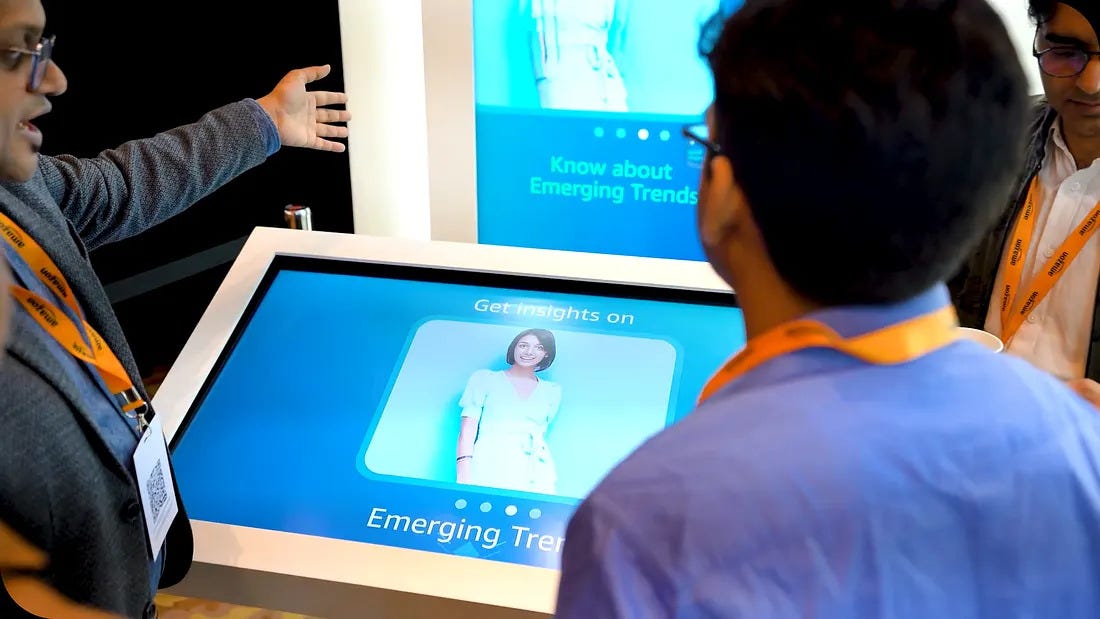
- Deloitte — an AI-powered retail future experience center in Bangalore, featuring holographic displays, object recognition technology, and a conversational AI sales assistant
- Protean — an interactive experience center that communicates complex financial products through hands-on, technology-led exploration
- Rustomjee — an immersive property sales experience that helped the brand achieve 100% pre-sales
Each of these represents a different sector applying the same strategic insight: your brand environment should do real work, not just look impressive.
The Framework for Getting It Right
If you’re planning an interactive space or experience center, three questions matter more than the technology brief:
What do you want people to feel when they leave? Define the emotional outcome before you define the technical solution. Every technology choice should serve the feeling, not the other way around.
What do you want people to do? Interaction without purpose is entertainment. Interaction with purpose drives conversion. Know the action you want visitors to take — and design backward from there.
What happens after they leave the space? The experience center moment is the beginning, not the end. How does the experience extend into digital, social, or follow-up touchpoints? The best digital experiential marketing creates relationship entry points, not just one-off encounters.
If you’re thinking about building a space that actually moves people — a store, a showroom, an experience center, or a campaign activation — you need a team that has mastered both the creative and the technical.
IIC Lab does both. They’ve built for Star Sports, Deloitte, Jio, BMW, and dozens of India’s most recognised names. Their work isn’t just technically impressive — it wins business.
메타데이터
- post_id
- 5bac90dad8ee
- slug
- creative-technology-in-experiential-marketing-from-interactive-spaces-to-digital-experience-5bac90dad8ee
- url
- https://medium.com/@devesh.makwana.iic.0135/creative-technology-in-experiential-marketing-from-interactive-spaces-to-digital-experience-5bac90dad8ee
- canonical_url
- https://medium.com/@devesh.makwana.iic.0135/creative-technology-in-experiential-marketing-from-interactive-spaces-to-digital-experience-5bac90dad8ee
- author_url
- https://medium.com/@devesh.makwana.iic.0135
- status
- ok
- fetched_at
- 2026-06-10 15:53:41