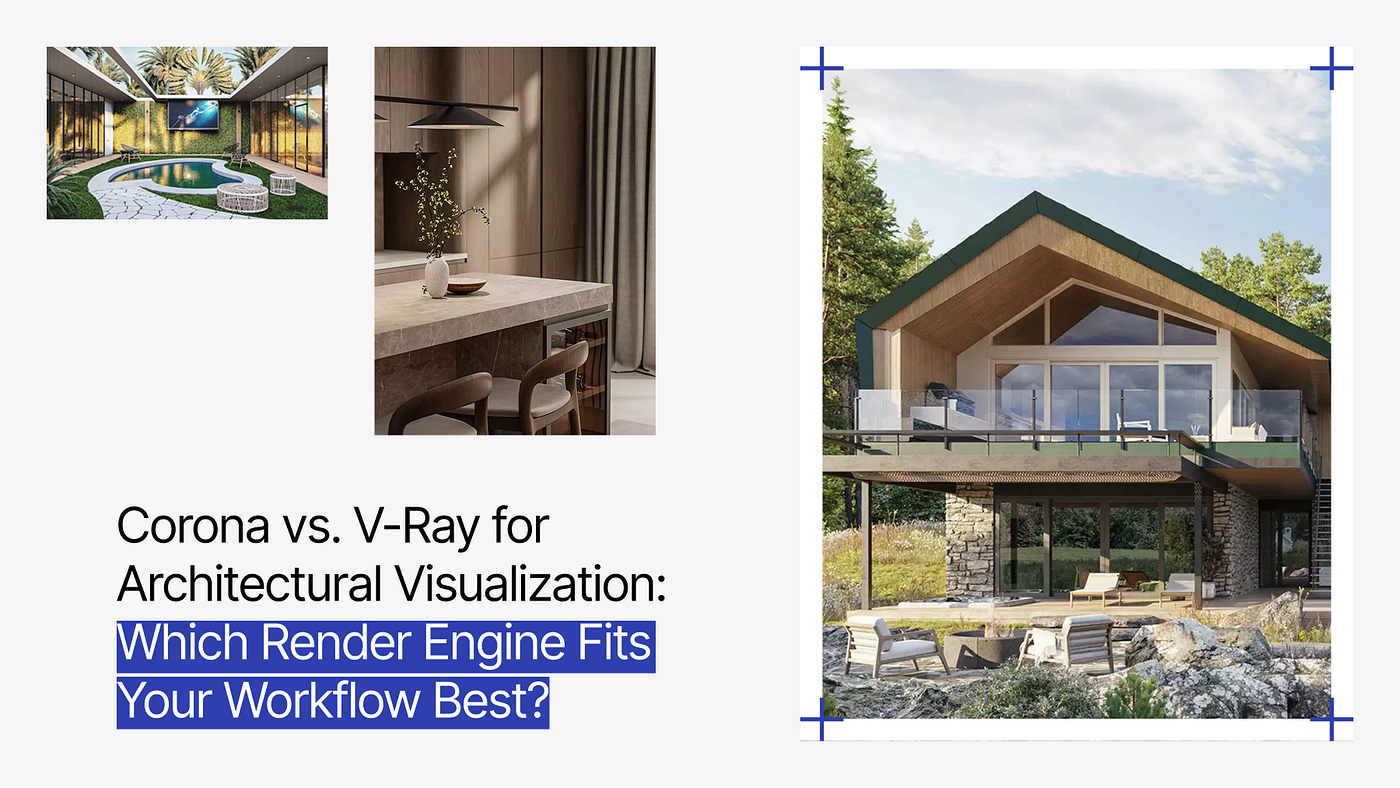
How 3D Rendering Helps Sell Sustainable Architecture Before It Is Built
Sustainable architecture is harder to market than conventional real estate because many of its strongest benefits are not immediately…
How 3D Rendering Helps Sell Sustainable Architecture Before It Is Built
Sustainable architecture is harder to market than conventional real estate because many of its strongest benefits are not immediately visible. Lower operational energy use, better daylight performance, reduced heat gain, water-conscious landscaping, and material efficiency all matter, but buyers, investors, and planning stakeholders rarely respond to abstract claims alone. They respond to clear visual proof. That is where 3D rendering becomes commercially useful.
This article is for developers, architects, hospitality brands, and design-led real estate marketers who need to present green projects in a way that feels credible, attractive, and easy to understand before construction starts. It covers how 3D visualization turns sustainability from a technical specification into a sales and approval asset, where renderings create business value, what kinds of visuals work best, and where teams often get the sustainability story wrong.
The core point is simple: sustainable design sells better when people can see how it improves the place, not just how it performs on paper. A good rendering does not merely make a project look beautiful. It makes environmental choices legible, desirable, and commercially relevant.

Why sustainable architecture is difficult to communicate
Most green architecture marketing underperforms for the same reason: it leans too heavily on language that sounds responsible but looks generic. Phrases like “eco-friendly,” “energy-efficient,” and “built with nature in mind” are easy to write and hard to trust. Unless the audience can connect those claims to lived experience, the sustainability narrative remains thin.
That problem gets more expensive when the project is still in pre-sales, fundraising, planning review, or early brand positioning. At that stage, nobody can walk through the building. Nobody can feel the shade from deep overhangs, notice how landscape buffers improve privacy, or see how orientation reduces solar exposure. The project must persuade without being physically available.
This is exactly where strong visualization helps. Instead of treating sustainability as a compliance layer, renderings can show it as part of the architecture itself: how the building sits on the site, how outdoor areas reduce heat stress, how facade depth controls light, how material choices soften the massing, and how landscape planning supports comfort as well as aesthetics.

3D renderings work best when they show performance through design
The mistake many teams make is trying to “decorate” a sustainable building with obvious green signals. Too many plants on a terrace. Too much sunlight. Too much visual emphasis on token eco elements. That approach can make a project look staged rather than intelligent.
A better approach is to visualize sustainability through design logic. Show what the building is doing.
For example, if a residential scheme uses recessed balconies and vertical screens to reduce solar gain, those facade decisions should be readable in the image composition. If a hospitality development preserves a strong landscape buffer between buildings and shoreline, the aerial rendering should make that environmental relationship feel intentional. If a luxury house uses cantilevering and orientation to minimize site disruption while maximizing views, the rendering should emphasize that balance instead of only dramatizing the form.
This is also why sustainability-oriented visuals need more discipline than purely aspirational ones. They must sell, but they also have to explain. The image should answer a buyer’s unspoken question: what makes this project better to live in, operate, or invest in?
Teams working in this space often benefit from studying how broader green architecture narratives are framed, but the commercial edge comes from applying those ideas visually to a specific development, not repeating the category language.

Where sustainable visualization creates real business value
The value of 3D rendering in green projects is not limited to pretty marketing images. In practice, it supports multiple commercial moments across the project lifecycle.
In pre-development, renderings help align internal stakeholders around what the sustainability story actually is. Many projects have strong technical intentions but weak presentation. Visualization forces the team to decide which design moves matter most and how they will be perceived by non-technical audiences.
In approvals and planning communication, visuals reduce friction. Review boards, municipal stakeholders, and community audiences are more likely to respond constructively when they can see how density, massing, landscaping, drainage, and building character work together. Renderings do not replace technical documentation, but they often make the intent legible enough for decisions to move faster.
In pre-sales and investor presentations, they help convert “future value” into something concrete. A sustainability claim tied to a rendering is easier to understand than a sustainability claim presented as a bullet point in a deck. This is especially important in mixed-use, hospitality, and premium residential projects, where emotional response and perceived long-term quality strongly influence buying decisions.
In campaign execution, the same asset can work across landing pages, brochures, pitch decks, email, social, OOH concepts, and sales-center displays. That reuse matters. Sustainable projects often involve longer narratives and more stakeholder education than conventional launches, so every visualization asset needs to travel well across channels.

What buyers and stakeholders actually need to see
Not every sustainable project needs the same type of rendering package. The right visual set depends on what the audience needs in order to believe the project.
For residential developments, exterior perspectives usually need to show comfort, privacy, shading, greenery, and everyday livability. Buyers are not only evaluating environmental responsibility. They are asking whether the place feels calm, healthy, premium, and durable.
For hospitality and resort developments, aerial views are often doing the heaviest strategic work. They show site planning, density control, relationship to the landscape, guest circulation, amenity hierarchy, and the balance between built form and open space. When sustainable planning is part of the value proposition, the aerial image should make that spatial intelligence obvious.
For single-family or bespoke homes, renderings often need to communicate restraint. A sustainable luxury home is not convincing because it has more visible “green” elements. It is convincing when the architecture appears well-sited, materially coherent, climate-aware, and built around long-term quality of life. Projects like a 3D rendering of a modern house often perform best when the visuals sell both aspiration and technical intelligence at once.
For landscape-rich suburban or eco-residential projects, site visuals matter more than many teams expect. Buyers and planners read the environmental seriousness of a development through landscape treatment, circulation, planting density, and open-space design. These are not secondary details. They are often proof that the sustainability narrative is real.

The best sustainability renderings are specific, not symbolic
There is a major difference between sustainability-themed imagery and sustainability-specific imagery.
Sustainability-themed imagery uses recognizable cues: greenery, sunlight, timber tones, open windows, and soft natural textures. It can be attractive, but it is also easy to genericize. Many projects start to look interchangeable.
Sustainability-specific imagery is anchored in the actual design response. It reflects climate, orientation, site conditions, development type, and user expectations. A desert project should not be visualized like a tropical one. A dense urban infill scheme should not be marketed like a remote eco-retreat. A coastal development should communicate different environmental priorities than a suburban townhouse project.
That distinction matters commercially because specificity builds trust. A project tied to local conditions looks better considered, more plausible, and more valuable. This is one reason climate-responsive categories such as desert architecture have become more relevant in design storytelling: they force teams to visualize adaptation rather than aesthetics alone.

What developers should ask for from a rendering team
If the goal is to market sustainable architecture effectively, the rendering brief needs to go beyond “make it look green.” That usually produces surface-level imagery and weakens the value proposition.
A better brief identifies the project’s real commercial story. Is the key message reduced environmental impact? Better quality of life? Lower operating cost? Site sensitivity? Premium positioning through climate-smart design? Faster investor confidence? Different stories require different visual priorities.
Developers should also ask whether the images can explain the project at multiple scales. One hero shot is rarely enough. Sustainable developments often need a combination of overview visuals, human-scale perspectives, and landscape-aware scenes to tell a complete story. In many cases, green building 3D rendering for developers is most effective when the image set is planned around decision points, not just aesthetics.
The strongest teams also think beyond the render itself. They ask where the asset will appear, how much detail is needed for each channel, whether the visuals need alternate crops, and how the sustainability message will stay consistent from teaser campaigns through sales conversion.

A useful test: can the rendering sell the project without the sustainability label?
This is the most practical test I know.
If you removed the words “green,” “eco,” and “sustainable” from the presentation, would the images still communicate a better project? Would a buyer still sense more comfort, more intelligence, more livability, more long-term value? Would an investor still see disciplined planning rather than image-making?
If the answer is no, the rendering may be carrying a label instead of revealing design value.
The projects that perform best in this category usually do something more convincing: they make sustainability look like quality. Not a badge, not a trend, and not a moral instruction. Just a better building, better explained. That is also why real-world eco housing design stories tend to resonate when they connect environmental thinking to clear visual and commercial outcomes.
For teams selling architecture before it exists, that is the real opportunity. Use 3D rendering to make sustainable decisions visible, specific, and desirable enough that the project earns confidence before the first phase is built.
메타데이터
- post_id
- 5bd4adf671bf
- slug
- how-3d-rendering-helps-sell-sustainable-architecture-before-it-is-built-5bd4adf671bf
- url
- https://medium.com/@maverickframe/how-3d-rendering-helps-sell-sustainable-architecture-before-it-is-built-5bd4adf671bf
- canonical_url
- https://medium.com/@maverickframe/how-3d-rendering-helps-sell-sustainable-architecture-before-it-is-built-5bd4adf671bf
- author_url
- https://medium.com/@maverickframe
- status
- ok
- fetched_at
- 2026-06-09 15:37:30