The AI Secret Weapon Hiding in Your Software Project: A PM & QC Guide to OutSystems AI Mentor…
Ever feel like software development has its own invisible currents, pulling projects off course with unexpected bugs, delays, or…
The AI Secret Weapon Hiding in Your Software Project: A PM & QC Guide to OutSystems AI Mentor Studio
Ever feel like software development has its own invisible currents, pulling projects off course with unexpected bugs, delays, or maintenance headaches? As a Senior Team Lead, I’ve seen it happen. But I’ve also seen how we can navigate these currents more effectively, especially in the OutSystems world, thanks to a powerful ally: the OutSystems AI Mentor Studio.
If you’re a Project Manager or a Quality Control Lead, you might not be writing the code, but you’re deeply invested in its quality, timeliness, and long-term viability. Understanding the OutSystems AI Mentor Studio isn’t just for developers; it’s key to your success too.
Imagine This Scenario…
Let’s say your team is building a new customer dashboard. It looks great, passes initial functional tests, and everyone’s excited. A few weeks after launch, however, users start complaining: the dashboard is slow, especially during peak hours. Digging deeper, the development team finds that a core data-fetching mechanism, while seemingly simple, was designed in a way that becomes incredibly inefficient under heavy load. Fixing it now means redesigning a critical piece, re-testing, and a frustrated client. This late-stage rework is a classic example of realizing accrued technical debt.
Now, imagine the same scenario, but with OutSystems AI Mentor Studio actively involved from the start. As developers build that dashboard, AI Mentor Studio, with its deep understanding of OutSystems best practices, flags that inefficient data-fetching pattern before it ever gets to QC, let alone production. It would identify this pattern as contributing to the application’s technical debt number, providing a specific finding like: “Warning: Potential performance issue. Fetching data inside a loop here (in ScreenX, ActionY) is adding X days to your technical debt due to potential database strain. Consider optimizing this query by fetching all necessary data in a single aggregate outside the loop to reduce this debt.”
The developers address it then and there, actively reducing the potential technical debt. The result? A performant dashboard from day one, a happier client, and a QC team that can focus on other critical areas.
This is the power we’re talking about.
So, What Exactly is the OutSystems AI Mentor Studio?
Think of OutSystems AI Mentor Studio as an AI-powered senior architect and quality watchdog built directly into the OutSystems platform. It’s constantly:
-
Analyzing Code & Architecture: It automatically scans your application’s code, looking for deviations from best practices in performance, security, maintainability, and overall architecture as defined by OutSystems. These deviations are quantified and contribute to the overall technical debt number.
-
Identifying Potential Issues (Technical Debt): It doesn’t just find bugs; it highlights “code smells” or architectural patterns that could lead to problems down the line — the very essence of technical debt that we all want to minimize. Each identified issue can be seen as adding to the technical debt.
-
Providing Actionable Feedback: It gives developers specific, understandable guidance on why something is a concern (i.e., why it’s increasing the technical debt number) and often how to improve it, right within their development environment.
-
It’s not about replacing human expertise; it’s about augmenting it, providing a consistent, tireless review that identifies sources of technical debt even the best developers might occasionally introduce under pressure.
Why This Matters to You, the PM & QC Leader
The benefits of OutSystems AI Mentor Studio, especially its focus on managing technical debt, extend far beyond the development team.
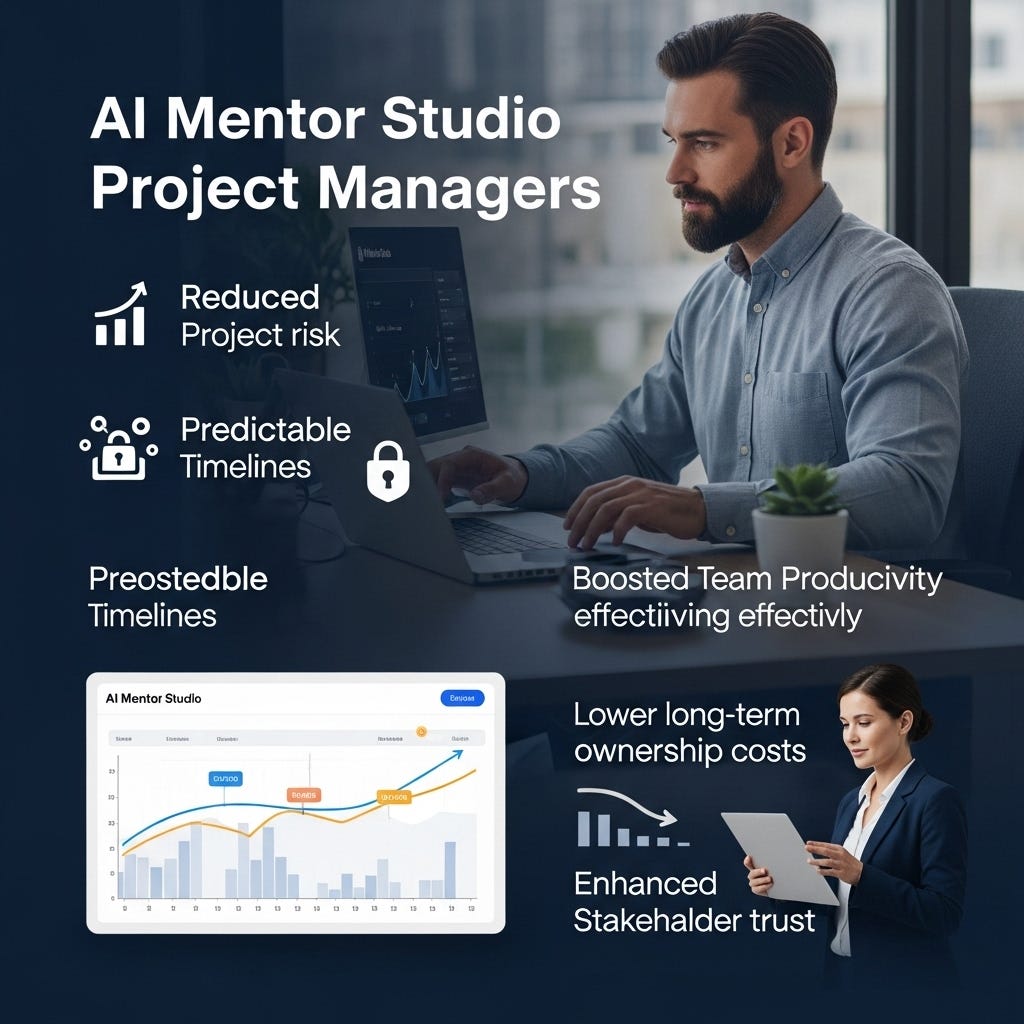
For Project Managers:
- Reduced Risk, Predictable Timelines: Early identification and reduction of the technical debt number by AI Mentor Studio mean fewer “oh no!” moments late in the project. This translates to more reliable release schedules and better budget adherence.
- Boosted Team Productivity: Developers spend less time on rework and firefighting issues caused by accumulated technical debt. AI Mentor Studio guides them to build it right the first time, keeping the debt low.
- Lower Long-Term Ownership Costs: Applications with a lower technical debt number are cheaper to support, maintain, and evolve. AI Mentor Studio helps build these robust foundations.
- Enhanced Stakeholder Trust: Knowing that an AI-powered system like AI Mentor Studio is continuously monitoring and helping manage the technical debt number can be a powerful point of reassurance for stakeholders.

For QC Leaders:
- Higher Quality Inputs: Code arriving for testing has an inherently lower technical debt number, as many underlying architectural and performance issues have already been flagged by AI Mentor Studio and potentially fixed.
- Sharper Testing Focus: Your team can concentrate more on business logic, user experience, and complex end-to-end scenarios, rather than getting bogged down by structural flaws indicative of high technical debt.
- Faster Root Cause Analysis: If defects do slip through, AI Mentor Studio’s analysis of technical debt contributions can sometimes provide clues about underlying architectural weaknesses, aiding in quicker diagnosis.
- Objective Quality Standard: It provides an unbiased, consistent benchmark for identifying and managing technical debt across all development teams and modules, based on OutSystems’ own standards.

Main Categories of AI Mentor Studio Findings
So, what kind of issues does OutSystems AI Mentor Studio typically look for? While the specific rules are extensive and continually updated by OutSystems, the findings generally fall into these main categories, all of which contribute to the overall technical debt:
- Performance:
- What it is: These findings pinpoint code patterns that can make your application slow or unresponsive. This is critical for user satisfaction and scalability.
- Examples: Inefficient database queries (like querying inside loops), large viewstates, improper use of caching, slow server-side logic.
- Why it matters to PMs/QC: Poor performance directly impacts user experience, can lead to user abandonment, and may require costly rework if discovered late. QC teams often spend significant time testing for performance.
2. Security:
- What it is: These findings highlight potential vulnerabilities that could be exploited by malicious actors, leading to data breaches or unauthorized access.
- Examples: SQL injection vulnerabilities, cross-site scripting (XSS) risks, improper input validation, insecure handling of sensitive data.
- Why it matters to PMs/QC: Security breaches can have devastating consequences (financial, reputational, legal). Ensuring security is a non-negotiable aspect of quality.
3. Maintainability & Architecture:
- What it is: This category covers issues that make the application difficult to understand, modify, or extend in the future. Poor architecture can lead to a brittle system where changes in one area unexpectedly break others.
- Examples: Overly complex logic (the “spaghetti code” effect), large modules or actions that are hard to manage, violations of architectural best practices (like improper dependencies between modules), duplicated code, lack of comments or unclear naming.
- Why it matters to PMs/QC: High maintainability means new features can be added more quickly and with less risk. Poor maintainability leads to slower development cycles, increased bug rates, and higher long-term costs. QC can also be more challenging in a poorly structured application.
4. Reliability & Robustness:
- What it is: These findings point to code that might lead to unexpected errors, crashes, or inconsistent behavior.
- Examples: Potential null reference exceptions, improper error handling, issues that could lead to data corruption.
- Why it matters to PMs/QC: An unreliable application frustrates users and damages trust. QC teams are often the first to encounter these issues if they aren’t caught earlier.
By categorizing findings, AI Mentor Studio helps development teams prioritize their efforts and gives PMs and QC Leaders a clearer insight into the specific types of risks or quality concerns present in the application.
Decoding the Numbers: Why Does the Technical Debt Number Go Up and Down?
You’ll encounter metrics from OutSystems AI Mentor Studio — often expressed as a “Technical Debt” number (e.g., quantified in estimated days of refactoring effort). It’s tempting to panic if this number increases. But in the real world of software development, this figure is dynamic.
What is the “Technical Debt Number” in this Context and Why Does it Fluctuate?
In the context of AI Mentor Studio, the Technical Debt number represents the estimated effort (often in days or hours) required to fix all identified deviations from best practices, code smells, and architectural concerns in your application. A lower number is always better.
Why the Technical Debt number goes UP:
- New Code Introduction: When developers add new features or modify existing ones, they might introduce code that isn’t perfectly optimized or fully adheres to all best practices, especially under tight deadlines. Each such instance adds to the technical debt.
- Increased Complexity: As features become more complex, the likelihood of introducing patterns that contribute to technical debt can increase.
- AI Mentor Studio Updates: OutSystems continuously improves AI Mentor Studio. A new update might include more sophisticated rules or identify new types of patterns as detrimental. This means existing code, previously considered “clean,” might now be flagged as contributing to technical debt because the “bar” for quality has been raised.
- Unaddressed Existing Debt: If identified technical debt is not addressed, it remains part of the total, and new debt can accumulate on top of it.

Why the Technical Debt number goes DOWN:
- Proactive Refactoring: When developers actively address the issues flagged by AI Mentor Studio — by refactoring code, optimizing queries, improving architecture — the sources of technical debt are eliminated, and the number decreases.
- Focused Debt Reduction Sprints: Teams might dedicate specific time (e.g., a “technical debt sprint”) to tackle a backlog of issues, leading to a significant drop in the number.
- Improved Developer Practices: As developers become more familiar with AI Mentor Studio’s guidance and OutSystems best practices, they naturally write code that incurs less technical debt from the outset.

The Key Takeaway on Metrics: The Technical Debt number reported by AI Mentor Studio is a dynamic health indicator. Fluctuations are normal and expected during active development. What’s crucial is:
- Awareness: The team is aware of the current technical debt level.
- Strategy: There’s a strategy in place to manage and reduce technical debt over time.
- Trend: The long-term trend should ideally be stable or decreasing, indicating that the team is not letting debt spiral out of control. Don’t aim for zero technical debt at all times (as that can stifle innovation), but aim for a manageable level that doesn’t impede future development or application stability.

Your Unseen Partner in Success
The OutSystems AI Mentor Studio isn’t just a developer’s gadget; it’s a strategic asset for the entire project ecosystem. As Project Managers and QC Leaders, embracing its insights, especially regarding the technical debt number and the categories of findings, allows you to ask more informed questions, better gauge project health, and ultimately, champion the creation of truly excellent software using the OutSystems platform.
Make AI Mentor Studio reports (and the technical debt trends they reveal) a regular part of your project conversations. Understand why the technical debt number goes up and down, and what types of issues are most prevalent. Use its objective feedback to foster a culture of continuous improvement and responsible debt management. When development, project management, and quality control are all aligned and informed by intelligent tools like OutSystems AI Mentor Studio, everyone wins.
References & Further Reading:
The information presented in this article regarding AI Mentor Studio is based on the publicly available features, benefits, and typical behavior of the OutSystems AI Mentor Studio. For the most accurate, detailed, and up-to-date information, I recommend consulting the official OutSystems resources:
- Primary Source Example: The OutSystems AI Mentor Studio product page on the official OutSystems website (www.outsystems.com). This page typically provides an overview of features, benefits, and how it helps development teams manage aspects like technical debt.
- (To find this, you would typically navigate the OutSystems website, looking under their platform features or solutions for developers/enterprises, or use their site search for “AI Mentor Studio”.)
- OutSystems Documentation: The official documentation site (success.outsystems.com) will contain in-depth articles, how-to guides, and explanations of specific AI Mentor Studio findings (often categorized) that contribute to technical debt and overall application quality.
- OutSystems Blog & Community: The OutSystems blog and community forums are valuable for practical insights, use cases, and discussions on leveraging AI Mentor Studio effectively for managing technical debt and improving code quality
메타데이터
- post_id
- 5c401e70e570
- slug
- the-ai-secret-weapon-hiding-in-your-software-project-a-pm-qc-guide-to-outsystems-ai-mentor-5c401e70e570
- url
- https://medium.com/@kiroadel/the-ai-secret-weapon-hiding-in-your-software-project-a-pm-qc-guide-to-outsystems-ai-mentor-5c401e70e570
- canonical_url
- https://medium.com/@kiroadel/the-ai-secret-weapon-hiding-in-your-software-project-a-pm-qc-guide-to-outsystems-ai-mentor-5c401e70e570
- author_url
- https://medium.com/@kiroadel
- status
- ok
- fetched_at
- 2026-06-22 12:55:45




