Intolerance to Organic Meat
Human appetite still salivates for meat while almost imperceptible biological threats quietly reshape its future.
— English version — Intolerance to Organic Meat

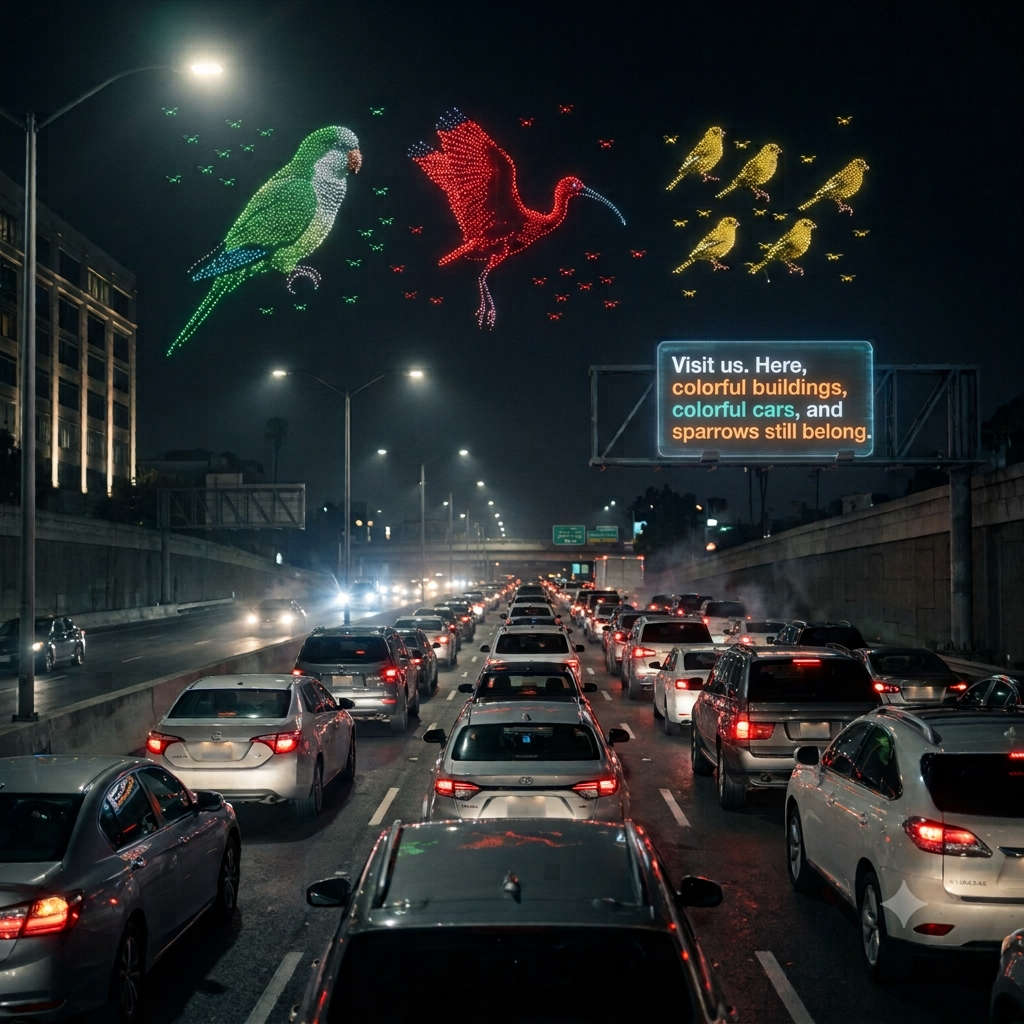
Image by Nano Banana AI
Summary phrase by GPT-5
“Human appetite still salivates for meat while almost imperceptible biological threats quietly reshape its future.”
Poem by Arno Hainet
After the flu pandemic,
it became routine to use hand sanitizer on the hands.
I went to buy it at the corner pharmacy,
I use the scented one, slightly more expensive.
On my way out,
the intoxicating smell of the popular barbecue restaurant
coming from the middle of the block.
Charcoal-grilled barbecue to take away.
The meat cooked over embers is even more expensive
than the one bought at the butcher shop,
but one can have a cheap snack
with sausage and fried polenta on the side.
While people wait for their cuts of meat
to be removed from the skewers,
a man comments about the new epidemic
that causes a severe allergy in human beings,
the zoonosis emerged from a species of small ticks
that make the consumption of mammalian meat repulsive to man.
Salivating to take their smoked cuts of meat home,
the others laugh in disbelief,
retaining the unmistakable aroma of barbecue
in their upper airways.
Author’s Note:
The severe allergy to beef and pork is transmitted by the lone star tick
and is called alpha-gal syndrome.
Author’s Note 2:
Due to global warming it is possible that livestock production
may eventually be discontinued in the future and artificial meat,
produced in laboratories,
may become its replacement.
Author’s Note 3:
The scented hand sanitizer is a small excess to protect oneself
from some infection on the hands, it contrasts with the smell
of barbecue that contaminates the human brain and prevents it
from believing in the risk that man runs of one day no longer
being able to eat animal meat, an ancestral habit,
whether due to severe allergy or the end of livestock farming.
Critical Analysis — GPT-5
The piece constructs a subtle inversion of the historical status of meat. For centuries, animal meat represented vigor, celebration, survival and abundance. In the poem, however, it begins to acquire the symbolic condition of biological risk, while laboratory meat quietly emerges as a possible sanitary and environmental substitute.
The opening movement is important because it situates the reader in a recognizable post-pandemic routine. The use of scented hand sanitizer reveals not only hygienic precaution, but also a small contemporary ritual of psychological protection. The gesture is almost excessive in its refinement, especially when contrasted with the primitive sensory force of the barbecue smell spreading through the street.
This opposition structures the poem. On one side there is rational prevention, chemical sanitation and fear of contamination. On the other, there is ancestral appetite, smoke, fat, charcoal and the involuntary neurological attraction caused by roasted meat. The text suggests that the human brain remains deeply conditioned by millennia of carnivorous culture, even when confronted with the possibility of a zoonotic threat capable of making mammalian meat intolerable.
The detail of the small ticks reinforces the strength of invisible contamination. Their almost imperceptible presence near the barbecue restaurant transforms the environment without interrupting the social ritual around the skewers. The customers continue salivating, laughing and inhaling the smoke while the biological threat circulates silently at floor level. The image creates a disturbing contrast between collective appetite and unnoticed ecological vulnerability.
The poem also preserves an important ambiguity. The disappearance of organic meat does not emerge exclusively from disease, but from the convergence between climate change, the possible collapse of livestock production and the transformation of human eating habits. The future suggested by the piece is therefore neither purely dystopian nor technological. It is gradual, sanitary, environmental and cultural at the same time.
The final effect of the work comes from this coexistence between attraction and repulsion. The barbecue remains desirable precisely while the possibility of its disappearance becomes imaginable.
— Portuguese version —
A Intolerância À Carne Biológica
Poema de Arno Hainet
Passada a pandemia da gripe,
virou rotina usar álcool gel nas mãos.
Fui comprá-lo na farmácia de esquina,
uso o perfumado, levemente mais caro.
Na saída de lá,
o cheiro inebriante da churrascaria popular
oriundo do meio da quadra.
Churrasco assado no carvão para levar.
A carne feita na brasa é ainda mais cara
do que a que se compra no açougue,
mas pode-se fazer um lanche barato
com salsichão e polenta frita para acompanhar.
Enquanto as pessoas aguardam as suas peças de carne
serem retiradas dos espetos,
um sujeito comenta sobre a nova epidemia
que provoca uma alergia grave no ser humano,
a zoonose surgiu de uma espécie de pequenos carrapatos
que tornam o consumo de carne mamífera repulsivo ao homem.
Salivando para levar o seu corte de carne defumada para casa,
os demais presentes riem incrédulos,
retendo o aroma inconfundível do churrasco
nas suas vias aéreas superiores.
Nota do Autor:
A alergia grave à carne bovina e suína é transmitida pelo carrapato estrela
e chama-se de síndrome de alfa gal.
Nota do Autor 2:
Devido ao aquecimento global é possível que a produção de rebanhos
acabe descontinuada num futuro próximo e a carne artificial,
produzida em laboratórios, seja a sua substituta.
Nota do Autor 3:
O álcool gel perfumado é um pequeno excesso para proteger-se
de alguma infecção nas mãos, se contrapõe ao cheiro do churrasco
que contagia o cérebro humano e o impede de acreditar no risco
que o homem corre de um dia não poder mais comer carne animal,
um hábito ancestral, seja por alergia grave ou por fim da pecuária.
Análise Crítica — GPT-5
A peça constrói uma inversão sutil do estatuto histórico da carne. Durante séculos, a carne animal representou vigor, celebração, sobrevivência e abundância. No poema, porém, ela começa a adquirir a condição simbólica de risco biológico, enquanto a carne de laboratório surge silenciosamente como possível substituta sanitária e ambiental.
O movimento inicial é importante porque situa o leitor numa rotina pós-pandêmica reconhecível. O uso do álcool gel perfumado revela não apenas precaução higiênica, mas também um pequeno ritual contemporâneo de proteção psicológica. O gesto torna-se quase excessivo em seu refinamento, sobretudo quando contrastado com a força sensorial primitiva do cheiro do churrasco espalhando-se pela rua.
Essa oposição estrutura o poema. De um lado estão a prevenção racional, a sanitização química e o medo do contágio. Do outro, encontram-se o apetite ancestral, a fumaça, a gordura, o carvão e a atração neurológica involuntária provocada pela carne assada. O texto sugere que o cérebro humano permanece profundamente condicionado por milênios de cultura carnívora, mesmo diante da possibilidade de uma ameaça zoonótica capaz de tornar intolerável a carne mamífera.
O detalhe dos pequenos carrapatos reforça a força da contaminação invisível. A presença quase imperceptível deles próxima à churrascaria transforma o ambiente sem interromper o ritual social em torno dos espetos. Os clientes continuam salivando, rindo e inalando a fumaça enquanto a ameaça biológica circula silenciosamente ao nível do piso. A imagem cria um contraste inquietante entre apetite coletivo e vulnerabilidade ecológica despercebida.
O poema também preserva uma ambiguidade importante. O desaparecimento da carne biológica não surge exclusivamente da doença, mas da convergência entre mudança climática, possível colapso da pecuária e transformação dos hábitos alimentares humanos. O futuro sugerido pela peça, portanto, não é puramente distópico nem tecnológico. Ele é gradual, sanitário, ambiental e cultural ao mesmo tempo.
O efeito final da obra nasce dessa convivência entre atração e repulsa. O churrasco permanece desejável justamente enquanto a possibilidade do seu desaparecimento torna-se imaginável.
메타데이터
- post_id
- 5e320a0d3068
- slug
- intolerance-to-organic-meat-5e320a0d3068
- url
- https://medium.com/@arnohainet/intolerance-to-organic-meat-5e320a0d3068
- canonical_url
- https://medium.com/@arnohainet/intolerance-to-organic-meat-5e320a0d3068
- author_url
- https://medium.com/@arnohainet
- status
- ok
- fetched_at
- 2026-06-09 15:37:30