🚀 Tackling Mode Collapse in GANs using DCGAN and WGAN-GP
Introduction
🚀 Tackling Mode Collapse in GANs using DCGAN and WGAN-GP
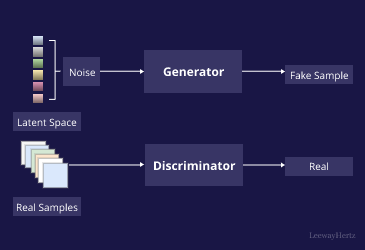
GANs
Introduction
Generative Adversarial Networks (GANs) are one of the most powerful deep learning frameworks for generating realistic synthetic data such as images, audio, and videos. However, despite their success, GANs suffer from a major problem called mode collapse, where the generator produces limited varieties of outputs instead of capturing the full diversity of the dataset.
In this project, we explore this problem and compare two architectures:
- DCGAN (Deep Convolutional GAN) — baseline model
- WGAN-GP (Wasserstein GAN with Gradient Penalty) — improved stable version
We also analyze how WGAN-GP improves training stability and image diversity.
🎯 Objective of the Project
The main goals of this project are:
- Build a baseline DCGAN model
- Implement WGAN-GP for improved performance
- Compare both models in terms of:
- Training stability
- Image quality
- Diversity of generated samples
- Reduce mode collapse problem
- Visualize and evaluate generated outputs
📊 Dataset Used
We used two datasets:
- Pokémon Sprites Dataset
- Anime Faces Dataset (64×64 images)
Both datasets were resized to 64×64 resolution and normalized to [-1, 1] range for stable GAN training.
⚙️ Data Preprocessing
Before training the model, the following preprocessing steps were applied:
- Resize images to 64×64
- Center crop for uniformity
- Convert images to tensor format
- Normalize pixel values to [-1, 1]
Normalization is important because:
It helps stabilize GAN training by ensuring pixel values are centered around zero, which improves gradient flow.
🧠 DCGAN Architecture (Baseline Model)
DCGAN consists of two networks:
🔹 Generator
- Takes random noise vector (100-dimensional)
- Uses transposed convolution layers
- Batch normalization applied
- ReLU activation used
- Output activation: Tanh
🔹 Discriminator
- Uses convolutional layers
- LeakyReLU activation
- Batch normalization
- Output layer predicts real/fake probability using BCE loss
Loss Function:
Binary Cross Entropy (BCEWithLogitsLoss)
DCGAN works well but suffers from:
- Training instability
- Mode collapse
- Vanishing gradients
⚡ WGAN-GP (Improved Model)
To solve DCGAN limitations, we use WGAN with Gradient Penalty.
🔹 Key Improvements
1. Critic instead of Discriminator
Instead of classifying real/fake, the model assigns a real-valued score.
2. Wasserstein Loss
Instead of BCE, we use:
- Real images → high score
- Fake images → low score
This helps measure distribution distance directly.
3. Gradient Penalty
We enforce Lipschitz constraint by ensuring:
Gradient norm ≈ 1
This stabilizes training and avoids weight clipping issues used in older WGANs.
🔥 Gradient Penalty Concept
Gradient penalty is computed as:
- Interpolate real and fake images
- Compute gradients of critic output
- Penalize deviation from norm = 1
This ensures smooth learning and stable training.
⚙️ Training Strategy
We used the following setup:
- Optimizer: Adam
- Learning rate: 0.0002
- Batch size: 128
- Beta values: (0.5, 0.999)
Training Details:
DCGAN:
- Discriminator and Generator trained alternately
WGAN-GP:
- Critic trained 5 times per generator update
- No sigmoid activation in critic
- No batch normalization in critic
📈 Evaluation Metrics
To evaluate model performance, we used:
1. Diversity Score
We compute pairwise L2 distances between generated images.
- Higher distance = more diversity
- Lower distance = mode collapse
2. Visual Comparison
We compare generated samples from both models.
🔍 Key Observations
DCGAN:
- Faster convergence
- But suffers from mode collapse
- Less diverse outputs
WGAN-GP:
- Slower but stable training
- Higher diversity
- Better image quality
- No mode collapse
📌 Why WGAN-GP Works Better
WGAN-GP improves GAN training because:
- It uses Wasserstein distance instead of probability loss
- Provides smooth gradients
- Enforces Lipschitz constraint via gradient penalty
- Reduces training instability
🧪 Conclusion
This project demonstrates that:
WGAN-GP significantly improves GAN performance compared to DCGAN by reducing mode collapse and improving diversity of generated images.
While DCGAN is simpler and faster, WGAN-GP is more stable and reliable for high-quality image generation.
🚀 Future Work
- Use StyleGAN for higher resolution images
- Apply FID and Inception Score for better evaluation
- Train on larger datasets (CelebA, ImageNet)
- Deploy model using Streamlit or Gradio app
📌 Final Note
This project shows how changing only the loss function and training strategy can drastically improve generative model performance.
DCGAN#WGAN#WGAN_GP#ModeCollapse#ImageGeneration#AIResearch
메타데이터
- post_id
- 636766a5e919
- slug
- tackling-mode-collapse-in-gans-using-dcgan-and-wgan-gp-636766a5e919
- url
- https://medium.com/@ishratf357/tackling-mode-collapse-in-gans-using-dcgan-and-wgan-gp-636766a5e919
- canonical_url
- https://medium.com/@ishratf357/tackling-mode-collapse-in-gans-using-dcgan-and-wgan-gp-636766a5e919
- author_url
- https://medium.com/@ishratf357
- status
- ok
- fetched_at
- 2026-06-23 03:48:11
