FileMaker Is Still Relevant. Here’s Why the AI Era Actually Proves It.
I came across a Wall Street Journal piece recently about a gluten-free bakery in New York that replaced their chaotic production…

FileMaker Is Still Relevant. Here’s Why the AI Era Actually Proves It.
I came across a Wall Street Journal piece recently about a gluten-free bakery in New York that replaced their chaotic production spreadsheets with an AI-powered planning tool. The whole thing cost a few hundred dollars a month. It automated ingredient calculations, production scheduling, and order scaling — things that used to require a dedicated operations manager to hold together through sheer force of will.
My first thought: that’s a FileMaker app.
Not literally — they used AI agents built by a consulting firm. But the problem they solved? That’s exactly the kind of problem FileMaker developers have been solving for decades. Custom business logic. Relational data. Workflows that don’t map to any off-the-shelf product. Growing businesses that have outpaced their spreadsheets but aren’t ready (or willing) to drop $500K on an ERP.
I run FMDojo, a platform and developer community for FileMaker. And whenever I see headlines like “AI is coming for small business software,” I brace for the subtext: that tools like FileMaker are being left behind.
I don’t think that’s true. Here’s why.
The problem hasn’t changed
The bakery in the article had 85 employees, $8M in annual revenue, and was tracking production schedules by printing out Excel sheets and handing out wooden rulers so bakers could follow the right row. Their operations manager updated everything manually every time an order changed.
That’s not a technology failure. That’s a systems design failure. And it’s incredibly common.
Small businesses grow faster than their internal tools. At some point the spreadsheet breaks — not because spreadsheets are bad, but because a living, breathing business operation can’t be static. Data needs relationships. Workflows need logic. People need something that updates when reality changes.
FileMaker has always been the answer to that problem for businesses that can’t afford — or don’t need — enterprise software. A custom FileMaker solution built by an experienced developer is still one of the fastest paths from “we’re drowning in spreadsheets” to “our data actually works for us.”
What AI actually changes
Here’s what is changing: the bar for what a small business expects from its software is rising fast. The bakery’s new system doesn’t just store data — it calculates things, surfaces insights, and scales automatically when a new order comes in. That’s the expectation now.
And honestly, that’s an opportunity for FileMaker developers, not a threat.
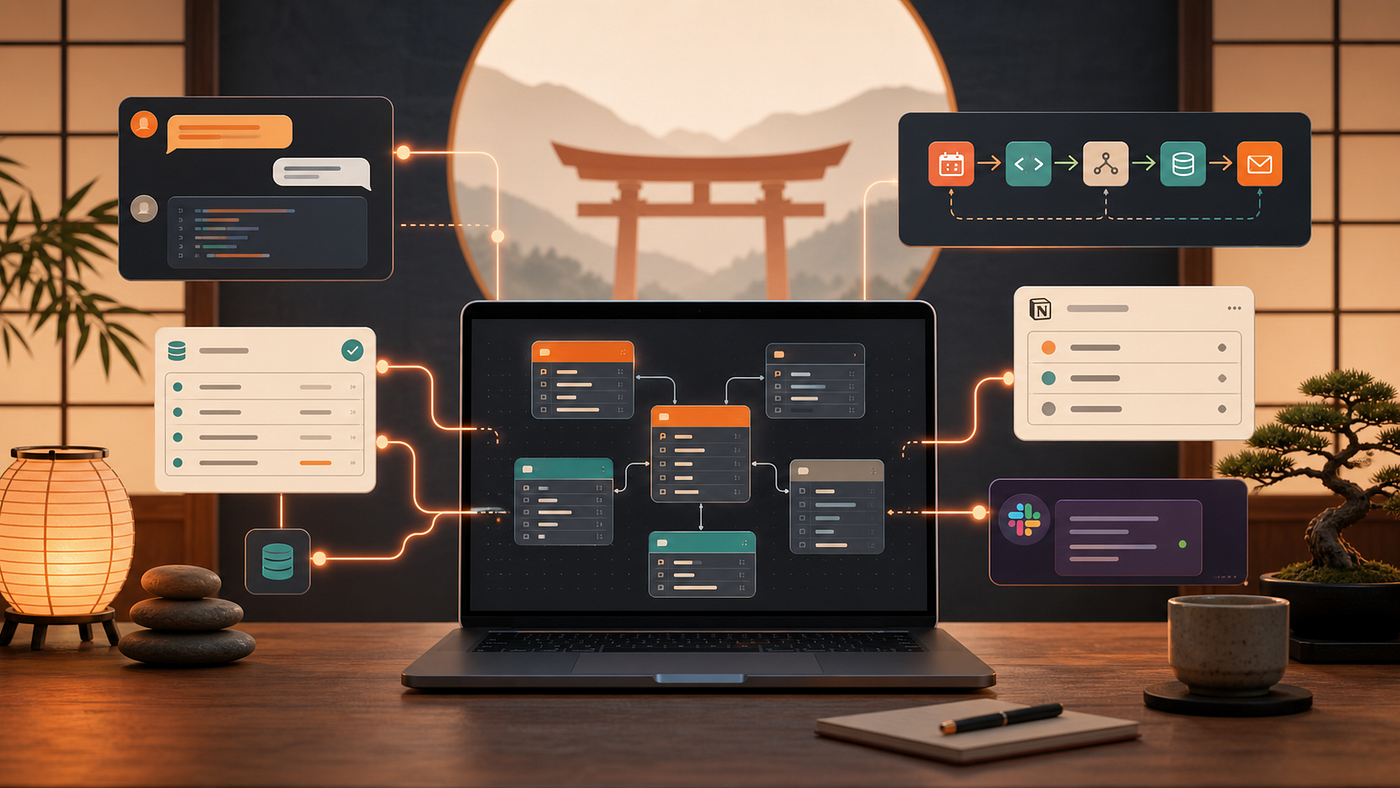
FileMaker already has the relational data model, the scripting engine, and the custom UI flexibility. What AI adds is the ability to interpret messy input, generate summaries, assist with decisions, and handle the kind of fuzzy logic that used to require human judgment. Bolt that onto a solid FileMaker foundation and you’ve got something genuinely powerful.
I’ve been building out AI features in FMDojo’s own toolset — things like AI-assisted SQL generation, smarter data migration workflows, and natural language interfaces for FileMaker databases. It’s not magic. But when it works, it dramatically lowers the technical burden on the end user.
The “Victor” problem
There’s a detail in the article that I keep thinking about. The bakery had a production manager named Victor who had never screwed up an order. Their whole operation ran on him. Staff motto: “In Victor we trust.”
That’s sweet. It’s also terrifying from a business continuity standpoint.
Every small business has a Victor. Someone who holds critical knowledge in their head, who’s been there long enough to know all the edge cases, who you genuinely cannot afford to lose. The goal of good business software — whether it’s FileMaker or AI or both — is to get that knowledge out of one person’s head and into a system that the whole team can rely on.
That’s not about replacing Victor. It’s about making sure the business doesn’t collapse if Victor takes a vacation.
The bottom line
More than 50% of small businesses say they plan to use AI tools this quarter, according to recent survey data. That number is only going up.
But AI tools don’t run in a vacuum. They need data. They need structure. They need workflows that make sense. And most small businesses don’t have that foundation in place — they have Victors and spreadsheets.
That’s where FileMaker developers come in. That’s where FMDojo fits. The opportunity right now isn’t to compete with AI — it’s to be the layer that makes AI actually useful for the businesses that need it most.
The bakery didn’t need a miracle. They needed their data to work. That’s always been the job.
메타데이터
- post_id
- 649df7d82662
- slug
- filemaker-is-still-relevant-heres-why-the-ai-era-actually-proves-it-649df7d82662
- url
- https://medium.com/@agir/filemaker-is-still-relevant-heres-why-the-ai-era-actually-proves-it-649df7d82662
- canonical_url
- https://medium.com/@agir/filemaker-is-still-relevant-heres-why-the-ai-era-actually-proves-it-649df7d82662
- author_url
- https://medium.com/@agir
- status
- ok
- fetched_at
- 2026-07-10 08:54:07