The Day the Government Decided She Was Dead
Adrienne Wells Chapman survived congestive heart failure. The record her government kept of her did not, and every system downstream…
The Day the Government Decided She Was Dead
Adrienne Wells Chapman survived congestive heart failure. The record her government kept of her did not, and every system downstream believed the record instead of her.
In September 2025, Adrienne Wells Chapman was in a hospital bed in Atlanta, recovering from congestive heart failure on top of diabetes, neuropathy, high blood pressure, a stroke the year before and a heart attack a few years before that. “I was on my deathbed during that time,” she said later, “but I walked out of the hospital, you know? I’m alive.”
She was alive. Weeks after she left the hospital, a pharmacist filling her prescription told her something that made no sense: there was no insurance on file for her. Wells Chapman went looking for an explanation and got one. Somewhere in the Social Security Administration’s records, her date of death was now on file: 14 September 2025. The day she nearly died. Not the day she did.
What followed was not a paperwork inconvenience. It was a second illness, running on top of the first. Her disability claim, already approved, was reclassified as a “glitch.” Her Medicaid coverage vanished. Her food assistance was cut in half. Her only bank account was frozen and her credit history wiped clean, as though the woman who had built it had never existed, which, on paper, she now had not. The hospitals that had treated the heart failure kept billing the person who was still alive to receive the bills: $48,946 from Emory, at least $12,000 more from Piedmont. “A mess,” she called it. “A complete mess.”
Wells Chapman had moved to Atlanta from North Carolina only two months earlier, in July 2025, to be closer to family while she recovered. She had applied for Medicaid in both states along the way, chasing coverage across a move that any ordinary life sometimes requires. Somewhere in that ordinary movement, between an old state’s records and a new one’s, between a disability system and a death system that are not supposed to talk over each other but sometimes do, a single wrong entry was made.
She started calling the Social Security Administration every morning. That became her job, she said, on top of the job of staying alive with an unmedicated heart condition. She waited more than a month for an in-person appointment. Meetings were promised and not kept. Months after the pharmacist first told her something was wrong, she was still, by every system that mattered to her daily life, dead.
A number, not an anecdote
It would be a comforting mistake to read Wells Chapman’s case as a single clerk’s typo, since a clean human error is at least a story with an ending. It is not that.
In June 2026, the Social Security Administration’s own Office of the Inspector General published an audit asking a narrower, drier question: when the agency wrongly records a living beneficiary as dead, does it follow its own procedure for fixing the mistake. The answer, buried in bureaucratic language, is unsettling. The agency posted 5.6 million death records in calendar year 2025 alone, and it later determined that 12,504 of them, a little over one in five hundred, were wrong. Looking back further, auditors identified 24,219 beneficiaries who had at least one incorrect death record between January 2020 and December 2024. They sampled 175 of those cases. In 45 percent of them, the technician who corrected the error never documented why, leaving the agency with no record of its own mistake and no way to learn from it. In two cases, the benefits were never properly reinstated at all.
None of this is new information to the people who study it. A 2019 report from the Social Security Advisory Board had already told the agency, in writing, what the consequence of an erroneous death record looks like for the person living through it: identity authentication may fail, employment may be hard to secure, credit may be denied, tax refunds may be delayed, and “other adverse actions may be taken by entities that receive SSA’s death data.” That warning is six years old. Wells Chapman’s bank, her food assistance office and her state Medicaid programme all behaved exactly as the 2019 report predicted they would, because each of them trusted the same upstream flag without asking whether it was true.
The record won
Here is the part worth sitting with. At no point in Wells Chapman’s ordeal was there a genuine dispute about the facts. She was calling. She was walking into offices. She had a pulse, a pharmacy history, a landlord, a son. Every plain fact about her contradicted the one entry that mattered. And for months, the entry won.
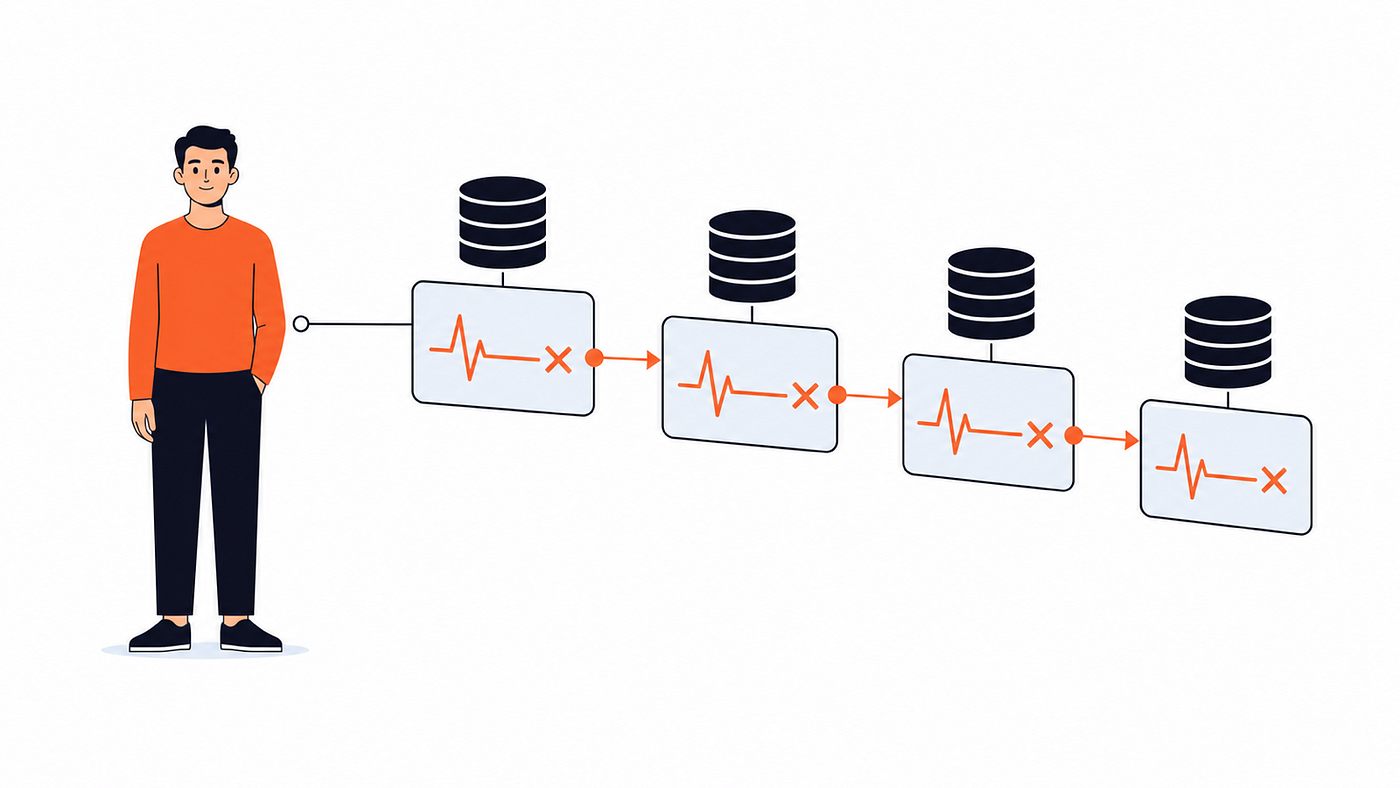
That is not really a story about death records. It is a story about what happens when a piece of information, once written down in one system, gets treated as settled everywhere else that depends on it, instead of as a claim that ought to be checked against the other things that are known about the same person. A bank does not independently verify that a customer has died. It reads a feed. A state Medicaid office does not investigate. It reads a feed. The error was made once, probably by an ordinary keying mistake or a garbled third party report, the kind the SSA’s own documentation admits happens routinely. The damage was done by every system after that one which had no job whose purpose was to notice the contradiction before acting on it.
Every organisation I have ever looked at closely has some version of this problem sitting quietly in its stack, whether or not death is ever involved. A customer exists under a maiden name in one system, a married name in another, an old address in a third, and a support ticket that says the account was closed when it was only ever paused. Each system is honestly reporting what it holds. None of them is lying. The problem is that nobody owns the job of reconciling the fragments into one current, trustworthy answer before something acts on them.
What changes when nobody has to notice
For most of the history of large institutions, a slow, human process sat between a bad record and a serious consequence. A caseworker eventually read a file by hand. A benefits appeal took months, which was cruel to the person waiting but also gave a human being time to notice that something did not add up. Wells Chapman’s own fight, the calls every morning, the missed appointments, the demand for “more checks and balances,” is that same slow human correction still running exactly as it always has: badly, unevenly, but running.
An AI agent removes that friction, and with it the only thing that was ever catching this kind of error. Ask an agent to read an account, check a status flag and act, and it will act. It has no instinct that the flag in front of it might be the wrong resolution of a person who exists somewhere else in the same organisation under a different name or a different record. A wrong “deceased” flag does not read any differently to a model than a correct one. It will deny the claim, freeze the account or close the ticket in the same confident tone either way, because confidence was never the thing in short supply. Correctness was.
Imagine the same case running through a bank’s customer service agent instead of a human teller. A person calls in, gives a name and an address, and asks why their card was declined. The old record, wrongly flagged, sits in the account system the agent was built to trust. There is no teller pausing, frowning, deciding something feels off enough to escalate to a supervisor. There is a model reading a field marked closed, or deceased, or fraudulent, and behaving exactly as it was told to behave when it sees that field. The caller’s protests are not new information to a system that was never asked to weigh them against the record in the first place.
That is the problem I have spent the last several years of my working life trying to close: the gap between what a record says about a person and what is actually true about them, closed before anything downstream is allowed to act on it, not after. It means treating any single system’s claim about a customer as provisional until it has been checked against every other source that also claims to know that person, using exact matches where a stable identifier genuinely exists and weighing softer, messier evidence, a shared address, a slightly misspelled name, a date a year off, when it does not. None of that is exotic. It is a discipline, and the discipline has a name: entity resolution. What it is not is optional, once the thing reading the record can act in seconds instead of waiting for a human to notice.
Nine months after the Social Security Administration recorded her death, and two months into a daily fight to reverse it, Adrienne Wells Chapman was still, by the government’s own account, dead. “It caused so much chaos,” she said, “that one little stroke of a key, all the damage that it can cause.” A person can absorb that chaos, however unfairly, because a person can keep calling every morning until someone finally listens. A system given the same wrong flag and asked to act on it will not call anyone. It will simply decide, correctly according to its own records and wrongly according to the world, that she is not there to answer.
Steven Renwick is the co-founder and CEO of Tilores, which provides real-time entity resolution through an API for AI and data teams working with fragmented customer records.
SOURCES 1. WRDW-TV, “Ga. mom loses all benefits after Social Security mistakenly declares her dead,” Alani Letang, June 25, 2026. 2. Social Security Administration, Office of the Inspector General, “Beneficiaries Incorrectly Recorded as Deceased” (Report №032311), June 24, 2026. 3. Social Security Advisory Board, “Social Security and the Death Master File,” June 17, 2019. 4. “How AI Agents Resolve the Same Customer Across Scattered Data Sources”
메타데이터
- post_id
- 6b29a7ea209d
- slug
- the-day-the-government-decided-she-was-dead-6b29a7ea209d
- url
- https://medium.com/@major-grooves/the-day-the-government-decided-she-was-dead-6b29a7ea209d
- canonical_url
- https://medium.com/@major-grooves/the-day-the-government-decided-she-was-dead-6b29a7ea209d
- author_url
- https://medium.com/@major-grooves
- status
- ok
- fetched_at
- 2026-07-20 01:46:52