Enterprise Security Solutions Driving the Next Wave of Innovation
Understanding the Evolution of the Cyber Security Market
Enterprise Security Solutions Driving the Next Wave of Innovation
Understanding the Evolution of the Cyber Security Market
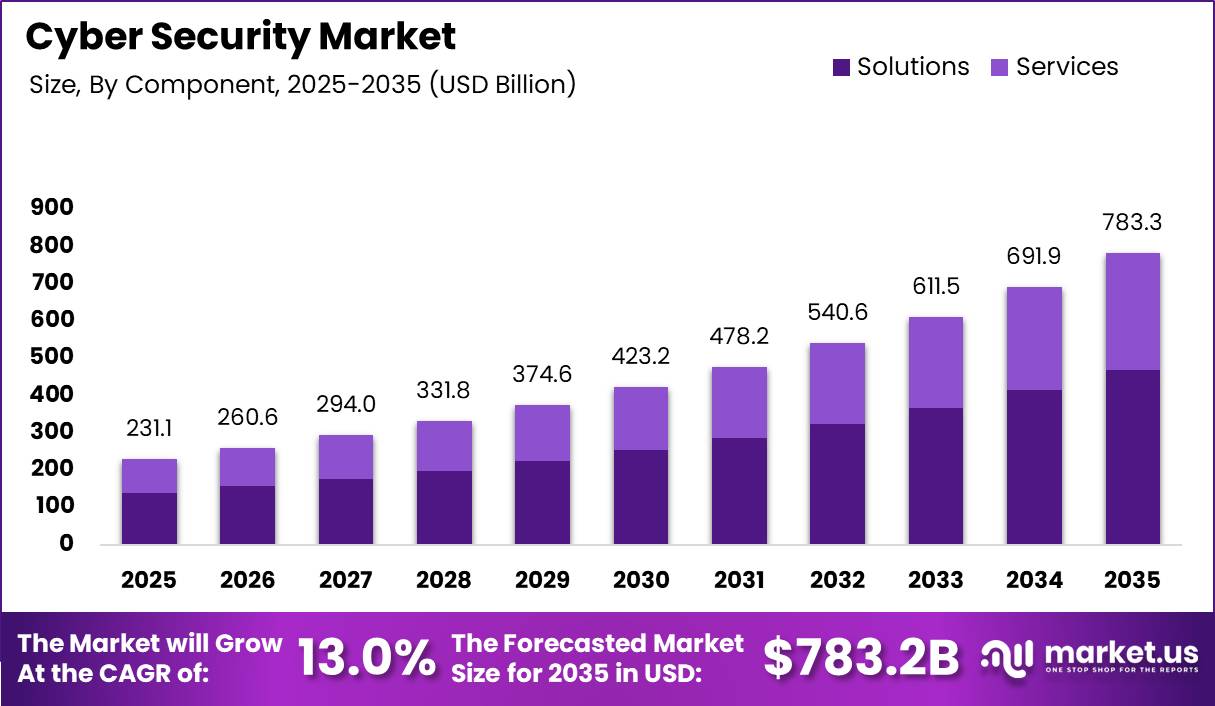
The cyber security market has evolved from a niche technology segment into one of the most critical pillars supporting the global digital economy. Organizations across industries are facing an increasingly sophisticated threat environment where cybercriminals exploit vulnerabilities through ransomware, phishing, malware, insider attacks, and advanced persistent threats. As enterprises embrace digital transformation, cybersecurity has become fundamental to ensuring operational continuity, protecting sensitive information, and maintaining customer confidence.
Businesses today operate in interconnected ecosystems that extend far beyond traditional corporate networks. Cloud platforms, remote workforces, Internet of Things (IoT) devices, and artificial intelligence have dramatically expanded the attack surface. Consequently, organizations are investing heavily in comprehensive security frameworks that provide proactive protection rather than reactive defense.
Get Sample PDF: https://market.us/report/cyber-security-market/request-sample/
The Growing Importance of Cyber Security in the Digital Economy
Digital transformation has fundamentally altered the way organizations conduct business. Every transaction, customer interaction, and operational workflow increasingly relies on digital infrastructure. This reliance has elevated cybersecurity from an IT concern to a boardroom priority.
Modern enterprises recognize that cyber incidents can disrupt operations, damage reputations, and generate significant financial losses. Data protection has become synonymous with business resilience. Organizations are therefore integrating cybersecurity into strategic planning, ensuring that digital innovation progresses alongside robust security measures.
The increasing adoption of digital payment systems, cloud computing, and connected technologies continues to strengthen demand for advanced cybersecurity solutions. Security investments are no longer optional — they are strategic necessities.
Key Factors Accelerating Market Expansion
Several influential factors continue driving the rapid growth of the cyber security market.
The proliferation of connected devices has significantly increased potential entry points for cyberattacks. Simultaneously, enterprises continue migrating workloads to cloud environments, requiring sophisticated cloud-native security solutions capable of protecting distributed infrastructures.
Artificial intelligence, automation, and big data analytics have introduced both opportunities and challenges. While these technologies improve operational efficiency, they also create new vulnerabilities that require innovative security mechanisms.
Regulatory frameworks governing data privacy further stimulate market expansion. Compliance with international standards encourages organizations to invest in advanced security technologies capable of meeting increasingly stringent requirements.
Emerging Threat Landscape and Business Challenges
Cyber threats continue evolving at remarkable speed. Attack methodologies have become increasingly sophisticated, leveraging automation, artificial intelligence, and social engineering to bypass conventional defenses.
Ransomware campaigns remain one of the most disruptive forms of cybercrime. Attackers increasingly target critical infrastructure, healthcare institutions, financial organizations, and government agencies, demanding substantial payments while disrupting essential services.
Supply chain attacks have also emerged as significant concerns. Rather than attacking organizations directly, cybercriminals infiltrate trusted vendors or software providers to compromise multiple targets simultaneously.
These evolving threats require organizations to adopt continuous monitoring, proactive intelligence gathering, and adaptive security architectures capable of responding rapidly to emerging risks.
Role of Government Regulations and Compliance Standards
Governments worldwide continue strengthening cybersecurity legislation to protect national infrastructure and consumer data.
Data protection regulations require organizations to implement comprehensive security controls, maintain transparent governance frameworks, and establish effective incident response procedures.
Compliance initiatives encourage widespread adoption of encryption technologies, identity management systems, multifactor authentication, and continuous security monitoring.
Although regulatory compliance represents a substantial investment, it also strengthens organizational resilience by promoting standardized security practices and reducing exposure to cyber risks.
Technological Innovations Shaping the Cyber Security Market
Technological innovation remains the principal catalyst transforming the cybersecurity industry. Advanced technologies enable organizations to detect threats faster, automate defensive responses, and strengthen digital resilience across increasingly complex environments.
Security vendors continue introducing intelligent platforms capable of identifying anomalous behavior before attacks can inflict significant damage. These innovations are redefining enterprise security strategies while supporting sustainable digital transformation.
Artificial Intelligence and Machine Learning in Threat Detection
Artificial intelligence has become indispensable within modern cybersecurity operations.
Machine learning algorithms continuously analyze enormous datasets, identifying subtle behavioral anomalies that traditional signature-based systems may overlook. These intelligent systems learn from evolving attack patterns, allowing organizations to detect emerging threats with greater accuracy.
AI-powered security platforms reduce false positives while accelerating incident investigation and remediation. Automated threat hunting enables security teams to prioritize critical vulnerabilities efficiently, improving operational effectiveness.
As cybercriminals increasingly utilize AI themselves, defensive technologies must evolve continuously to maintain strategic superiority.
Cloud Security and Zero Trust Architecture
Cloud computing has revolutionized enterprise infrastructure, introducing unprecedented scalability alongside new security considerations.
Organizations increasingly implement Zero Trust Architecture, which assumes no user, device, or application should receive implicit trust regardless of network location. Every access request undergoes continuous verification based on identity, context, and behavioral analysis.
Cloud security solutions incorporate encryption, workload protection, identity governance, secure access service edge (SASE), and cloud-native application protection platforms.
These technologies collectively strengthen enterprise resilience while supporting flexible hybrid and multi-cloud environments.
IoT, Edge Computing, and Endpoint Protection
The expansion of connected ecosystems continues transforming cybersecurity priorities.
Industrial IoT devices, smart cities, autonomous vehicles, healthcare equipment, and manufacturing systems generate enormous volumes of interconnected data. Every connected endpoint represents a potential vulnerability requiring continuous protection.
Endpoint Detection and Response (EDR) solutions provide real-time visibility into user devices, enabling rapid threat identification and containment.
Edge computing further decentralizes data processing, requiring distributed security architectures capable of protecting information closer to its source while minimizing latency.
Security Automation and Predictive Cyber Defense
Automation has become essential for managing increasingly complex cybersecurity operations.
Security orchestration platforms automate repetitive tasks including alert prioritization, malware containment, vulnerability assessment, and incident response workflows.
Predictive analytics leverage historical attack data, behavioral intelligence, and threat indicators to anticipate potential security incidents before they occur.
This proactive approach significantly reduces response times while allowing security professionals to concentrate on strategic decision-making rather than routine operational activities.
Future Outlook and Growth Opportunities in the Cyber Security Market
The future of the cyber security market remains exceptionally promising. Accelerating digital transformation, expanding regulatory requirements, and increasingly sophisticated cyber threats continue creating substantial demand for innovative security solutions.
Organizations recognize cybersecurity as a strategic investment supporting long-term digital growth, operational resilience, and competitive differentiation.
Industry-Wise Adoption and Investment Trends
Cybersecurity adoption spans virtually every major industry.
Financial institutions invest heavily in fraud prevention and transaction security. Healthcare providers prioritize patient data protection and medical device security. Manufacturing organizations strengthen industrial control systems against operational disruption.
Retailers secure omnichannel commerce platforms, while government agencies enhance national cybersecurity infrastructure.
Growing investment across these diverse sectors continues expanding the cybersecurity ecosystem and encouraging technological innovation.
Regional Market Developments and Competitive Landscape
Regional cybersecurity markets exhibit distinct growth characteristics influenced by technological maturity, regulatory frameworks, and digital adoption rates.
North America remains a prominent innovation hub supported by advanced digital infrastructure and substantial cybersecurity investments.
Europe emphasizes regulatory compliance and data privacy initiatives, while Asia-Pacific experiences rapid expansion driven by accelerating digital transformation, smart city initiatives, and increasing enterprise technology adoption.
Competitive dynamics continue intensifying as established vendors, emerging startups, and cloud service providers introduce increasingly sophisticated security capabilities.
Opportunities for Innovation and Strategic Partnerships
Innovation continues creating substantial opportunities throughout the cybersecurity value chain.
Artificial intelligence, quantum-resistant encryption, behavioral biometrics, secure identity platforms, confidential computing, and extended detection and response (XDR) solutions represent important areas of ongoing development.
Strategic collaborations among technology vendors, telecommunications companies, cloud providers, academic institutions, and government agencies accelerate innovation while strengthening global cyber resilience.
These partnerships facilitate knowledge sharing, improve interoperability, and enable faster deployment of advanced security technologies.
Future Prospects and Long-Term Market Evolution
The cyber security market is positioned for sustained expansion as digital ecosystems become increasingly interconnected and sophisticated.
Future security platforms will combine artificial intelligence, automation, predictive analytics, decentralized identity management, and adaptive security architectures to combat evolving cyber threats more effectively.
Organizations will increasingly adopt integrated cybersecurity ecosystems rather than isolated point solutions, enabling comprehensive visibility across users, devices, applications, and cloud environments.
As digital innovation continues reshaping global commerce, cybersecurity will remain a foundational enabler of trust, resilience, and sustainable economic growth. The market’s long-term trajectory reflects not only rising demand for advanced protection but also the growing recognition that secure digital infrastructure is indispensable to the future of every connected enterprise.
메타데이터
- post_id
- 701957249653
- slug
- enterprise-security-solutions-driving-the-next-wave-of-innovation-701957249653
- url
- https://medium.com/@hazel.w3199/enterprise-security-solutions-driving-the-next-wave-of-innovation-701957249653
- canonical_url
- https://medium.com/@hazel.w3199/enterprise-security-solutions-driving-the-next-wave-of-innovation-701957249653
- author_url
- https://medium.com/@hazel.w3199
- status
- ok
- fetched_at
- 2026-08-08 12:46:18