Before You Blame the Meeting, Check the Room
Your learners may need ventilation first
Before You Blame the Meeting, Check the Room
Your learners may need ventilation first
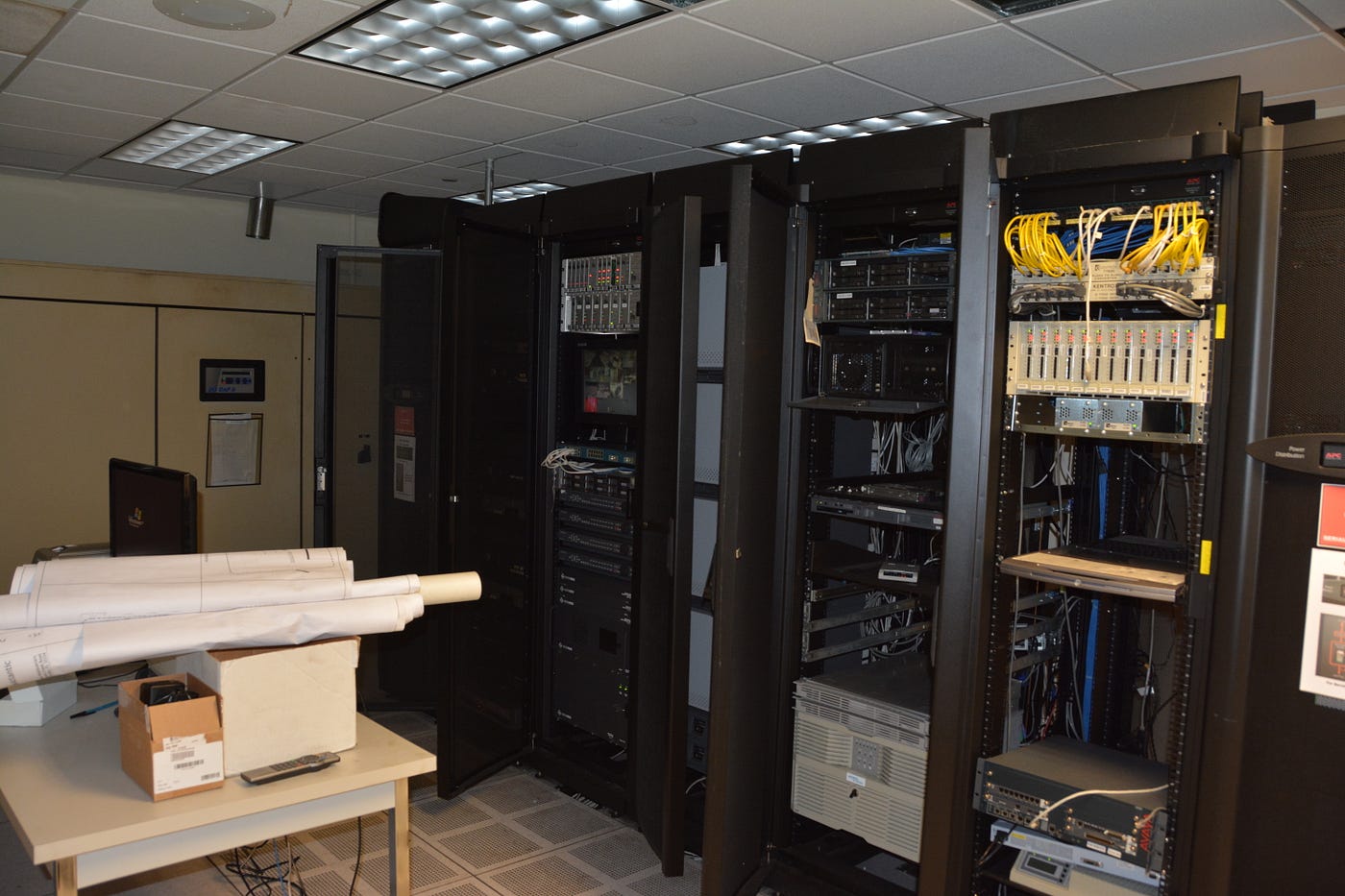
Photo by 2y.kang on Unsplash
On July 5, 2026, a small post about indoor CO2 became one of the most discussed links on Hacker News — more than 700 points and hundreds of comments in less than a day. The argument was simple enough to feel almost annoying: a closed meeting room can drift past 1,000 ppm of carbon dioxide within an hour, and some rooms can climb much higher.
I understand why it caught fire.
Most of us have sat through the second half of a workshop where the energy disappears. In a classroom, the questions get slower. In a remote course, the facilitator starts repeating the same sentence. In a planning session, the group loses the thread and reaches for the safest answer.
We usually blame the meeting.
Or the facilitator.
Or the students.
Or ourselves.
I have done this too. When a review call goes flat, my first instinct as an engineer is to inspect the agenda, the decision record, the tooling, the pull request size, or the async prep. Those are real variables. But the recent discussion forced me to put a less glamorous variable back into the system diagram — the physical room.
Before we diagnose weak participation, we should ask whether the room is making good participation harder.
1. The room is part of the lesson
Educators already know attention is not a purely mental resource. We adjust lighting. We reduce noise. We arrange chairs. We choose whether students face each other or face a screen. We give people breaks because bodies are not abstractions attached to brains.
Yet air often gets treated as background.
That is strange, because the work we ask people to do in teaching and creator-led learning is exactly the work most vulnerable to subtle environmental drag. We ask students to compare ideas, remember context, notice exceptions, ask better questions, and make judgments under incomplete information.
Small-team leaders do the same thing in a different costume. We run retrospectives, product reviews, editorial planning calls, sprint planning sessions, architecture discussions, and course-design critiques. These are not typing contests. They depend on attention and judgment.
The numbers behind the concern are not folklore. In a controlled 2012 Environmental Health Perspectives study, participants were exposed to 600, 1,000, and 2,500 ppm CO2 while completing a decision-making simulation. At 1,000 ppm, performance declined on six of nine decision-making measures compared with the 600 ppm baseline. At 2,500 ppm, seven of nine measures saw large reductions, with the steepest declines in taking initiative and thinking strategically.
A later controlled office-environment study, also published in Environmental Health Perspectives, put 24 participants through six full workdays in different indoor environmental conditions. Cognitive scores were higher in low-VOC, higher-ventilation “Green” and “Green+” conditions than in a conventional condition, and the authors found VOCs and CO2 independently associated with cognitive scores.
These studies do not prove every sleepy class is a ventilation problem. They do something more useful — they make stale indoor air a plausible variable in the same class as lighting, noise, and temperature.
That is enough to measure.
2. CO2 is a signal, not a villain
The easiest mistake is to turn CO2 into a single-cause explanation for every bad hour indoors. That would be too neat.
CO2 is useful because people exhale it. When several people sit in a closed room, the number rises if outdoor air is not replacing indoor air fast enough. In that sense, CO2 is often a proxy for ventilation. It may also have direct cognitive effects at levels commonly seen indoors, but indoor air is a mixture — human bioeffluents, VOCs from materials, particles, humidity, temperature, and outdoor pollutants all matter.
So the practical question is not “Did CO2 alone ruin my lesson?”
The better question is — “Is this room exchanging enough air for the work we are asking people to do?”
That distinction matters for educators and creators because we do not want another dashboard to worship. We want a usable signal.
ASHRAE Standard 62.1 frames ventilation around acceptable indoor air quality, not around a universal classroom magic number. NIOSH occupational limits also remind us not to confuse ordinary room readings with immediate toxicity — workplace exposure limits are far higher than the levels involved in most learning and meeting discussions.
That caveat cuts both ways. A room at 1,200 ppm is not an emergency. But it may still be a poor place for a nuanced conversation, a three-hour online workshop, or the final 40 minutes of a course where the hardest concept appears.
The goal is not panic. The goal is instrumentation.
In engineering, we are used to this. A high p95 latency does not tell us the whole system is broken. It tells us where to inspect. A rising error rate does not identify the root cause by itself. It narrows the search.
CO2 can play the same role for rooms.
3. A realistic measurement example
Here is the home-office version I would actually use.
Buy or borrow an NDIR CO2 monitor. Do not put it directly in your breathing stream. Put it on a shelf or table away from your face, away from a window crack, and away from the supply vent. Give it time to stabilize.
Then run one normal teaching or working block.
A plausible pattern in a small closed room looks like this:

The point is not whether your monitor says 1,250 or 1,330. Consumer sensors vary. Placement matters. Outdoor CO2 is no longer a fixed 400 ppm everywhere, and local conditions can shift it.
The point is the slope.
If the number climbs steadily during a lesson or meeting and drops quickly when you open a door or window, the room is telling you something actionable. You do not need a facilities report to try a 10-minute airing break.
For a classroom, I would measure across real use, not during an empty-room walkthrough. A room can look compliant and still perform poorly when 25 bodies arrive, laptops heat the space, blinds close, and the door stays shut for noise control. A monitor at the back of the room, away from direct exhalation, can give a rough but useful trend.
For a creator, the measurement can be even simpler. If your afternoon recording sessions always feel harder, compare a closed-door session against one with the door open or with a scheduled ventilation break. Watch both the CO2 curve and your own editing burden later. Did you ramble less? Did you need fewer retakes? Did your outline hold?
That is a better experiment than blaming willpower.
4. Why personal-device sensors are tempting but tricky
The Hacker News discussion quickly moved to a product idea — why not put CO2 sensors in phones or watches?
I like the instinct. Awareness changes behavior. Many people never think about ventilation because they have no feedback loop. A visible number makes the invisible negotiable.
But the implementation is harder than the product pitch.
A sensor on a wrist, desk phone, or laptop may sit inside a local plume of exhaled air. A reading near someone’s mouth is not the same as a room-average reading. Air does not mix instantly, and small changes in sensor position can create different values. The thresholds from controlled studies and building guidance generally refer to ambient room conditions, not a watch sitting close to a person’s breathing path.
This is a familiar product trade-off. Put the sensor close to the user and you maximize personal relevance, but you also maximize noise. Put it away from the user and you get a better room signal, but lose convenience.
If I were designing this feature for educators, I would avoid a dramatic “bad air” alert. I would show trends and context instead — something like: rising fast for 35 minutes, currently 1,280 ppm, suggested action a 5-minute ventilation break, and, crucially, a confidence note that the sensor is sitting close to the user.
That last line matters. We should teach people what the measurement means.
A creator tool could do the same thing. If a writing app or recording setup detects repeated high readings during long sessions, it could suggest a break before the next take. Not because the number owns the truth, but because the number is a cheap prompt to inspect the environment.
Good measurement should reduce superstition, not create a new one.
5. The counter-case — sometimes it is not the air
There is another reason to stay careful. Some symptoms people attribute to indoor air have other causes.
If someone is sleepy in every classroom, every movie theater, and every car ride, stale air may not be the main story. Sleep debt, sleep apnea, medication, depression, dehydration, lighting, boredom, illness, and workload can all show up as fatigue. In teaching, poor pacing and unclear tasks still matter. In meetings, bad facilitation is still bad facilitation.
The room is a variable, not an alibi.
I also would not use a cheap CO2 monitor to litigate building compliance. Schools and offices have HVAC systems, design standards, maintenance histories, and constraints. A consumer reading can start a conversation; it is not a legal-grade commissioning report.
And there is a fairness issue. “Open a window” is easy advice in a mild climate with clean outdoor air. It is harder during wildfire smoke, heavy traffic pollution, freezing weather, extreme heat, or a noisy street. Sometimes the better answer is filtration, mechanical ventilation, shorter sessions, room changes, or institutional investment.
That is why I like the educator framing better than the productivity-hack framing. The real question is not “How do I squeeze more output from people?”
The real question is — “What physical conditions do learners and collaborators need before we judge their effort?”
That question leaves room for care.
6. My operating rule for teaching and decision rooms
Here is the checklist I am taking from this.
Before an important class, workshop, or decision meeting, I want to know five things:
- Occupancy — how many people will breathe in this room, and for how long?
- Exchange — is there outdoor air coming in through HVAC, windows, doors, or scheduled breaks?
- Trend — does CO2 rise steadily during real use?
- Recovery — how quickly does the room improve when we open a door, window, or change rooms?
- Consequence — are we doing low-stakes listening, or are we asking for judgment, design, memory, and planning?
The last item is the one I would emphasize for educators.
A stale room during a casual viewing session is one problem. A stale room during an exam review, a special education planning meeting, a portfolio critique, or a course-design workshop is another. The same ppm reading has different stakes depending on what people are trying to do.
I would also change the meeting design.
For any session longer than 50 minutes, schedule a real break and ventilate during it. For rooms known to climb quickly, shorten the block. For remote teaching, normalize opening a door or window before a deep-focus segment. For recorded creator work, treat ventilation like microphone placement — not glamorous, but part of the production setup.
We already accept this in other domains. A teacher checks the projector before class. A podcaster checks audio before recording. An engineer checks CI before merging. The room deserves the same humility.
If the work depends on attention, the environment is not background infrastructure. It is part of the work.
The July 2026 discussion was loud because it gave many people a number for a feeling they had struggled to place. That does not make CO2 the explanation for every bad meeting or every tired student. It makes it one of the first cheap variables to rule out.
Open the door. Crack the window when outdoor conditions allow. Move the class. Take the break. Measure the trend.
Then judge the meeting.
References
- Satish et al., “Is CO2 an Indoor Pollutant? Direct Effects of Low-to-Moderate CO2 Concentrations on Human Decision-Making Performance,” Environmental Health Perspectives
- Allen et al., “Associations of Cognitive Function Scores with Carbon Dioxide, Ventilation, and Volatile Organic Compound Exposures in Office Workers,” Environmental Health Perspectives
- ASHRAE Position Documents — Indoor Carbon Dioxide
- ASHRAE Standard 62.1 — Ventilation for Acceptable Indoor Air Quality
- NIOSH Pocket Guide to Chemical Hazards — Carbon Dioxide

메타데이터
- post_id
- 728a5740b3c7
- slug
- before-you-blame-the-meeting-check-the-room-728a5740b3c7
- url
- https://medium.com/educreation/before-you-blame-the-meeting-check-the-room-728a5740b3c7
- canonical_url
- https://medium.com/educreation/before-you-blame-the-meeting-check-the-room-728a5740b3c7
- author_url
- https://medium.com/@wesley-wei
- status
- ok
- fetched_at
- 2026-07-10 23:26:47