Tariffs Aren’t the Mass Timber Problem. Procurement Discipline Is.
A market shock is exposing a discipline gap that was already there.
Tariffs Aren’t the Mass Timber Problem. Procurement Discipline Is.
A market shock is exposing a discipline gap that was already there.
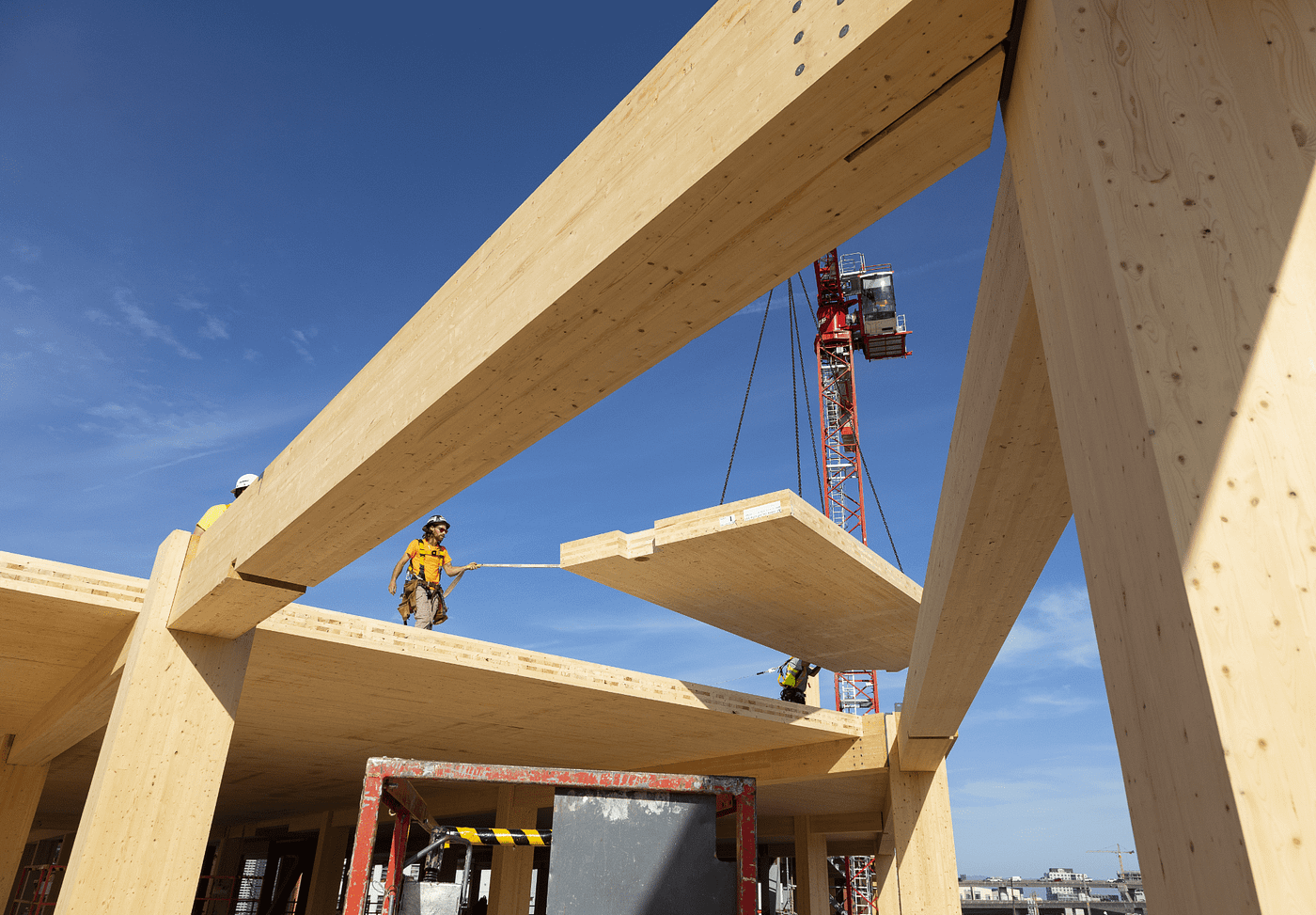
Tariffs solve for trade enforcement. They don’t solve for the gap between what the project’s pro forma assumed CLT would cost and what procurement decisions actually cost once the cost target starts moving.
Where Mass Timber Tariff Exposure Actually Begins
The U.S.–Canada softwood lumber dispute is not a 2026 story. It has run continuously since 1982, with successive rounds of antidumping and countervailing duty determinations layered onto cross-border trade in dimensional lumber, glulam, and structural panel products. Most development teams have treated the dispute as a framing-cost issue — a per-board-foot adder on stick-built single-family and light-frame multifamily projects, absorbed through general material escalators in the pro forma.
What changed in 2025 and 2026 was the structure of the duty regime, not just the rate.
In October 2025, the U.S. Department of Commerce imposed a 10% Section 232 tariff on all imported timber and lumber products, citing national security findings under the Trade Expansion Act of 1962. That tariff sits on top of existing antidumping and countervailing duties. The Commerce Department’s preliminary determination in April 2026 reduced the combined AD/CVD rate to 24.83% — but the Section 232 layer holds the effective combined burden on Canadian softwood at 34.83%. A final determination is expected in late August 2026.
The volume effect has been immediate. Softwood lumber imports from Canada fell 28% year-over-year through January 2026. Two mills in South Carolina permanently closed in August 2025. Conifex Timber announced additional Canadian capacity reductions in March 2026. The National Association of Home Builders has estimated that combined tariffs and duties have added at least $10,000 to the cost of a typical single-family home. Full-year 2025 single-family housing starts fell 7% to 943,000 units — the weakest result since the pandemic recovery.
For mass timber projects, the implication is more specific than the framing-lumber narrative captures. Cross-laminated timber, glulam, and mass plywood panel products draw on the same softwood feedstock — primarily SPF and Douglas fir — that the tariff regime now repriced. Suppliers in Quebec and British Columbia that have served U.S. mass timber demand since the early commercialization of CLT are now subject to the full 34.83% effective burden. Domestic suppliers in Washington, Oregon, Montana, Arkansas, and Maine are operating against unchanged feedstock economics but face capacity constraints relative to the demand that has migrated toward them.
The structural risk for development teams considering mass timber is not that the tariff exists. It is that the procurement decisions a mass timber project requires are now being made against a moving cost target — and the teams that resolved those decisions early have substantially more insulation than the teams that deferred them. This pattern, where structural development risk originates upstream of construction, is the central observation across Durata Advisory’s work and the Development Risk Framework.
Tariffs as a Procurement Discipline Problem
The conventional reading of a tariff shock is that it raises material costs and therefore squeezes project margin uniformly across affected sectors. That reading is incomplete for mass timber.
Mass timber procurement is structurally different from conventional structural systems. CLT and glulam panels carry 16–26 week fabrication lead times. Panel depth, species selection, and connection strategy interact directly with structural grid, floor-to-floor height, and unit marketability. A meaningful mass timber project commits to its supplier — or at least to its supplier shortlist — during schematic design, because the structural calculations and the panel shop drawings cannot wait for contractor pricing during construction documents. This dynamic is examined in Mass Timber Delivery Risk.
That structural property is exactly what determines tariff exposure.
A project that locked its CLT supplier with a Letter of Intent during schematic design — with deposit schedules tied to fabrication slots, species and grade specified, and structural calcs run against the actual panel product — is largely insulated from spot price movement on the broader softwood market. The supplier carries some exposure under the contract, the project absorbs the rest, and the pro forma adjusts within a band that was already modeled.
A project that left CLT supplier selection to the GC during design development or construction documents is now negotiating against a cost target that moved between when the pro forma was set and when the actual procurement happened. Structural calcs may have been run against a generic panel grade. The substitution options may not have been pre-qualified. The lender’s construction loan terms may have assumed material escalators that the current market has exceeded.
The tariff regime did not create this exposure. It revealed it. The same procurement discipline that mass timber requires for delivery reasons — front-loaded supplier commitment, early structural coordination, pre-qualified alternates — is also what determines whether a tariff shock lands inside the modeled cost band or outside it. Teams that treated mass timber as a structural system swap with conventional procurement timing now face the consequences of a procurement gap they may not have known they were carrying.
The Supplier Commitment Gap
Specifying “CLT panels by approved manufacturer” in construction documents without an underlying supplier commitment is a placeholder, not a procurement strategy. It satisfies the document set without resolving who fabricates, when, at what price, and against which contract terms.
The teams that have absorbed the 2025–2026 cost movement most successfully share a consistent pattern. CLT supplier selection happened during schematic design. Letters of Intent were issued before design development. Deposits were paid against fabrication slot reservations. Species, grade, and panel layup were specified to the actual product the supplier would manufacture, not to a generic CLT designation that any qualified manufacturer could potentially fulfill. Domestic alternates — typically a Mercer Mass Timber, SmartLam, Vaagen Timbers, or Sterling Solutions option — were pre-qualified during design development with structural calculations run against the alternate panel properties, even when the primary supplier was a Canadian source like Nordic Structures, Element5, or Kalesnikoff.
The teams that left supplier selection to the GC during construction documents now face a different problem. They are negotiating with a smaller pool of available capacity, against a higher cost baseline, with structural calculations that may need to be re-run if a different supplier’s panel layup or grade is selected, and on a schedule that already had the long-lead procurement on the critical path. Each of these is a recoverable problem in isolation. Together, they compound into schedule slippage, lender renegotiation, or scope reduction.
The interaction between fire-zone or hazard-zone enclosure requirements and mass timber procurement adds another layer for projects in California, Colorado, and other affected jurisdictions. Decisions about exposed timber surfaces, encapsulation, and connection detailing are not separable from supplier selection, because different suppliers have different standard fire-rated assembly options. The broader coordination gap between design and execution applies with particular force here.
Advisory Lens
Supplier commitment is not a procurement function — it is a feasibility function. An advisory engagement evaluates whether the project has a real supplier commitment behind its mass timber specification or whether the project is carrying a placeholder that will be resolved later under cost pressure. Sponsors who discover the gap during construction documents have limited room to maneuver. Sponsors who identify it during feasibility can structure supplier engagement, alternate qualification, and contract terms before the cost target starts moving.
The Cost Escalation Gap
Mass timber pro formas constructed in 2023 and 2024 typically carried material escalators in the 3–5% range, applied uniformly across structural scope. Those escalators were calibrated to a softwood market that no longer exists.
Spot pricing on certain CLT products has moved 15–25% on a per-cubic-meter basis since the Section 232 tariff was imposed in October 2025, with additional movement reflecting feedstock contraction, mill closures, and the reallocation of production between Canadian and domestic capacity. The movement is not uniform across the product class. Domestic CLT pricing has moved less aggressively than imported pricing on a percentage basis but has been constrained by capacity utilization at U.S. mills. Glulam pricing has moved differently than CLT pricing, reflecting different feedstock and fabrication economics. Mass plywood panel products have followed a third pattern. The result is that a pro forma carrying a single material escalator across the mass timber package is almost certainly mispricing at least one component of that package.
The implications extend beyond direct construction cost. Lenders are now stress-testing mass timber projects against more aggressive material cost scenarios as part of construction loan underwriting and reunderwrite cycles. Insurance underwriters — particularly those that have begun evaluating mass timber exposure independently of the IBC compliance pathway — are incorporating tariff-driven replacement cost assumptions into builder’s risk pricing. Permanent loan underwriting is following the same pattern with a lag.
This is the same structural gap examined in When Feasibility Models Diverge from Construction Reality, specific to a procurement environment in which the cost target is now a moving variable rather than a fixed assumption. The capital structure implications — where material cost movement affects debt service coverage, equity returns, and long-term hold economics — connect to observations on capital allocation discipline and stress-tested investing for institutional capital.
Advisory Lens
A 3% material escalator applied uniformly to a mass timber package is not an estimate — it is a hope. An advisory engagement examines whether the pro forma’s material assumptions are calibrated to the actual product being procured, with realistic scenario ranges that reflect current tariff conditions, and whether the project’s debt structure accommodates the resulting volatility. Sponsors who run this analysis during feasibility preserve the option to restructure equity, debt, or scope. Sponsors who run it during construction documents have already committed.
The Financing Gap
The third gap sits outside both procurement and design. It is the gap between what the project’s financing assumptions were calibrated to and what the lender will actually underwrite when the construction loan closes — or when an existing loan comes up for restructure.
Construction lenders are now evaluating tariff exposure as a covenant question, not a soft underwriting consideration. A mass timber project with significant import-sourced panel content, no supplier LOI, generic CLT specification, and a 3% material escalator carries a materially different risk profile than a project with locked domestic-or-import-alternate supplier commitments, specified panel products, and modeled cost scenarios. Lenders are pricing that difference. In some cases, they are declining to price it at all and asking the sponsor to restructure the procurement strategy as a condition of construction financing.
The compounding effect with insurance is significant. Builder’s risk policies for mass timber projects have been repriced over the same window that tariffs have moved material costs. Replacement cost assumptions that were valid at 2024 underwriting are now understated. Carriers writing mass timber exposure are incorporating both the structural fire and water risk concerns that have shaped recent underwriting and the tariff-driven replacement cost movement. A project that satisfies its lender’s construction financing requirements may still find that its insurance assumptions no longer reflect the actual cost to rebuild, which affects loan-to-value calculations and covenant compliance through the construction period.
For projects already in the financing phase when tariffs imposed, the most consequential exposure is often not the direct cost movement but the renegotiation cost. Lender re-underwrites take time. Equity restructure takes longer. Both compound against a project’s interest reserve and entitlement durability windows. The underlying pattern of deferred coordination — where decisions deferred during early phases compound into structural problems later — applies directly. The capital durability dimensions — how a project’s hold structure absorbs cost shocks across long-cycle development — are explored further in Long-Duration Real Estate Capital Durability and Real Estate Deal Governance Under Pressure.
Advisory Lens
Financing gap risk is not resolved by better contractor pricing. It is resolved by aligning procurement strategy, cost assumptions, and capital structure during early-stage development — before the lender, the insurer, and the construction market all reprice the project simultaneously. An advisory engagement maps where the project’s financing assumptions intersect with its procurement strategy and identifies the points where current market conditions have moved away from those assumptions. The earlier this map is built, the more options the sponsor retains.
Where the Structural Risk Concentrates
The structural risk in mass timber procurement under the current tariff regime is not that tariffs raise material costs. Tariffs are a cost shock that mass timber projects, more than most structural systems, are positioned to absorb if their procurement discipline is intact. The risk is that treating mass timber as a structural system swap — without the front-loaded procurement discipline the system requires — leaves three critical gaps unresolved.
First, the supplier commitment gap: mass timber specifications that satisfy the document set without an underlying supplier LOI, deposit schedule, or pre-qualified alternates. Projects in this position discover during construction documents that their procurement target has moved and their negotiating leverage has eroded.
Second, the cost escalation gap: pro forma assumptions calibrated to a softwood market that no longer exists, with uniform material escalators applied across a mass timber package whose components have moved at different rates. This is the gap that surfaces during contractor pricing and lender stress testing.
Third, the financing gap: construction loan and insurance underwriting that have repriced mass timber exposure based on tariff-driven replacement cost assumptions, against pro formas that did not. The compounding effect across debt, insurance, and equity structure is where projects lose flexibility.
Projects that addressed only the first dimension of mass timber procurement — selecting a structural system — without resolving the supplier, cost, and financing dimensions during early-stage development now face all three gaps simultaneously. Projects that resolved them upstream are not immune to tariff movement, but they are operating within a cost band the pro forma anticipated.
Implications for Development Teams Considering Mass Timber
The implication for developers, sponsors, and architects evaluating mass timber on current and pipeline projects is not that mass timber has become more expensive. It is that the procurement discipline mass timber has always required is now also the discipline that determines tariff exposure. The two are no longer separable.
Early-stage review for mass timber projects in 2026 should examine three questions specifically. First, whether the project carries a real supplier commitment — LOI, deposit schedule, specified panel product, pre-qualified alternates — or a placeholder specification that will be resolved later under cost pressure. Second, whether the pro forma’s material assumptions are calibrated to the actual product being procured, with realistic scenario ranges reflecting the current tariff regime and capacity environment. Third, whether the financing structure — construction loan, insurance, permanent debt — is aligned with those material assumptions and can absorb the volatility that current market conditions create.
These evaluations are most productive during early development phases, before structural calculations have committed to a specific panel layup, before the lender has issued construction loan terms, and before the insurer has bound builder’s risk coverage. The pattern of early-stage risk concentration described in Why Development Outcomes Are Determined Before Construction Begins and Early-Stage Failure Patterns in Real Estate Development applies directly. The construction sequencing implications, particularly where long-lead mass timber procurement interacts with foundation, podium, and enclosure scope, are examined in execution observations on construction sequencing in complex development and mass timber procurement strategy.
The duration implications — how tariff exposure interacts with long-cycle development holding periods — connect to Mass Timber and Duration Risk in Long-Cycle Development and the broader Mass Timber Risk Strategy framework.
Beyond Tariffs: A Framework for Material Cost Shock Risk
The structural framework described here — where a procurement-intensive system reveals discipline gaps under cost pressure that conventional systems can absorb through contractor pricing flexibility — applies beyond mass timber and beyond tariffs.
Steel pricing volatility under recent Section 232 expansions, concrete supply disruptions in regional markets, and specialized facade material lead times all exhibit the same dynamic: a cost shock arrives, and the projects that pre-committed at adequate specificity absorb the movement within their modeled cost band, while the projects that deferred specificity discover their procurement gap at the moment they have the least leverage to address it.
The underlying principle is consistent across these environments. Procurement discipline is not a construction-phase activity. It is a feasibility-phase decision about how much specificity the project carries through schematic design and design development, what supplier commitments are made before construction documents, and how the resulting cost assumptions are stress-tested against scenarios the current market makes plausible. The coordination dynamics that separate disciplined development teams from improvisational ones apply with particular force in any environment where lead time, supplier commitment, and cost target are interacting variables rather than independent ones.
The systemic dimensions — how housing production capacity, capital allocation patterns, and material supply chain conditions interact across the broader development environment — connect to observations on housing shortage as a systems failure, misaligned capital flows, and construction productivity at scale.
Durata Advisory may examine these adjacent dynamics in future observations. The underlying observation remains consistent: structural development risk originates upstream of construction, and the interaction between procurement discipline, cost assumptions, and financing structure is where that risk concentrates.
Frequently Asked Questions
What is the current effective tariff rate on Canadian softwood lumber?
As of April 2026, the effective combined burden on Canadian softwood lumber entering the United States is 34.83%. This combines a preliminary antidumping and countervailing duty rate of 24.83% with a 10% Section 232 tariff imposed under the Trade Expansion Act of 1962 in October 2025. A final determination from the U.S. Department of Commerce is expected in late August 2026.
How do softwood tariffs affect mass timber projects specifically?
Mass timber products — including CLT, glulam, and mass plywood panels — draw on the same softwood feedstock as dimensional framing lumber. Suppliers in Canada that have served U.S. mass timber demand are subject to the full effective tariff. Domestic suppliers face capacity constraints as demand reallocates toward them. Mass timber projects with import-sourced supplier commitments face direct cost exposure; projects without committed suppliers face procurement timing exposure as available capacity tightens.
Does the tariff rate apply equally across CLT, glulam, and other mass timber products?
No. The tariff applies to softwood lumber inputs, but the cost movement at the finished product level varies by product type, fabrication economics, and supplier-specific exposure. Spot pricing on certain CLT products has moved 15–25% since October 2025, with glulam and mass plywood panel products following different patterns. Pro formas that apply a uniform material escalator across a mass timber package will mispricing at least one component.
How should mass timber pro formas account for tariff-driven cost movement?
Pro formas should reflect the actual product being procured rather than a generic mass timber escalator, with scenario ranges that account for current capacity constraints and the possibility of further tariff movement before the August 2026 final determination. Lenders are stress-testing these assumptions during construction loan underwriting; pro formas that do not anticipate the stress test face renegotiation pressure.
What is a Letter of Intent in mass timber procurement?
A Letter of Intent is an early-stage commitment between the project sponsor and a mass timber supplier that reserves fabrication capacity, establishes preliminary commercial terms, and aligns the structural design around a specific panel product. It is not a substitute for the eventual supply contract, but it locks the procurement strategy at a stage where the structural design and the supplier capabilities can be coordinated. Projects without LOIs at design development typically discover supplier gaps during construction documents.
When should mass timber tariff exposure be evaluated?
During early development phases — before structural calculations commit to a specific panel layup, before lender construction loan terms are issued, and before insurance underwriting binds builder’s risk coverage. Sponsors who run this analysis during feasibility preserve the option to adjust procurement strategy, cost assumptions, and financing structure. Sponsors who run it later face compressed options.
Does the tariff regime affect domestic mass timber suppliers?
Domestic CLT and glulam suppliers are not directly subject to Canadian softwood duties, but they operate in the same structural market. Capacity at U.S. mills has tightened as demand reallocates toward domestic sources. Pricing has moved less aggressively than imported pricing on a percentage basis but has been constrained by utilization. Pre-qualifying domestic alternates during design development is now a baseline procurement discipline rather than a contingency consideration.
How does Durata Advisory help with mass timber tariff and procurement risk?
Durata Advisory works at the decision layer before capital gets committed. For mass timber projects, that means evaluating supplier commitment strategy, pro forma calibration, and financing alignment during the earliest project stages — when corrections are inexpensive and options are still open.
Structuring Risk Before Capital Commits
If you are evaluating a mass timber project and want to understand where procurement, cost, and financing exposure concentrate under current tariff conditions, Durata Advisory can help map the decision sequence before commitments lock outcomes. Start a conversation or request a structured early-stage project review.
Related Reading
Related Durata Advisory observations include Development Risk in Real Estate Development Projects, Why Development Outcomes Are Determined Before Construction Begins, Mass Timber Delivery Risk, When Feasibility Models Diverge from Construction Reality, The Coordination Gap Between Design and Execution, Deferred Coordination Risk, Wildfire-Zone Construction Risk, Building Enclosure Risk in Multi-Family Development, and Early-Stage Failure Patterns in Real Estate Development.
Field notes at TysonDirksen.com include Mass Timber Risk Strategy, Mass Timber and Duration Risk in Long-Cycle Development, Capital Allocation Discipline, Stress-Tested Investing for Institutional Capital, Long-Duration Real Estate Capital Durability, Real Estate Deal Governance Under Pressure, and Early Coordination in Mass Timber.
Execution observations at Evolve Development Group include Mass Timber Procurement Strategy, Construction Sequencing in Complex Development, Construction Management and Project Delivery, Development Sequencing in Real Estate, and Why Construction Productivity Matters.
Durata Advisory provides development advisory services only. The practice does not provide brokerage services, securities advice, capital raising, or investment solicitation. Advisory observations are general in nature and do not constitute legal, financial, or investment advice.
메타데이터
- post_id
- 7c8f19e38ccb
- slug
- tariffs-arent-the-mass-timber-problem-procurement-discipline-is-7c8f19e38ccb
- url
- https://medium.com/@tysonhdirksen/tariffs-arent-the-mass-timber-problem-procurement-discipline-is-7c8f19e38ccb
- canonical_url
- https://medium.com/@tysonhdirksen/tariffs-arent-the-mass-timber-problem-procurement-discipline-is-7c8f19e38ccb
- author_url
- https://medium.com/@tysonhdirksen
- status
- ok
- fetched_at
- 2026-06-09 15:37:30