Rebalancing the Safety Net: Honest Truth About Fall Detection Watches in 2026
If you are currently caring for an aging parent, you’ve likely spent a few sleepless nights worrying about the call. It is a completely…
Rebalancing the Safety Net: Honest Truth About Fall Detection Watches in 2026

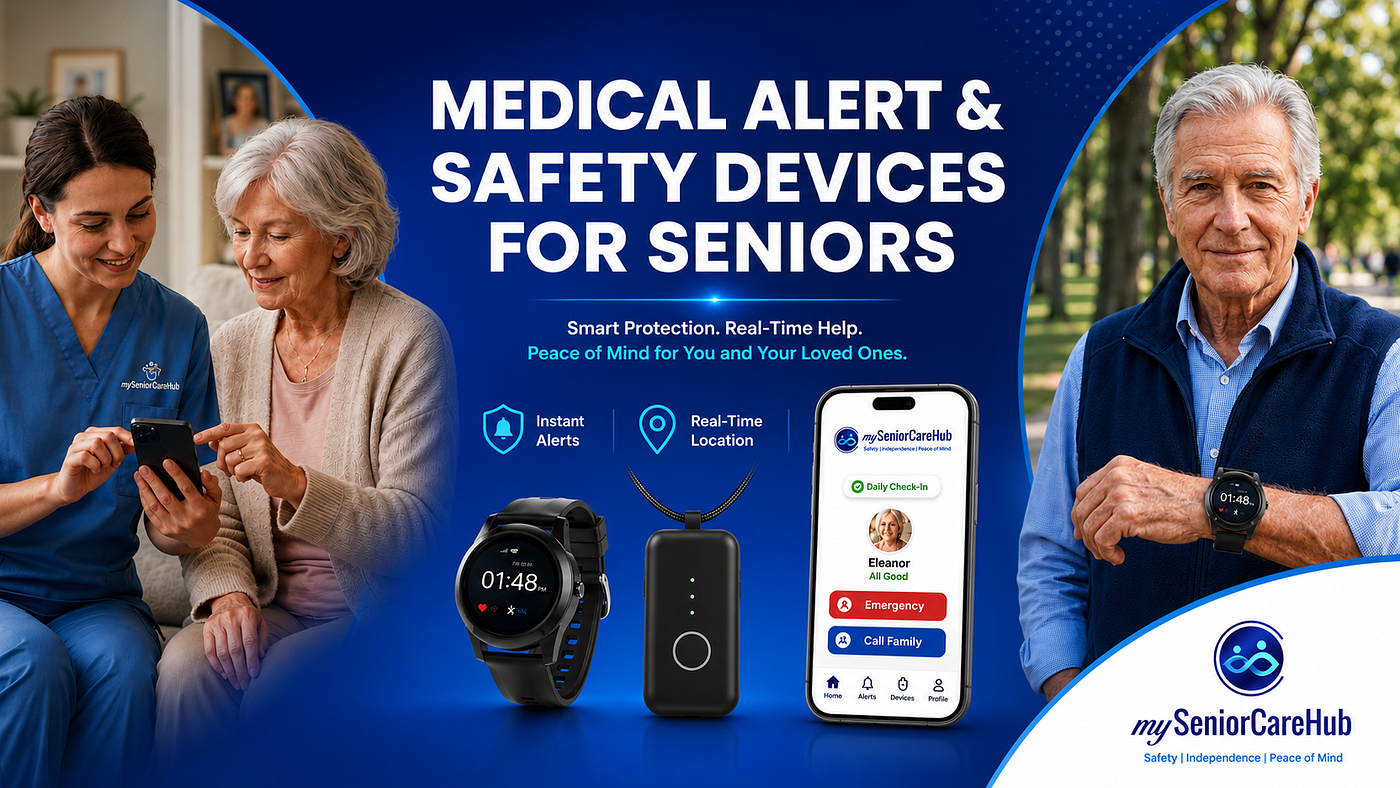
A Senior Man Wearing SafeLynk Smartwatch (by mySeniorCareHub)
If you are currently caring for an aging parent, you’ve likely spent a few sleepless nights worrying about the call. It is a completely valid fear: falls remain the leading cause of injury-related emergency room visits for seniors.
Beyond the immediate impact, it’s the threat of the long lie — spending hours on the floor unable to get up or reach a phone that can lead to serious complications like dehydration, hypothermia, or pressure sores.
Naturally, a medical alert watch with automatic fall detection sounds like the perfect, modern solution. But before you hit buy on the latest wearable tech, it’s crucial to look past the marketing.
To build a truly resilient safety net, you need to understand exactly how this technology works, where the blind spots are in 2026, and how to combine a device like the **SafeLynk Smart Watch** with real-world care strategies.
Physics of a Wearable Lifeline
Every modern fall detection watch relies on an IMU (Inertial Measurement Unit) — a tiny chip housing highly sensitive accelerometers (to measure speed changes) and gyroscopes (to track rotation and changes in body angle).
For the watch’s algorithm to separate a dangerous accident from everyday life, it looks for a very specific, three-part signature:
Sudden Acceleration Downward ⟶ High-G Impact Force ⟶ A Period of Total Immobility
If the watch detects this sequence, it initiates a haptic (vibrating) and audio countdown. If the wearer doesn’t dismiss the prompt within a few seconds, it automatically assumes they are incapacitated and dispatches emergency services or family members.
Reality Check: 2026 Accuracy Statistics
Technology has advanced dramatically, but human movement is chaotic, and perfect accuracy doesn’t exist. Data from current industry benchmarks reveals exactly where the technology shines — and where it struggles.
1. Hard Falls (Tech’s Strength)
When a senior trips over a rug or stumbles on a curb, their body drops fast and hits the ground hard. Because this generates a high-velocity signature, high-end smartwatches boast an 88% to 94% sensitivity rate for these types of impact events.
2. Slow Slide Gap (Blind Spot)
According to research from Senior Safety Reviews, accuracy drops significantly to roughly 60% during soft falls.
If a senior feels dizzy and slowly slides out of an armchair or slumps down against a wall, the movement lacks the high-velocity impact that sensors look for. The watch simply registers this as sitting down or resting.
3. Wrist-Wear Dilemma (False Positives)
A watch sits on the wrist; the most active, animated part of the human body. Because of this placement, roughly 1 in every 5 users will experience frequent false alarms caused by everyday, vigorous actions like clapping, chopping vegetables, hammering a nail, or dropping the watch onto a hard countertop.
Risk of Alarm Fatigue: If a device triggers a false alarm too often, seniors frequently get frustrated and take the watch off entirely, leaving them unprotected.
Bridging the Gap: Why SafeLynk Smart Watch Matters
Does a 10% to 40% margin of error mean you shouldn’t buy a fall detection watch? Absolutely not. Wearing a device that gives your parent a 90% higher chance of getting help is infinitely better than wearing nothing at all.
The key is choosing a device designed specifically for the realities of aging, rather than a generic smartwatch. The **SafeLynk Smart Watch** is engineered to bridge these physical limitations by layering multiple safety features:
- Physical SOS Button: Algorithms cannot catch 100% of slow, sliding falls. If your parent slides to the floor slowly but remains conscious, they don’t have to navigate a complex touchscreen. They can simply press and hold the prominent, dedicated SOS button to bypass the sensors and call for help instantly.
- Independent 4G LTE Connectivity: SafeLynk operates completely independently of a smartphone. It doesn’t matter if their mobile phone is left in the kitchen; the watch itself acts as a standalone speakerphone to connect directly with a 24/7 emergency monitoring center.
- Real-Time GPS Tracking: If a fall occurs outside or during a walk, the watch doesn’t just trigger an alert — it transmits live location coordinates directly to emergency dispatchers and family members, cutting down critical response times.
How to Create a Complete Safety Strategy
Technology is only one layer of defense. To protect your aging parent from the long lie, you should combine the SafeLynk watch with a few strategic habits:
Change the Charging Routine
Many high-drain wearables fail to protect users simply because they are sitting on a charger during a midnight bathroom trip — a highest-risk time for falls.
Establish a routine where the watch is charged for 1–2 hours during a sedentary activity, like watching the evening news or reading, so it is firmly on their wrist overnight.
Wear It in the Shower
Slips frequently happen on wet bathroom tiles. Because the SafeLynk watch features a robust, water-resistant design, ensure your parent knows it is safe — and vital — to keep it on while showering.
Optimize the Home Environment
A wearable device is a reactive tool; reducing environmental hazards is proactive. Use this simple checklist to secure their living space:
- Remove trip hazards: Eliminate loose throw rugs, cluttered pathways, and exposed extension cords.
- Brighten the night: Install motion-activated LED nightlights along the path from the bed to the bathroom.
- Secure high-risk areas: Mount stable grab bars inside the shower and next to the toilet.
Ultimate Goal: Confidence and Independence
Ultimately, a medical alert watch like the SafeLynk provides far more than just sensor data and automated alerts.
It provides the daily confidence for seniors to maintain their independence and live actively in their own homes, while giving long-distance caregiving families the peace of mind to breathe a little easier.
Secure Your Peace of Mind Today
The SafeLynk Smart Watch requires no long-term contracts and features a simple, under-2-minute setup right out of the box. Join over 2,000 families who have trusted us to protect their loved ones.
메타데이터
- post_id
- 810d3c8b9057
- slug
- rebalancing-the-safety-net-honest-truth-about-fall-detection-watches-in-2026-810d3c8b9057
- url
- https://medium.com/@digitalcaregiver12/rebalancing-the-safety-net-honest-truth-about-fall-detection-watches-in-2026-810d3c8b9057
- canonical_url
- https://medium.com/@digitalcaregiver12/rebalancing-the-safety-net-honest-truth-about-fall-detection-watches-in-2026-810d3c8b9057
- author_url
- https://medium.com/@digitalcaregiver12
- status
- ok
- fetched_at
- 2026-06-09 15:37:30