AI Becomes Valuable When It Understands Your Business.
The next era of Data + AI will not be won by models alone. It will be won by teams that combine powerful intelligence with rich context…
AI Becomes Valuable When It Understands Your Business.
The next era of Data + AI will not be won by models alone. It will be won by teams that combine powerful intelligence with rich context, trusted data, and clear business outcomes.
Created by Team Bricksnotes.
A lot of people still talk about AI as if the model is the whole story.
A model gets better. A benchmark improves. A demo looks impressive. A chatbot sounds smarter.
But real business value does not come from that alone.
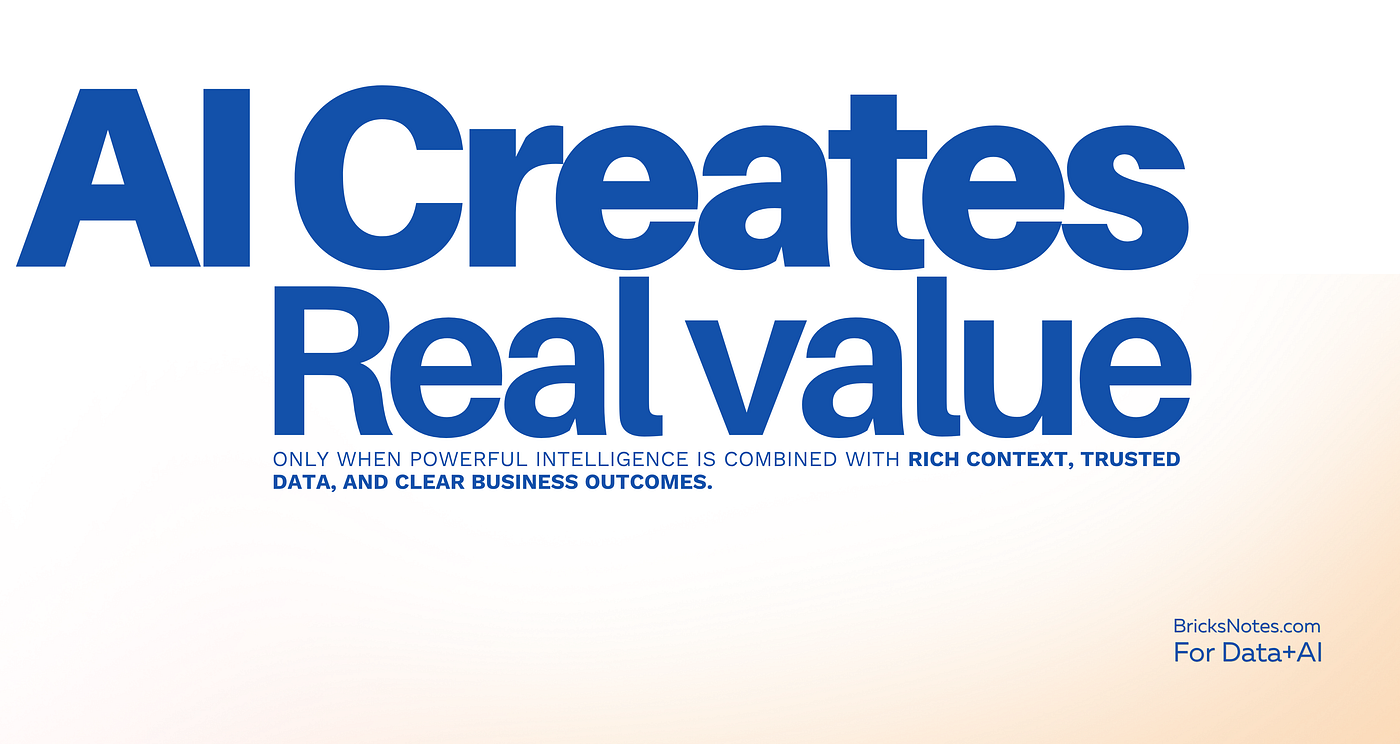
AI creates real value only when powerful intelligence is combined with rich context, trusted data, and clear business outcomes.
That is the line I keep coming back to.
And the more I watch what Databricks is doing, the more I feel they understand this deeply.
What stands out to me is not just the number of launches. It is the direction behind them. Databricks is clearly moving toward a future where AI is not floating above the business. It is grounded in the business. It understands the data better. It works with more context. It stays closer to governance. And it aims to help people move from answers to action much faster.
That is a much more useful future than just “smarter models.”
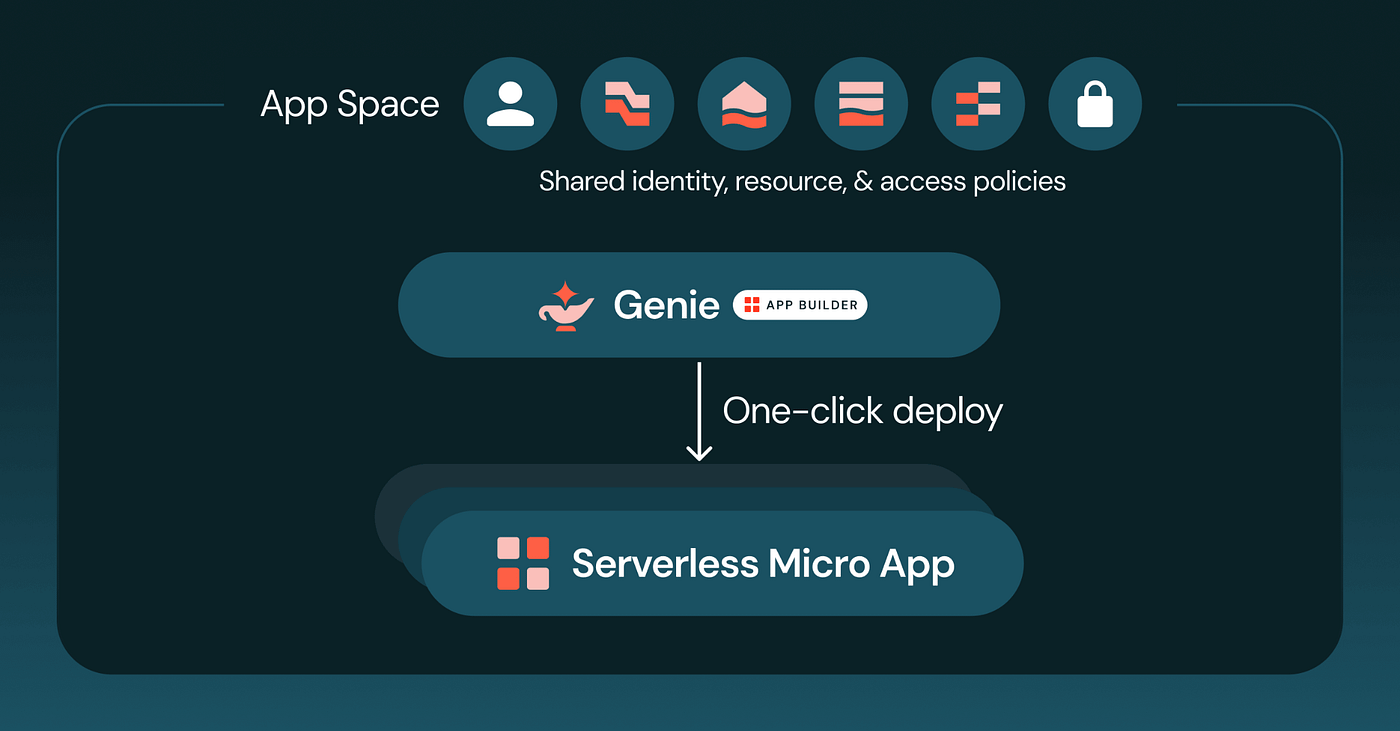
Take the recent Genie direction.
Genie One, Genie Agents, and Genie Ontology are not exciting because they add one more chat interface. They are exciting because they try to solve the hardest part of enterprise AI: making intelligence actually understand the company it is supposed to help.
That is where most AI systems struggle.
They may sound smart, but they do not know how your business defines an active customer. They do not know which revenue metric leadership trusts. They do not know which dashboard is outdated, which query is authoritative, or which document contains the real meaning behind an important number.
That is why context matters so much.
Without context, AI guesses. With context, AI starts becoming useful.
That shift is huge.
And to me, this is one of the reasons Databricks is standing out right now. The platform direction feels less like “let’s add AI to everything” and more like “let’s build the right conditions for AI to actually create value.”
That means trusted data. That means governance. That means context. That means speed. That means systems that connect to real business work.
The same pattern shows up when you look at Reyden and Lakehouse//RT.
A lot of people will focus on the speed story, and yes, real-time performance is exciting. But the bigger story is what that speed makes possible. When the same environment can support governed data, analytics, and faster operational workloads more naturally, the business can move faster without creating more copies, more fragmentation, and more confusion.
That matters because AI is only useful when it can sit close to the truth.
And the truth in an enterprise usually lives inside governed data, real workflows, and trusted systems.
This is also why I think people like Ali Ghodsi, Reynold Xin, Matei Zaharia, and the broader Databricks team deserve real appreciation.
Not because they are simply launching more products.
But because they are helping push the industry toward a better question.
Not “how do we make AI sound smarter?” But “how do we make AI more useful for real work?”
That is a much more important problem.
Ali has often pushed the idea that AI needs better context, not just more raw intelligence. Reynold’s work around Reyden points to the importance of performance without forcing more complexity into the architecture. Matei has always been part of the deeper platform and open systems thinking that made Databricks different in the first place. And behind all of them is a much larger team doing the hard engineering work that usually gets less attention than the headline.
That deserves credit.
Because this kind of progress does not happen by accident.
It happens when people keep asking better questions about what businesses actually need.
And I think that is the bigger lesson here.
Businesses do not need AI just to impress people. They need AI to help them understand faster, decide better, move with more confidence, and reduce the distance between data and action.
That only happens when the foundations are strong.
A powerful model without trusted data will still create weak outcomes. A fast system without business context will still create weak decisions. An agent without governance will still create risk. A dashboard without clear outcomes will still create noise.
This is why I believe the next winners in Data + AI will not be the teams with the flashiest demos.
They will be the teams that get the foundations right.
The teams that connect intelligence with context. The teams that combine speed with trust. The teams that build around outcomes, not hype. The teams that understand that AI becomes powerful only when the business can actually rely on it.
That is the direction I see in Databricks right now.
And it is one of the reasons I think the company is leading one of the most meaningful innovation cycles in the Data + AI space today.
At BricksNotes, this is the part that inspires us most.
Not just new features. Not just new names. But the bigger movement toward systems that make AI more practical, more grounded, and more useful for real people trying to do real work.
That is the future worth building for.
And that is the kind of Data + AI future more of us should be paying attention to.
메타데이터
- post_id
- 8441d8ac7615
- slug
- ai-becomes-valuable-when-it-understands-your-business-8441d8ac7615
- url
- https://medium.com/towards-data-engineering/ai-becomes-valuable-when-it-understands-your-business-8441d8ac7615
- canonical_url
- https://medium.com/towards-data-engineering/ai-becomes-valuable-when-it-understands-your-business-8441d8ac7615
- author_url
- https://medium.com/@Bricksnotes
- status
- ok
- fetched_at
- 2026-06-24 16:30:55