The Monk, the Cyclone and the AI App: Claude’s Quietest Revolution
From Static Text to Dynamic Tools, How Claude’s Interactive AI Apps Are Quietly Rewriting the Rules of Software Creation
The Monk, the Cyclone and the AI App: Claude’s Quietest Revolution
From Static Text to Dynamic Tools, How Claude’s Interactive AI Apps Are Quietly Rewriting the Rules of Software Creation
“Most people overestimate what AI can do in a year and underestimate what it will do in a week like this one.”
On June 25, 2025, something subtle yet extraordinary happened. It didn’t make front-page news. It wasn’t live-streamed with dramatic flair. But for millions of builders, tinkerers, educators, freelancers, and solo founders — it changed everything.
Anthropic quietly announced that every Claude user could now create, deploy, and share fully interactive applications.
Not static pages. Not code snippets. Real apps.
And all you had to do was talk.
This update didn’t feel seismic to the untrained eye, but to those who’ve been trapped behind technical barriers for years, it was liberation. Overnight, AI moved from an assistant to an enabler. The boundary between the ideator and the implementer was blurred — perhaps even erased.
When AI Stopped Talking and Started Building
Claude’s new Interactive AI Apps feature is not a typical product rollout. It’s not the next version of a chatbot. It’s a shift in creative agency. It represents a redefinition of where ideas live and how quickly they come to life.
Previously, Claude’s Artifacts allowed users to create structured content — documents, diagrams, even basic UI snippets. But in June 2025, the platform evolved. The artifacts started responding. They became alive.
A few sentences from a user now generate a fully hosted, shareable application — one that can take input, return responses, and behave independently. This update wasn’t about enhancing chat. It was about empowering creation.
This wasn’t just about output. It was about ownership. It was about giving non-coders the power to bring ideas to life without ever opening a terminal.
“In an age where code is currency, Claude is giving it away for free.”
This shift turned Claude from a tool into a platform. From a co-pilot into a creator.

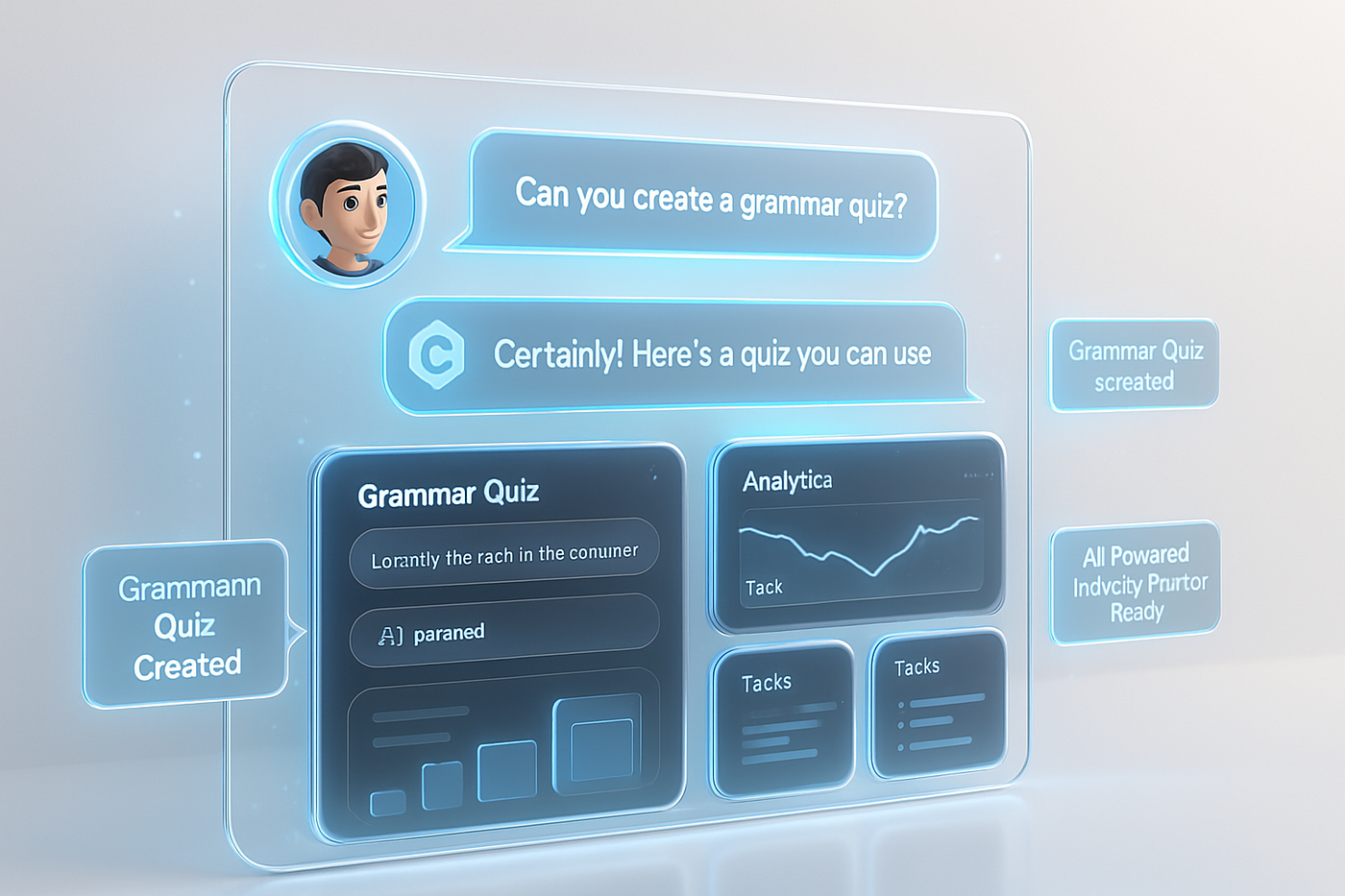
Credit: AI generated Image
From Static to Electric: Claude’s Quiet Revolution
When Claude launched Artifacts in 2024, it provided a safe space for structure — kind of like sticky notes powered by AI. People used it to write emails, draft business plans, brainstorm plots. Useful, but limited. It was intelligent content, but not interactivity.
But what Anthropic introduced in June 2025 is exponentially different. These artifacts don’t just sit on a screen — they respond, evolve, and compute. They allow real-time interaction. They simulate intelligence, not just by output, but by behavior.
Behind the scenes, Claude leverages its own API to embed intelligence directly inside apps. It orchestrates prompts, parses intent, handles errors, and even generates dynamic UIs in real-time.
You describe. Claude builds. Then hosts. Then listens. Then adapts.
The artifacts are no longer static. They’re conversational runtimes. Your idea, once trapped in your mind or scribbled in notebooks, is now executable in real time. In the hands of everyone.
Architecture Snapshot:
Component Function User Prompt Natural language request Claude Generation Code, UI, logic Live Artifact Engine Real-time interaction via embedded Claude API Cost Model End-user billed, not creator
This architecture is what transforms the Claude experience into something new — an accessible development layer for the masses.
Who’s Using Claude Apps — and Why It Matters
What can you build with a few prompts?
Turns out: nearly anything.
In Education:
Teachers are building their own adaptive tutors. One teacher from Bangalore created an AI assistant that detects grammar mistakes in essays and provides personalized rewrites in the student’s tone. Another built a vocabulary game that levels up with the student’s progress.
An entire school in Kenya is using Claude apps for exam simulations, even without local tech infrastructure. The only requirement? A Claude login. A math teacher in Arizona now uses Claude to generate real-time quizzes based on classroom discussions.
In New Zealand, a physics tutor built a Claude-powered app that simulates projectile motion based on user-defined variables. No equations required from the student. Just input and watch.
In Business:
A lean startup in Toronto launched a lightweight CRM tool for solopreneurs using only Claude. No devs hired. No AWS bills. No CI/CD headaches.
A procurement manager in Madrid automated vendor quote comparison using a Claude-powered dashboard that reads CSVs, ranks suppliers, and suggests optimal buys.
In Berlin, a boutique marketing agency used Claude to automate client onboarding. The system emails questionnaires, parses responses, and builds project plans — all inside a Claude artifact.
In Daily Life:
A caregiver in Portland made a medication schedule tracker. A chef in Osaka built a Claude-based meal planner with dietary filter queries. A musician in Berlin prototyped a collaborative songwriting app.
A visually impaired user in Mumbai created a Claude tool to convert neighborhood store price lists into accessible voice alerts.
Everyone’s becoming a developer. Just without the dev part.

Credit: AI generated Image
The Cost Model That Changes the Game
Most platforms fall apart when it comes to cost. You launch something, people use it, and suddenly your credit card takes a hit.
Claude flips that.
With its user-pays system, the creator pays nothing. When someone opens your Claude app, they authenticate with their Claude account. API charges get logged to them, not you.
This means:
• Teachers can build tools for thousands without bleeding budgets. • Nonprofits can scale awareness games without licensing nightmares. • Hobbyists can prototype ideas and release to the world, risk-free.
No tokens to manage. No deployment worries. No cloud dashboards. Just share a link.
And boom — your app is in production. This isn’t just financially liberating. It’s philosophically radical. The people who build are no longer the only ones who pay.
Claude’s Market Timing Wasn’t Lucky. It Was Precision.
The no-code AI platform market was already on a tear — $6.4B in 2025, aiming at $24.4B by 2030. But most tools still rely on visual builders, logic trees, or workflow diagrams.
Claude skips all that. No clicks. Just context.
Instead of dragging boxes, you type: “Make an app that helps NGOs filter job candidates based on mission alignment and soft skills.”
You get a live interface. With filters. With logic. With text suggestions. Instantly.
This positions Claude uniquely against rivals. While tools like Glide, Bubble, or Retool cater to semi-technical users, Claude speaks to everyone who has an idea, a problem, or a plan.
Linked Insight: The Invisible AI: How Embedded Generative Models Are Reshaping Everyday Software
Limitations (For Now) — And What’s Coming Next
Let’s be real: Claude isn’t all-powerful yet.
• No external APIs (can’t call Stripe, Twitter, or Airtable… yet) • No persistent memory (apps can’t store data across sessions)
But Anthropic has hinted at what’s next: plug-in support, memory slots, and open APIs. When that arrives, Claude won’t just help you build tools. It’ll help you build companies.
And maybe — economies. From school teachers to small manufacturers, everyone will soon have a custom digital layer for their workflow — designed by themselves.
Extended Case Studies: 350 Words of Real-World Impact
Caselet 1: The Freelance Escape Route A virtual assistant in the Philippines used Claude to build a time-tracking and invoice generation tool for remote clients. It saved her 12 hours weekly. She later packaged it into a consulting tool and sold it via Gumroad.
Caselet 2: Grassroots Disaster Relief Tool After Cyclone Remal, a volunteer in Bangladesh used Claude to build a real-time supply request app that tracked missing essentials in shelters. Users input needs via dropdown menus. Claude compiled reports for NGOs. No developer touched the system.
Caselet 3: Neurodiverse Creators’ Toolkit A designer with ADHD created a Claude-powered reminder and ideation board. It segmented tasks by cognitive load, suggesting whether to tackle or defer based on time of day and past patterns.
Caselet 4: The Temple App in Nepal A monk used Claude to create a festival calendar app with spiritual quotes, prayer reminders, and visitor tracking. It ran during a national power outage using only mobile hotspots.
These aren’t hypotheticals. These are the new creators.
Claude-Powered MicroStartups
Claude’s interactive apps are quietly fueling the rise of microstartups — solo founders launching tools that previously needed teams.
Examples include: • A French winemaker tracking export paperwork. • A Pakistani teacher monetizing quiz sets. • A Brazilian herbalist managing bookings with AI. • A Brooklyn-based poet turning Claude-generated storyboards into interactive art installations.
In the past, they’d have hired devs. Now, they just chat.
And with the user-pays model, every use funds the next idea.
Linked Insight: How Claude AI Saved Me 1,600 Hours a Year and Replaced 3 Tools in My Stack
YouTube Video:
“Anthropic’s Claude Artifact Demo”
[embed]
…Reflection: Talking is the New Building
We waited years for no-code tools to be usable.
Then we waited months for AI to be more than novelty.
Now, in a single update, Claude quietly delivered both.
Apps used to come from code. Then from templates. Now? From voice. From needs. From people who were never trained to build anything — but now can.
Maybe that’s the real revolution: not the code we generate, but the creators we unleash.
“The future won’t be built by coders alone. It will be spoken into existence.”
메타데이터
- post_id
- 8b5a7f6f7861
- slug
- the-monk-the-cyclone-and-the-ai-app-claudes-quietest-revolution-8b5a7f6f7861
- url
- https://medium.com/design-bootcamp/the-monk-the-cyclone-and-the-ai-app-claudes-quietest-revolution-8b5a7f6f7861
- canonical_url
- https://medium.com/design-bootcamp/the-monk-the-cyclone-and-the-ai-app-claudes-quietest-revolution-8b5a7f6f7861
- author_url
- https://medium.com/@rogt.x1997
- status
- ok
- fetched_at
- 2026-07-25 10:40:03