Why PLCs are the Backbone of Smart Automation ?
What is a PLC?
Why PLCs are the Backbone of Smart Automation ?
What is a PLC?
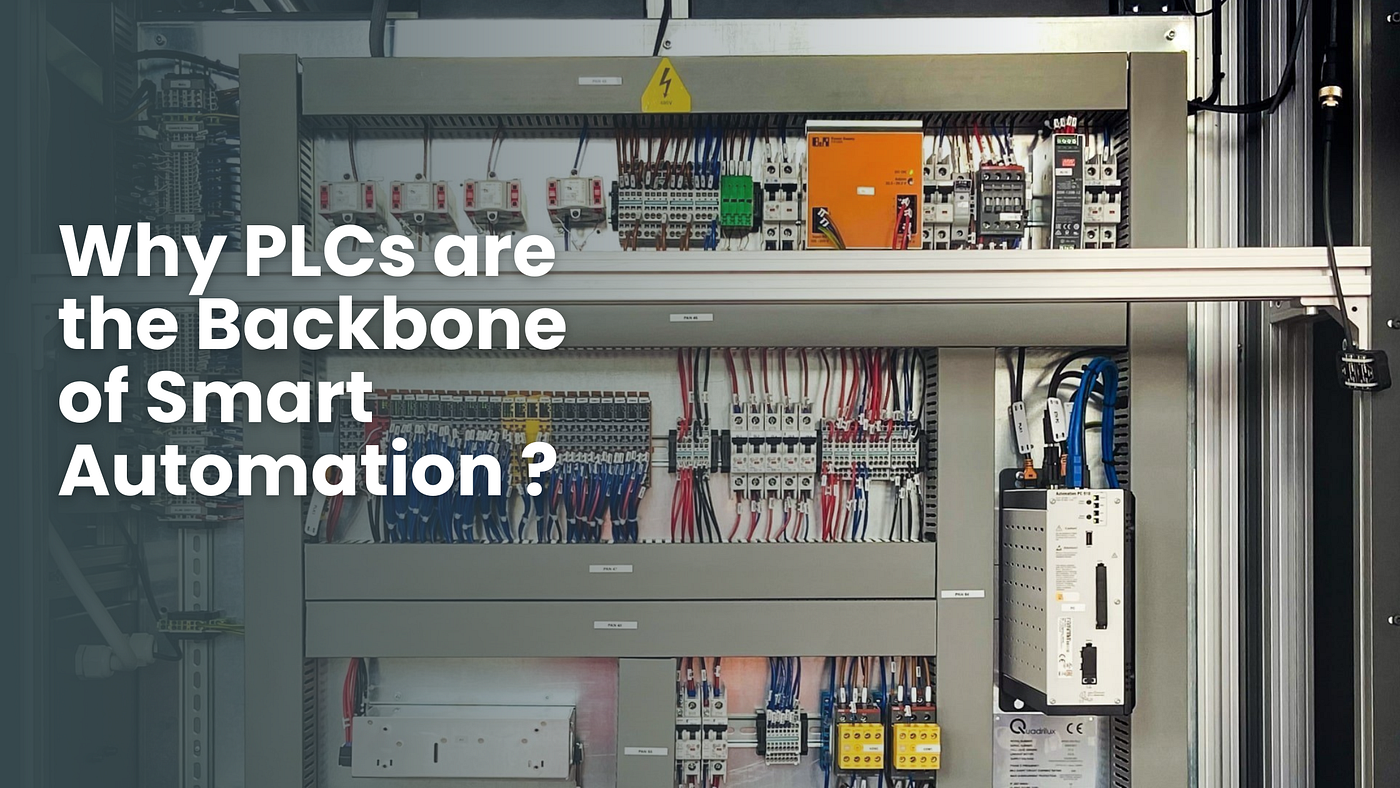
A Programmable Logic Controller (PLC) is a rugged microprocessor-based control system that uses programmable memory to execute tasks like logic, sequencing, timing, counting, and arithmetic for managing machines and industrial processes.
Why PLCs Are Ideal for Engineers?
Designed for engineers with limited computing experience, PLCs offer intuitive programming. They enable simple entry of control logic (e.g., “IF A OR B → switch on C; IF A AND B → switch on D”) no need for specialized coding skills or deep computer knowledge.
How It Works
- Inputs come from sensors (e.g., switches) or devices.
- The engineer writes a sequence of instructions (the PLC program) and loads it into the controller.
- The PLC continuously follows this loop:
- Read inputs
- Execute logic
- Drive outputs — like motors or valves — as specified by the rules
This repetitious scan cycle lets the PLC monitor and control processes in near real-time.
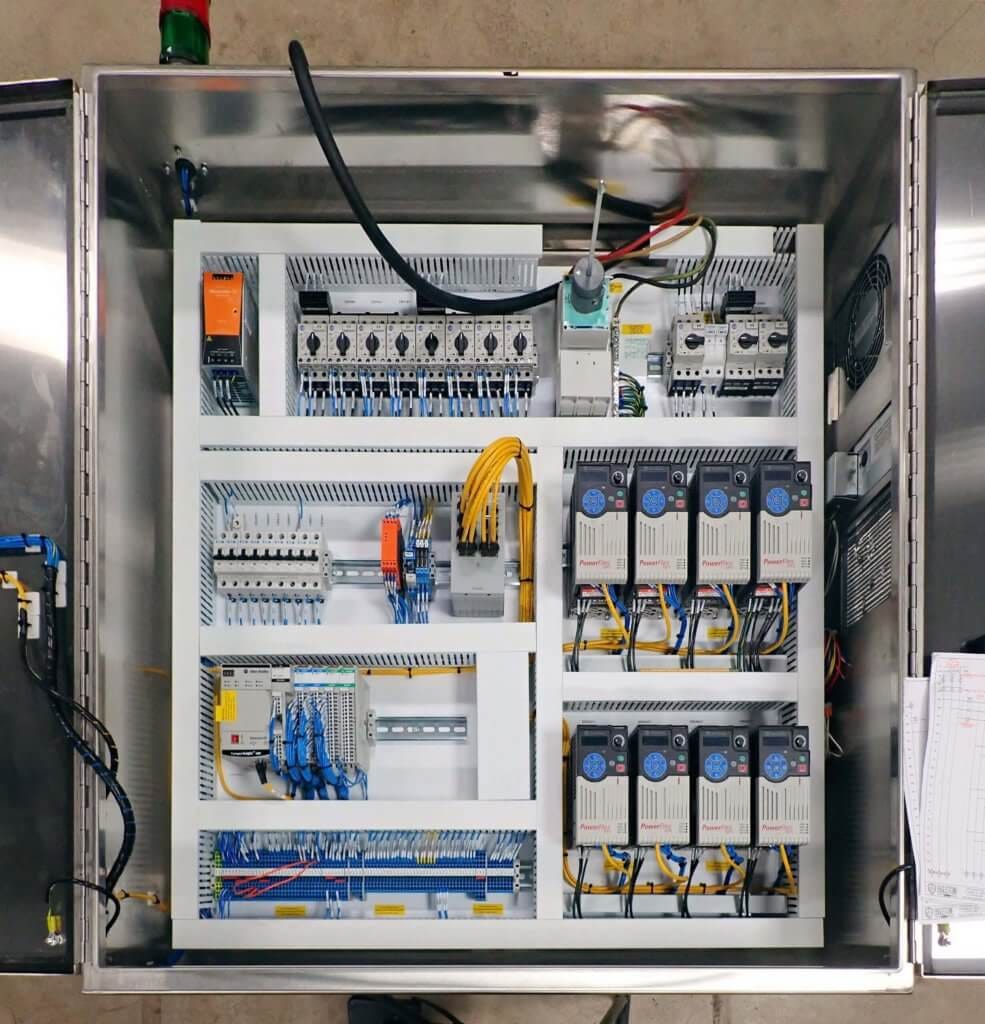

A Close-Up of a Programmable Logic Controller (PLC) in Action
The Big Advantage: Flexibility
- One PLC, Many Tasks: The same hardware adapts to vastly different systems — just by changing the program.
- No Rewiring Required: To update control logic, simply key in a new set of instructions. It’s faster, safer, and more cost-effective than physical rewiring.
- Scale-Up Anytime: Need more outputs or sensors? Just add modules to existing PLCs no need for extra control cabinets or completely new setups.
Ideal Use Case
Let’s say you need to manage two sensors (A, B) with two outputs (C, D). The logic might read:

Loaded into the PLC, this logic loops continuously monitoring sensors and activating outputs as programmed. Want to tweak the behavior? Just update the program no rewiring, no sweat.
Why PLCs Shine in Industry
- User-Friendly: Engineers, not programmers, can build or tweak programs.
- Reliable & Rugged: PLCs are built to withstand dust, vibration, electrical noise, extreme temperatures, and tough conditions that would knock out regular PCs .
- Fast and Deterministic: Designed for real-time execution, PLC scan cycles run every few milliseconds perfect for time-sensitive control.
- Modular & Scalable: You can expand I/O and capabilities as your system grows no major redesign needed.
- Cost-Effective: Cutting wiring, avoiding hardware changes, and enabling easy upgrades all reduce long-term costs.
메타데이터
- post_id
- 940354d2d122
- slug
- why-plcs-are-the-backbone-of-smart-automation-940354d2d122
- url
- https://medium.com/@swetharp2002/why-plcs-are-the-backbone-of-smart-automation-940354d2d122
- canonical_url
- https://medium.com/@swetharp2002/why-plcs-are-the-backbone-of-smart-automation-940354d2d122
- author_url
- https://medium.com/@swetharp2002
- status
- ok
- fetched_at
- 2026-07-24 04:40:37