There Is No Such Thing as a “Pure” Human: What DNA Reveals About Our Shared Origins
In 2013, a prominent white supremacist named Craig Cobb sat beneath the bright lights of a television studio expecting confirmation of his…
There Is No Such Thing as a “Pure” Human: What DNA Reveals About Our Shared Origins
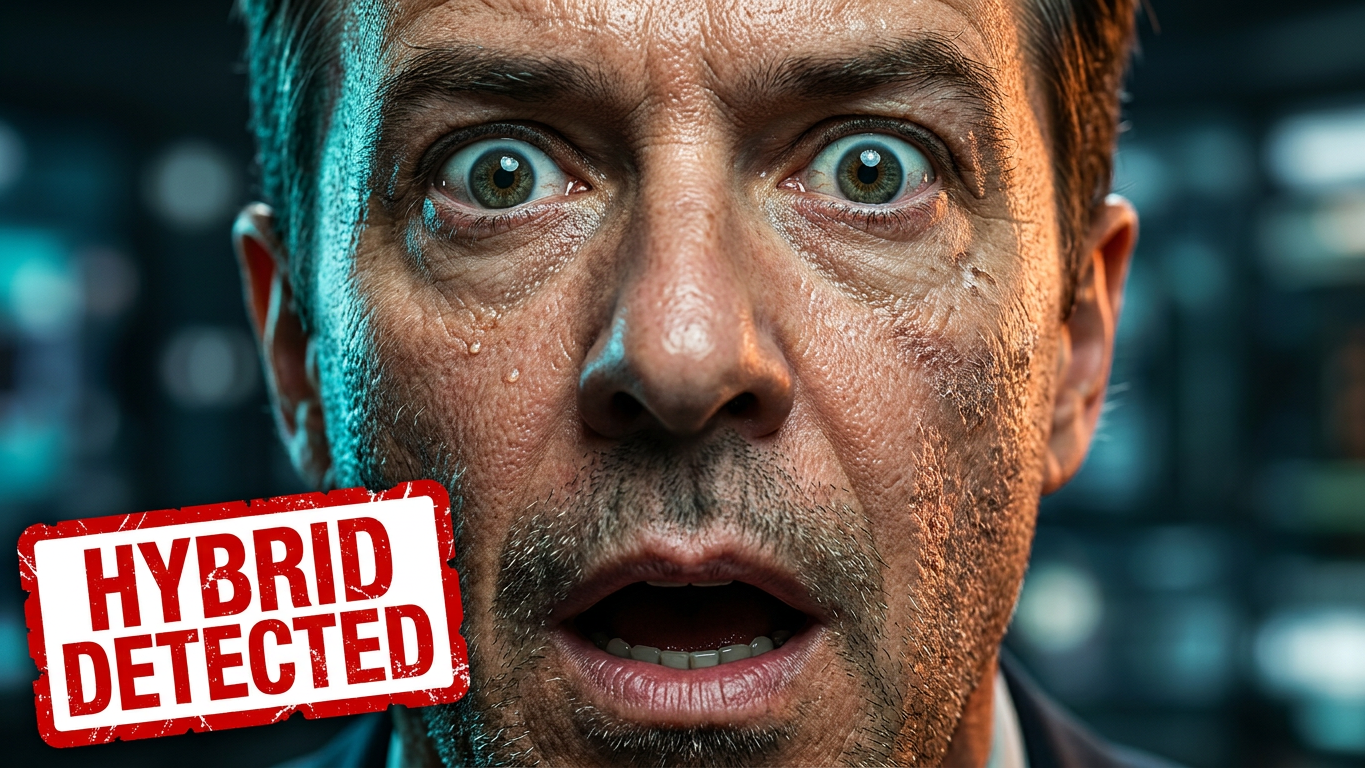
In 2013, a prominent white supremacist named Craig Cobb sat beneath the bright lights of a television studio expecting confirmation of his beliefs. Instead, a DNA test revealed that a portion of his ancestry traced back to Sub-Saharan Africa.
I highly recommend watching the full video before or after reading.
Watch here: https://youtu.be/UB8YQ3kwJ44
The result immediately made headlines. Cobb dismissed the finding, calling it insignificant. Yet the moment highlighted a much larger truth: modern genetics is forcing us to rethink everything we thought we knew about ancestry, race, and human identity.
For decades, the story of human evolution appeared straightforward. Modern humans emerged in Africa roughly 200,000 years ago, left the continent around 60,000 years ago, and gradually spread across the globe.
But as scientists began comparing genomes from populations around the world, they uncovered evidence that transformed our understanding of human history.
The deeper researchers looked into our DNA, the more they discovered a remarkable fact:
There is no such thing as a genetically “pure” human population.
Every one of us carries the legacy of ancient encounters, migrations, and interbreeding events that stretch back tens of thousands of years.
The Theory That Once Dominated Human Origins
Throughout much of the twentieth century, anthropologists largely embraced a model known as the “Out of Africa” theory.
The framework proposed that modern humans evolved in Africa and later expanded into Europe and Asia, replacing older human relatives such as Neanderthals and Homo erectus.
According to this interpretation, those ancient populations disappeared without leaving a meaningful genetic legacy.
Humans were thought to have replaced them rather than mixed with them.
Then came one of the most important breakthroughs in the history of genetics.
The Discovery That Changed Everything
In 2010, scientists successfully extracted and sequenced DNA from a Neanderthal bone estimated to be around 40,000 years old.
For the first time, researchers could directly compare the genome of an extinct human relative with the DNA of living people.
The findings shocked the scientific community.
Populations outside Africa — including Europeans, Asians, and Indigenous peoples of the Americas — were found to carry between 1% and 4% Neanderthal DNA.
This meant modern humans did not simply encounter Neanderthals and replace them.
They interbred.
The descendants of those ancient unions survived, and fragments of Neanderthal DNA remain embedded within billions of people alive today.
Human evolution was far more interconnected than anyone had imagined.
The Mystery of the Denisovans
Just when scientists thought the story could not become more surprising, another discovery emerged.
A tiny finger bone uncovered in a Siberian cave belonged to a completely unknown human population.
Researchers named them Denisovans.
Although only a few fossils have been found, Denisovan DNA survives in several modern populations. People from Papua New Guinea, Australia, and parts of Southeast Asia carry some of the highest levels of Denisovan ancestry.
In certain populations, Denisovan DNA accounts for up to 6% of the genome.
Some of the most fascinating adaptations inherited from Denisovans are found among Tibetans, whose ability to thrive in low-oxygen environments appears linked to genes acquired from these ancient relatives.
Ancient DNA continues to influence modern human life.
Africa’s Hidden Genetic Legacy
For many years, scientists assumed African populations represented the least mixed branch of humanity because they generally lacked Neanderthal ancestry.
However, newer genetic studies revealed a different story.
Researchers examining West African populations discovered stretches of DNA that could not be traced to any known human lineage.
These sequences appeared to come from an unidentified ancient population — often referred to as a “ghost population.”
No fossils have yet been conclusively linked to this group.
Yet their genetic signatures survive in living people.
The discovery suggests that ancient humans within Africa also interbred with other hominin populations that remain largely unknown to science.
Rather than a simple family tree, human evolution resembles a vast network of interconnected branches crossing and reconnecting over hundreds of thousands of years.
The Myth of Biological Race
Perhaps the most important lesson from genetics is that traditional racial categories do not reflect deep biological divisions.
Throughout history, humans have used visible traits such as skin color, facial structure, hair texture, and eye shape to classify one another.
Yet these characteristics represent only a tiny fraction of our genetic makeup.
All humans are approximately 99.9% genetically identical.
The differences we notice most easily are often adaptations to local environments rather than evidence of separate biological groups.
Skin color provides a powerful example.
Research suggests that some of the earliest modern Europeans likely had darker skin than many present-day Europeans. Lighter skin evolved much later as populations adapted to environments with lower levels of sunlight.
Traits that seem fundamental are often relatively recent evolutionary developments.
The visible features that divide us socially represent only a small part of the much larger story written in our DNA.
Why Genetics Matters in Modern Medicine
The implications extend far beyond anthropology.
Human genetic diversity directly influences medicine, disease susceptibility, and treatment outcomes.
Different populations evolved under different environmental pressures. Some inherited adaptations that provided protection against diseases common in specific regions.
For example, variants associated with sickle cell trait can offer protection against severe malaria. Other genetic adaptations influence immune responses, metabolism, and cardiovascular health.
Researchers have also discovered significant variation in genes responsible for processing medications.
As medicine moves toward personalized treatment, understanding genetic diversity becomes increasingly important.
A one-size-fits-all approach cannot fully account for the complexity of human biology.
The future of healthcare depends on recognizing and understanding these differences while appreciating our overwhelming genetic similarity.
What Our DNA Really Reveals
Every genome is a historical archive.
Within it are traces of ancient migrations, forgotten populations, environmental challenges, and human resilience.
The DNA of African Americans often reflects both African and European ancestry, preserving evidence of complex and often painful historical realities.
European genomes carry the legacy of Neanderthal encounters.
Many Asian and Oceanian populations preserve Denisovan ancestry.
Every population contains echoes of countless generations that came before.
The closer scientists examine human genetics, the harder it becomes to support ideas of separation, purity, or biological hierarchy.
The Real Story of Humanity
Human beings have always tried to draw boundaries.
We separate ourselves by race, nationality, language, culture, and appearance.
But the genome tells a different story.
It reveals movement rather than isolation.
Connection rather than separation.
Shared origins rather than permanent divisions.
There are no pure lineages.
There never were.
Every person alive today is the product of countless migrations, encounters, and adaptations stretching back across deep time.
The visible differences we often focus on are tiny compared to the immense inheritance we share.
Modern genetics has uncovered a profound truth:
We are not separate stories.
We are chapters of the same story.
Final Thoughts
The greatest lesson hidden inside human DNA is not how different we are — it is how deeply connected we have always been.
Our genomes preserve evidence of ancient relatives, forgotten migrations, and shared ancestors that unite every population on Earth.
The more science uncovers, the clearer that reality becomes.
Human history is not a story of purity.
It is a story of connection.
And every one of us carries that story within us.
I highly recommend watching the full video before or after reading.
Watch here: https://youtu.be/UB8YQ3kwJ44
메타데이터
- post_id
- a588f550983b
- slug
- there-is-no-such-thing-as-a-pure-human-what-dna-reveals-about-our-shared-origins-a588f550983b
- url
- https://medium.com/@sandhurazayousaf/there-is-no-such-thing-as-a-pure-human-what-dna-reveals-about-our-shared-origins-a588f550983b
- canonical_url
- https://medium.com/@sandhurazayousaf/there-is-no-such-thing-as-a-pure-human-what-dna-reveals-about-our-shared-origins-a588f550983b
- author_url
- https://medium.com/@sandhurazayousaf
- status
- ok
- fetched_at
- 2026-06-09 15:37:30