Terms & Conditions (Research)
Articles presented here are a collection of research materials for my performative essay / lecture / experimental theatre idea — which…
Terms & Conditions (Research)
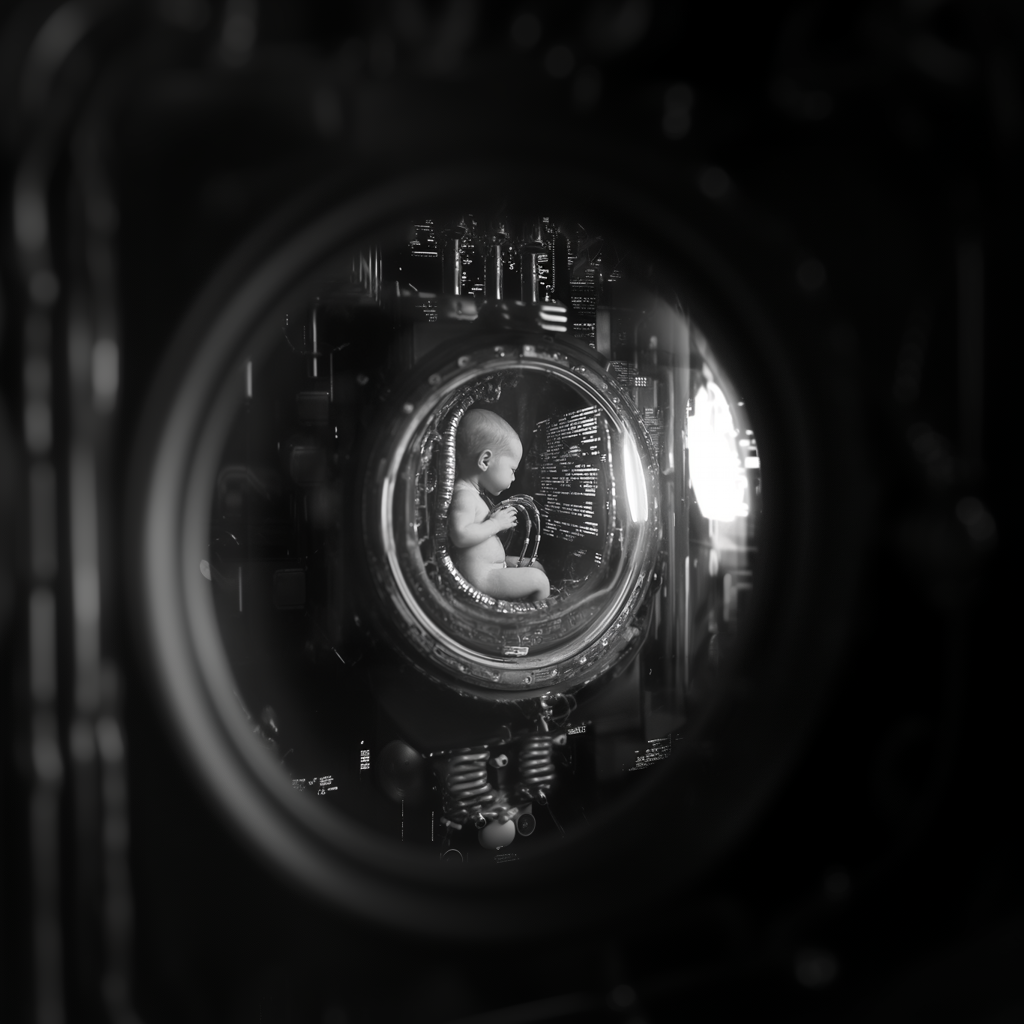
Poster image created by Mark Ashmore — Terms & Conditions
Articles presented here are a collection of research materials for my performative essay / lecture / experimental theatre idea — which will Premiere at the Adelaide Fringe in 2025 — more info on ‘Terms & Conditions’ can be found here — https://adelaidefringe.com.au/fringetix/terms-conditions-af2025
Want to follow the journey — Instagram — https://www.instagram.com/future_artists/
Welcome to the post doc research of this writer — should have probably stopped at the PhD.
In Neuromancer, William Gibson plays with the concepts of reality and humanity. Most interestingly, Gibson uses the idea of artificial intelligence, or AI to explore the concept of human consciousness and sentience in a digitized age. Possibly the most striking example occurs in Case’s conversation with Dixie.
“Wait a sec.” Case said. “Are you sentient, or not?”
“Well, it feels like I am, kid, but I’m really just a bunch of ROM. It’s one of them, ah, philosophical questions, I guess. . . .” The ugly laughter sensation rattled down Case’s spine. “But I ain’t likely to write you no poem, if you follow me. Your AI, it just might. But it ain’t no way human.”
“So you figure we can’t get on to its motive?”
“It own itself?”
“Swiss citizen, but T-A own the basic software and the mainframe.”
“That’s a good one,” the construct said. “Like, I own your brain and what you know, but your thoughts have Swiss citizenship. Sure. Lotsa luck, AI.” [pp. 127–28]
Research
pandora’s vox: on community in cyberspace
by humdog (1994)
when i went into cyberspace i went into it thinking that it was a place like any other place and that it would be a human interaction like any other human interaction. i was wrong when i thought that. it was a terrible mistake.
the very first understanding that i had that it was not a place like any place and that the interaction would be different was when people began to talk to me as though i were a man. when they wrote about me in the third person, they would say “he.” it interested me to have people think i was “he” instead of “she” and so at first i did not say anything. i grinned and let them think i was “he.” this went on for a little while and it was fun but after a while i was uncomfortable. finally i said unto them that i, humdog, was a woman and not a man. this surprised them. at that moment i realized that the dissolution of gender-category was something that was happening everywhere, and perhaps it was only just very obvious on the net. this is the extent of my homage to Gender On The Net.
i suspect that cyberspace exists because it is the purest manifestation of the mass (masse) as Jean Beaudrilliard described it. it is a black hole; it absorbs energy and personality and then re-presents it as spectacle. people tend to express their vision of the mass as a kind of imaginary parade of blue-collar workers, their muscle-bound arms raised in defiant salute. sometimes in this vision they are holding wrenches in their hands. anyway, this image has its origins in Marx and it is as Romantic as a dozen long-stemmed red roses. the mass is more like one of those faceless dolls you find in nostalgia-craft shops: limp, cute, and silent. when i say “cute” i am including its macabre and sinister aspects within my definition.
it is fashionable to suggest that cyberspace is some kind of island of the blessed where people are free to indulge and express their Individuality. some people write about cyberspace as though it were a 60′s utopia. in reality, this is not true. major online services, like compuserv and america online, regular guide and censor discourse. even some allegedly free-wheeling (albeit politically correct) boards like the WELL censor discourse. the difference is only a matter of the method and degree. what interests me about this, however, is that to the mass, the debate about freedom of expression exists only in terms of whether or not you can say fuck or look at sexually explicit pictures. i have a quaint view that makes me think that discussing the ability to write “fuck” or worrying about the ability to look at pictures of sexual acts constitutes The Least Of Our Problems surrounding freedom of expression.
western society has a problem with appearance and reality. it keeps wanting to split them off from each other, make one more real than the other, invest one with more meaning than it does the other. there are two people who have something to say about this: Nietzsche and Beaudrilliard. i invoke their names in case somebody thinks i made this up. Nietzsche thinks that the conflict over these ideas cannot be resolved. Beaudrilliard thinks that it was resolved and that this is how come some people think that communities can be virtual: we prefer simulation (simulacra) to reality. image and simulacra exert tremendous power upon culture. and it is this tension, that informs all the debates about Real and Not-Real that infect cyberspace with regards to identity, relationship, gender, discourse, and community. almost every discussion in cyberspace, about cyberspace, boils down to some sort of debate about Truth-In-Packaging.
cyberspace is a mostly a silent place. in its silence it shows itself to be an expression of the mass. one might question the idea of silence in a place where millions of user-ids parade around like angels of light, looking to see whom they might, so to speak, consume. the silence is nonetheless present and it is most present, paradoxically at the moment that the user-id speaks. when the user-id posts to a board, it does so while dwelling within an illusion that no one is present. language in cyberspace is a frozen landscape.
i have seen many people spill their guts on-line, and i did so myself until, at last, i began to see that i had commodified myself. commodification means that you turn something into a product which has a money-value. in the nineteenth century, commodities were made in factories, which karl marx called “the means of production.” capitalists were people who owned the means of production, and the commodities were made by workers who were mostly exploited. i created my interior thoughts as a means of production for the corporation that owned the board i was posting to, and that commodity was being sold to other commodity/consumer entities as entertainment. that means that i sold my soul like a tennis shoe and i derived no profit from the sale of my soul. people who post frequently on boards appear to know that they are factory equipment and tennis shoes, and sometimes trade sends and email about how their contributions are not appreciated by management.
as if this were not enough, all of my words were made immortal by means of tape backups. furthermore, i was paying two bucks an hour for the privilege of commodifying and exposing myself. worse still, i was subjecting myself to the possibility of scrutiny by such friendly folks as the FBI: they can, and have, downloaded pretty much whatever they damn well please. the rhetoric in cyberspace is liberation-speak. the reality is that cyberspace is an increasingly efficient tool of surveillance with which people have a voluntary relationship.
proponents of so-called cyber-communities rarely emphasize the economic, business-mind nature of the community: many cyber-communities are businesses that rely upon the commodification of human interaction. they market their businesses by appeal to hysterical identification and fetishism no more or less than the corporations that brought us the two hundred dollar athletic shoe. proponents of cyber- community do not often mention that these conferencing systems are rarely culturally or ethnically diverse, although they are quick to embrace the idea of cultural and ethnic diversity. they rarely address the whitebread demographics of cyberspace except when these demographics conflict with the upward-mobility concerns of white, middle class females under the rubric of orthodox academic Feminism.
the ideology of electronic community appears to contain three elements. first, the idea of the social; second, eco-greenness; and lastly, the assumption that technology equals progress in a kind of nineteenth century sense. all of these ideas break down under analysis into forms of banality.
as beaudrilliard has said, socialization is measured according to the amount of exposure to information, specifically, exposure to media. the social itself is a dinosaur: people are withdrawing into activities that are more about consumption than anything else. even the Evil Newt says that. ( i watched his class.) so-called electronic communities encourage participation in fragmented, mostly silent, microgroups who are primarily engaged in dialogues of self-congratulation. in other words, most people lurk; and the ones who post, are pleased with themselves.
eco-green is a social concept that is about making people feel good. what they feel good about is that they are getting a handle on what amounts to the trashing of planet earth by industrialists of the second industrial revolution. it is a good and desirable feeling, especially during a time where semioticists are trying to figure out how they are going to explain radiation- waste dumps to people thirty thousand years in the future. eco-green is also a way to re-package calvinistic values under a more palatable sign. americans are calvinists, i am sorry to say. they can’t help it: it arrived on the mayflower.
i also think that the idea of electronic community is a manifestation of the triumph of sign-value over worth-value. there is nothing that goes on in electronic community that is not infested with sign- value. if electronic community were anything other than exercise in sign-value, identity hacking, which is entirely about surface-sign, would be much more difficult. signs proclaiming electronic technology as green abound in cyberspace: the attitude of political correctness; the “green” computer, the “paperless” office and the illusion that identity in cyberspace can be manipulated to obscure gender, ethnicity, and other emblems of cultural diversity; the latter of course being both the most persistent and most ridiculous. both of these concepts, the social and the eco-green, are directly nourished by an idea of progress that would not have appeared unfamiliar to an industrialist in the nineteenth century.
i give you an example: the WELL, a conferencing system based in Sausalito, California, is often touted as an example of a “social cluster” in cyberspace. originally part of the Point Foundation, which is also associated with the Whole Earth Review and the Whole Earth Catalogues, the WELL occupies an interesting niche in the electronic-community marketplace. it markets itself as a conferencing system for the literate, bookish and creative individual. it markets itself as an agent for social change, and it is, in reality, calvinist and more than a little green. the WELL is also afflicted with an old fashioned hippie aura that lead to some remarkably touching ideas about society and culture. no one, by the way, should kid themselves that the WELL is any different than bigger services like America OnLine or Prodigy–all of these outfits are businesses and all of these services are owned by large corporations. the WELL is just, by reason of clunky interface, a little bit less obvious about it.
in july of 1993, in a case that received national media coverage, a man’s reputation was destroyed on the WELL, by WELLpeople, because he had dared to have a relationship with more than one woman at the same time, and because he did not conform to WELL social protocol. i will not say that he did not conform to ethical standards, because i believe that the ethic of truthfulness in cyberspace is sometimes such as to render the word ethics meaningless. in cyberspace, for example, identity can be an art-form. but the issues held within the topic, called News 1290,(now archived) were very complex and spoke to the heart of the problem of cyberspace: the desire to invest the simulacrum with the weight of reality.
the women involved in 1290 accepted the attention of the man simultaneously on several levels: most importantly, they believed in the reality of his sign and invested it with meaning. they made love to his sign and there is no doubt that the relationship affected them and that they felt pain and distress when it ended badly. at the same time it appears that the man involved did not invest their signs with the same meaning that they had his, and it is also clear that all parties did not discuss their perceptions of one another. consequently the miscommunication that occurred was ascribed to the man’s exploitation of the women he was involved with, and a conclusion was made that he had used them as sexual objects. the women, for their parts, were comfortable in the role of victim and so the games began. of the hundreds of voices heard in this topic, only a very few were astute enough to express the idea that the events had been in actuality caused more by the medium than by the persons who suffered the consequences of the events. persons of that view addressed the ideas of “missing cues” like body language, tone of voice, and physical appearance. none of this, they said, is present in cyberspace, and so people create unrealistic images of the Other. these opinions were in the minority, though. most people made suggestions that would have shocked the organizers of the Reign of Terror. even the words “thought criminal” were used and suggestions about lynching were made.
hysterical identification is a mental device that enables one person to take on the sufferings of a group of persons. it is something that until the 1880′s was considered a problem of females. in our society, many decisions about who a person is, are made through the device of hysterical identification. in many cases, this is brought about by the miracle of commercial advertising which invests products with magical qualities, making them into fetishes. buy the fetish, and the identification promised by the advertisement is yours. it is tidy, easy, and requires no investment other than money.
in october of 1994, couples topic 163 was opened. in this topic, user Z came on to discuss her marital problems, which involved a daughter who was emotionally disturbed. it began in a very ordinary way for this type of thing, with the woman asking for and receiving advice about what to do. in just a few days, though, the situation escalated, and the woman put another voice on the wire, who was alleged to be her daughter, X. the alleged daughter exposed her problems and expressed her feelings about them, and the problems appeared to be life-threatening. this seemed to set something off within the conference, and a real orgy began as voices began to appear to express their identification with the mysterious and troubled daughter X. the nature of the identifications and the tone of the posts became stranger and stranger and finally user Z set the frightening crown upon the whole situation by posting a twistedly lyrical monologue of maternal comfort and consolation directed at the virtual Inner Children who had appeared to take refuge within her soft, enveloping arms. the more that the Inner Children wept, the more that the Virtual Mommy lyricized and comforted. this spectacle, which horrified more than one trained mental health professional who read it on the WELL, went on and on for several days and was discussed privately in several places in disbelieving tones. when the topic imploded, the Virtual Mommy withdrew reluctantly insisting that only a barbarian would believe that she would commodify her own tragedy.
one of the interesting things about both of these incidents, to me, is that they were expunged from the record. News1290 exists in archive. that means that it is stored in an electronic cabinet, sort of like what the Vatican did with the transcripts of the trial of Galileo. it’s there, but you have to look for it, and mention of 1290 makes WELLpeople nervous. Couples 163 was killed. that means it was destroyed, and does not exist at all anymore, except on back- up tape or in the hard disks of those persons (like me) who downloaded it for their own reasons. what i am getting at here is that electronic community is a commercial enterprise that dovetails nicely with the increasing trend towards dehumanization in our society: it wants to commodify human interaction, enjoy the spectacle regardless of the human cost. if and when the spectacle proves incovenient or alarming, it engages in creative history like, like any good banana republic.
this, however, should not surprise anybody. aesthetically, electronic community of the kind likely to be extolled in the gentle, new-age press, contains both elements of the modernist resistance to depth and appeal to surface combined with the postmodern aesthetic of fragment. the electronic community leaves a permanent record which is open to scrutiny while maintaining an illusion of transience. in doing this, it somehow manages to satisfy the needs of the orwellian and the psycho-archeologist.
people can talk about cyberspace as a Utopian community only because it is literature, and therefore subject to editorial revision. these two events plus another where a woman’s death was choreographed as spectacle online, made me think about what electronic community was, and how it probably really did not exist, except like i said, as a kind of market for the consumption of sign-value.
increasingly, consumption is micro-managed, as the great marxists alvin and heidi toffler suggest when they talk about “de-massing.” so-called electronic community may be seen as a kind of micro-marketing of the social to a self-selected elite. this denies the possibility of human relationship, from which all authentic community proceeds. if one exists merely as sign-value, as a series of white letters, as a subset, then of course it is perfectly fine and we can talk about a community of signs, nicely boxed, categorized and inventoried, ready for consumption.
many times in cyberspace, i felt it necessary to say that i was human. once, i was told that i existed primarily as a voice in somebody’s head. lots of times, i need to see handwriting on paper or a photograph or a phone conversation to confirm the humanity of the voice, but that is the way that i am. i resist being boxed and inventoried and i guess i take william gibson seriously when he writes about machine intelligence and constructs. i do not like it. i suspect that my words have been extracted and that when this essay shows up, they will be extracted some more. when i left cyberspace, i left early one morning and forgot to take out the trash. two friends called me on the phone afterwards and said, hummie your directory is still there. and i said OH. and they knew and i knew, that it was possible that people had been entertaining themselves with the contents of my directories. the amusement never ends, as peter gabriel wrote. maybe sometime i will rant again if something interesting comes up. in the meantime, give my love to the FBI.

Instagram Image to be used on ‘Terms and Conditions’ Created by Mark Ashmore
Veni Redemptor: The Metallic Masks of God Carmen Hermosillo humdog@aol.com
ABSTRACT There are four key points covered in this paper: redemption, information, mass-mindedness and the suggestion of posthumanism. The paper was inspired by a study of Western European iconography and literature. This study led to a consideration of the visible effects of technological changes in information broadcasting since 1300 AD. There seem to be just a few persistent messages in Western culture, and of these messages one of the most nagging concerns redemption. The form in which the redemption message occurs seems to morph to suit the media through which the message is transmitted and the cultural theories underpinning those media.
this text is dedicated
to James Joyce, who, in Ulysses, wrote the
kind of footnotes
that I would have written if I were not a coward.
from yr pal,
carmen.
Whenever humanity comes to an intersection between the values of humanness and the values of machinery or technology, it appears that the human, when possible, will adapt itself to the needs of technology rather than modifying technology to suit the needs of humanity. Howard Rheingold’s book Virtual Reality, for example, states the problem as it pertains to intelligence and computers. Rheingold suggests that of two paths to intelligent machinery, intelligence amplification is most humanistic. Intelligence amplification is more humanistic because it enables human intelligence to do the things it does best while freeing it from repetitive tasks. It says that the human is prime. Artificial intelligence, on the other hand, places primacy on the machine and bends the human to the machine model.
History suggests that the machine will win the struggle between humanity and the objects that humanity creates. The struggle exists because humanity is looking for a Redeemer. Humanity wants to be redeemed from its own humanness and will not hesitate to do whatever is required to create this condition of release for itself. One of the ways that humanity makes provision for these adaptations and creates redeemers is through theory: theory being those packages and wrappers that give humanity permission to change the terms of its redemption and the masks of its redeemers. Each technological innovation is accompanied by a theory, and each innovation in Western Europe has been met with a swift and definite rejection of the value systems that carefully held up previous cultural constructs and forms. The West, for most of its history, has had a heavy subtext surrounding the Divine. Bear with me, therefore, if I exploit a little bit of that subtext for a moment. Have patience with me; I am going to talk about angels.
A Metaphor
I began to dream of angels. I began to dream of them as ambassadors, as messengers. I found a word: theor. It was a Greek word. I began to see theory differently; the word theory having that Greek root word, theor. I began to see theory as a host of angels, messengers sent to perform a particular duty or rite: this is one of the meanings of the word theory. I asked myself, why did they come? I was not thinking about scientific, empirical theory, you understand. I was thinking of the kinds of theory that the humanities cares about: those statements of fact upon which practice depends: Postmodern Theory. Literary Theory. Theories of Cultural Formation. Those are the angels that populated my dreams. I wondered if I was the only person having this dream; I wondered if it was the kind of dream that Henry Miller wrote about, the kind where we dreamed while we were still awake. I watch too much television. I noticed that there was talk about angels on television, I saw books in the stores; I read little cards called “angel cards.” Why do I dream of angels? It appears that an angel is a message, an ambassador of aura . Wires and microwaves are also ambassadors of aura. In the time when there were such creatures as artists, artists were also theors, angels, ambassadors. When the university and monastery were the TV and radio of their culture, angels were hot. People in universities and monasteries at that time were talking heads who were narrowcasting rather than broadcasting. They still are. The tension between narrowcast and broadcast is behind the development of print technology and is the germ of the Protestant Reformation. The Reformation is about the triumph of broadcasting. Aldus and Martin Luther were broadcasters. Aldus, and especially Luther, had an ideology to sell. The institutional church’s answer to Luther’s broadcast was clever, I thought. It re-created itself as theater.
I see Luther in the tradition of Giotto, the Italian avant-garde artist of the 1300s. Giotto’s people may appear superficially individual, as they do in the Lamentation, but careful examination reveals that Mary and Jesus and all the observers have the same noses, the same mouths, the same eyes. People in this picture, gathered around the dead Christ, are still primarily differentiated by their clothing, which at this time was even more of a social status emblem than it is now. In this picture, Giotto is trying to express the individual terror of the human individual confronting the death of a loved one. Christ, in this picture, is not a triumphant King attended by battalions of richly attired, gold- leafed angels. Here, in this picture, he is dead man and his Mother is sad. The church, I suspect, was horrified at this intensely personal, emotionally accessible statement of human sorrow because it was a statement of individual personality.
The Adoration of the Mystic Lamb, by Jan van Eyck, is a representation of the cosmogony under which Christopher Columbus set out to find and exploit the New World. It is perhaps one of the most eloquent expressions of faith that the Divine, the Human and the Natural could exist together with a unified purpose, as a divinely directed vision. The Adoration of the Mystic Lamb was created in Northern Europe, the geographical seat of revolutions in print technology, banking, and theology during the Renaissance. It is another visual representation of a shift in consciousness and it is an ambassador of impending modernity.
Angels are messengers of the Divine Redeemer. In the late Middle Ages, they were represented as powerful, wealthy ambassadors in the service of an even wealthier and more powerful king. Angels painted in the late Middle Ages, for example, often have magnificent, huge and multicolored wings. Color was even more expensive in the middle ages than it is now. As the specifically self-responsible individual is more and more integrated into the predominant social system of Western Europe, the power and majesty of the theory of angels begins to wane until at last, in the mid to late nineteenth century, a painting such as the Annunciation of Dante Gabriel Rossetti portrays an angel as a small, wingless person of indeterminate status and gender bringing a small white flower to a melancholy woman who appears to be shrinkin g away from his message.
I began to dream of angels: they were messages about two tensions expressive of the force that, as Dylan Thomas said, “through the green tube drive the flower.” One part of Europe was broadcasting and preparing a stage production. The other part was narrowcasting and trying to reconcile the ways of God to man. It has not changed much: “There is more poetry on heaven and earth,” said William Shakespeare, almost, “than is dreamt of in your philosophies, Horatio.”
Who are the angels now?
Redemption Through The Printing Press
European civilization before the advent of print technology was essentially a mass-mind operation with most structure imposed from above through the institutional church and the Papacy. When the Pope spoke “ex cathedra” on matters of dogma, the Pope spoke with the voice of Christ. Papal authority was the authority of the Divine. The Divine Voice was to be heard and obeyed without question by the faithful. In some rather chilling ways, our society does not operate very differently. One has only to substitute the television set for the Pope, the shopping mall for the cathedral, the advertisement for the sermon, and the purchase of consumer goods for the sacraments of penance and communion.
When the Church lost credibility in Europe after the Black Plague, the reconstruction of consensual reality in Western Europe became the project of the renegade publisher. The printing press became a vehicle through which anonymous political opinion could be transmitted. It was, like the growing practice of personal privacy, a protection from the intrusion of the state into the life of the individual. The printer’s shop also became a gathering place for those individuals, intellectuals, and artists concerned with matters of social change and consensus reality. The role of the renegade publisher-entrepreneur as a broadcaster of social change persists into the present day. In addition, by freeing cultural memory from the need to continuously re-create itself, by reason of the press’s ability to store information reliably, print technology began a string of changes that led to changes in ideas about originality and creativity that culminated in the cult of talent and genius in nineteenth-century romanticism. These ideas and values persist into the present day, but somewhat distorted into an aesthetic of self- exploitation and display.
The Struggle and Transition
One of the most interesting conflicts between the institutional church and the Reformation concerned the way that information was presented. The Reformation was invested in print, in the Word of God. The institutional church was invested in the senses, and continued to present what was essentially a visual spectacle. This is still visible in church architecture. Protestant churches are buildings that still, to some extent, resemble lecture halls and schoolrooms. They are plain. The graphic information available in a Protestant church is sparse. Attention is focused towards the front of the church where the minister will speak and the minister refers to texts from the Bible often. In the Protestant tradition, many people can still be found bringing their own Bibles to church services, so that they may have a text before them to refer to. People come, to some extent, to worship the Word of God as it is revealed in the Text of God.
Roman churches are not plain. They are full of graphic information in stained glass windows, statues, paintings, frescoes, altarpieces and decorative sculpture. Until about 30 years ago, the services were conducted in Latin, a language that the average person was not expected to speak or understand. The traditional Roman church service is a service where the Text is irrelevant.
One of the great tragedies of the Reformation is rooted in this tension between the graphic and the verbal. There are cases recorded where zealot Reformers broke into Catholic churches in the sixteenth century and smashed all of the statuary in the mistaken belief that the statues were being worshipped as idols. Three hundred years later, Victor Hugo summed up this tension eloquently in a passage from his novel Les Miserables,which begins: “ ‘This will kill that;’ he said. ‘The printing press will kill the cathedral.’ “
The technology of television has created a world where the graphic is again becoming more important than the text. Illiteracy, it appears, is being displaced by aliteracy. That is to say that there are people who have the ability to read, but they choose not to do so, preferring the image to the text, in the form of the graphic novel and the comic book. In order for a mass-mind operation to work, people must be willing to suspend belief in their own observations. Literacy works against this.
Redemption Through the Word and Sign
In the Gospel of John in the New Testament, the first verses make reference to the logos. In the Greek, the word has a meaning that is more dense than the English “word” suggests. So when Christ descends to earth and becomes flesh, he is not just Word made flesh. When Christ lives on earth he is Creative Principle, Idea and Sign. The meaning of Word, in Western culture, is encapsulated in the opening verses of the Gospel of John, and not the least of these meanings is that which suggests that somehow Word and Meaning both will be redeemers. With the advent of Modernism, the categories of Word and Sign became confused, and that confusion has been manipulated. For example, in Leni Riefenstahl’s film Triumph Of The Will, we see the opening lines of the Gospel of John come to life in twentieth- century Germany. This Germany is descended from the Germany of Martin Luther’s Reformation, and Reifenstahl manipulated the Word to serve the aestheticization of politics which was part of the Modernist impulse to aestheticize everything. In Triumph Of The Will, the Word arrives in an airplane, looking a lot like Adolf Hitler, to redeem the pride of the German Empire.
The Search for Redemption
The search for a redeemer, it should be said, is not exclusive to the German nation in the post WW1 era. The idea of redemption is contained within the idea of Progress and is part of the energy that fueled the Second Industrial Revolution in the late nineteenth century. The artistic expressions of the nineteenth century are filled with roads to redemption and portraits of the faces of Redeemers: redemption through machinery; redemption through romantic love; redemption through genius; redemption through nature; redemption through education; and finally, in our own time, redemption through the production and consumption of goods and services. One has only to scan a newspaper on Sunday afternoon or watch an hour of commercial television to become overwhelmed with all of the possibilities for redemption that Western society has available for purchase.
Redemption from Enforced Passivity
The real history of the liberation of humans dates from the 1880s. In the autumn of 1886, Sigmun d Freud read a paper about a case of male hysteria before a meeting of medical professionals in Vienna. Freud in 1886 was primarily a neurologist who had an interest in the study of neurosis. Hysteria, since the time of the Greeks, was considered primarily an illness of women. The root word of hysteria, hysteros, means womb. Hysteria was also thought to be caused by some kind of sexual difficulty or deprivation. In the Middle Ages, hysteria continued to be considered an illness of sexual origin, perhaps of diabolical causes. Many people who were tried and killed for witchcraft in the Middle Ages may have been hysterics. By the nineteenth century, however, hysterics were seen as “fakers.” They were seen as people who had “nervous symptoms” such as convulsions, paralysis, spasms, pain and other physical symptoms. The study of the nervous system in 1886 was a new frontier. Sigmund Freud, along with Charcot, took hysteria seriously as a medical problem. By bringing a case of male hysteria into the medical meeting in 1886, Freud identified hysteria as a problem that was not limited or defined by gender. The idea of hysterical identification, according to Freud, allows patients to express, in their own symptoms, not only their own problems and experiences, but those of several other people. Hysterical identification enables an individual patient suffer for a group of other people and to act all the parts of the drama that they are involved in. Freud characterized hysteria as a “psychic infection.” Identification is not imitation. It is, rather, an assimilation based on a similar case and is derived from common elements that remain unconscious. Identification is the original form of emotional tie with an object. In hysterical identification, the object persists. Hysterical identification contains elements of and strives toward the condition of the “wanna-be.”
Further explorations suggested that hysteria was in fact a dis- ease that had its origins in self-censorship, that docility called enforced passivity and known in the vernacular as “put up and shut up.” Hysteria is the consequence, in other words, of social control. The need for prediction and control is our inheritance from the work of Copernicus and Galileo who, in the 1500s, delivered a blow to the human psyche so terrible that the society has not yet really dealt with its ramifications. The blow dealt by astronomy was this: humanity is not the center of the universe; God has other things on his/her mind. This blow, which is not unlike the psychic injury dealt Germany through the Versailles Treaty at the end of World War One, required the installation of reflexive mythologies in Western culture. Myth Number One, by Isaac Newton: The universe can be known through human reason. If the universe can be known, its behavior can be predicted and therefore controlled. The effects of this myth are everywhere visible.
Lewis Mumford, in his book The Myth of the Machine, writes about something he calls the “mega machine” or the “invisible machine.” He describes this as
a machine made of living but rigid human parts, each assigned to his special office, role, and task, to make possible the immense work output and grand designs of this great collective organization . . . Mumford goes on to discuss the qualities that the components of this invisible machine must possess in order for the machine to work. Chief among these qualities is that of docility. We might also call this passivity. The passivity is of an enforced type: The bending of the human spirit into a mechanical form requires this. According to Mumford, it is the assembly of a group of individuals with individual memories and wills into a mechanized group or megamachine of this type that built the pyramids of Egypt. Mumford also suggested that
the secret of mechanical control was to have single mind with a well-defined aim at the head of the organization and a method of passing messages through a series of intermediate functionaries until they reached the smallest unit. Exact reproduction of the message and absolute compliance were both essential. Mumford also sees the military as a blueprint for the megamachine and notes, “through the army, in fact, the standard model of the megamachine was transmitted from culture to culture. . . . “
The invisible or megamachine was not unique to any one culture. Latin American writer Mario Vargas Llosa has suggested, for example, that one of the reasons that the civilizations of South and Central America were overrun by European invaders during the fifteenth century involves a kind of social organization among these groups that suggests the invisible machine that Mumford describes.
The invisible machine in the shape of the medieval church can be said to have at least partially inspired the intellectual revolt that is called Renaissance Humanism, for example. The megamachine is large and impersonal, and the kind of administrative method required to operate a megamachine requires a studious repression of the autonomous function of the human personality.
Since the nineteenth century, culture in Western Europe has been built on the production and distribution of consumer goods. As Karl Marx suggested, production creates product and the need for product simultaneously. We live at this moment bounded on all sides by both visible and invisible machines. In the sense that women have traditionally been individuals who must deal with the imposition of enforced passivity, we have, for the most part, all become women. And we have become women because it is becoming nearly impossible to escape the invisible machines and the passivity that they require and impose through mass media and institut ionalized fantasy. Donna Haraway, in her book Simians, Cyborgs, and Women, calls this the “feminization” of work.
Advertising creates institutionalized fantasy. Advertising sets up and defines the terms of the fantasies. Advertising speaks to us about the search for romance and about the forepleasure that we may receive through the acquisition of consumer goods. Advertising also provides us with a shopping list from which we can select those images and ideas with which we may construct the collages of hysterical identifications that we call selves that speak to us and to others about the unconscious connections that we share.
Redemption from Self-Censorship
Women, according to Camille Paglia, have been identified with the moon, with the dark, with nature. The struggle to conquer woman has, in some sense, been poetry about man’s inability to conquer the universe. Control of nature would seem, at least superficially, to resonate with control of, and redemption from, death. Women, therefore, being colonies of the male imperative, have traditionally been secondary to the artistic and creative process; they have been exempted from speech. They have been silenced, and silently they have fed and clothed the makers; they have been the models, the muses. The business of women in the arts, for the most part, has been one that might be described by the word “adjunct.” In addition, as John Berger and Camille Paglia have noted, the whole visual tradition of Western European art is full of naked, distant women looking at the floor, the trees, the skies, the Glory of God; looking everywhere, it seems, but into the eyes of the beholder. These defeated, bashful images of women seem to say to us, “I am not really here — -or, if I am here, you don’t see me.” One wonders what success the male imperative would have had in Western society if the European iconographic tradition would have been filled, instead, with paintin gs of naked, distant men looking away from the beholder while shyly covering their genitals.
The relationship between women and technology is similar, in spite of the best efforts of writers like Erika Whiteway and Tiffany Lee Brown. These two women, who insist that technology ought not be gender-identified, like Camille Paglia and Annie LeBrun, have taken on conservative orthodox-feminist victim-consciousness. Orthodox feminism would restore women to the condition of the medieval gynaeceum, in that it would restrict women, in many cases, to writing about “women’s studies” and “women’s issues” and making “women’s art.” It is interesting to note that both Whiteway and Brown are part of the renegade-publisher community at this time.
Equally illuminating with regard to the position of women and technology is the history of women and telephony, which appears to illustrate stereotypical ideas about the roles that women are assigned in cultural change: At the opening of the age of telephony, all telephone operators were boys. Eventually, the boys were replaced by women because women were nicer, more reliable, and more docile than the boys.
Redemption through the Aesthetics of Fascism
The National Socialist Party in Germany was a movement grounded in Modernism that travelled essentially in two directions: it aestheticized political discourse and, at the same time, gave politics an irrational edge normally associated with religious experience. In part, this was due to the German need to dehistoricize its relationship with the rest of the world as the result of the devastating conditions of the Treaty of Versailles. Norse mythology was manipulated by the National Socialists to create a psychic defense against the effects of the Treaty of Versailles. Substance and content were not important to them, and neither were the moral consequences of their actions. Legalit y, which is form, was everything. In his essay “The Art of Telling the Truth,” Michel Foucault, writing of the tension between antiquity and modernity, asks the following: “What is my present? What is the meaning of this present? And what am I doing when I speak of this present? This, it seems to me, is what this new questioning of modernity means . . . “
According to Berthold Hinz, the Third Reich was a dehistoricized culture. Dehistoricization was a way of dealing with the psychic wound inflicted upon the German culture by the disastrous outcome, for Germany, of World War I. The fascist impulse in aesthetics is directed at the surface and resists depth.
It has been said that Dante’s poetry was meant to be read as scripture was read, that it could be read in a variety of ways, including, but not limited to, the allegorical and the moral. Dante left a letter saying that he himself wanted the Comedy interpreted as Scripture. Dante saw his poetry as an extension of Holy Writ, which meant that the content was not arbitrary or slippery. In order for expression and content to serve fascism, it seems that expression must be overdetermined and content underdetermined. Substance, in this setting, is counterproductive, because the substance or content in this setting (if it exists at all) is unstable and can be changed. Consequently, the surface features of the work are more important than the substance of the work. Fascist aesthetics are more or less the opposite of Dante’s thinking about his own work.
In fascist aesthetic practice the superficial features of the work engage the beholder immediately, and one apprehends the organization of the pattern as arbitrary and not connected, except in a reactionary way, to the practice of the past. What fascism undoes is the ability of the beholder to read symbols as one might read Dante. Fascism creates an artifact of ruin which ultimately is as romantic as the nineteenth-century ruins of Fonthill Abbey. Fascist aesthetic practice is a romanticization of the intellect and the abstract; it is irrationally rational. Irrational rationality is an aura that clings to Hitler, as well.
Martin Heidegger, in his essay “The Anaximander Fragment,” said that “thinking is the first poetics.” This suggests the idea that thinking is something essentially mimetic and representational in nature; something that can slip and be slipped; something that is not at all tied to telling the truth. It is important to say that the United States has also become dehistoricized to some extent since the Vietnam War. Both cultures, German and American, moved toward image and away from representation. Represe ntation, as Jean Beaudrillard has pointed out, has its ultimate authority in the divine.
Berthold Hinz has also pointed out that dehistoricized cultures are searching for some kind of “metahistorical unity.” Hitler certainly tried to create the image of unity in architecture and visual arts such as painting by requiring artists to work in representational and genre styles. Genre painting is an artform that speaks to the values and aesthetics of the seventeenth- and eighteenth-century European middle classes. Genre painting and representational architecture, two forms of art expression favored by Hitler, are essentially forms directed towards symbol making. The German citizen of the Third Reich was encouraged through spectacle and image to identify with German greatness. The citizen of the post-Vietnam United States has also been encouraged to identify through spectacle and image with the greatness of America. The interesting part of both of these identifications-with-greatness is that the citizens of these nations are encouraged to identify with the greatness of their nations precisely at those moments when the nations themselves are forced to confront the possibilities of their own actual decline in greatness.
Cyberpunk: Redemption from the Body
In cyberspace, or Cyberia, as some call it, nobody has a body. Identities float around freely, and the identities themselves are flexible and subject to change without notice. Cyberspace is that invisible, disembodied sphere, as several authors have noted, where electronic interaction takes place. It is the place where your telephone calls happen; it is a kind of electrical Isla nd of the Blessed. Rudy Rucker, RU Sirius, and Queen Mu, in their 1992 book Mon do 2000 User’s Guide, defined and packaged cyberculture and tied it to postmodernist criticism, particularly that of Jean Baudrillard with regard to hyper-reality and simulation. Cyberculture is interesting also in terms of its support of consumer/commodity models of hysterical identification with fetishes, in this case primarily those of electron ic goods and services. One of the most interesting and mostly unexamined subtexts informing cyberculture, however, lies in its ties to Greek Cynicism, a philosophical system that survives primarily through anecdote and is connected to followers of Socrates. Cynicism as a belief system is actively hostile to the physical body, as if somehow not to have a body would be a good thing, as if having a body were a form of limitation. As an example, Cynic thought and belief inform traditional Christian beliefs about sensuality and ascetic practice. Cynicism wants a divorce from the body, and cyberculture has acquired the technology that can provide it.
In cyberspace, everyone is a simulation of themselves, and this is possible, in part, because all of the visual cues that inform more usual forms of personal interaction are missing. All things are possible without these cues, and the lack of these cues gives rise to interesting debates as to what constitutes real, as opposed to simulated, identity. These debates acquire a special poignancy when disembodied voices find themselves inevitably and relentlessly attracted and pulled towards the wisps of other disembodied abstracted identities, which one might as well call “head cheese” — -an idea that suggests an intellectual construct devoid of substance or context. “Head cheese” can also be used to describe a text that is fleshed out and humanized in the mind of the receiver, a quiet disembodied voice in the imagination that exists primarily as the shadows of one’s own thoughts.
In cyberspace it is also possible to create and support multiple identities. It is possible even to make a claim that creation of identity and affect constitutes a form of poetry. This is an aesthetic act of spectacle that is directed at the surface and also resists depth. The ethic of truthfulness is such, in cyberspace, that multiple-identity creation is sometimes not perceived as dishonesty; the justification being that each identity is merely a fleshing out or development of some “real” aspect of the identity hacker’s own personality, as he or she perceives it.
Conclusions
It appears at this moment in time that the ideals and values that humanity has cherished since the Renaissance are going up in flames. Traditional ideas about the value of the individual are threatened by hysterical identification and institutionalized fantasy. Consensual reality is in a state of flux, gender roles that rely upon the ability to do physical work are collapsing and humanity is beginning to realize that nature cannot be conquered and colonized. All the while, however, humans are laboring with great intensity to create large mechanical social structures that invite both male and female to participate in a kind of self- willed passivity that previously only females enjoyed. Donna Haraway, in the “Cyborg Manifesto,” explains the blurring of categories of human, nature and machine, and suggests that privilege based upon gender and species are rapidly disappearing. Looming on the horizon as a result of this intense and competitive transformation is what mathematician and writer Vernor Vinge refers to as the Singularity: that moment when most grounds and values that define the human will collapse and have to be reinvented as the result of the creation of superhuman intelligence technologies. The posthuman era is at hand. The posthuman era is the newest and perhaps most terrifying mask of the redeemer, but it is what we wanted, it is what we have been working towards and what we have asked for. Whatever shall we do?
메타데이터
- post_id
- ac234e6d485c
- slug
- terms-conditions-research-ac234e6d485c
- url
- https://medium.com/@markashmorefrsa/terms-conditions-research-ac234e6d485c
- canonical_url
- https://medium.com/@markashmorefrsa/terms-conditions-research-ac234e6d485c
- author_url
- https://medium.com/@markashmorefrsa
- status
- ok
- fetched_at
- 2026-08-04 06:09:04