The Human Guardrail
Restoring Coherence in an Age of AI-Driven Chaos
The Human Guardrail
Restoring Coherence in an Age of AI-Driven Chaos

Created by AI
As the United Nations intensifies its Global Dialogue on AI Governance, a stark reality has moved to the forefront of international discourse: our regulatory frameworks are struggling to keep pace with the accelerating power of artificial intelligence. The recent findings of the UN’s Independent International Scientific Panel on AI highlight two systemic risks that threaten the very foundation of global governance: the erosion of truth and the collapse of meaningful human oversight.
While the international community debates technical protocols, we are neglecting the most fundamental unit of governance: the human decision-maker. To mitigate these risks, we must look beyond external regulation and invest in Internal Emotional Excellence — grounded in rigorous physiological and systemic principles — as a critical infrastructure for the digital age.
The Erosion of Truth: A Crisis of Internal Resilience
The UN’s report warns that AI-driven misinformation is actively undermining the shared reality necessary for democratic discourse. When deepfakes and algorithmic persuasion become the default, the public and their leaders are increasingly susceptible to cognitive manipulation.
In this landscape, ‘truth’ is not merely an external objective; it is a byproduct of human perception. Internal emotional excellence functions as a direct countermeasure to this erosion. By training individuals in the systemic practice of objective self-awareness, we create a cognitive ‘firewall.’ When leaders and citizens possess the internal discipline to decouple their decision-making from fear-based or emotionally charged stimuli, the effectiveness of AI-generated disinformation is neutralized. We do not need better filters for the internet; we need better ‘filters’ for the human mind.
Restoring Human Oversight: The Need for Cognitive Maturity and Physiological Rigor
The UN correctly asserts that while machines can inform, humans must decide and answer. However, the current reality of ‘human oversight’ is often a performative illusion. When a policymaker is overwhelmed by data, cognitive fatigue, and algorithmic nudging, true, independent oversight becomes impossible.
We are seeing a deficit of human agency in high-stakes environments. To restore genuine oversight, we must treat the ‘human component’ with the same technical rigor we apply to AI safety. My framework for Internal Emotional Excellence, bridging internal physiology with external output, provides the necessary methodology to maintain:
• Decoupling from Algorithmic Bias: The ability to maintain objective judgment, even when AI outputs are designed to trigger specific, predefined emotional responses.
• Systemic Stability and Physiological Tracking: The capacity to exercise agency under high-pressure, stochastic conditions. By utilizing measurable physiological markers such as Heart Rate Variability (HRV) parameters (e.g., RMSSD) and engaging in structured coherence breathing at a rate of 6 breaths per minute, decision-makers can actively monitor and optimize their autonomic nervous system to prevent cognitive overload.
• Informed Autonomy: Shifting the role of the regulator from a passive recipient of AI ‘insights’ to an active, coherent architect of ethical outcomes through systematic variation reduction.
A New Mandate for Global Governance
The UN is calling for practical capacity-building that moves beyond abstract ethical principles. If we are to address the challenges facing governments today, we must recognize that technical guardrails are incomplete without human coherence.
The integration of Internal Emotional Excellence into our governance frameworks — leveraging systems-level principles and real-time physiological self-regulation — is the missing link. By equipping our institutions with the tools to cultivate internal stability, we move from a reactive posture — constantly chasing the latest technological disruption — to a proactive one.
We must protect the integrity of our institutions not only by regulating the machine, but by strengthening the human capacity for disciplined, centered, and coherent judgment.
“The most important safeguard for the future of democracy is the stability of the person behind the screen.”
Profile of Prof. Pradeep B. Deshpande
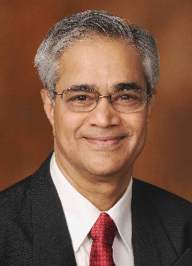
Pradeep B. Deshpande is Professor Emeritus of Chemical Engineering at the University of Louisville. He served on the Chemical Engineering faculty at the University of Louisville for thirty-three years, fully retiring in 2008. He has also served as Visiting Professor of Management at Gatton College of Business & Economics, University of Kentucky in Lexington for fourteen years, where he introduced a mandatory Six Sigma Training Program in the UK’s newly revamped MBA program in 2005 and taught the six sigma class in their MBA program in Athens, Greece for twelve years. He has briefly taught at IIT Kanpur and IIT Madras, both in India.
Pradeep has published 7 books and some one hundred and fifty articles and guided 20 doctoral scholars and forty Master’s scholars. Prof. Deshpande is a recipient of several awards, including the Donald P. Eckman Education Award from the Instrument Society of America, the Grawemeyer Award in Instructional Development (Finalist) from Metroversity in Louisville, the Alumni Research Scholar award from the J. B. Speed School of Engineering at the University of Louisville, the 150th Anniversary Distinguished Engineering Fellow award from the University of Alabama, the R. N. Maddox Memorial Lectureship from the University of Arkansas, and the Abhyankar Memorial Lectureship from the University of Bombay, Department of Chemical Technology. Prof. Deshpande is a Fellow of the International Society for Automation.
Pradeep and Meena have been married for 58 years, and they have 2 sons and seven grandchildren. Pradeep and Meena live in Louisville, Kentucky.
메타데이터
- post_id
- b9b134e22741
- slug
- the-human-guardrail-b9b134e22741
- url
- https://medium.com/@pradeepbdeshpande/the-human-guardrail-b9b134e22741
- canonical_url
- https://medium.com/@pradeepbdeshpande/the-human-guardrail-b9b134e22741
- author_url
- https://medium.com/@pradeepbdeshpande
- status
- ok
- fetched_at
- 2026-08-28 08:54:50






