Why AI-Powered eCommerce Is Becoming the Biggest Growth Advantage in Digital Retail
Digital retail is not divided between large businesses and small ones, well-funded ones and lean ones, or established ones and new ones. It…
Why AI-Powered eCommerce Is Becoming the Biggest Growth Advantage in Digital Retail
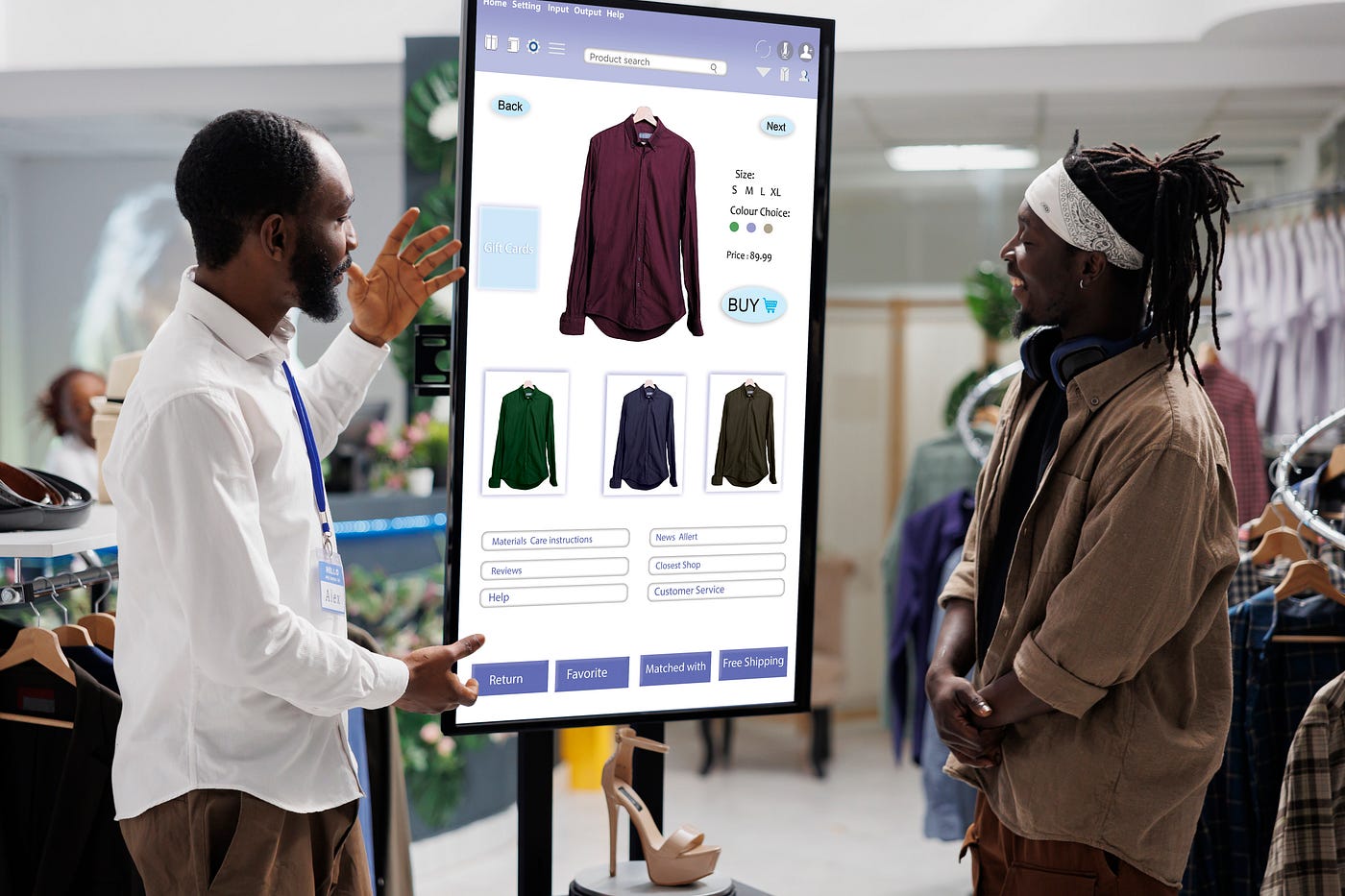
Digital retail is not divided between large businesses and small ones, well-funded ones and lean ones, or established ones and new ones. It is increasingly divided between businesses that have embedded AI into how they operate, sell, and grow, and businesses that have not. That division is widening every quarter.
Digital retail has gone through several transformative phases since eCommerce began scaling in the early 2000s. The shift from physical to digital, the transition from desktop to mobile, the emergence of social commerce, the rise of marketplace dominance, each phase rewrote the rules of who could compete effectively and what it required to build and sustain growth in online retail.
The current phase is different from every previous one in a specific and important way. The previous transformations were primarily distribution shifts, they changed where customers shopped and through which devices they accessed stores. The current transformation is a decision-making shift. It is changing how businesses understand their customers, how they price and position their products, how they manage their operations, and how they allocate their resources. And the engine of that shift is artificial intelligence embedded directly into the eCommerce operating model.
AI-powered eCommerce is not a technology upgrade businesses install and return to operating as before. It is a fundamentally different way of running an online retail operation, one in which the gap between what businesses know about their customers and markets and what they act on closes from days or weeks to hours or minutes. One in which the distance between data and decision compresses to the point where the decision becomes, in many contexts, automated. One in which the organizational capacity to serve each customer as an individual, with personalized product discovery, personalized pricing, personalized communication, personalized service, no longer depends on team size but on the quality of the AI systems doing the personalizing.
This article is a complete examination of why AI-powered eCommerce is becoming the biggest growth advantage in digital retail, what specific mechanisms drive the advantage, what the documented commercial outcomes look like across the businesses generating them, what the technology infrastructure of AI-powered eCommerce actually involves, how businesses at different scales can build toward it, and what the competitive landscape looks like for businesses that invest in this capability versus those that treat it as a future concern.
The Structural Advantage AI Introduces to Digital Retail
Growth in digital retail has always been a function of decision quality at scale. The business that makes better decisions, about what to stock, what to charge, what to recommend, who to market to, and how to retain customers it has already won, consistently outperforms the one making worse decisions, regardless of how much traffic each of them attracts.
For most of eCommerce history, decision quality at scale was constrained by human cognitive capacity. The human team responsible for merchandising could optimize the product assortment for perhaps hundreds of SKUs. The pricing team could monitor competitive pricing for perhaps dozens of high-velocity products. The marketing team could segment and personalize campaigns for perhaps a handful of distinct customer cohorts. The customer service team could provide genuine individual attention to a fraction of the customer base.
These constraints meant that decision quality degraded as scale increased. The larger the catalog, the more SKUs operated without deliberate optimization. The more traffic a store attracted, the larger the percentage of visitors receiving undifferentiated experiences because personalization capacity was insufficient to reach them all. Scale created complexity that human decision-making capacity could not keep pace with, and that gap between complexity and capacity expressed itself as suboptimal conversion rates, avoidable customer churn, and pricing and inventory decisions that left margin on the table.
AI removes this constraint. Not incrementally, structurally. An AI-powered eCommerce operation can optimize pricing for ten thousand SKUs simultaneously with the same precision it applies to ten. It can deliver personalized product recommendations to ten million visitors per day with the same relevance quality it delivers to ten thousand. It can predict demand for every SKU in the catalog with the same rigor it applies to the top twenty sellers. The quality of AI-powered decisions does not degrade as scale increases, it improves, because scale generates more data, and more data trains better models.
This is the structural advantage AI introduces to digital retail: it decouples decision quality from organizational scale. The business with better AI systems makes better decisions at any scale, and the gap in decision quality between AI-powered eCommerce operators and those still relying primarily on human judgment compounds with every quarter of model training.
AI-Powered Personalization: The Revenue Engine Hiding in Plain Sight
No dimension of AI-powered eCommerce generates more documented, consistent, and commercially significant impact than personalization, the ability to deliver each customer an experience that reflects their individual preferences, behaviors, and purchase history rather than the averaged experience designed for the typical visitor.
Personalized Product Discovery and Recommendation
Traditional eCommerce product discovery asks customers to navigate a catalog organized for operational convenience rather than individual relevance. Categories, filters, and sort orders present the merchant’s organizational framework, not the customer’s need framework. The conversion cost of this mismatch is significant, customers who cannot efficiently find what they came for do not convert, and the store’s investment in acquiring that traffic generates no return.
AI-powered product recommendation engines solve the discovery mismatch by modeling each customer’s preference profile from their behavioral history and surfacing products predicted to be individually relevant rather than categorically organized. Collaborative filtering identifies customers with similar behavioral patterns and leverages their subsequent choices to predict what the current customer will find valuable. Content-based filtering models the attribute profiles of products each customer has engaged with positively and recommends products with similar attributes. Real-time session modeling interprets current browsing signals to generate recommendations that reflect immediate purchase intent.
The commercial outcomes of AI-powered personalization in eCommerce are among the most consistently documented results in digital retail analytics. McKinsey’s research on personalization at scale finds that it generates 5 to 15% revenue increases and 10 to 30% improvement in marketing spend efficiency. Amazon attributes approximately 35% of its total revenue to its AI recommendation engine. These are not experimental outcomes from pilot programs, they are production results from businesses operating AI personalization at full commercial scale.
For mid-market eCommerce businesses implementing AI personalization through platforms and apps, the results are proportionally significant. Stores that have implemented AI-powered product recommendations consistently report 15 to 30% improvements in conversion rates, 10 to 25% improvements in average order value, and measurable improvements in session depth and return visit rates, all driven by the fundamental change from showing every customer the same products to showing each customer the products most relevant to them specifically.
AI-Powered Search: Converting Intent Into Purchase
Search is the highest-intent discovery channel in eCommerce. Customers who type a query into a store’s search bar are demonstrating active purchase motivation, they arrived knowing they want something and are trying to find it. Traditional keyword-matching search fails this motivation by returning results based on string matching rather than intent understanding, consistently surfacing products that technically match the query but do not serve the customer’s actual need.
AI-powered search uses natural language processing to interpret query intent, machine learning to rank results by predicted relevance rather than keyword density, and behavioral personalization to adjust result ordering based on each customer’s historical preferences. A customer who searches “running shoes for flat feet” on a store using AI-powered search receives results ranked by their relevance to the specific biomechanical need expressed, with products the customer has shown affinity for in previous sessions appearing higher in results than technically equivalent alternatives.
The commercial impact of upgrading from keyword search to AI-powered search is among the fastest-returning investments in eCommerce technology. Stores report 30 to 50% improvements in search-to-purchase conversion rates following AI search implementation, along with 20 to 35% reductions in zero-results search rates, because AI search interprets the intent behind queries that return no results in keyword matching and surfaces relevant products anyway.
Personalized Email and Marketing Automation
Email marketing remains one of the highest-ROI channels in digital retail, but the gap between undifferentiated broadcast email and AI-personalized behavioral email in commercial performance has grown wide enough that comparing them as the same channel type is misleading.
AI-powered email personalization selects the products featured in each email based on each individual recipient’s purchase history and behavioral signals, sends at the time each individual is most likely to engage based on their historical open patterns, and adjusts the promotional framing, discount-forward versus new-arrival-forward versus editorial-forward, based on each customer’s demonstrated price sensitivity and content engagement patterns.
The documented performance difference between broadcast and AI-personalized email is substantial. Personalized email campaigns generate 6 times higher transaction rates than non-personalized broadcasts, according to Experian research. Behavioral trigger emails, abandoned cart sequences, browse abandonment, post-purchase recommendation sequences, replenishment reminders, generate the highest conversion rates of any eCommerce marketing channel when powered by AI-driven product selection and timing optimization.
AI-Driven Inventory Management: Turning Working Capital Into Competitive Advantage
Inventory management is the operational dimension of eCommerce where AI-powered decision-making creates its most direct and measurable financial impact, converting the working capital invested in stock into a competitive advantage through precision that human planning processes cannot approach.
Demand Forecasting That Compounds Over Time
Traditional demand forecasting in eCommerce relies on historical sales velocity, seasonality adjustments, and buyer intuition to predict what inventory levels each SKU requires at each point in time. This approach works reasonably well for stable, predictable products in stable market conditions. It fails systematically for products with volatile demand, trend-driven categories, new product launches, seasonal items with weather-sensitive demand, because historical patterns are insufficient predictors of future demand in volatile conditions.
AI-powered demand forecasting incorporates data inputs that traditional statistical models ignore: social media trend signals that predict demand shifts before they appear in sales data, search volume patterns that indicate building consumer interest in specific products, weather forecast data that affects demand for weather-sensitive categories, competitive inventory signals that indicate market supply constraints, and external economic indicators that affect purchasing behavior across categories.
The result is demand forecasts that are 20 to 50% more accurate than traditional statistical forecasting across volatile product categories, and that improvement in forecast accuracy translates directly into the two most commercially significant inventory outcomes: reduction in stockouts on high-demand products and reduction in excess inventory on slow-moving ones.
Forecast accuracy of this quality, consistently applied across a full catalog, drives working capital reductions of 15 to 25% through better inventory alignment with actual demand, capital that is freed for investment in customer acquisition, product development, or the operational infrastructure that supports growth. For a business with $10 million in inventory on its balance sheet, a 20% working capital reduction represents $2 million freed from unproductive inventory that was earning zero return.
Dynamic Replenishment and Allocation
AI-powered replenishment systems automate the calculation of optimal reorder points and quantities for every SKU based on real-time inventory positions, transit times from suppliers, current demand forecast, and the cost structure of holding versus stocking out. This automation removes the planning overhead of manual replenishment management for large catalogs while simultaneously improving the precision of replenishment decisions.
For multi-location operations, businesses with both online and physical retail channels, or businesses with multiple warehouse locations, AI-powered allocation intelligence optimizes how available inventory is distributed across the network to maximize total revenue from the available supply. When inventory is constrained, AI allocation consistently outperforms human allocation by correctly identifying which locations have the highest probability of converting the available units based on real-time demand signals.
Automated Markdown Optimization
Markdown management, the timing and depth of price reductions applied to slow-moving inventory, is one of the most direct levers on retail gross margin, and one of the most imprecisely applied through traditional calendar-based markdown approaches. A markdown taken too early sacrifices margin on inventory that would have sold at full price with more time. A markdown taken too late generates carrying costs and eventual clearance losses that a more timely reduction would have avoided.
AI-powered markdown optimization determines the timing and depth of markdown actions for each SKU individually, based on the product’s demand trajectory, remaining inventory, time to end-of-season, and price elasticity characteristics. The result is 10 to 20% reductions in total markdown spend for businesses that implement AI markdown optimization, directly improving gross margin through more precise use of the most powerful pricing tool in retail inventory management.
AI-Powered Pricing: Capturing Margin at Every Opportunity
Pricing is the most direct lever on eCommerce profitability, and it is the lever that traditional retail management is least equipped to operate with precision. Static pricing strategies, setting prices at launch and adjusting on fixed schedules, leave margin on the table during high-demand periods and give back margin unnecessarily when competitive dynamics would support price maintenance.
Dynamic Pricing Intelligence
AI-powered dynamic pricing systems optimize prices continuously across channels based on real-time demand signals, competitive price monitoring, inventory position, and customer price sensitivity modeling. When demand for a specific product is strong relative to available inventory, prices can be adjusted upward within pre-set business rule guardrails to capture the margin that high-demand conditions support. When competitive pricing has shifted the market or inventory is aging, prices can be reduced with the precision that prevents unnecessary margin sacrifice.
Retailers deploying AI dynamic pricing consistently document 2 to 5 percentage point improvements in gross margin rates, representing substantial absolute dollar impact when applied to meaningful revenue bases. In a digital retail environment where every major marketplace and competitor is monitoring and responding to pricing in real time, the ability to respond with equal speed and greater analytical sophistication is a structural competitive advantage.
Competitive Price Intelligence
AI-powered competitive price monitoring tracks pricing across competitor storefronts and marketplace listings at the product level, updating in real time and feeding those signals directly into pricing optimization models. The ability to know, at any given moment, where your pricing sits relative to the competitive landscape for each product in your catalog, and to respond intelligently rather than reactively, is a capability that manual price monitoring processes cannot replicate at catalog scale.
For eCommerce businesses competing in categories with high price transparency, consumer electronics, books, commodity household goods, competitive price intelligence is a defensive necessity. For businesses in categories with lower price transparency, it is an offensive opportunity: the ability to identify pricing headroom where competitors have not yet moved allows margin capture that generic cost-plus pricing approaches leave unrealized.
AI in Customer Acquisition: Getting More From Every Marketing Dollar
Customer acquisition cost has risen significantly across digital marketing channels over the last five years as competition for advertising inventory has intensified and as privacy changes have reduced the targeting precision available through traditional cookie-based approaches. In this environment, the businesses generating the lowest customer acquisition costs are the ones whose AI-powered marketing systems can identify, target, and convert high-value customers more efficiently than their competitors.
Predictive Customer Lifetime Value Modeling
AI-powered customer lifetime value modeling identifies the characteristics, behavioral, demographic, acquisition source, first-purchase patterns, that predict high long-term customer value at the point of acquisition. This predictive capability allows marketing teams to bid more aggressively for customers who match high-LTV profiles, accepting higher acquisition costs for customers likely to generate disproportionate long-term value, while reducing bids for customers whose profile suggests lower long-term engagement.
The commercial impact of LTV-informed bidding strategies is consistently significant. Businesses that have implemented predictive LTV models in their acquisition marketing report 20 to 40% improvements in return on ad spend by shifting acquisition budget toward channels and audience segments with demonstrated high-LTV profiles, and proportional reductions in the acquisition spend allocated to channels generating high volumes of low-value customers.
AI-Powered Customer Segmentation
Traditional customer segmentation in eCommerce operates on demographic variables and simple behavioral thresholds, customers who have purchased more than twice, customers in specific geographic regions, customers who have spent above a certain threshold. These segments are useful but blunt, because they aggregate customers with meaningfully different behavioral patterns and value profiles into the same treatment group.
AI-powered segmentation identifies customer cohorts based on the combination of hundreds of behavioral variables simultaneously, purchase cadence, category affinity, price sensitivity, channel engagement patterns, seasonal behavior, product review activity, creating segments that reflect genuinely similar behavioral and value profiles rather than demographic proximity. These segments allow marketing personalization that is commercially meaningful rather than cosmetically different.
Lookalike Audience Modeling at Scale
AI-powered lookalike modeling uses the behavioral and transactional profiles of a business’s highest-value existing customers to identify potential customers in advertising platforms who share similar characteristics, enabling acquisition campaigns that reach the most likely high-value future customers rather than broad demographic targets.
The precision of AI-powered lookalike models has improved significantly as the underlying machine learning infrastructure has matured. For eCommerce businesses with sufficient transaction history to define a quality seed audience, lookalike campaigns built on AI-powered audience models consistently outperform demographic and interest-based targeting on both acquisition cost and acquired customer value metrics.
AI-Powered Customer Retention: The Compounding Revenue Advantage
Customer retention is the dimension of eCommerce growth that generates the highest long-term ROI and that AI-powered systems improve most dramatically through their ability to identify at-risk customers, intervene with precise timing, and create the personalized experiences that make retention the default rather than the exception.
Churn Prediction and Proactive Retention
AI-powered churn prediction models analyze the behavioral patterns that precede customer disengagement, declining purchase frequency, shrinking basket sizes, reduced email engagement, increased time between sessions, and identify customers who are trending toward lapse before they have actually lapsed. This predictive window between “at-risk” and “churned” is where targeted retention interventions generate the highest ROI.
The intervention itself, whether a personalized win-back offer, a customer service outreach, a product recommendation based on demonstrated preferences, or a loyalty incentive, is most effective when it arrives before the customer has mentally departed rather than after. AI-powered churn prediction enables proactive retention at a precision that monthly RFM analysis cannot provide, because the behavioral signals that predict churn are more granular and more current than monthly purchase summaries capture.
Businesses implementing AI-powered churn prediction and proactive retention programs consistently report 15 to 30% reductions in customer churn rates, which, at meaningful customer base scale, represent substantial annual revenue protection. For a business with 100,000 active customers and an average LTV of $500, reducing churn by 20% protects $10 million in future customer value annually.
Loyalty Program Intelligence
AI-powered loyalty program management transforms static point accumulation systems into dynamic engagement platforms that personalize the loyalty experience to each customer’s specific engagement patterns and value profile. Rather than offering every customer the same points structure and the same reward catalog, AI-powered loyalty intelligence identifies the rewards and engagement mechanics that each customer segment finds most motivating and adjusts the loyalty experience accordingly.
Research from Accenture consistently shows that personalized loyalty experiences generate 3 to 5 times the repeat purchase rate of generic loyalty programs, because the personalization makes the program feel genuinely designed for each individual rather than administratively applied to all customers uniformly.
Post-Purchase Experience Optimization
The period immediately following a purchase is one of the most commercially valuable and most underinvested windows in the customer lifecycle. A customer who has just completed a transaction is in a state of brand engagement, they have demonstrated trust in the brand, committed to a specific product, and are receptive to experiences that enhance the value of that purchase.
AI-powered post-purchase experience optimization delivers personalized product care content, complementary product recommendations based on the specific item purchased, personalized replenishment reminders calibrated to the expected consumption cycle, and loyalty engagement mechanics that build toward the next purchase, all timed and personalized based on the specific purchase and the individual customer’s behavioral profile.
Businesses that invest in AI-powered post-purchase experience consistently report higher second-purchase rates, faster repeat purchase cycles, and higher customer satisfaction scores than those that treat the post-purchase period as a fulfillment workflow rather than a customer relationship investment.
The Technology Infrastructure of AI-Powered eCommerce
Understanding what AI-powered eCommerce requires in technology infrastructure terms is essential for businesses evaluating how to build toward this capability, because the infrastructure decisions made early significantly determine what AI capabilities are achievable and at what quality.
The Data Foundation: Everything Starts Here
AI-powered eCommerce capabilities are only as effective as the data infrastructure beneath them. Every recommendation engine, every demand forecast, every churn prediction model, every pricing optimization system depends on a data foundation that captures behavioral signals comprehensively, integrates data from all relevant sources in near-real-time, maintains data quality through governance processes, and makes data accessible to AI systems without the latency that degrades recommendation relevance and pricing precision.
The most common reason AI-powered eCommerce implementations underperform their commercial potential is not inadequate AI technology, it is inadequate data infrastructure. Recommendation engines fed batch-updated data generate recommendations that reflect yesterday’s behavioral signals rather than today’s purchase intent. Demand forecasting models trained on incomplete transaction data generate forecasts with accuracy ceilings that better data would eliminate. Pricing optimization systems operating on delayed competitive intelligence respond to market conditions that have already evolved.
Building a real-time, comprehensive, integrated data foundation is the highest-leverage investment available to eCommerce businesses preparing for AI capability, and it is the investment that pays compound returns as every AI system built on top of it benefits from the improvement.
Headless Commerce Architecture and AI Integration
Headless commerce architecture, which decouples the customer-facing storefront from the backend commerce engine, provides significant advantages for AI-powered eCommerce implementations because it allows AI systems to be integrated into the customer experience at the API layer without being constrained by the frontend rendering limitations of traditional theme-based storefronts.
An AI recommendation engine integrated at the API layer can inject personalized content into any surface of the customer experience, homepage, category pages, product detail pages, search results, cart, checkout, without requiring theme customization for each surface. AI-powered search can be integrated as a full replacement for the native search engine without frontend constraints. Personalized pricing can be implemented at the API layer, making it available to all surfaces simultaneously through a single integration point.
For businesses operating at the scale where headless architecture is commercially justified, the combination of composable commerce infrastructure and AI capability integration represents the most technically powerful eCommerce configuration currently available, and the one generating the strongest AI-powered personalization outcomes among enterprise digital retailers.
Shopify and the AI-Ready eCommerce Stack
For the majority of mid-market eCommerce businesses, Shopify and Shopify Plus provide the most accessible path to AI-powered eCommerce capability, through a combination of native platform AI features, a mature app ecosystem of AI-powered tools, and an API architecture that integrates with enterprise AI platforms.
Shopify’s native AI capabilities include product recommendation APIs, AI-powered search through Shopify Search & Discovery, Shopify Magic for AI-generated product descriptions and email content, and Shopify Sidekick for AI-powered store management assistance. These native capabilities provide a meaningful baseline of AI functionality without additional app investment.
The Shopify app ecosystem extends this baseline with specialized AI platforms covering the full range of eCommerce AI use cases: personalization and recommendation engines, AI-powered email marketing automation, dynamic pricing platforms, demand forecasting tools, churn prediction and retention automation, and AI-powered customer service chatbots. An eCommerce business building on Shopify has access to best-in-class AI capability for virtually every eCommerce function through app integrations that require no custom development infrastructure.
For businesses requiring AI capabilities beyond what the native platform and app ecosystem provide, enterprise-scale recommendation infrastructure, custom ML pipelines, proprietary demand forecasting models, Shopify’s GraphQL API provides the integration points for connecting custom AI systems to the Shopify data layer and storefront.
Platform Selection and AI Capability Roadmap
The platform decision for eCommerce businesses building toward AI-powered operations should be evaluated not only on current AI capabilities but on AI capability roadmap, because the AI features available on a platform in 2026 will be substantially more capable in 2028, and the business should be on the platform whose AI investment trajectory is most aligned with where eCommerce AI is headed.
Shopify’s investment in AI infrastructure, including its development of Shopify Magic, its integration with leading AI models, and its platform-level AI features, reflects a strategic commitment to AI-powered eCommerce that makes it a strong platform choice for businesses prioritizing AI capability development. Businesses working with a qualified eCommerce development company or evaluating eCommerce platform solutions should ensure that AI capability roadmap is an explicit criterion in the platform evaluation.
The Competitive Dynamics of AI-Powered eCommerce
The competitive implications of the shift to AI-powered eCommerce are worth examining precisely, because they determine the urgency of investment decisions for businesses at every scale.
The Compounding Advantage of Early Investment
AI systems improve with data, and data accumulates with time. A recommendation engine that has been learning from a store’s customer behavioral data for three years makes materially better predictions than the same engine operating on six months of data, because it has observed more customer purchase trajectories, more seasonal patterns, more product substitution behaviors, and more response patterns to different types of promotional interventions.
This temporal improvement dynamic creates a compounding advantage for businesses that invest in AI-powered eCommerce capabilities early. Every quarter of AI system operation is a quarter of model training that competitors starting later cannot shortcut regardless of their investment level. The recommendation accuracy, the demand forecast precision, the churn prediction reliability, all improve continuously with operation, and the gap between an AI system with three years of training data and one with three months is meaningful in every performance dimension.
For businesses evaluating the timing of AI-powered eCommerce investment, this compounding dynamic makes delay expensive in a way that is not immediately visible in any single quarter but that accumulates into a significant competitive gap over a two to three year horizon. The businesses that are hardest to compete with on AI-powered personalization in 2028 are the ones that started their AI investment in 2025 or 2026, not the ones that start in 2028.
The Democratization of Enterprise AI Capability
One of the most commercially significant dynamics in the current AI-powered eCommerce landscape is the democratization of capabilities that were previously available only to the largest digital retailers. Amazon’s recommendation infrastructure, Walmart’s demand forecasting systems, and Sephora’s personalization platforms required hundreds of millions of dollars in custom development investment to build from scratch.
The same capability tiers are now accessible to mid-market eCommerce businesses through SaaS AI platforms, Shopify app integrations, and API-connected ML services at cost structures that mid-market revenue levels support. A Shopify store generating $5 million annually can access recommendation engine sophistication that would have required enterprise-scale custom development five years ago, through a monthly app subscription that represents a fraction of a percent of revenue.
This democratization changes the competitive dynamics of digital retail by making AI capability a differentiator based on quality of implementation rather than size of investment budget. The business with better AI implementation, better data infrastructure, better model configuration, better integration with the customer experience, will outperform the business with poorer implementation regardless of their relative revenue scales. This is a fundamentally different competitive environment than one in which AI capability is gated by investment capacity, and it is the environment that mid-market eCommerce businesses are now operating in.
Category Leadership Is Being Determined Now
In most major eCommerce categories, the businesses that will be recognized as leaders in 2030 are making the technology decisions that will determine their position right now. The AI-powered eCommerce capabilities being built and deployed in 2025 and 2026 will have accumulated two to three years of model training by 2028, making the current period of AI adoption the one in which the compounding advantages that determine long-term category leadership are being established.
For eCommerce businesses evaluating their competitive position, the relevant question is not whether AI-powered operations are necessary, they clearly are, and the evidence base for their commercial impact is extensive and growing. The relevant question is whether their current technology investments are building toward AI-powered operations at the speed and with the quality that the competitive environment requires, and whether the partners and platforms they are working with are genuinely equipped to help them build that capability.
Building Toward AI-Powered eCommerce: A Practical Roadmap
For businesses at different stages of AI adoption, the path toward AI-powered eCommerce follows a sequence that builds each capability on the data infrastructure and operational learning of the previous one.
Stage 1: Data Infrastructure and Foundation
The first investment is the one that all subsequent AI capabilities depend on: building a data infrastructure that captures behavioral signals comprehensively, integrates data from all relevant sources, and makes that data accessible to AI systems without prohibitive latency. This means comprehensive eCommerce event tracking, product views, add-to-cart events, purchase completions, search queries, session depth, feeding into a data platform that aggregates and cleans signals for AI consumption.
For Shopify-based stores, this infrastructure starts with ensuring that Shopify’s native analytics capture is comprehensive and that third-party analytics and behavioral tracking tools are correctly integrated. For more sophisticated requirements, a customer data platform, Segment, Klaviyo, or equivalent, provides the aggregation and integration layer that makes behavioral data available to multiple downstream AI systems simultaneously.
Stage 2: AI-Powered Search and Core Recommendations
With the data foundation in place, the first AI capability investments should prioritize the surfaces that serve the highest-intent customers and deliver the fastest measurable commercial impact. AI-powered search is typically the highest-ROI starting point, it immediately serves the store’s highest-intent visitors and delivers measurable conversion rate improvements within weeks of implementation.
Product detail page recommendations, “frequently bought together,” “customers also viewed,” “complete the look”, are the second highest-ROI implementation, delivering immediate average order value improvements from the most commercially motivated customer surface in the store.
Stage 3: Personalized Email Marketing and Customer Segmentation
AI-powered email personalization, behavioral trigger sequences, personalized product recommendations in campaigns, predictive send-time optimization, represents the next tier of AI capability investment. For most eCommerce businesses, email is the highest-ROI direct marketing channel, and AI-powered personalization generates the performance improvements that justify the investment in the personalization infrastructure required.
Customer segmentation intelligence built on AI-powered behavioral modeling enables the audience precision that makes paid marketing more efficient and retention marketing more targeted, generating return-on-ad-spend improvements that reduce the effective customer acquisition cost for every marketing channel simultaneously.
Stage 4: Dynamic Pricing, Demand Forecasting, and Advanced Personalization
The third tier of AI capability investment covers the operations and pricing dimensions that generate the working capital and margin improvements that make AI-powered eCommerce financially transformative in addition to commercially competitive. AI-powered demand forecasting, dynamic pricing within category-appropriate guardrails, and automated markdown optimization all require the data foundation and operational infrastructure built in earlier stages to work accurately, which is why they come later in the adoption sequence.
Homepage personalization, checkout recommendations, and post-purchase AI experience optimization complete the personalization coverage at this stage, creating a fully AI-personalized customer journey from first site visit through post-purchase engagement.
Stage 5: Predictive Analytics and Continuous Optimization (Month 12 and Beyond)
The final stage of AI-powered eCommerce maturity is when the system becomes self-improving, when the data generated by AI-powered operations is continuously fed back into the models that drive those operations, improving every AI system’s accuracy and commercial performance with each passing week of operation.
Predictive LTV modeling, churn prediction and proactive retention automation, AI-powered new product success prediction, and competitive intelligence automation are the advanced capabilities that operate on this feedback loop, and that represent the ceiling of what AI-powered eCommerce can deliver for businesses that have built the foundation and executed the sequence correctly.
What Businesses Need to Do Right Now
The commercial case for AI-powered eCommerce is no longer theoretical. It is documented across thousands of businesses, in production, at scale, in every major eCommerce category. The question for businesses evaluating their position is not whether to invest in AI-powered eCommerce capability but how to invest in it most effectively given their specific situation.
The most important decision is the sequencing of investment, starting with the data infrastructure that all AI capabilities require, then building AI capability in the order that delivers the fastest commercial return on each investment tier, and ensuring that each stage is executed with the rigor and measurement discipline that allows learning from each implementation to inform the next.
The second most important decision is partner selection. AI-powered eCommerce implementation requires partners, development agencies, platform consultants, technology vendors, who genuinely understand both the AI capabilities available and the eCommerce operational context in which they need to deliver commercial results. The gap between AI-powered eCommerce implementations that deliver their commercial potential and those that produce impressive technology with disappointing outcomes is almost always a partner quality gap.
For businesses building on Shopify, this means working with a Shopify development agency or Shopify development company that combines genuine Shopify platform expertise with AI capability implementation experience, and that can evaluate which AI tools from the Shopify ecosystem will deliver the highest commercial impact for a specific store’s traffic profile, customer base, and growth objectives.
For businesses operating at Shopify Plus scale, the implementation complexity and commercial stakes are higher, making the selection of a Shopify Plus development company or Shopify Plus web development company with verifiable Shopify Plus expertise and documented AI implementation track record a particularly consequential decision.
For businesses evaluating broader platform and technology strategy, an eCommerce development company that can advise across platform selection, data architecture, AI capability roadmap, and integration strategy, rather than optimizing each in isolation, will produce materially better outcomes than piecemeal advisory across separate specialists.
The Measurement Framework: Connecting AI Investment to Business Outcomes
Investing in AI-powered eCommerce without a measurement framework that connects the investment to commercial outcomes is investing without accountability, and without accountability, the optimization decisions that improve commercial performance over time cannot be made on evidence.
The measurement framework for AI-powered eCommerce should track commercial outcomes at each AI-powered surface, attributing revenue impact to specific AI investments to build the evidence base for ongoing investment prioritization.
Revenue per visitor is the most comprehensive single commercial metric for AI-powered eCommerce, capturing both conversion rate improvements and AOV improvements driven by AI personalization in a single number. Tracking revenue per visitor by customer cohort, new visitors, returning customers, high-LTV customers, provides the segmented view that identifies where AI personalization is delivering the strongest commercial impact.
AI-attributed revenue measures the revenue from purchases that originated in or were materially influenced by an AI recommendation or personalized surface, capturing the discovery value of AI personalization that direct conversion metrics alone do not fully reflect.
Customer acquisition cost by channel and cohort, tracked against the LTV predictions generated by AI modeling, measures whether AI-powered acquisition targeting is delivering the higher-value customer mix that LTV-informed bidding strategies are designed to produce.
Customer retention rate by cohort, tracked against pre-AI implementation baselines, measures the retention impact of AI-powered personalization, loyalty intelligence, and churn prevention programs, connecting the engagement improvements that AI delivers to the customer lifetime value outcomes that represent the long-term financial return on the AI investment.
Conclusion: The Growth Advantage That Compounds
AI-powered eCommerce is not the biggest growth advantage in digital retail because it is the newest technology or the most fashionable strategic priority. It is the biggest growth advantage because it addresses the fundamental constraints on eCommerce growth that every other intervention leaves in place.
It removes the constraint between data and decision quality. It removes the constraint between scale and personalization depth. It removes the constraint between catalog size and inventory optimization precision. It removes the constraint between marketing budget and customer acquisition efficiency. And it removes the constraint between team size and the organizational capacity to serve each customer as an individual.
Each of these constraint removals generates measurable commercial improvement. Together, they generate the compounding growth advantage that is separating the leaders of the next digital retail era from those who will spend that era catching up.
The businesses that invest in AI-powered eCommerce capability seriously, sequence their investments correctly, build on the right platform and data infrastructure, and execute with the right partners are not merely keeping pace with a technology trend. They are building the decision-making infrastructure that makes better business performance the default at every scale, and the compounding nature of AI model improvement means that the advantage grows every quarter it operates.
Digital retail’s next era belongs to the businesses building AI-powered operations today. The question is not whether that is true. The question is whether your business is one of them.
Ready to Build an AI-Powered eCommerce Growth Engine?
Whether you’re looking to implement AI-driven personalization, intelligent product recommendations, predictive analytics, conversational commerce, inventory optimization, or a complete AI commerce strategy, having the right technology partner can significantly accelerate results.
At Techtic Solutions, we help brands transform their commerce operations through AI-powered innovation, modern commerce architecture, data-driven decision-making, and scalable digital experiences. From strategy and implementation to optimization and ongoing support, our team works closely with businesses to unlock measurable growth and long-term competitive advantage.
Contact us to explore how AI can help your business increase conversions, improve customer experiences, optimize operations, and create sustainable eCommerce growth.
The brands that act today will be the ones leading tomorrow’s intelligent commerce landscape. Let’s build that future together.
메타데이터
- post_id
- c33a3f5453e8
- slug
- why-ai-powered-ecommerce-is-becoming-the-biggest-growth-advantage-in-digital-retail-c33a3f5453e8
- url
- https://medium.com/@techticsolutionsinc/why-ai-powered-ecommerce-is-becoming-the-biggest-growth-advantage-in-digital-retail-c33a3f5453e8
- canonical_url
- https://medium.com/@techticsolutionsinc/why-ai-powered-ecommerce-is-becoming-the-biggest-growth-advantage-in-digital-retail-c33a3f5453e8
- author_url
- https://medium.com/@techticsolutionsinc
- status
- ok
- fetched_at
- 2026-06-09 15:37:30