5 Fintech Apps in the UAE You Will Probably End Up Using Every Day
These fintech apps make everyday shopping and spending extremely seamless
5 Fintech Apps in the UAE You Will Probably End Up Using Every Day
These fintech apps make everyday shopping and spending extremely seamless
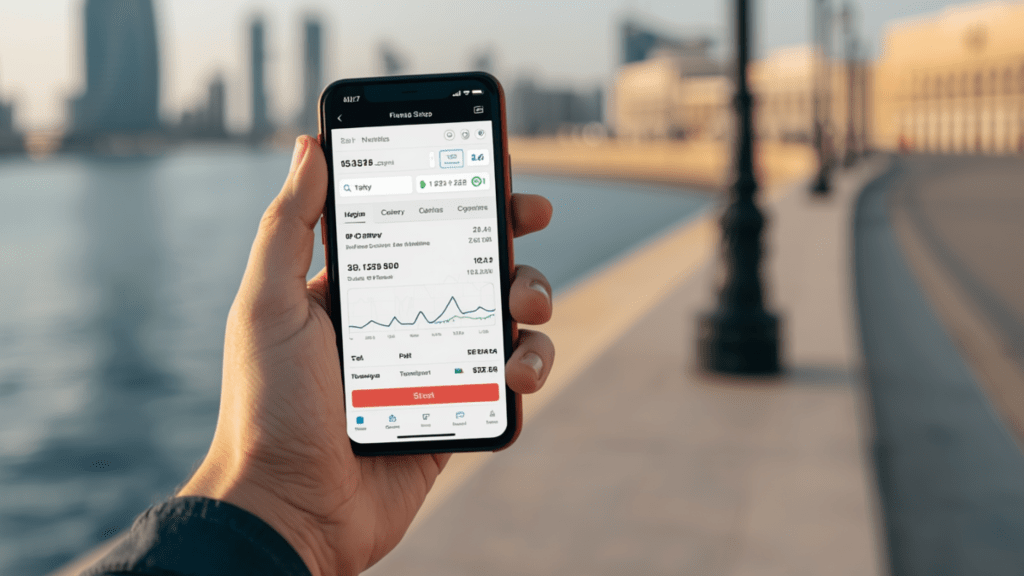
Created using Canva
Last night, I made the mistake of checking my screen time. The verdict was… humbling.
Nearly two full hours of my day disappear into fintech apps. TWO HOURS.
Can you believe it?
And it is something all my friends and colleagues also do more or less, if not 2 hours, 1 hour or so, they spend on these 5 top fintech apps in the UAE.
So, here’s the part that actually matters: in 2026. Let’s look at these wonderful, magnificent fintech apps of the UAE.
5 Top Fintech Apps in the UAE You Will Need Daily
Let’s be honest: if you live in the UAE, from booking a cab, ordering food, to buying property (yes, buying property) happens through the apps.
So instead of giving you a generic list, here are five apps people in the UAE genuinely use, why they use them, and the one thing you should know about each before you hit download.
Wio Bank
If you’ve just moved to the UAE , or you’re simply tired of paying AED 25 a month for a bank account you barely touch, Wio is usually the first app people open.
Launched in 2022 with backing from ADQ, e&, and First Abu Dhabi Bank, Wio Personal gives you multi‑currency accounts (AED, USD, EUR, GBP) and zero FX fees when you spend in the same currency you hold.
But here’s the real reason expats swear by it: the FX markup. Wio charges 0.7% on foreign‑currency card spend, the lowest among UAE banks, digital or traditional. If you spend around AED 50,000 a year internationally, that difference can save you roughly AED 700. That’s not pocket change.
For remittances, Wio uses Wise, mid‑market rate plus a small fixed fee (around AED 15 on an AED 5,000 transfer). That’s significantly cheaper than most legacy banks.
The catch? The Standard Plan requires a monthly balance of AED 3,000 or you pay AED 25. The Salary Plan waives fees if you transfer AED 15,000 monthly (or AED 5,000 if your employer is a partner).
This app is best for expats, freelancers, frequent travelers, and anyone who spends or sends money internationally.
Tabby
Tabby recently secured a Stored Value Facilities license from the Central Bank of the UAE, which means it’s evolving from a Buy Now, Pay Later tool into a full financial platform, think spending accounts, cards, and money management.
But even before this shift, Tabby was already everywhere.
More people in the UAE got a Tabby Card last year than any traditional credit card.
Over a million members and counting!
The core feature is simple: split any purchase into four interest‑free payments.
There’s no need to perform a traditional credit check, or no hidden fees, as long as you pay on time. Most residents with a valid Emirates ID and stable income get approved, making it a lifeline for people building credit or not yet eligible for a credit card.
The catch?
Late payments will hit your credit score. And that can affect your eligibility for loans elsewhere. Worth keeping in mind before you start splitting everything in sight.
This app is best for residents who want flexibility without a credit card, and shoppers across retail, electronics, and travel.
Careem
Most people still think of Careem as ‘the Uber of the Middle East’. In 2026, it’s basically a digital Swiss Army knife.
Rides, food, groceries, laundry, remittances, it’s all in one place. And the financial layer, Careem Pay, is surprisingly useful.
You can top up your wallet, pay for everything inside the app, and send money to other Careem users without needing a bank account.
For people who are new to the UAE, between accounts, or just prefer keeping daily spending separate, it works as a lightweight digital wallet that you already have installed anyway.
The sleeper feature?
International transfers. Careem has been quietly expanding remittances through its partnership with Adyen. If you regularly send smaller amounts home, it’s worth comparing the rates.
This app is best for daily commuters, food‑delivery regulars, and anyone who wants one app for rides, food, and quick peer‑to‑peer payments.
Stake
Real estate is the UAE’s favorite conversation topic.
Stake makes it accessible to people who aren’t ready to drop AED 1 million on a studio in Dubai Marina.
The platform has been growing rapidly, with a gross merchandise value CAGR of over 130% and revenue growth of more than 100% over the past three years.
It now serves over 2 million users from 211 nationalities.
The model is simple: buy fractional ownership in a UAE property, earn rental income proportional to your share, and sell your stake on the secondary market.
Minimum investment?
AED 500.
Suddenly, real estate isn’t just for people with six‑figure savings.
In 2025, Stake launched StakeOne, which digitizes access to full property ownership and after‑sales management for premium Dubai properties from developers like Emaar and Ellington.
This app is best for residents, especially expats, who want exposure to Dubai real estate without buying an entire unit.
NOW Money
This one does not get talked about enough in UAE fintech coverage, which mostly focuses on products built for the professional expat demographic.
This one doesn’t get enough attention.
NOW Money was built specifically for migrant workers and lower‑income residents who don’t meet the AED 3,000-5,000 salary requirements most UAE banks demand. It focuses on financial inclusion, providing access to banking services for people who are often excluded.
Users get a UAE bank account with no minimum salary, a debit card, and affordable international remittances. For workers in construction, hospitality, domestic services, and similar sectors, it’s often the only digital banking option that doesn’t require endless paperwork or salary thresholds.
It’s not flashy. It doesn’t have the premium features of Wio or Liv. But for the people it serves, simplicity is exactly what matters.
This app is best for lower‑income workers, domestic staff, and anyone who doesn’t meet mainstream digital bank salary requirements.
So, What’s Next?
The fact that a list like this even exists isn’t an accident. It’s the result of years of intentional infrastructure building. The CBUAE’s FIT Program quietly laid the groundwork , real‑time payment rails, a unified eKYC system, and an open‑finance layer that lets apps onboard you in minutes instead of making you wait weeks.
So these apps are signals/proof that the UAE’s financial system is more open, more accessible, and more user‑centric than it was just three years ago.
And the most interesting part?
We are still early. The foundation is built, but the ecosystem is very much in motion. The next wave of fintech in the UAE will reshape how residents interact with money altogether.
메타데이터
- post_id
- c36c2ead9a54
- slug
- 5-fintech-apps-in-the-uae-you-will-probably-end-up-using-every-day-c36c2ead9a54
- url
- https://medium.com/the-gravity/5-fintech-apps-in-the-uae-you-will-probably-end-up-using-every-day-c36c2ead9a54
- canonical_url
- https://medium.com/the-gravity/5-fintech-apps-in-the-uae-you-will-probably-end-up-using-every-day-c36c2ead9a54
- author_url
- https://medium.com/@rudrifcw
- status
- ok
- fetched_at
- 2026-06-27 08:54:08