The Selfish Gene: Are We Just Survival Machines?
Unpacking the startling evolutionary reality of our DNA and the ultimate human rebellion.
The Selfish Gene: Are We Just Survival Machines?
Unpacking the startling evolutionary reality of our DNA and the ultimate human rebellion.
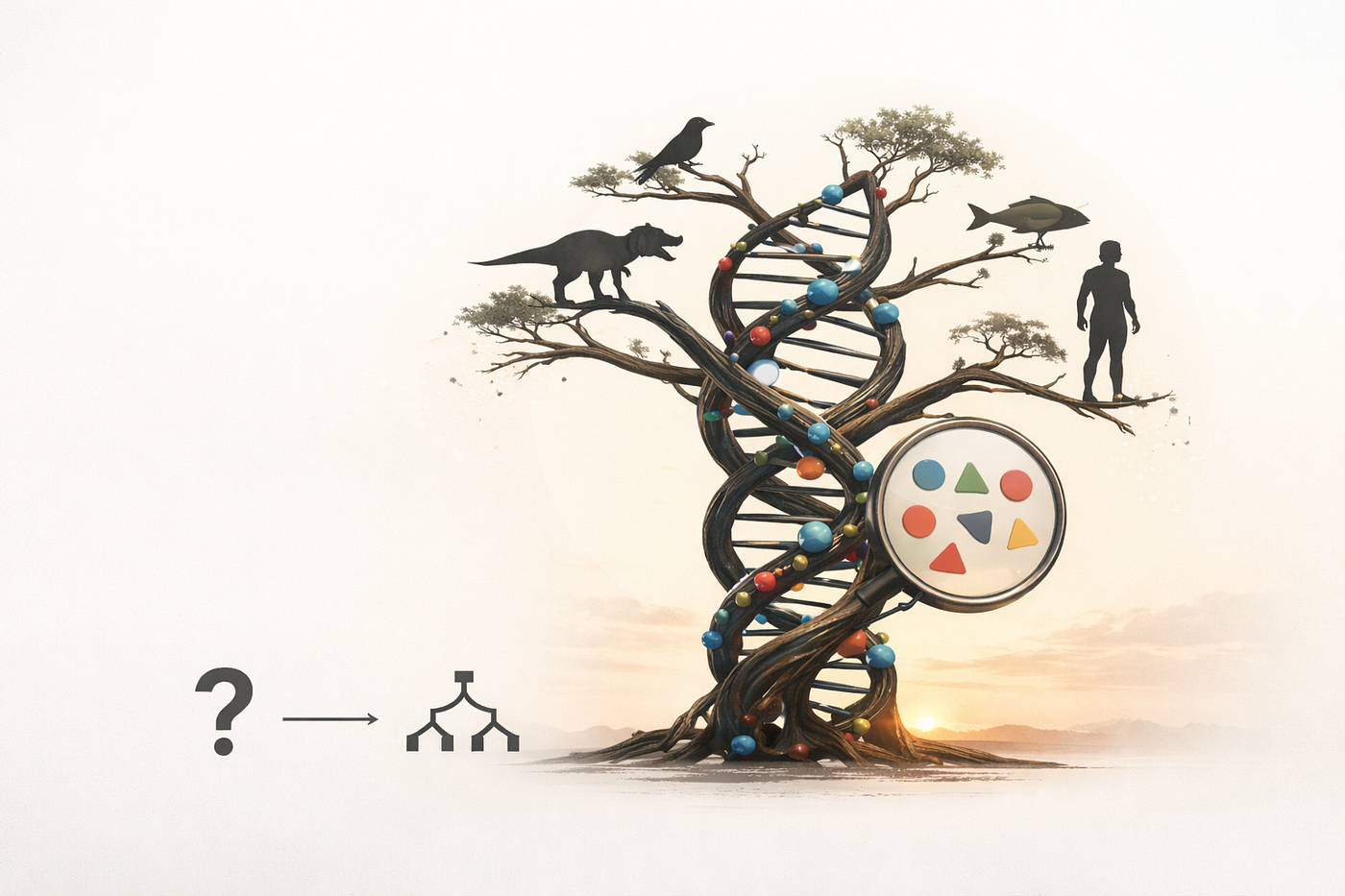
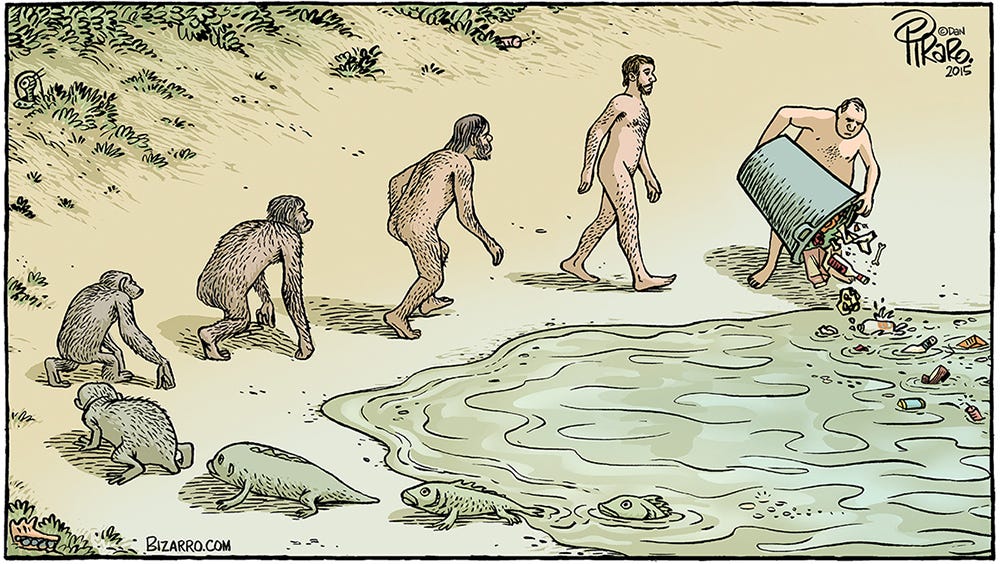
Imagine a highly advanced alien civilization landing on Earth. Their first question to measure our intelligence might be simple: Do they understand why they exist?. For over three billion years, life on Earth existed without knowing the reason for its own survival. Charles Darwin was the first to offer a logical explanation for our existence. However, Richard Dawkins took this logic to a mind-bending extreme in his famous book, The Selfish Gene. The most shocking truth revealed in the book is that humans, animals, and plants are not the main characters of the story. We are simply vehicles — survival machines driven by a ruthless master.
The Illusion of Group Selection
Many of us grew up believing in a flawed version of evolution. We assume that evolution works for the benefit of a group or the greater good of an entire species. This concept, known as the theory of group selection, suggests that if members of a group sacrifice themselves for the whole, the group will survive.
While this aligns with our moral ideals, mathematical and logical reality proves it cannot be sustained. The flaw is simple:
- In a fully altruistic group where everyone gives up their food for others, a single selfish rogue will eventually appear and refuse to make sacrifices.
- This selfish individual will exploit the sacrifices of others and eat their food.
- Consequently, the selfish creature becomes stronger, lives longer, and reproduces more successfully.
- Their offspring inherit these selfish traits, and within a few generations, the altruistic group is entirely replaced by an army of selfish individuals .
Evolution does not operate on group selection; it is entirely driven by gene selection.
Nature’s Ruthless Reality
In evolutionary biology, altruism and selfishness are not psychological terms driven by intent. An act is considered altruistic only if it increases another’s chance of survival while decreasing the actor’s own chances. Nature is full of stark examples of pure, behavioral selfishness:
- The Black-Headed Gull: These birds nest very close to one another. When a neighbor leaves to fish, a gull will immediately swallow the neighbor’s chick, securing a highly nutritious meal without expending any energy.
- The Praying Mantis: During mating, the female often bites off the head of the male. Because the insect’s head contains the brain centers controlling movement, removing it removes control, providing the female with a meal while the male’s body finishes its reproductive task.
- The Emperor Penguin: Standing at the water’s edge, penguins hesitate to dive in due to the threat of predatory seals. Instead of risking their own lives, they attempt to push each other into the water to test if it is safe.
Even maternal love or the sacrifice of a worker bee dying to protect its hive is a disguised form of selfishness . A mother protecting her child is essentially a selfish gene ensuring the survival of its exact copies residing within the child. Selfishness wears the mask of altruism.
“Our genes are immortal heroes, leaping from one body to another across generations, while human bodies and species scatter like clouds over time.”
The Primordial Soup and Chicago Gangsters
To understand our DNA, we must look back billions of years to a time before life, when the Earth was just a primordial soup of water, methane, ammonia, and carbon dioxide. Through lightning strikes or dangerous ultraviolet radiation, amino acids — the building blocks of proteins — began to form. Then, a miraculous accident occurred: the birth of the Replicator.
This molecule could make copies of itself, but the copying process was never perfectly accurate . Just like manually copying a book over a hundred generations leads to accumulated spelling mistakes and altered meanings, these errors formed the foundation of evolution . As raw materials dwindled, replicators fought for survival based on three rules: longevity, speed of copying, and accuracy .
Some replicators began breaking others apart to steal their components. To protect themselves, others built thick protein walls. Over millions of years, these protective walls evolved into complex bodies with eyes and brains — these are the survival machines . We are giant robots built by replicators to hide inside.
These genes lack consciousness or a master plan. They operate like successful Chicago gangsters: surviving a fiercely aggressive and competitive underworld requires one to be ruthless and cunning . The greatest attribute of a successful gene is its ruthless selfishness, focused solely on advancing its own copies.
The Rowing Crew: Why Selfish Genes Cooperate
If a gene is a selfish entity only concerned with its own replication, why do the gene for making eyes and the gene for making stomachs cooperate instead of fighting? .
Imagine a rowing crew consisting of eight highly selfish people who only care about winning their own gold medal. Even the strongest individual cannot win the race alone; they need the other seven to row in perfect harmony. If the boat sinks, nobody gets a medal. Nature acts as the coach, selecting only the boat that works best together and wins the race. If a gene builds tiger-like teeth but the stomach gene only digests grass, the animal will starve and the boat will sink. Therefore, selfish genes are forced to cooperate to build a successful survival machine.
Aging, Sex, and Parasitic DNA
Despite this incredible teamwork, survival machines eventually break down and die. The secret of aging lies in late-acting lethal genes . If a lethal gene activates in childhood, evolution removes it because the host dies before reproducing . However, if a lethal gene activates at fifty or sixty, the person has already passed that time bomb to the next generation . Tricking the body with chemicals to block the signals that activate these lethal genes could potentially delay aging and death .
Furthermore, the process of sexual reproduction requires an organism to sacrifice fifty percent of its genes, which seems like a bad deal. Yet, specific sexuality genes manipulate the system for their own benefit, forcing sexual reproduction to ensure they survive through the shuffling of chromosomes. Similarly, large portions of our DNA do nothing to build our bodies. This surplus DNA acts as a parasite, taking a free ride on our survival machine simply to copy itself .
The Ultimate Rebellion
Realizing that human nature is fundamentally designed by blind, ruthless replicators can feel discouraging . If we want a compassionate society, we cannot expect help from our biology; we are born selfish and must actively teach altruism and cooperation .
However, this presents a deeply hopeful message. Humans are distinct from other animals because we possess culture and the capacity to learn. We are the only creatures on Earth with the power to reject the demands of our blind, selfish creators . When we choose not to have children, or when we risk our lives for a complete stranger, we are rebelling against our selfish genes. Our true freedom lies in recognizing our biological inheritance and bravely standing against it .
Primary Keyword: The Selfish Gene
Related Semantic Keywords: Richard Dawkins, evolutionary biology, survival machines, human evolution, group selection, gene selection
Meta Description:
Discover the startling evolutionary reality behind Richard Dawkins’ The Selfish Gene. Learn why we are survival machines and how humans can rebel against DNA.
메타데이터
- post_id
- c5afc49ac520
- slug
- the-selfish-gene-are-we-just-survival-machines-c5afc49ac520
- url
- https://medium.com/@talesbysandeep/the-selfish-gene-are-we-just-survival-machines-c5afc49ac520
- canonical_url
- https://medium.com/@talesbysandeep/the-selfish-gene-are-we-just-survival-machines-c5afc49ac520
- author_url
- https://medium.com/@talesbysandeep
- status
- ok
- fetched_at
- 2026-07-17 05:19:11