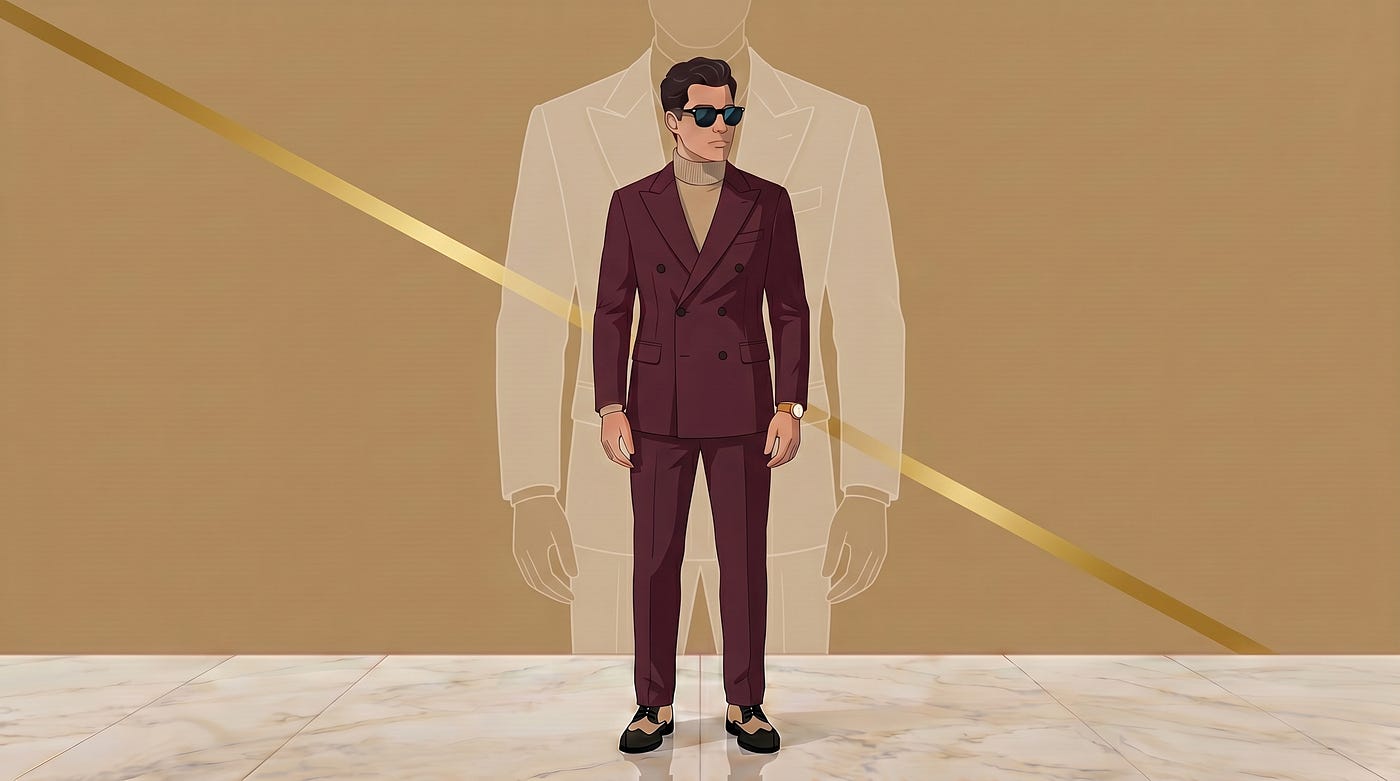
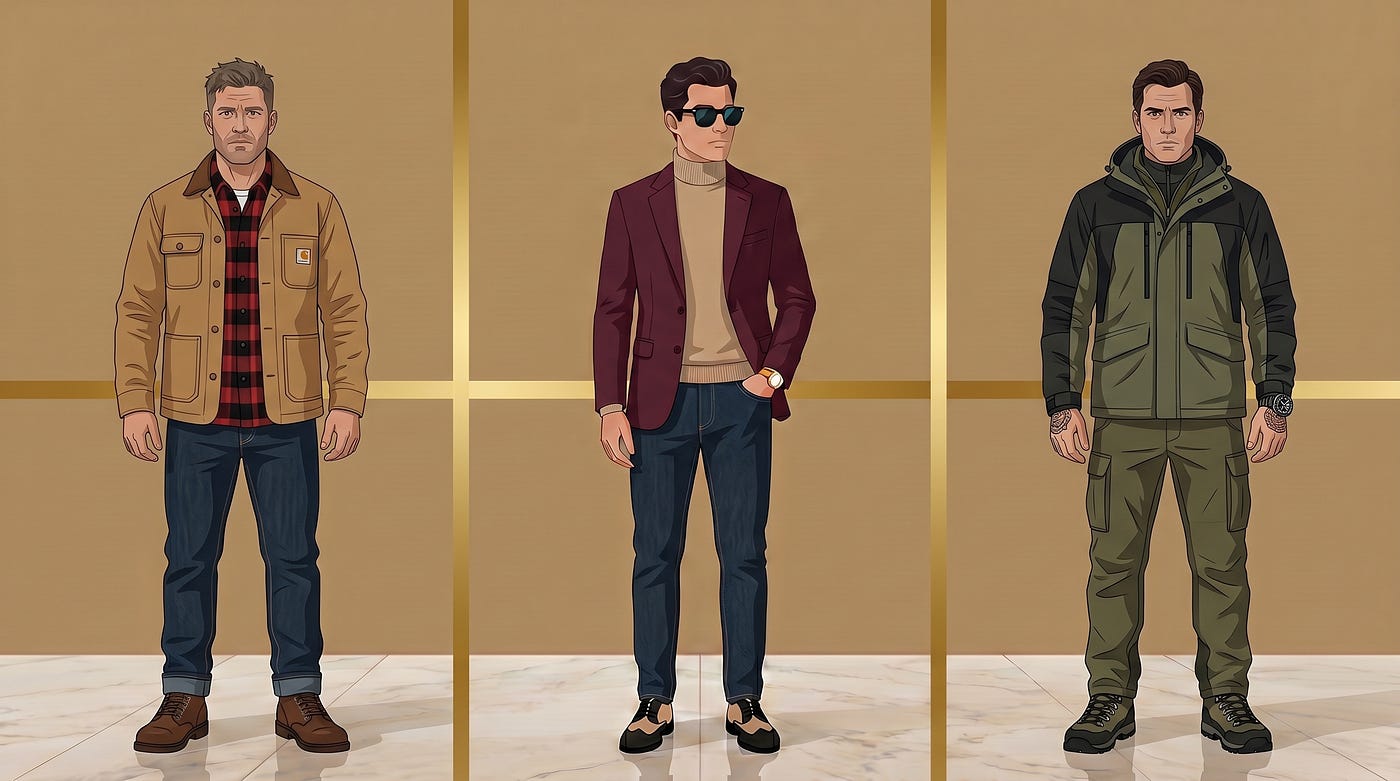
What Is AI Fashion, and Can It Actually Dress You Better?
Type “AI fashion” into Google and you’ll get a flood of apps promising to dress you better than you dress yourself. Some of them even…
What Is AI Fashion, and Can It Actually Dress You Better?

Type “AI fashion” into Google and you’ll get a flood of apps promising to dress you better than you dress yourself. Some of them even deliver a little. Most just guess.
The problem isn’t that AI can’t help with style. It’s that most tools mistake data for understanding, feeding you recommendations built from behavior alone, with no framework, no philosophy, and no idea who you actually are. That gap shows up fast: quiz answers that don’t match the suggestions, advice with no point of view behind it, and a chatbot that forgets you the moment you close the app.
This piece breaks down what AI fashion tools actually do, where they fall short, and why an agent built on a real styling philosophy and relationship, not just a dataset, closes the gap the others can’t.
What Is AI in Fashion, Really?
Ask ten people what “AI fashion” means, and you’ll get ten different answers, mostly wrong. Some picture a chatbot recommending outfits. Others picture a filter that puts clothes on your photo. Neither is the whole story.
AI in fashion actually breaks into three distinct technologies, and most tools only use one:
- Recommendation engines predict what you might like based on data, either your behavior or your stated preferences. This is the oldest and most common form, the engine behind Stitch Fix’s algorithm-plus-stylist model.
- Computer vision recognizes and classifies what’s actually in front of it: a garment in a photo, an outfit you’re wearing, a wardrobe you’ve cataloged. This is what powers tools like Amazon’s StyleSnap.
- Generative AI creates something new, most visibly virtual try-on, rendering a specific person in a specific garment before they buy it.
Most apps market themselves as “AI fashion” while doing only one of these three. Knowing which one you’re actually getting is the first useful thing to understand before you trust any of them with your closet.
What Are AI Fashion Tools Actually Doing? (Examples of AI Fashion)
The category splits cleanly once you know what to look for.
- Recommendation-and-fulfillment services like Stitch Fix pair an algorithm with a human stylist: the machine narrows thousands of options to a shortlist, a person makes the final call, and the box is shipped. It’s less “AI stylist” and more algorithm-assisted personal shopping.
- Visual search tools like Amazon’s StyleSnap work differently. Upload a photo, and computer vision finds similar items in the catalog. Useful for tracking down a specific piece. Not useful for telling you whether that piece actually belongs in your wardrobe, conceptually, if it really should be there.
- Closet-first apps like Whering skip the sales pitch entirely, cataloging what you already own and suggesting combinations from your own closet rather than pushing new purchases.
The pattern across nearly every 2026 roundup of these tools is the same: each one solves a single slice of the problem. A chatbot gives generic advice. A closet app stores clothing. A shopping app recommends products. None of them close the full loop, and app store reviews confirm it (example 1, example 2); users report onboarding quizzes that don’t match the suggestions that follow, or recommendations that reset the moment you miss a day logging in.
Knowing which slice a tool covers is the difference between trying five apps and being disappointed five times and picking the one that actually does what you need.
Not sure your own eye is calibrated yet? Put it to the test in Style Battle, picking the better-dressed look, head-to-head, and see how your instincts stack up against the community.
The Cold Start Problem: Why Your AI Stylist Doesn’t Know You Yet
There’s a name for the exact frustration you feel on day one of any new styling app: the cold start problem. Data scientists define it plainly: a recommendation system simply can’t make accurate predictions when it has little or no interaction data to work from. You’re a stranger to it, and strangers get generic answers.
Most apps paper over this with shortcuts. Show everyone the popular picks. Guess from age and location. Both are documented as unreliable; the popularity-default approach only works if your taste matches the crowd’s, and demographic guessing can misfire badly enough to reinforce lazy stereotypes rather than learn anything real about you.
The deeper issue is that these systems can’t infer context, only pattern-match on whatever you feed them. Upload a photo in a cropped sweater and high-waisted trousers, and the algorithm logs that combination as your preference, with no idea whether you actually loved it or just wore it because it was laundry day. Behavioral data without a framework to interpret it is just noise wearing the costume of personalization.
A framework changes the starting point entirely. Instead of the algorithm guessing at who you are from a handful of uploads, you tell it directly, and everything downstream gets sharper from that first answer onward.
This article was originally posted on Aesthetics Blog. You can read the full version here.
메타데이터
- post_id
- d4ca1c9dd0b1
- slug
- what-is-ai-fashion-and-can-it-actually-dress-you-better-d4ca1c9dd0b1
- url
- https://medium.com/@IlPappa/what-is-ai-fashion-and-can-it-actually-dress-you-better-d4ca1c9dd0b1
- canonical_url
- https://medium.com/@IlPappa/what-is-ai-fashion-and-can-it-actually-dress-you-better-d4ca1c9dd0b1
- author_url
- https://medium.com/@IlPappa
- status
- ok
- fetched_at
- 2026-08-06 10:19:58