The Evolution of SRE Observability: Moving Beyond Dashboards
Observability is gradually shifting from static visualization to intelligent, conversational investigation, and this shift is changing how…
The Evolution of SRE Observability: Moving Beyond Dashboards
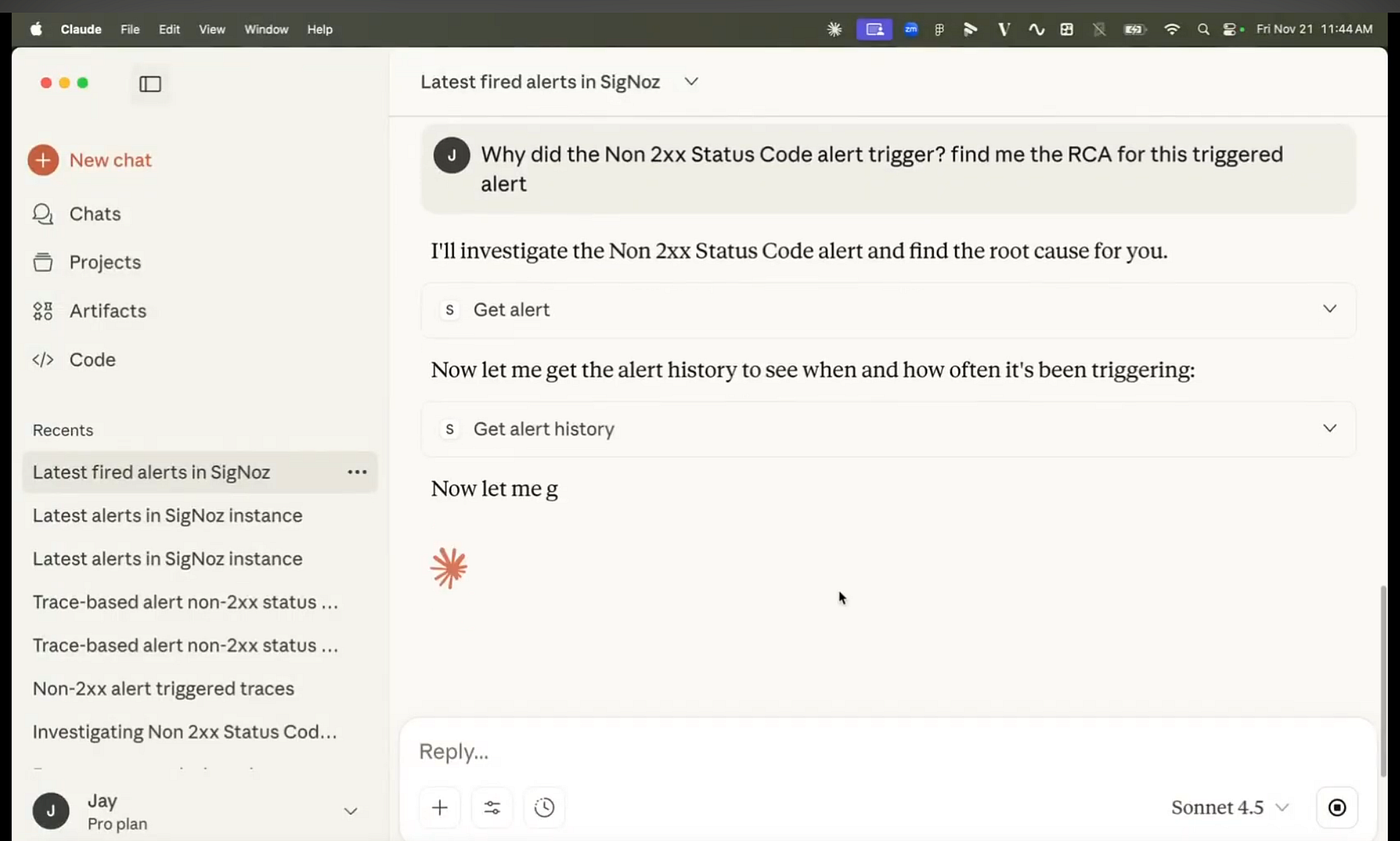
Observability is gradually shifting from static visualization to intelligent, conversational investigation, and this shift is changing how we approach incident response.
Over the past several weeks, I’ve been working with SigNoz, Model Context Protocol (MCP) servers, and Claude AI to explore how modern observability workflows can measurably reduce MTTR and improve incident investigation.
The Challenge We Still Face:
Even with mature tooling, SREs lose valuable time during incidents:
→ Context-switching between metrics, logs, and traces
→ Manually correlating symptoms across distributed services
→ Writing queries under pressure
→ Translating technical findings for non-technical stakeholders
Dashboards show us what broke, but finding why still depends on pattern recognition under stress.
A Different Approach:
By exposing SigNoz telemetry through an MCP server, we enable AI to reason directly over production observability data.
What this enables:
- Natural language investigation
“Why did checkout latency spike after deployment?” → The system queries traces, correlates logs, checks resource utilization, and explains probable root causes.
- Faster triage
AI doesn’t replace engineering judgment — it accelerates it. You validate findings, but start with context instead of noise.
- Unified signal analysis
Metrics, logs, and traces analyzed together, not in silos.
- Knowledge transfer
Junior engineers gain access to senior-level investigation patterns through guided workflows.
Why This Matters:
In complex distributed systems:
-
Failures are multi-dimensional
-
Symptoms rarely point to single services
-
Time pressure degrades decision quality
AI-assisted observability delivers:
✓ Reduced MTTR
✓ Better post-incident analysis
✓ Transferable reliability knowledge
✓ Scalable expertise, not just headcount
The Architecture:
- Clean separation of concerns:
OpenTelemetry → SigNoz → MCP Server → Claude
- No invasive code changes. No vendor lock-in. No black-box automation claims.
The Takeaway:
-
Observability is becoming conversational. The evolving SRE skillset isn’t just about Kubernetes or alerts but also about asking the right questions of your systems.
-
AI doesn’t replace reliability engineering. It amplifies disciplined engineering practices.
If you’re building observability platforms or running complex production systems, this direction is worth your attention.
What’s your take? How is AI changing your reliability workflows?
메타데이터
- post_id
- daf7bb1a84e6
- slug
- the-evolution-of-sre-observability-moving-beyond-dashboards-daf7bb1a84e6
- url
- https://medium.com/@tundedamian/the-evolution-of-sre-observability-moving-beyond-dashboards-daf7bb1a84e6
- canonical_url
- https://medium.com/@tundedamian/the-evolution-of-sre-observability-moving-beyond-dashboards-daf7bb1a84e6
- author_url
- https://medium.com/@tundedamian
- status
- ok
- fetched_at
- 2026-06-20 20:29:01