Why Slow Cooker Food Takes Too Long to Cook
Why slow cooker food takes too long to cook is usually due to low internal temperature, overfilling the pot, frozen ingredients, or…
Why Slow Cooker Food Takes Too Long to Cook
Why Slow Cooker Food Takes Too Long to Cook
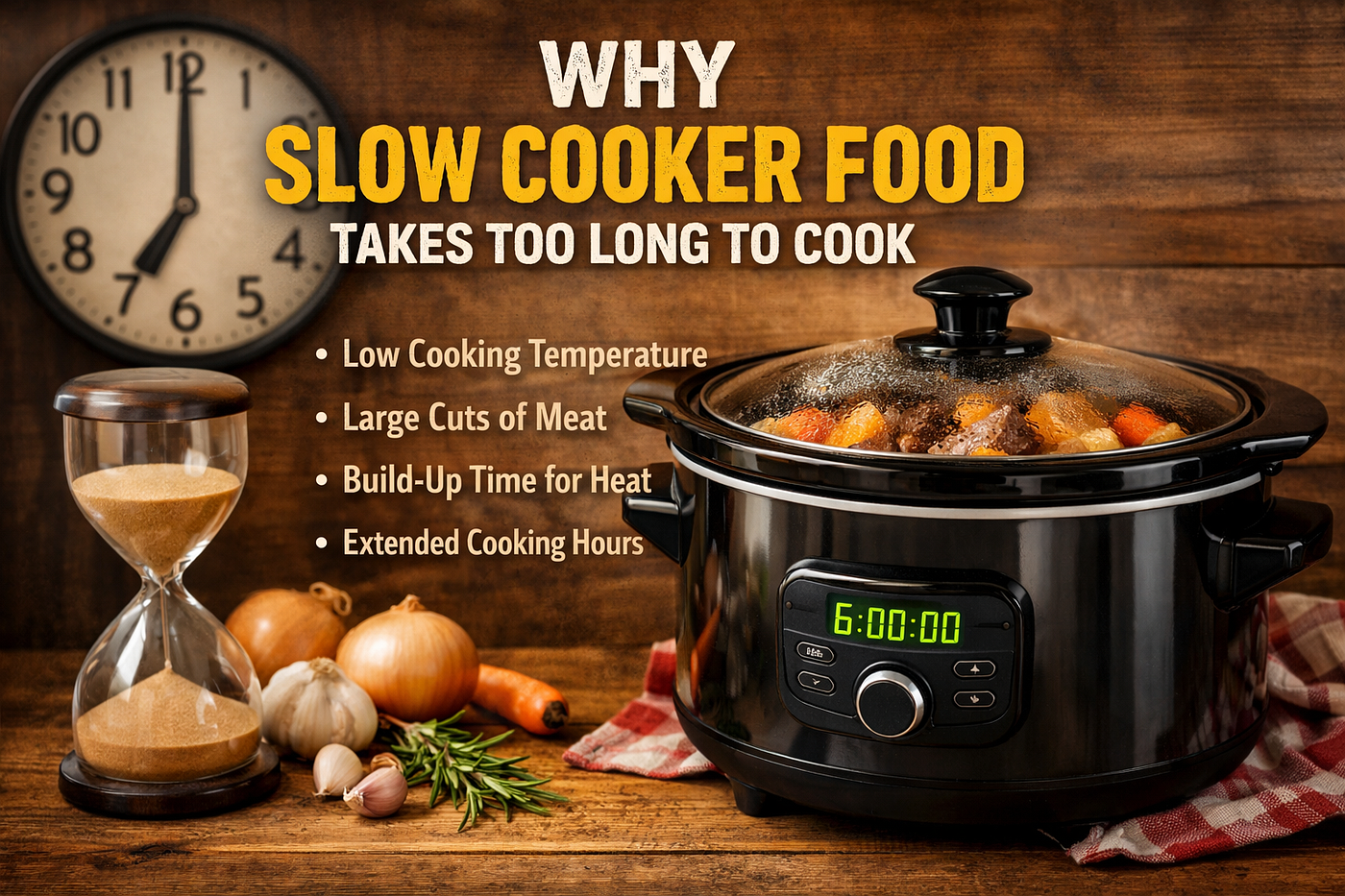
**Why slow cooker food takes too long to cook** is usually due to low internal temperature, overfilling the pot, frozen ingredients, or frequent lid opening, all of which prevent steady heat buildup. Slow cookers rely on constant low heat, so small usage mistakes can add hours to cooking time.
I’ve been using slow cookers for over a decade, both at home and in shared office kitchens. I’ve cooked everything from beef stews to pulled chicken, and I’ve also made plenty of mistakes that left food half-done at dinner time. Over the years, I learned that slow cookers aren’t unpredictable — they’re just very sensitive to how we use them.
Food is still undercooked after the recommended time
People often follow a recipe exactly but still end up with tough meat or crunchy vegetables.
Recipes say 6–8 hours, but it takes 10 hours or more
This is common in busy households where meals need to be ready at a specific time.
Meat cooks unevenly or stays tough
Large cuts may look done on the outside but remain chewy inside.
Office slow cookers take longer than home ones
Shared kitchen appliances often behave differently than expected.
Slow cooker works fine sometimes, but not always
Inconsistent results make users doubt the appliance.
How Each Pain Point Is Solved
Food is still undercooked after the recommended time
Why it happens
Slow cookers heat gradually and rely on trapped steam. If ingredients start cold, especially meat, the cooker spends hours just reaching a safe cooking temperature.
How the solution works
I stopped adding refrigerated or frozen ingredients directly. Letting meat sit out for 15–20 minutes before cooking made a noticeable difference. The food reached cooking temperature faster and finished on time.
Recipes say 6–8 hours, but it takes much longer
Why it happens
Recipe times assume the cooker is filled correctly — usually half to two-thirds full. Overfilling blocks heat circulation.
How the solution works
Once I reduced portion size and avoided stacking ingredients, cooking times aligned better with recipes. Liquid also heated more evenly, which sped things up.
“Heat loss from lid removal is one of the biggest causes of extended cook times,” — Mark Feldman, Appliance Repair Technician
Meat cooks unevenly or stays tough
Why it happens
Lean cuts don’t break down well at low temperatures. Large chunks take longer to reach the center.
How the solution works
From experience, tougher cuts like chuck roast or pork shoulder cook faster overall because collagen breaks down slowly but completely. Cutting meat into smaller, uniform pieces also helped.
“Slow cooking works best with connective tissue, not lean muscle,” — Sarah Collins, Culinary Instructor
Office slow cookers take longer than home ones
Why it happens
Office slow cookers are often smaller, older, or plugged into shared circuits that reduce power consistency.
How the solution works
At work, I always use the high setting for the first hour, then switch to low. This stabilizes temperature early and prevents long delays.
“Slow cooking works best with connective tissue, not lean muscle,” — Sarah Collins, Culinary Instructor
Inconsistent results from the same slow cooker
Why it happens
Each time the lid is opened, internal temperature drops by about 10–15°F, adding 20–30 minutes per peek.
How the solution works
Once I committed to not opening the lid, results became consistent. Using a glass-lid cooker also reduced curiosity checks.
“Heat loss from lid removal is one of the biggest causes of extended cook times,” — Mark Feldman, Appliance Repair Technician
Country-Specific Context
USA
Larger slow cookers are common, which increases warm-up time if underfilled. Energy costs vary by state, so longer cooking can mean higher electricity bills.
UK
Smaller kitchens and compact appliances mean less powerful heating elements. UK users often need longer preheat times.
Canada
Cold ambient temperatures, especially in winter, slow initial heat buildup. I noticed longer cook times in colder kitchens.
Australia
Warmer climates help, but voltage differences can still affect imported slow cookers. Ventilated kitchens also lose heat faster.
Experience-Based Benefits
After correcting how I used my slow cooker, meals finished closer to schedule. Meat texture improved, vegetables cooked evenly, and I stopped guessing dinner times. I also wasted less electricity and stopped feeling frustrated by “slow” cooking that wasn’t actually slow.
“Most slow cooker complaints come from usage habits, not appliance failure,” — Linda Gomez, Home Economics Educator
Practical Tips
- Always preheat on high for 20–30 minutes if time matters
- Keep the cooker between 50% and 70% full
- Cut ingredients into similar sizes
- Avoid frozen ingredients unless recipe allows it
- Place slow cooker away from cold windows or vents
- Check lid seal regularly for steam leaks
For food safety temperature guidance, the **USDA slow cooker safety guide** explains why low heat requires time
“Most slow cooker complaints come from usage habits, not appliance failure,” — Linda Gomez, Home Economics Educator
FAQs
Does opening the lid really slow cooking?
Yes. Each opening can add up to 30 minutes to total cook time.
Is cooking on high always faster?
High reaches safe temperature faster, but total cooking time still depends on food type.
Why does chicken cook slower than beef?
Chicken has less connective tissue, so it doesn’t break down as efficiently at low heat.
Can I put frozen meat in a slow cooker?
It’s not recommended because it keeps food in the unsafe temperature zone longer.
Why does my new slow cooker behave differently?
Modern models often cook hotter to meet updated safety standards.
Should I stir slow cooker food?
Only if the recipe says so. Stirring releases heat and steam.
Conclusion
Slow cookers don’t take too long because they’re faulty — they take longer when small details are overlooked. Once you respect how low heat, moisture, and time work together, slow cooking becomes reliable, predictable, and stress-free. With a few habit changes, your meals can finish on time and taste the way they should.
메타데이터
- post_id
- ddb7e40f3e39
- slug
- why-slow-cooker-food-takes-too-long-to-cook-ddb7e40f3e39
- url
- https://medium.com/@kicook/why-slow-cooker-food-takes-too-long-to-cook-ddb7e40f3e39
- canonical_url
- https://medium.com/@kicook/why-slow-cooker-food-takes-too-long-to-cook-ddb7e40f3e39
- author_url
- https://medium.com/@kicook
- status
- ok
- fetched_at
- 2026-06-22 18:00:48