Eliminating $10M in Leakage: A Transaction Monitoring Guide
Transaction monitoring software is the technical baseline for preventing systemic financial leakage in global procurement by replacing…
Eliminating $10M in Leakage: A Transaction Monitoring Guide
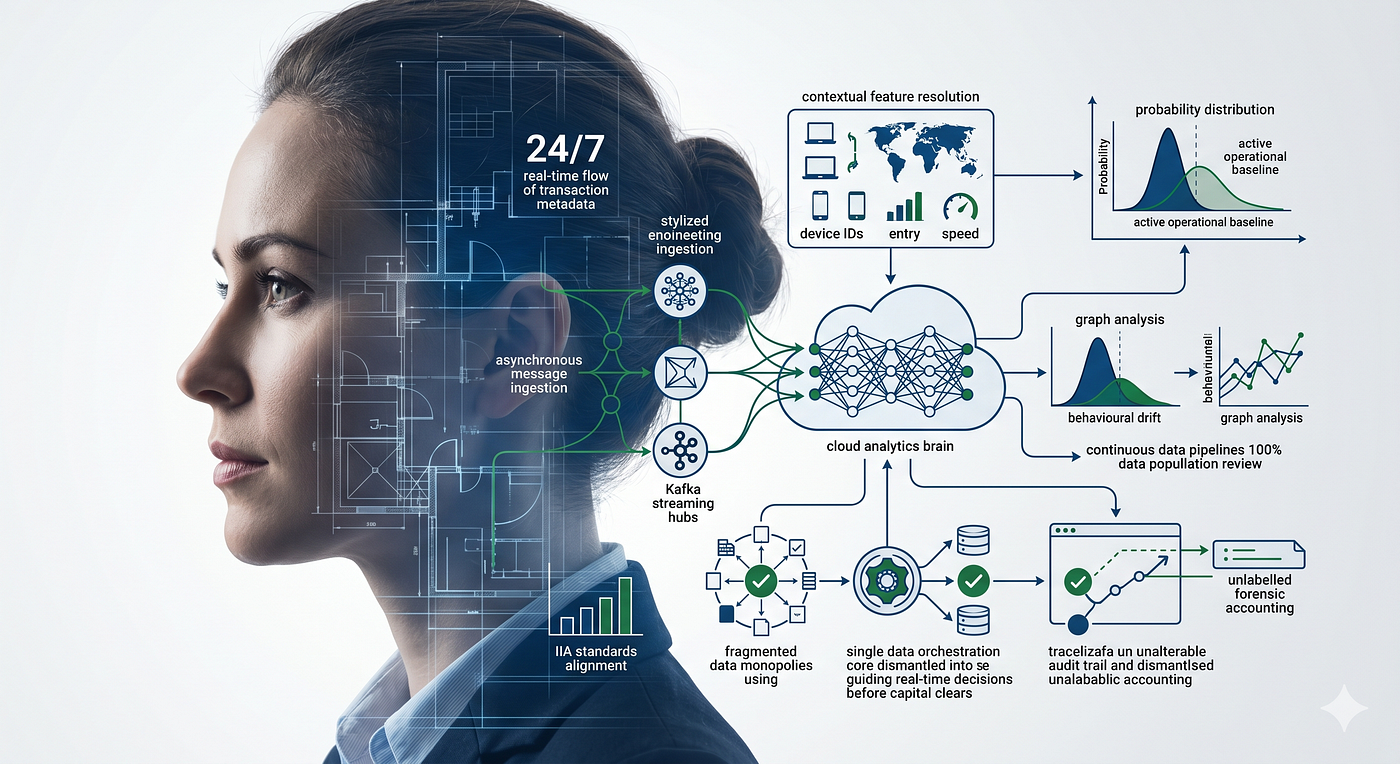
Transaction monitoring software is the technical baseline for preventing systemic financial leakage in global procurement by replacing manual, sample-based audits with a state of persistent, 100% data population oversight.
By integrating machine learning directly into the payment flow, these systems identify unapproved vendor selections, duplicate invoices, and internal collusion at the point of transaction rather than months after the cash has left the building. This shift relies on a high-definition intelligence layer that ingest disparate data streams to perform a vendor risk assessment and anomaly detection in real time, effectively closing the gap between data ingestion and actual business choice.
As a result, organizations move from reactive troubleshooting to a proactive state where internal controls are enforced automatically across the entire enterprise ledger.

Transaction Monitoring Software
The Hidden Cost of Manual “Grunt Work”
I once spoke with a controller at a global manufacturing firm who took a strange pride in their 200-person audit team. My first thought was that a team that size is a signal of a failing system. You should not need a small army to verify that your bills are being paid correctly. When you rely on a manual workforce to catch errors, you are essentially making choices based on a low-resolution map of your own company. Human brains are excellent at small-scale recognition but fail at high-dimensional correlation across hundreds of thousands of rows.
Most procurement leakage happens because we are drowning in telemetry but starving for clarity. I’ve seen forensic accountants stare at spreadsheets for days trying to find a “needle” that had already cost the company six figures in fines. The data was sitting in their ERP the whole time; they just had no way to act on it. This friction is what creates the opening for duplicate payments and unapproved spend.
Engineering Procurement Integrity
Procurement is the first place to start because it is high-volume and historically prone to leakage. In a manual world, you sample 5% of purchase orders and just hope for the best. Modern transaction monitoring software allows for a 100% check on every single requisition, stopping money from leaving the building before a payment is even scheduled.
- Pattern Recognition: Identifying vendors that share the same bank account or physical address to signal potential internal collusion.
- Price Variance Monitoring: Flagging when the same SKU is purchased at different price points across different regional departments.
- Threshold Bypassing: Spotting “split-billing” where a large purchase is broken into smaller amounts to stay under limits for secondary approval.
- Duplicate Payment Detection: Looking across the entire history, not just the last month, to find invoices already paid under different reference numbers.
When these checks move to the front end, it changes the conversation with internal stakeholders. They know the system is watching, which improves compliance without needing to send a single “nasty-gram” email.
Beyond OCR: Contextual Reasoning in T&E
Travel and Expense (T&E) is often a nightmare of 40-page policies and manual receipt checking. Automating this isn’t just about reading a receipt; it is about contextual reasoning. A smart system knows that a $100 dinner in New York City carries a different risk profile than a $100 dinner in a small town.
By clearing the 95% of expenses that are clearly within policy, you allow your audit team to focus on the 5% that look genuinely suspicious. This shift recovers funds and man-hours simultaneously. You are moving from a “human calculator” model to a model where your analysts act as strategic problem solvers. According to the Institute of Internal Auditors, this move toward tech-enabled, continuous monitoring is becoming the global standard for institutional integrity.
Solving the “Junk Drawer” Vendor Master File
The vendor master file is often the junk drawer of the enterprise, containing multiple entries for the same global company with slightly different spellings or tax IDs. This fragmentation makes it impossible to get a clear view of total spend and creates a massive opening for fraud. AI excels at this type of data hygiene.
A continuous state of maintenance is required where every new vendor is checked against external government databases in real time. It identifies shell companies and duplicates before they are added to the system. Keeping this foundation clean is what allows all other automation efforts to actually work. Without this, your transaction monitoring software is just running on bad data.
Anti-Bribery Controls and the Real-Time Nervous System
We have to move away from the “look back” audit. If you find a fraud event six months after it happened, you are just doing a post-mortem. Strategic leadership requires a live “heat map” of risk. By integrating anti-bribery controls into your payment flows, you can assign a risk score to every transaction before it is finalized.
- Risk Scoring: Assigning weights to transactions based on jurisdiction, vendor history, and employee behavioral baselines.
- Automated Action: Moving beyond simple alerts to blocking transactions when confidence thresholds are met.
- Governance as Code: Baking corporate policies directly into the digital agents so compliance is on by default.
If a payment to a new vendor in a high-risk jurisdiction is triggered at 2:00 AM, the system should hold it. This is not about being the “office of no,” but the office of “not until we are sure”. This level of persistent oversight is the best defense for a leadership team that must answer for the integrity of global operations.
Breaking the Technical Debt Anchor
The biggest hurdle I face is the existing tech stack. Most companies run on a mix of legacy ERPs and modern cloud apps that do not talk to each other. These silos are the enemy of intelligence. You cannot run a global fraud model if your data is stuck in five different buckets.
Breaking these silos is a leadership challenge more than a technical one. You have to be willing to invest in the middleware and data pipelines that allow information to flow freely. A “hub and spoke” model often works best, where legacy systems stay in place but feed into a centralized cloud data platform. This allows you to run your models without having to rip and replace your entire core infrastructure; a project that almost always ends in disaster. This shift toward centralized, automated oversight is a primary factor in reducing regulatory friction.
The Shift from Gatherer to Adjudicator
I hear a lot of fear about AI taking jobs, but the reality is that the jobs become more interesting. We are moving away from the human calculator model. I do not want my best analysts spending their days looking for missing decimal points. I want them looking at the “weird” cases that the AI flags.
When you automate the drudgery, you free your people to do high-level detective work. It requires a different skill set focused on ethics, strategic judgment, and data interpretation. The organizations that are winning are retraining their staff now. They are teaching their auditors how to audit an AI model and their procurement teams how to use risk data to negotiate better contracts. This transition is how you build a resilient workforce.
Sustaining the Momentum of Automation
Automation is not a “set it and forget it” project. It is a permanent shift in how you operate. Your models need to be tuned as the business changes, and your detection logic needs to adapt as new risks emerge. This requires an ongoing partnership between IT and the business units.
The most successful initiatives treat technology as a foundational element of strategy rather than a support function. By focusing on core processes like procurement and T&E, you create a self-funding cycle of efficiency. The cost savings can then be used to fund more complex workflows in other areas of the business.
Do not wait for a “perfect” time to start. The technology is mature, the data is likely already there, and your competitors are already moving. Pick the process that is causing the most pain today and start building the backbone of a smarter organization. The goal is to reach a state where compliance is a silent, automated standard that supports every strategic move you make.
Moving to autonomous operations is the only way to stay relevant in a world that does not slow down for manual approvals.
Also Read: Deploying Agentic AI for Risk Management in Distributed Firms
메타데이터
- post_id
- e907d6107629
- slug
- eliminating-10m-in-leakage-a-transaction-monitoring-guide-e907d6107629
- url
- https://medium.com/@manish.pandey27/eliminating-10m-in-leakage-a-transaction-monitoring-guide-e907d6107629
- canonical_url
- https://medium.com/@manish.pandey27/eliminating-10m-in-leakage-a-transaction-monitoring-guide-e907d6107629
- author_url
- https://medium.com/@manish.pandey27
- status
- ok
- fetched_at
- 2026-06-09 15:37:30