Best Mac Markdown Editors (2026): I Tested 8
I tested eight Markdown editors through one filter most roundups skip: can I start a draft on the iPad and finish it on the Mac without…
Best Mac Markdown Editors (2026): I Tested 8

I tested eight Markdown editors through one filter most roundups skip: can I start a draft on the iPad and finish it on the Mac without thinking about sync, file formats, or workarounds?
- iA Writer ($49.99 Mac / $19.99 iOS) won for most people who write across devices.
- Ulysses ($5.99/month) is the better pick if you publish directly to WordPress or Medium.
- Drafts (free / Pro $19.99/year) is the best capture-first tool with the deepest Shortcuts integration of anything on this list.
- Apple Notes is free, syncs flawlessly, and handles more Markdown-adjacent writing than most people give it credit for.
- Typora ($14.99) is excellent on the Mac but has no iPad app at all.
- Bear ($2.99/month) is gorgeous but better as a note-taker than a writing tool.
- Craft (free / Plus $8/month) is beautiful and block-based, which gets in the way of prose.
- Obsidian (free / Sync $4/month) is the most powerful and the most likely to give you sync headaches on mobile.
Who Should Skip This Post
If you have a Markdown editor that works and you’re actually finishing drafts in it, close this tab and go write something. Switching tools mid-flow is the most reliable way to feel productive while producing nothing.
This post is specifically for people who write on more than one Apple device and keep running into the gap between “this app syncs” and “this app syncs well.” If you only write on a Mac and never touch an iPad, most of these editors are fine. Pick whichever one feels good to type in. Your problem is different from the one I’m solving here.
I started drafting this post on my iPad, on the train home from work. Just the opening and a rough outline, about 400 words in Bear, because Bear is the app I open when I want to feel like writing is pleasant. Got home, sat down at the Mac, opened Bear, and the draft was there.
Three paragraphs behind where I’d left it.
I watched the sync indicator spin for about ten seconds, then everything caught up. No data loss. No conflict. Just a small, annoying delay that made me wonder whether the version I was looking at was actually the latest one, which made me re-read everything from the top to make sure, which cost me the momentum I’d built on the train.
That ten-second gap is the whole problem. Not for a single app, but for the entire category. Every Markdown editor on the Mac will tell you it syncs across devices. Almost none of them tell you how it syncs, what breaks when it doesn’t, and whether you’ll still trust it at 6 AM when you have 40 minutes before the workday starts and you can’t afford to troubleshoot a file conflict.
So I tested eight of them. Not for fonts, not for themes, not for which one has the prettiest sidebar. I tested them for three things:
- Does iCloud sync actually work between iPad and Mac? Not “technically works.” Works as in: I closed the iPad, opened the Mac, and my cursor was where I left it.
- Does it have useful Shortcuts actions? Can I build a workflow around this app, or does it exist in its own little silo?
- Can I draft on the iPad and finish on the Mac without thinking about it? The “without thinking about it” part is the whole test. If I have to think about it, the app already failed.
Here’s what I found.
If You Write Across Devices and Want the Least Friction: iA Writer
iA Writer is the one I keep coming back to. Not because it’s the most powerful. Because it’s the most trustworthy.
The sync is iCloud-based, using your actual iCloud Drive folder structure. Your files are plain .md files sitting in a folder you can see in Finder and Files. There's no proprietary database, no special container, no intermediary service. When you save on the iPad, the file updates on the Mac. In eight months of daily use, I've had zero sync conflicts. Zero.
The Shortcuts integration is solid. You can create new documents, append to existing ones, and retrieve content. Not the deepest action set on this list (that honor goes to Drafts), but enough to plug it into a morning writing routine or a capture workflow.
The writing experience itself is deliberately sparse. Focus Mode dims everything except the sentence you’re writing. The Style Check catches filler words and clichés before you publish them. And the Authorship feature, which visually flags text that was pasted from AI tools, is genuinely useful if you use Claude or ChatGPT for research and want to make sure your drafts stay yours.
The honest caveat: You’re paying $49.99 for the Mac app and $19.99 for iPhone/iPad, separately. That’s $69.98 if you want both, and there’s no bundle discount. For a text editor. That’s a real number, and I understand why people balk at it. But it’s a one-time purchase, no subscription, and the “I’ll use this for five years without paying again” math works out better than most alternatives.
Best for: Someone who writes regularly on both iPad and Mac and values sync reliability above everything else.
If You Publish to the Web and Need Everything in One Place: Ulysses
Ulysses is the most complete writing environment on this list. It’s also the most expensive, and whether that trade-off works depends on one question: do you publish directly to WordPress, Ghost, or Medium?
If yes, Ulysses earns its cost. The built-in publishing tools are genuine. You can format, preview, add tags and featured images, and post directly from the app. No copy-pasting into a browser. No reformatting. For someone running a blog or a content calendar, that’s real time saved every single week.
The cross-device experience is excellent. Ulysses syncs via iCloud and I never caught it lagging behind. The library system keeps projects organized across Mac and iPad, and the iPad app is a full-featured editor, not a stripped-down companion. Shortcuts support is there too: you can create sheets, open specific groups, and search your library.
The writing itself uses what Ulysses calls “Markdown XL,” which extends standard Markdown with annotations, footnotes, and image management. In practice, this means your files aren’t quite portable. Export works fine (HTML, DOCX, PDF, ePub), but the source files live inside Ulysses, not as plain .md files on your drive.
The honest caveat: At $5.99/month or $39.99/year, Ulysses is the priciest option here for ongoing cost. If you don’t use the publishing features, you’re paying a premium for a writing experience that iA Writer matches for a one-time fee. And the proprietary Markdown flavor means your writing is somewhat locked into the Ulysses ecosystem. Not trapped, exactly. But entangled.
Best for: Professional bloggers and content creators who publish to CMS platforms regularly and want one app for the entire pipeline.
If You Think in Fragments and Want to Decide Later Where They Go: Drafts
Drafts is the app most Markdown editor roundups leave out, and it’s the one with the deepest Apple integration on this list.
The premise is simple: open the app, start typing. Every piece of text goes into an inbox. Later, you decide what it becomes. An email, a blog post, a task, a Slack message, a file in iA Writer. Drafts doesn’t care. It captures first and routes later.
For the cross-device question, Drafts is exceptional. It syncs via its own CloudKit-based system and it’s fast. Genuinely fast. I typed a note on the iPad, locked the screen, picked up the Mac, and the note was already there. The Watch app is real too, not a gimmick. I’ve dictated a paragraph idea into my wrist at the grocery store and found it waiting on my Mac twenty minutes later.
But here’s why it belongs in this roundup: the Shortcuts integration is the best of any writing tool on Apple platforms. Drafts offers dozens of Shortcuts actions. You can create drafts, search, append, prepend, run actions, filter by tag, retrieve content by UUID. If you build Shortcuts workflows (and I build a lot of them), Drafts is the hub everything else connects to.
The honest caveat: Drafts is a capture and processing tool, not a long-form writing environment. You can write a full article in it, technically. But there are no writing goals, no project organization, no focus mode, no style checking. For pieces over 1,000 words, I draft in Drafts and then move to iA Writer for the real writing. That’s two apps where one might do. Some people hate that. I’ve made peace with it.
Best for: Shortcuts power users, capture-first thinkers, and anyone who wants a text inbox that talks to everything else on their Mac and iPad.
If Markdown Is a Side Activity, Not Your Main Job: Bear
Bear is the most visually polished app on this list. The typography, the themes, the animations when you search or switch between notes. It feels like a writing app designed by someone who genuinely cares about the small things. And the small things do matter when you open an app every day.
Bear syncs over CloudKit (not raw iCloud Drive folders, which is an important distinction). In practice, this means sync is fast and reliable, but your notes live inside Bear’s database rather than as files on your drive. You can export to Markdown, but the canonical copy of your work is inside the app. Worth knowing before you commit.
The Shortcuts support is decent. You can create, search, retrieve, and open notes. Not as deep as Drafts, but enough to pull Bear into a workflow.
Bear uses its own flavor of Markdown (hashtags for tags, some custom syntax for highlights and checkboxes). It renders inline as you type, which looks great but means the Markdown you write in Bear isn’t always standard. If you copy your notes into another editor, you might find stray syntax that doesn’t translate.
The honest caveat: Bear Pro at $2.99/month or $29.99/year is one of the best deals on this list if you’re primarily a note-taker who occasionally writes longer pieces. But once your writing gets serious (1,500 words, multi-section structure, regular publishing), you’ll probably end up using Bear for capture and something else for long-form. I did, and I don’t think that’s a failure of Bear. It’s just where it shines.
Best for: Note-takers who write short- and medium-form Markdown on Apple devices and care about design.
If You Only Write on the Mac and Want the Best Value: Typora
Typora is the outlier on this list, and I’m including it precisely because it fails the cross-device test.
Typora has no iPad app. No iPhone app. No mobile version at all. If you draft on an iPad and finish on a Mac, Typora isn’t an option, full stop.
But if you only write on a Mac? It’s arguably the cleanest Markdown editing experience available. Typora renders Markdown inline as you type, in place. No preview pane, no split view. Bold text looks bold. Headers look like headers. Tables form visually as you build them. Every other editor on this list makes you work in raw syntax and shows you the rendered version somewhere else. Typora just shows you the result.
At $14.99 one-time for up to three devices across Mac, Windows, and Linux, it’s the best pure value on this list. If you work across platforms (Mac at home, Windows at the office), Typora is one of the few editors that works identically on both.
The honest caveat: No sync, no library, no organizational features, no plugin system. Typora is a text editor and nothing else. You bring your own folders, your own cloud sync, your own file management. For some people that’s freedom. For others it’s a deal-breaker the moment they have more than fifteen Markdown files to keep track of.
Best for: Mac-only (or cross-platform desktop) writers who want the cleanest possible editing experience at the lowest possible price.
If You Want Beautiful Documents More Than Fast Drafting: Craft
Craft is gorgeous. The block-based editor, the cover images, the nested pages, the way documents just look good even while you’re drafting them. If you think visually and care about how your notes present before they’re finished, Craft has a genuine pull.
The iCloud sync is solid. The iPad app is full-featured. Shortcuts actions exist for creating and opening documents. On paper, Craft ticks every box this article is testing for.
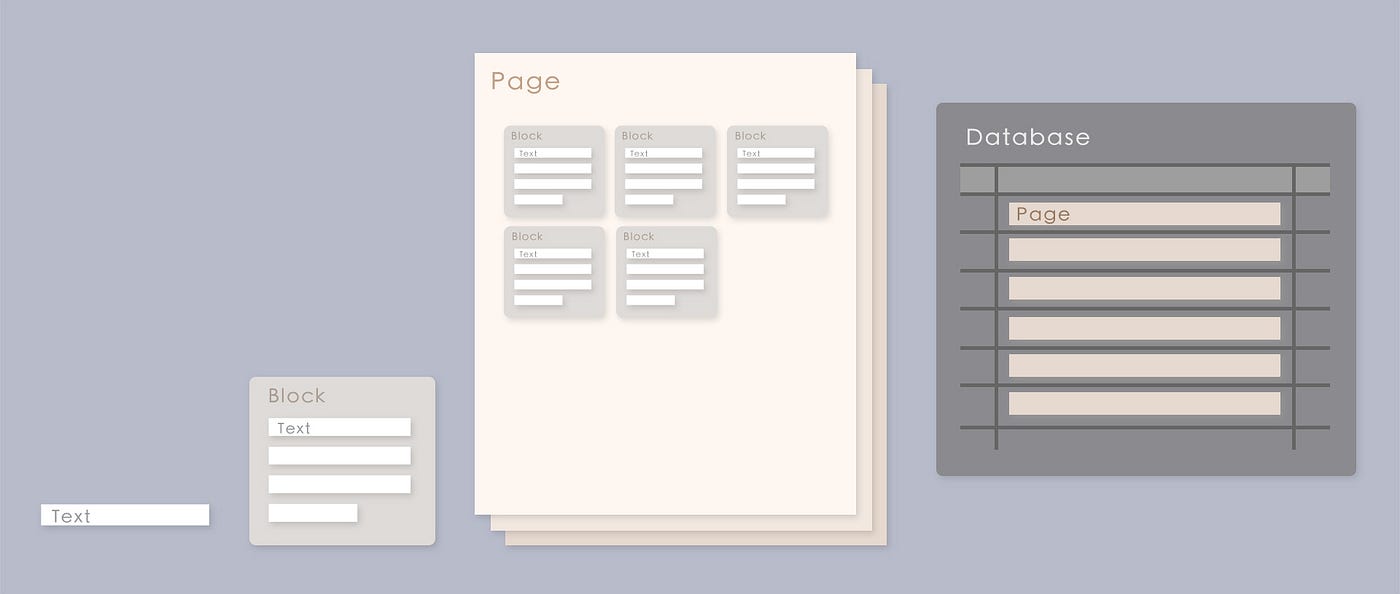
In practice, the block-based editing model is the problem, at least for prose. Every paragraph is a separate block. You can move blocks, style them individually, nest them, drag them around. That’s fantastic for structured documents, wikis, and project notes. It’s distracting when you’re trying to get into a flow state and just write. I kept reaching for keyboard shortcuts that would move my cursor from one paragraph to the next, and instead I was selecting blocks and moving them.
The honest caveat: Craft starts free (limited to 10 documents, with 2 added weekly) and the Plus plan runs $8/month. That’s a fair price for what you get, but you’re paying for document design and organization features, not writing tools. If your Markdown files end up in Craft, they stop being Markdown files. They become Craft documents. That’s fine if you’re staying. Less fine if you ever want to leave.
Best for: Visual thinkers who want notes and docs to look polished while they’re still works in progress. Not ideal for fast, keyboard-driven prose writing.
If You Need a Knowledge Base That Happens to Handle Writing: Obsidian
Obsidian is the most powerful tool on this list by a significant margin. Bidirectional links, graph view, a plugin ecosystem with over 2,000 community extensions, and local Markdown files you fully own. For building a personal knowledge base, nothing else comes close.
But this article is about writing across devices, and that’s where Obsidian stumbles.
Obsidian offers iCloud sync for its vaults, and on the Mac it works well. On the iPad, the story gets more complicated. iCloud-based vault sync has a documented history of conflicts, slow initial loads, and occasional file duplication. Obsidian Sync ($4/month or $48/year) is the company’s own solution and it works better, but that’s an additional cost on top of a tool that’s free for personal use, which changes the value calculation.
The Shortcuts support is limited. You can open vaults and create notes, but the action set is thin compared to Drafts or even Bear. Obsidian’s power lives in its plugin system, not in native Apple integration.
I used Obsidian as my primary writing tool for about 18 months. I love it for research, for linking ideas, for building a reference system that grows smarter over time. As a place to write a 2,000-word article against a deadline? It’s too much. I’d end up fiddling with templates and plugins instead of finishing the piece. That’s a me problem as much as an Obsidian problem, but I suspect I’m not the only one.
The honest caveat: If you already have an Obsidian vault and it’s working for you, adding the Sync plan is probably cheaper and simpler than switching to another editor. Don’t let this article talk you into disrupting a system that’s functional. But if you’re choosing fresh and your primary need is “write Markdown, sync it, finish it,” Obsidian is built for a different job.
Best for: Knowledge workers building a linked reference system who also need to write in Markdown. Not the best starting point if all you need is a place to draft.
The Default That Keeps Surprising Me: Apple Notes
Apple Notes doesn’t technically support Markdown. I know. But hear me out.
Notes handles rich text natively. You can add headings, bold, italic, checklists, links, tables, and code blocks without any Markdown syntax at all. The formatting just works. And when you’re done, you can select all, copy, and paste into a Markdown editor on the Mac where the formatting converts cleanly.
That sounds like a workaround, and it is. But it’s a ten-second workaround attached to the most reliable cross-device sync in the Apple ecosystem. Notes syncs instantly and perfectly between Mac, iPad, and iPhone. It has Shortcuts actions. It’s free. And for a surprising number of writing situations (quick drafts, outlines, meeting notes that become blog posts), it’s all I need.
I draft in Apple Notes more than I’d like to admit. The friction is zero. The app opens instantly, it syncs before I can blink, and the formatting is just enough. For anything over 1,000 words that I plan to publish, I move it to iA Writer. But the draft usually starts in Notes.
The honest caveat: You can’t write raw Markdown in Notes and see it rendered. You can’t export natively to .md. And if you're the kind of person who wants their writing stored as plain text files in a folder on your drive, Notes is structurally wrong for you. But for the "draft on iPad, finish on Mac" workflow this article is about? It works better than half the dedicated Markdown editors I tested.
Best for: Anyone who wants to start writing immediately with zero setup and perfect sync, then move to a dedicated editor for finishing.
What I Actually Use
My current setup, for what it’s worth:
Apple Notes for first drafts and quick captures on the iPad. Zero friction, instant sync, and I don’t have to decide what the text will become yet.
Drafts for anything I want to process through a Shortcut. Meeting notes that get routed to specific folders. Quick ideas that need to land in my task manager. Fragments that might become part of something longer.
iA Writer for anything I’m going to publish. Once a draft has shape, I move it to iA Writer on the Mac and finish it there. The Style Check catches my worst habits, and the clean export means I can paste directly into Medium without reformatting.
Three apps, each doing the thing it’s best at. I tried consolidating into one. It never stuck. The app that’s best for capturing ideas at 7 AM on the train is not the same app that’s best for finishing a 2,500-word post at 9 PM.
The Part Nobody Wants to Hear
The best Markdown editor is the one you’ll actually open on whichever device is in front of you.
I know that sounds like a non-answer. But I’ve watched myself (and a lot of other people) spend more time evaluating writing tools than actually writing in them. The evaluation feels productive. It isn’t. It’s just a different flavor of procrastination, and it’s especially dangerous because it feels like you’re making progress.
Pick one. Use it for 30 days. If it syncs, if it opens fast, if you forget you’re using it while you’re writing, that’s the one. The tool matters far less than the habit of sitting down and doing the work.
Marketing ops by day, workflow nerd by night (and most early mornings). I write about Apple tools, productivity systems, and the setups that actually survive a real workweek. No affiliate links, no sponsorships; just apps I pay for and opinions I’ve earned the hard way. ✌️
메타데이터
- post_id
- 093ca6c83b46
- slug
- best-mac-markdown-editors-2026-i-tested-8-093ca6c83b46
- url
- https://medium.com/@alltech/best-mac-markdown-editors-2026-i-tested-8-093ca6c83b46
- canonical_url
- https://medium.com/@alltech/best-mac-markdown-editors-2026-i-tested-8-093ca6c83b46
- author_url
- https://medium.com/@alltech
- status
- ok
- fetched_at
- 2026-06-09 15:37:30