🔐 Azure SQL Private Endpoint Security Lab
Building a Zero Trust Database Architecture in Microsoft Azure
🔐 Azure SQL Private Endpoint Security Lab
Building a Zero Trust Database Architecture in Microsoft Azure
Secure Azure SQL Connectivity Using Private Endpoint, Private DNS & Virtual Network Isolation
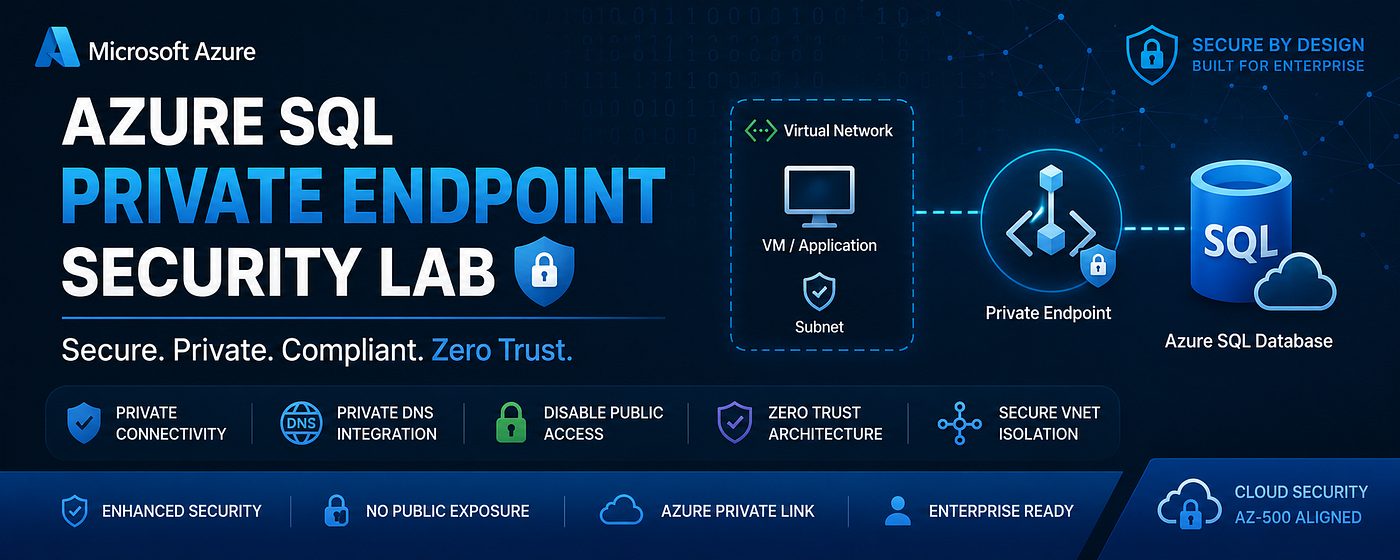
Cloud databases are one of the most targeted assets in modern cloud environments.
One of the biggest security mistakes organizations make is exposing databases directly to the public internet.
In this lab, I built a secure Azure SQL architecture using:
- Azure Private Endpoint
- Private DNS Integration
- Virtual Network Isolation
- Zero Trust Networking Principles
- Public Access Restriction
The goal was simple:
Ensure Azure SQL traffic remains private and never traverses the public internet.
🚨 Why This Matters
By default, cloud databases can potentially become internet-accessible if network configurations are not properly secured.
This introduces risks such as:
- Unauthorized access attempts
- SQL brute-force attacks
- Public exposure of sensitive data
- Compliance violations
- Expanded attack surface
Modern enterprise cloud security follows a different model:
🔒 Zero Trust Architecture
Meaning:
Never trust public exposure by default.
Always minimize access paths.
🏗️ Final Architecture
The architecture below demonstrates how Azure SQL was secured using Private Endpoint connectivity.

🧠 Core Security Components
🔹 Azure SQL Database Managed cloud database service used for secure data storage.
🔹 Azure Private Endpoint Provides private IP-based connectivity to Azure SQL.
🔹 Private DNS Zone Enables internal DNS name resolution for private connectivity.
🔹 Azure Virtual Network (VNet) Isolates communication within a secure internal network.
🔹 Azure Virtual Machine Used as an internal testing client for SQL connectivity validation.
🔹 Public Access Disabled Blocks internet-based access to reduce the attack surface.
🚀 Step 1: Create Azure SQL Server
The first step was creating an Azure SQL logical server.
I configured:
- SQL authentication
- Secure admin credentials
- East US deployment region
- Dedicated resource group

🔐 Step 2 : Configure Secure Authentication
SQL authentication was configured for initial database administration.

💾 Step 3 : Deploy Azure SQL Database
A secure Azure SQL database named:
SecureDBwas deployed using the Standard S0 pricing tier.

This configuration provided a cost-effective environment for security testing and architecture validation.
🌐 Step 4 : Create Virtual Network
To isolate communication internally, I created a dedicated Azure Virtual Network.
This VNet would later host:
- Azure VM
- Private Endpoint
- Internal secure traffic flow

🔒 Step 5 : Configure Azure Private Endpoint
The most important part of the lab was configuring the Azure Private Endpoint.
Azure Private Endpoint assigns:
✅ A private IP address ✅ Internal-only connectivity ✅ Secure Azure backbone communication
between the VNet and Azure SQL Database.

🧠 Step 6 : Configure Private DNS Integration
Private DNS integration was enabled to ensure internal DNS resolution for the SQL service.
Without Private DNS:
❌ Resources inside the VNet may fail to resolve the SQL private address properly.

🖥️ Step 7 : Deploy Internal Azure VM
An Azure Virtual Machine was deployed inside the same Virtual Network.
This VM acted as:
- Internal client
- Jumpbox
- Connectivity validation system

🚫 Step 8 : Disable Public Network Access
To enforce Zero Trust networking, public SQL access was disabled.
This ensures:
Internet → Azure SQL ❌ BLOCKEDand only private connectivity is allowed.

This is one of the most critical cloud security controls in enterprise Azure environments.
✅ Step 9 : Validate Secure Internal Connectivity
After disabling public access, the database was successfully accessed internally through the Private Endpoint architecture.

This confirmed:
✅ Private connectivity works correctly ✅ DNS resolution is functioning ✅ Public exposure has been eliminated
🔍 Azure SQL Database Overview
Final Azure SQL Database deployment status:

🔐 Private Endpoint Deployment Validation
Private Endpoint deployment completed successfully with secure VNet integration.

🌐 Private Networking Configuration
Network policies and subnet configuration used for private SQL connectivity.

🛡️ Security Benefits of This Architecture
✅ Reduced Attack Surface
Azure SQL is no longer exposed publicly.
✅ Zero Trust Networking
Access is restricted to approved internal resources only.
✅ Secure Azure Backbone Traffic
Traffic remains inside Microsoft’s private infrastructure.
✅ Internal DNS Resolution
Private DNS ensures internal name resolution to private IP addresses.
✅ Enterprise Security Alignment
This architecture aligns with:
- Cloud security best practices
- Compliance requirements
- Enterprise governance models
- AZ-500 security objectives
🧠 Key AZ-500 Concepts Covered
✅ Azure SQL Security Secure database deployment and protection techniques.
✅ Private Endpoint Private IP-based secure connectivity to Azure SQL.
✅ Private DNS Internal DNS resolution for private resources.
✅ Virtual Network Security Network isolation using Azure VNets and subnets.
✅ Zero Trust Architecture Reducing unnecessary public exposure and enforcing secure access.
✅ Network Isolation Restricting communication within the private Azure infrastructure.
✅ Azure Private Link Secure private communication between Azure services and VNets.
🚨 Real-World Takeaway
One of the biggest lessons from this lab was understanding that:
Cloud security is not only about identity and permissions.
Network isolation and private connectivity are equally important.
Even a fully patched database can become a major risk if publicly exposed.
Using Azure Private Endpoint significantly strengthens cloud security posture while reducing exposure to internet-based threats.
🚀 Future Improvements
Future enhancements planned for this architecture include;
- NSG-based subnet filtering
- Microsoft Defender for SQL
- Azure Policy enforcement
- Managed Identity integration
- SQL Auditing & Threat Detection
- SIEM monitoring with Microsoft Sentinel
👨💻 Author
Amal Udayanga Basnayake
🔗 LinkedIn https://www.linkedin.com/in/amal-udayanga-basnayake/
💻 GitHub https://github.com/AmalUBasnayake
🌐 Portfolio https://amalcyberlab.vercel.app/
🔥 Final Thoughts
This lab was a great hands-on experience in implementing secure Azure SQL networking using enterprise-grade cloud security principles.
Understanding Private Endpoint architecture is extremely valuable for;
- Cloud Engineers
- Security Engineers
- Azure Administrators
- SOC Teams
- AZ-500 learners
because private connectivity and Zero Trust networking are becoming essential requirements in modern cloud environments.
메타데이터
- post_id
- 1dbf1f7d0ee1
- slug
- azure-sql-private-endpoint-security-lab-1dbf1f7d0ee1
- url
- https://medium.com/@amalubasnayake/azure-sql-private-endpoint-security-lab-1dbf1f7d0ee1
- canonical_url
- https://medium.com/@amalubasnayake/azure-sql-private-endpoint-security-lab-1dbf1f7d0ee1
- author_url
- https://medium.com/@amalubasnayake
- status
- ok
- fetched_at
- 2026-07-17 08:43:13






