What is “the sacred”?
Whatever it is, it is sooner or later unavoidable in our lives.[1]
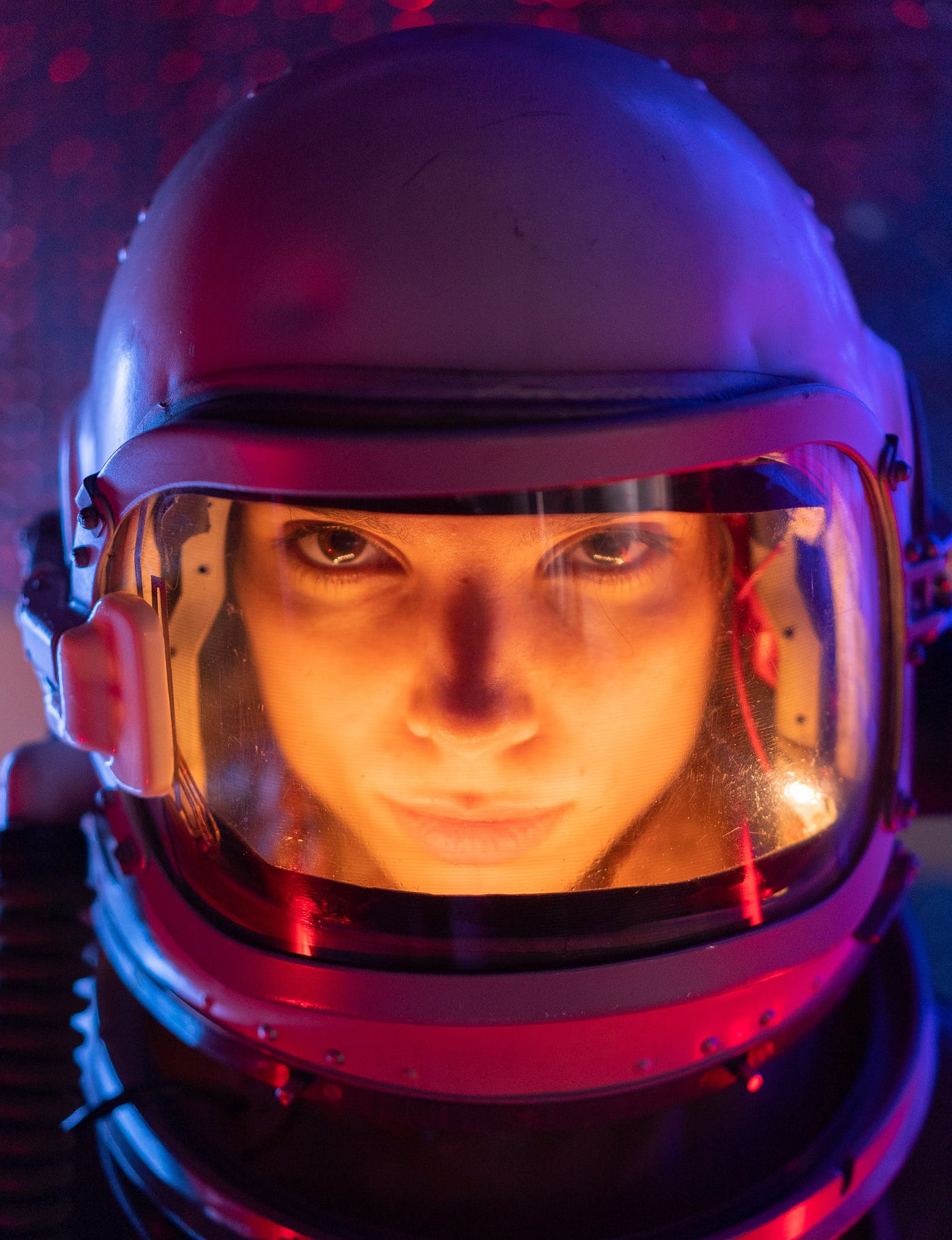
Photo by K. Mitch Hodge on Unsplash
What is “the sacred”?
Whatever it is, it is sooner or later unavoidable in our lives.[1]
Humans live and move and have their being in two realms, the immediate world created by the senses, and the vastly larger world mediated by meaning.[2] Rites and rituals connect the two and inform the latter. From this intersection ritually expressed arises the sense of the sacred, at least primordially. “The sacred, in its simplest sense, is the restraining force on human appetite that gives birth to desire, mediated by the world of signs.”[3]
There is however more to the sacred than “Thou shalt not.”. Losing any sense of it is part of the modern dilemma. As seen by the Canadian philosopher Charles Taylor, many people today have a “buffered self”, as opposed to people of previous ages who had “porous selves.” By this he means a perspective that grows out of a denial that anything that cannot be empirically proven has any claim upon us: we are “buffered.”
Taylor calls the present moment “the immanent frame”:
It is the sense of an absence; it is the sense that all order, all meaning, come from us. We encounter no echo outside. In the world read this way, as so many of our contemporaries live it, the natural/supernatural distinction is no intellectual abstraction. A race of humans has arisen which has managed to experience its world as entirely immanent. In some respects, we may judge this achievement a victory for darkness, but it is a remarkable achievement nonetheless.[4]
And yet that “achievement” is coming apart at a rapid pace. The fear that grips much of humanity today is stoked by inimical climate change, pandemics, economic chaos, war, and political divisions stoked by propagandists wielding tools that Josef Goebbels could only have dreamt of. For people who believe their world of meaning is “entirely immanent”, the need for the sacred comes roaring back. How else to explain the fascination for angels, extraterrestrials (science fiction angels), for magic, reviving dead pagan religions in the form of Wicca, the whole phenomenon of the “powers” of crystals and amulets, and the continuing consultation of mediums, spiritualists, gurus…
In any age, humans have always needed rituals to give structure and meaning to our private and social lives. That remains true today.
The terms “rite” and “ritual” (which can be considered synonyms) come from the Latin ritus, meaning “prescribed order”, which would itself comes from a form of Indo-European Vedic rta or arta, which evokes the order of the cosmos.[5] [6]
The question
With the disappearance of classical culture, the dying spasms of modern culture giving birth to postmodernism, humans have ever more extraordinary means of trying to understand ourselves. Our technology inundates us with data, meanings to understand. The dilemma today is not one of understanding so much as it is judging. Each of us must judge for ourselves what is worth living — who am I and what must I do? No amount of data can answer that.
These are philosophical issues, existential ones in the strict sense. They occur in every age, in every culture. “Who am I?” includes the past (“how did I get here?”), the present, and the future (“where am I going?”). The next stage of questioning is “what am I to do?” It should be clear that these are matters of conscience, that is, one’s self-awareness as a creature embedded in the passage of time and unescapably shaped by one’s culture, including how one has lived in response to both. The transient nature of both provokes anxiety. It can also evoke awe.
The strength of assertion and the pangs of doubt are the matrix for each of our conscience’s questioning. And we are each unique in this experience. Some may find that the best “answer” is to avoid thinking about it completely. Characteristic of the “buffered self” is the conviction that since “science has nothing to say” about such questions — or the existential ground of anxiety that provokes them — they are meaningless and therefore should not be asked.
Anxiety and awe
The problem is, even for people who believe they are nothing more than machines governed by chemicals, created by blind random forces like the universe itself, there is no avoiding moments of anxiety. Or conversely, of wonder and awe. In other words, even if one concludes that all is absurdity (à la Albert Camus), that conclusion forms a tie that binds, an identity. Which is to say, a religious conviction (from Latin religio, to bind up).
Because language is communal — there are no private languages — talk about religious convictions is purely in the world mediated by meaning, and it is expressed in symbol, analogy, simile, metaphor, metonymy, and beyond these figures of speech, ritualized myth. It is important to realize that a religion need not express itself in formal rites. The Society of Friends (“Quakers”), for instance, have no overt liturgies. Unlike other Christians, they do not baptize or celebrate Communion, or keep Christmas and Easter. Yet they are indeed Christians, cultivating inner experiences (“the inner light”) of what these “outer” rites seek to express.
If the influence of Plato and Aristotle has waned in our time, the ancient philosopher Epicurus (341–270 BC) has come into his own, as it were. He was no bon vivant, despite the pejorative “epicurean” to denote something or someone hedonistic. Epicurus taught that we should maximize pleasure and minimize pain to live tranquilly. This translated into leading an ascetic lifestyle, controlling one’s desires and impulses, on one hand, and on the other, banishing the fear of death and the gods by training oneself to accept that there is no afterlife or punishment after death. One might sum up his approach to achieving and keeping a clear conscience. [7]
On the nature of things
The Roman philosopher Lucretius (ca. 99–55 BC) popularized the Greek’s ideas in epic poem form, entitled De rerum natura (“On the nature of things”). The growth of the influence of this work has been enormous down to this day, especially in the rise of modern atheism.[8] De rerum natura put forth a thorough-going materialist philosophy: we are born into a universe of random chance, in which death is final and no divinity holds any sway (if indeed there be any). Ironically, a ninth-century monastic copyist saved the poem from oblivion.
Ada Palmer has shown that De rerum natura only came into its own during the later Renaissance and is a major source of Enlightenment thinking and beyond. Karl Marx wrote his doctoral thesis championing Epicurus’ thought, for instance.[9] His famous assertion that religion “is the opium of the people” has its origin in Epicurus.[10] Moreover, the relative ascetism of the ancient philosophy and its eschewing of politics gave way to the idea of progress through reason and the revolution to accomplish it, whether scientific or violent. The end result, as Taylor says, is that “race of humans which has managed to experience its world as entirely immanent.”
We still need a good story
Well, not quite, as humanity’s yearning for myth is as strong as ever. Modern media empires have been built on satisfying our need for some feeling of transcendence over immanence. Think of the enormous influence of science fiction: the dense growth of the Star Trek, Marvel, and Star War universes, as well as the Matrix trilogy, Superman, and especially the Batman mythos. J. K. Rowling’s Harry Potter series has marked the global culture as well with its adolescent brand of “re-enchantment of the world”. The appearance of such religions as Scientology, Wicca, The Church of Satan, and even The Church of the Flying Spaghetti Monster[11] is more proof that the sacred hasn’t gone away. Like trying to nail jelly to a wall, it just keeps slipping away.
It is often said that Communism was an attempt to create a secular Christianity by sublating certain elements of the gospel. One example of science doing the same kind of transposition is the notion that we live in a simulation. This hypothesis posits that everything we experience, our very being, is actually created by computer code written by super-intelligent beings or being.[12]
The opinion that we live in some kind of computation in and by itself is not an outrageous claim. For all we currently know, the laws of nature are mathematical, so you could say the universe is just computing those laws. […] The controversial bit about the simulation hypothesis is that it assumes there is another level of reality where some being or some thing controls what we believe are the laws of nature, or even interferes with those laws.[13]
In other words, “some (divine) being.” Of course, this is no longer science at all, but merely bad theology: where do the super-intelligent beings come from? To prolong this weird chain of being, maybe the coding entity is a rogue super artificial intelligence, that having utterly destroyed its creators, creates a simulation of them as an expression of its regret… or something…
Sensing it
That sense of the sacred is first a feeling of awe and reverence, and its ritual re-enactment is a spur to the development both of a communal language and a new sense of community. “We are the people of our god(dess),” the members say. “This is what made us what we are together.” An effigy of the god is a further development, another representation of the originary scene, with the erection of a dwelling to house it: “our god is with us!” (literally). This then led for some time in the ancient Near East (at least) to the practice of “god-napping”, making off with the local statue to lessen those people’s sense of identity.[14]
Language developed along with spoken and eventually written stories of the ineffable Sacred, which made available the evocative experience of it in story, song, sagas, codified in liturgies that are meant to stimulate the worship of the community gathered. A turning point came with “the Greek discovery of mind”, in Bruno Snell’s suggestive words.[15] The importance of rational analysis, the existence of the individual as subject, the difference between mind and body, etc., were the notions that took form among the Greeks leading to Plato and Aristotle. The enduring reality of what I call the existential questions was promoted by the tragedies like Œdipus Rex. The slow discrediting of the Greek (and later Roman) gods and goddesses began.[16]
The sense of the sacred evolved as well. The Hebrews’ revelation of a god whose name is simply “I am”, who had no visible representation other than a fire that does not consume what it burns, found congenial ground among the partisans of the philosophers, such as Philo of Alexandria[17]. With the appropriation of the divine in the figure of a human, Christianity eventually carried the Greek discovery through the collapse of the Roman Empire. Muslim philosophers brought forward in particular the thought of Aristotle, translating and interpreting his works conserved by Eastern Christians, leading to the great syntheses of Thomas Aquinas and beyond.
Despite all that has happened since 1274 AD, every language still has a word for “god”. Try as it might, the rise of modern atheism cannot cancel the sense of the sacred. It is, as I’ve said, hard to nail down. It can be dismissed as illusory, a quirk of neurons, a former evolutionary advantage to survival which has become redundant like the appendix (and can become dangerous like an appendix), and so on. An epicurean philosophy may teach how to ignore intimations of Something More, but the fact that it must be dealt with — since Epicurus himself — proves that the sense of the sacred perdures.
What is sensed?
The sense of the sacred is what impels faith to attempt to explain what it cannot describe — which is a basic definition of theology. Reflecting on this mysterious evocation raises the pressing questions I have described, as we seek insights into this phenomenon that is both individual and so unique, and that is also shared in and by a community through which faith comes, including the American Atheists, the Humanist Society, and so on.[18] [19]
Faith is a trusting response to that which is “revealed”. Since language is always communal, I learn a vocabulary of gesture, ritual, liturgy, developed by my “community of faith” to describe what I am feeling and why I should or should not trust it.[20] Doubt is always a reflection of faith: no one doubts what is certain (except for Pyrrhonian skeptics).
But is it real? This is the essential question. It is quite plausible to argue that in fact nothing outside the brain of the sensing person is being felt. Neurons, all the way down… The position I have presented here absolutely does not rely at all on a human ability to “feel” God.[21] What I am arguing here is that whatever it is we are actually sensing, this evocation of Something Greater Than Me is going to remain a permanent aspect of human life, intimately connected historically, physically, and culturally with the phenomenon of language itself. In other words, this religious dimension of human existence is unavoidable. It is part of that world that language opens up, that makes us human — the world mediated by meaning.
Many people today refer to themselves as “spiritual but not religious.” They mean of course that they do not subscribe to some form of “organized religion” (do they prefer “disorganized religion”?)
With all due respect, we should stop saying that; perhaps we should say that we are “religious, but some of us are spiritual.”
This means the sacred is going to be around as long as we are.
[1] Adapted from a paper delivered to the Generative Anthropology Summer Conference on June 23, 2023. See https://www.academia.edu/103933064/The_world_mediated_by_meaning_will_always_evoke_the_sacred
[2] See Lonergan, Bernard. “The World Mediated by Meaning” in Philosophical and Theological Papers, 1965–1980: Volume 17 edited by Robert Croken and Doran, S.J., Robert, 107–118. Toronto: University of Toronto Press, 2004.
[3] Eric Gans, “Chronicles of Love and Resentment” http://anthropoetics.ucla.edu/views/vw726/
[4] The Secular Age (Cambridge, MA: Harvard University Press, 2007), 367. Incidentally, this “frame” is the same that enables humanity to see Earth’s resources as simply to be taken for granted, exploited and the resulting waste thrown away — part of the loss of a sense of the sacred character of our planet. “[The Earth] now cries out to us because of the harm we have inflicted on her by our irresponsible use and abuse of the goods with which God has endowed her. We have come to see ourselves as her lords and masters, entitled to plunder her at will. … This is why the earth herself, burdened and laid waste, is among the most abandoned and maltreated of our poor; she “groans in travail” (Rom 8:22). We have forgotten that we ourselves are dust of the earth (cf. Gen 2:7); our very bodies are made up of her elements, we breathe her air, and we receive life and refreshment from her waters.” Pope Francis, writing in the encyclical Laudato Sì, §2. http://www.vatican.va/content/francesco/en/encyclicals/documents/papa-francesco_20150524_enciclica-laudato-si.html.
[5] Recalling that Vedism is the oldest known human religion.
[6] Picard, Dominique, Rites, rituels. Dans : Jacqueline Barus-Michel éd., Vocabulaire de psychosociologie, (Toulouse: Érès, 2002), 251–57 ; 251. My translation; emphasis added. https://doi.org/10.3917/eres.barus.2002.01.0251
[7] An excellent introduction is here: https://plato.stanford.edu/entries/epicurus/
[8] Ada Palmer, Reading Lucretius in the Renaissance (Cambridge, MA: Harvard University Press), 25f.
[9] Over Democritus, and by extension, Hegel over Kant. See Peter Fenves, “Marx’s Doctoral Thesis on Two Greek Atomists and the Post-Kantian Interpretations.” Journal of the History of Ideas 47, no. 3 (1986): 433–52.
[10] Catherine Wilson, Epicureanism at the Origins of Modernity (Oxford University Press, 2008), 26.
[11] This is an “anti-church church” which has shown extraordinary power to attract people. Maybe it’s the ordination for $59.00… See https://www.spaghettimonster.org
[12] https://www.scientificamerican.com/article/are-we-living-in-a-computer-simulation/
[13] Sabine Hossenfelder, Existential Physics: A Scientist’s Guide to Life’s Biggest Questions (London: Atlantic Books, 2022), 119. Of course, this begs the question of where those mathematical laws came from…
[14] https://www.asor.org/anetoday/2016/09/godnapping-ancient-near-east/
[15] See The Discovery of the Mind in Greek Philosophy and Literature, tr. Thomas G. Rosenmeyer (New York: Dover books, 1982); originally Die Entdeckung des Geistes: Studien zur Entstehung des europaischen Denkens bei den Griechen (Hamburg: Claassen und Goverts, 1948).
[16] To balance Snell’s insights, see E. R. Dodds, The Greeks and the Irrational (Berkeley: University of California Press, 1951).
[17] https://plato.stanford.edu/entries/philo/
[18] See atheism.org.
[19] https://thehumanistsociety.org
[20] One great mistake of our time that that first we have a “religious experience” and then we individually search out a community of faith that best expresses that experience. This stunted notion informs the idea that parents should not raise their children in the same faith tradition as themselves so they can find their “own” religion. The stereotypical response of the child is to choose no religion at all: after all, if my parents didn’t think it was important enough, why should I? This leaves some people vulnerable to the attractions of cults, among other things.
[21] Nor do I necessarily subscribe to the notion that there is something in our protoplasm that impels us toward the divine. But that is for another time, and another forum.
메타데이터
- post_id
- 3eb361b7fcc8
- slug
- what-is-the-sacred-3eb361b7fcc8
- url
- https://medium.com/@pierrewhalon/what-is-the-sacred-3eb361b7fcc8
- canonical_url
- https://medium.com/@pierrewhalon/what-is-the-sacred-3eb361b7fcc8
- author_url
- https://medium.com/@pierrewhalon
- status
- ok
- fetched_at
- 2026-08-04 11:14:51