The Ocean Might Save Us. We Just Don’t Know Yet.
The science of carbon removal is promising, the scale is unproven, and the questions are urgent.
The Ocean Might Save Us. We Just Don’t Know Yet.
The science of carbon removal is promising, the scale is unproven, and the questions are urgent.
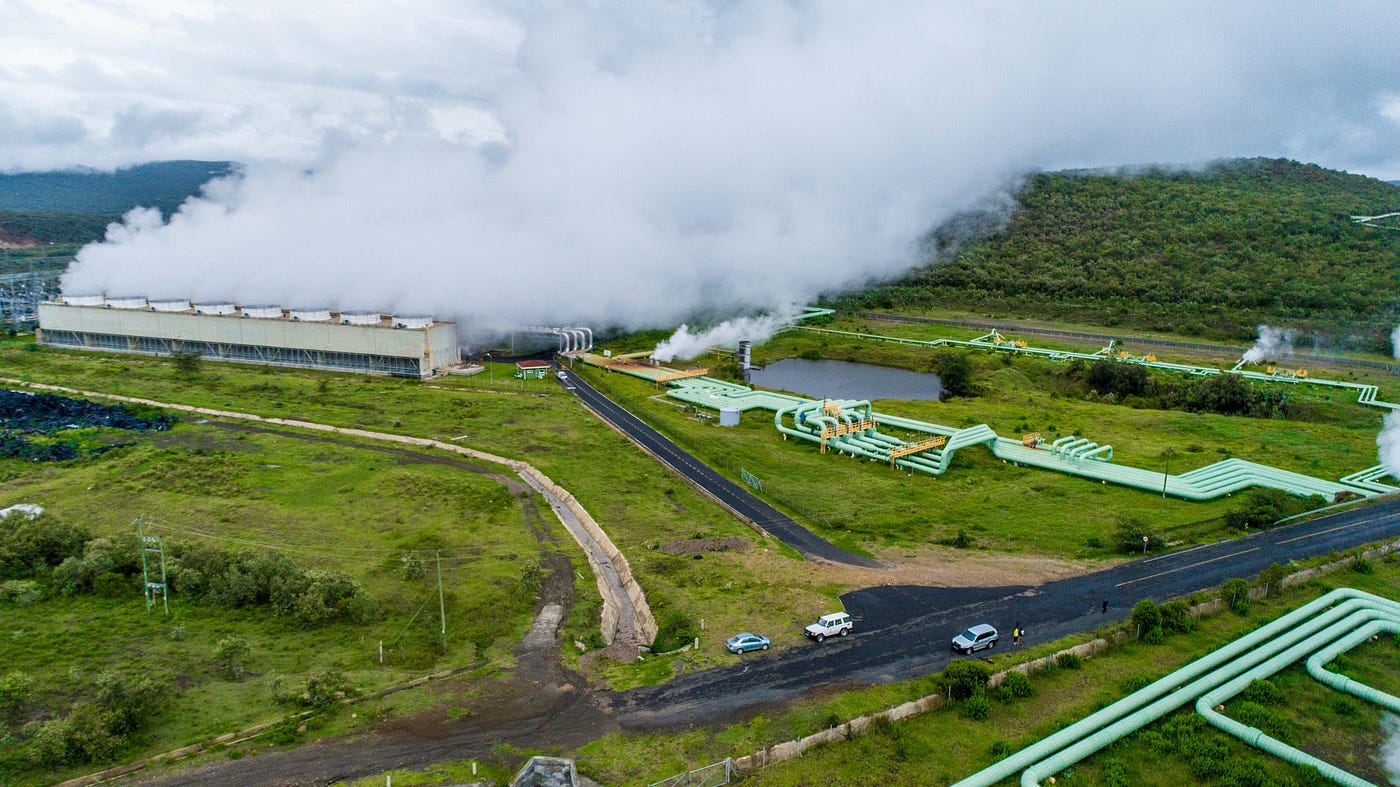
Photo by samsommer on Unsplash
The ocean has already absorbed more than 90% of the excess heat generated by global warming. It holds a third of all the carbon dioxide humans have emitted since the Industrial Revolution. Overall, it stores 42 times more carbon than the atmosphere does.
So a reasonable question has started to occupy climate scientists, startups, and regulators: if the ocean is already our biggest carbon sink, can we help it absorb more?
In 2025, this question built momentum. Multiple research groups and startups moved ocean-based carbon dioxide removal from laboratory proof-of-concept to open-water field trials. The era of simply studying the idea has given way to an era of testing it in the actual sea.
The early results are genuinely promising. They are also genuinely uncertain. And the gap between those two things is where the most important climate debate of the next decade is quietly taking shape.
Why the ocean, and why now?
The logic behind marine carbon removal starts with a hard fact that the climate community has slowly come to accept. As Andrew Lenton, director of a CO2 removal research program at Australia’s national science agency CSIRO, puts it bluntly: “There’s no net-zero without carbon dioxide removal.”
This is the uncomfortable consensus. Cutting emissions is necessary but no longer sufficient. To prevent runaway warming and reach net zero, we also have to remove carbon that has already been emitted. The math of the remaining carbon budget simply doesn’t work otherwise.
For years, removal efforts focused on planting trees and building direct air capture facilities. But these approaches share a serious drawback — they compete for land, water, and other resources that are already under pressure.
This is why attention has turned to the sea. As Scott Doney, a biogeochemist at the University of Virginia, explains, the resource competition that plagues land-based removal is far less acute in the ocean. The ocean is vast, already does this work naturally, and doesn’t require displacing farmland or forests.
Greg Rau, cofounder of Planetary Technologies and a marine biogeochemist at UC Santa Cruz, frames the appeal simply: “Why not mimic what we already know is a winner under natural circumstances?”
The main approaches
Marine carbon removal isn’t a single technology. It’s a family of approaches, each at a different stage of development and each with its own profile of promise and risk.
Ocean alkalinity enhancement is the most discussed. The idea is to add mineral compounds — typically olivine or lime — to seawater to increase its capacity to absorb atmospheric CO2. A 2024 review in Nature Reviews Earth & Environment estimated the theoretical potential at 2 to 5 gigatonnes of CO2 removal per year. That is a scale genuinely relevant to climate targets.
Iron fertilization stimulates phytoplankton growth by adding iron to specific ocean regions. The phytoplankton absorb CO2 through photosynthesis, then sink, carrying the carbon to the deep ocean. A controlled iron fertilization experiment found that iron addition stimulated phytoplankton blooms as expected — and the resulting carbon export to the deep ocean was three to four times higher than previous models predicted.
Biological approaches include farming seaweed, restoring mangroves, salt marshes, and seagrass beds — the ecosystems that store what scientists call “blue carbon.” Carbon stored by ocean and coastal ecosystems is considered one of the most effective natural sequestration mechanisms on Earth.
Each approach has moved from theory toward trial. Each is now being tested in actual open water, not just modeled on a computer.
Photo by masakazu sasaki on Unsplash
The problem with measuring success
Here is where the promising story meets its hardest obstacle. Measuring whether marine carbon removal actually works — over the timescales that matter — is extraordinarily difficult.
A study led by Megan Sullivan, a postdoctoral researcher at the University of Rhode Island’s Graduate School of Oceanography, published in the Proceedings of the National Academy of Sciences, illustrates the trap.
Most conversations about ocean carbon removal, Sullivan points out, focus only on one thing: how much carbon sinks out of the surface ocean. But that, her research suggests, is an incomplete picture.
Her work found that some proposed strategies, including iron fertilization, could overestimate their long-term impact if they focus only on carbon export without accounting for how nutrients redistribute through the system. “It’s just as important to consider how nutrients cycle through the system,” Sullivan said. “Understanding these differences will help scientists better predict how effective ocean-based climate interventions might be over decades or centuries.”

Sullivan et al. Shows differential carbon (blue) and phosphorus (pink) cycling following enhanced surface productivity. Decoupled timescales of organic carbon and phosphorus recycling in the global ocean, PNAS.
This is the recurring difficulty across the entire field. It is relatively easy to show that carbon sinks in the short term. It is much harder to prove that it stays sunk — and that the intervention didn’t trigger second-order effects that cancel out the benefit. Carbon that descends and then returns to the surface within a few years isn’t removal. It’s a delay.
The decades-to-centuries timescale is the one that matters for climate. It is also the timescale that is hardest to measure in field trials that have only been running for months.
The regulatory turn
Despite the uncertainty, the field is moving into a new phase: regulatory approval for real-world deployment.
In a notable development, a deep-ocean climate plan won rare EPA approval in 2026. The company Carboniferous plans to carry out a field experiment in the Orca Basin off the coast of Louisiana — an anoxic basin, devoid of oxygen, with higher salt concentration than most seawater. The conditions are designed to keep sunk biomass from decomposing and releasing its carbon back.
The EPA approval matters beyond this single project. It signals that regulators are now willing to permit actual ocean interventions, not just laboratory study. This shifts the entire field from “should we research this?” to “under what conditions should we deploy this?”
That shift is happening faster than the science is resolving its core uncertainties. Which is precisely what makes this moment so fraught.
The honest tension
Photo by Marcus Woodbridge on Unsplash
The people closest to this work hold two ideas in tension, and their honesty about it is what makes the field credible.
On one hand, the urgency is real. The window for limiting warming below catastrophic levels is closing. Removal is not optional if we want to reach net zero. The ocean offers scale that land-based approaches cannot match, without the resource conflicts.
On the other hand, the ocean is a complex, interconnected system that we do not fully understand. Interventions at climate-relevant scale could have consequences we cannot yet predict. A 2026 oyster study found that CO2 storage in the sea may pose risks to marine life. The same nutrient cycling that Sullivan studied could produce ecological effects far from the intervention site.
The co-founding director of the Institute for Responsible Carbon Removal at American University, who has reviewed several of these projects, captures the careful middle position: there are both pros and cons to ocean carbon removal techniques, and they need to be weighed project by project rather than embraced or rejected wholesale.
This is not the language of hype. It is the language of a scientific field that knows it is being asked to scale before it has finished learning.
What happens next
The trajectory for the next few years is now reasonably clear.
Field trials will multiply. More companies will move from proof-of-concept to open-water testing. Regulatory frameworks, currently being built case by case, will gradually formalize. Investment will flow, because the carbon removal market is one of the few climate sectors with genuine commercial momentum.
The critical question is whether the measurement science can keep pace with the deployment. If we can develop reliable methods to verify that carbon removed actually stays removed over climate-relevant timescales — and to detect ecological side effects early — then marine carbon removal could become one of the most important climate tools of the century.
If we cannot, we risk pouring resources into interventions that look effective in the short term but fail to deliver real, durable removal. Worse, we risk disrupting ocean systems we do not understand in pursuit of benefits we cannot confirm.
The ocean has been quietly doing this work for all of human history, absorbing our excess heat and carbon without being asked. The question now is whether we can help it do more without breaking the very system we are relying on to save us.
We are running the experiment in real time, in real water. The results will not be fully understood for decades. But the decisions about how far and how fast to go are being made now, in the absence of that understanding.
That is the uncomfortable place where ocean carbon removal sits in 2026. The most promising climate tool we have may also be the one we understand least. And we are reaching for it anyway, because the alternative — relying on emissions cuts alone — is no longer enough to get us where we need to go.
The ocean might save us. We just don’t know yet. And we may have to commit before we find out.
메타데이터
- post_id
- 552f53c378cb
- slug
- the-ocean-might-save-us-we-just-dont-know-yet-552f53c378cb
- url
- https://medium.com/the-new-climate/the-ocean-might-save-us-we-just-dont-know-yet-552f53c378cb
- canonical_url
- https://medium.com/the-new-climate/the-ocean-might-save-us-we-just-dont-know-yet-552f53c378cb
- author_url
- https://medium.com/@chinmayjambhale
- status
- ok
- fetched_at
- 2026-06-23 17:05:31