The Tea Shop That Computed
How a company built on scones and sandwiches taught the world what computers were really for
ORIGIN STORIES
The Tea Shop That Computed
How a company built on scones and sandwiches taught the world what computers were really for

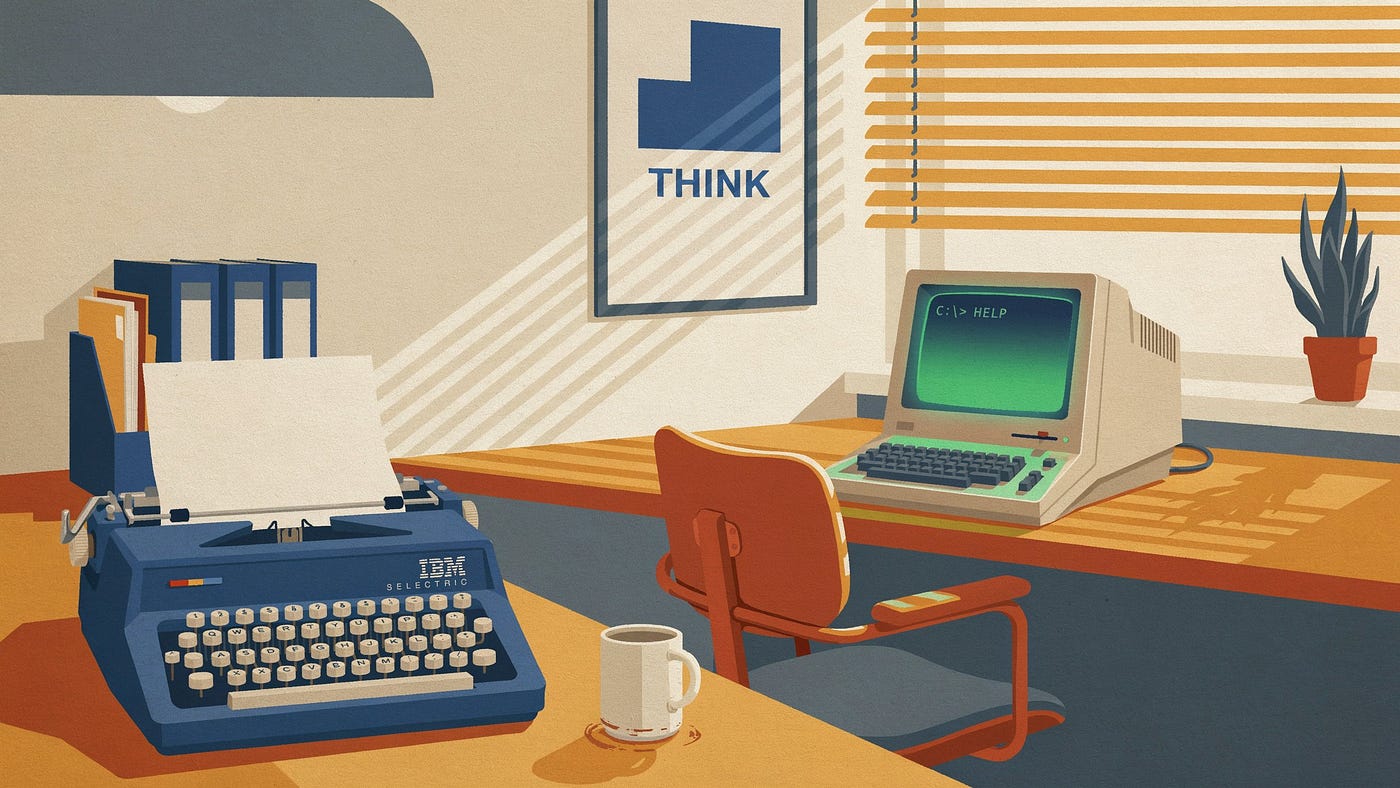
By the author with Ideogram
If you are not yet a Medium member, here’s a **link **to read free.
In a London office in the autumn of 1951, a machine that took up a room the size of a small house hummed and clicked its way through the most important calculation of its young life. It was working out the price of cake. Its memory lived in tanks of mercury. Its brain ran on hundreds of glowing valves that threw off enough heat to bake the very goods it was counting. And the company that built it did not make computers. It made tea.
This is the part nobody tells you about the dawn of business computing. The first company on earth to put a computer to work running an actual business was not IBM. It was not a defense ministry, and it was not a university physics lab. It was J. Lyons and Company, a British empire of teashops and corner houses that fed the nation cups of tea and penny buns through depression and war. By the 1930s Lyons employed tens of thousands of people, and its bakeries turned out something close to thirty-six miles of Swiss roll a day. Someone had to add all of that up. That someone, it turned out, would not be a person at all.
The man who saw it coming was named John Simmons. He was a mathematics graduate who had landed, of all places, in charge of the clerks’ offices at Lyons. Picture the scene he walked into every morning. Hundreds of clerks, pencils in hand, totting up the daily takings of a national catering operation by sheer human effort. Most managers would have seen a department. Simmons saw a sickness. He became obsessed with what was then called scientific management, and somewhere in the 1930s he began dreaming of a machine that could swallow all that drudgery whole. The only trouble was that the machine he was dreaming about did not yet exist.
So he went looking. In 1947 Simmons sent two of his managers, Oliver Standingford and Raymond Thompson, across the Atlantic to study American business methods. They came home talking about something else entirely. In the United States they had seen the first electronic computers, vast experimental brains built to calculate artillery trajectories and grind through equations no human had the years to finish. One of the men who had helped create ENIAC told them that a similar machine was being built much closer to home, at the University of Cambridge. Standingford and Thompson came back with a report that must have read like science fiction to a board that sold sandwiches. Build a computer, they argued. Use it to run the company.
What happened next is the part I love. Lyons did not sit back and wait for someone else to make it possible. The company helped pay for the Cambridge machine, a few thousand pounds and the loan of one of its own engineers, in exchange for the right to copy the design once it worked. When the Cambridge computer ran its first program in 1949, Lyons hired an engineer named John Pinkerton and set him to building one of their own. A colleague named David Caminer did something quieter and, in the long run, just as important. He sat down and translated the messy reality of a business, its orders and its costs and its payrolls, into flowcharts a machine could actually follow. We would give that work a name eventually. We would call it systems analysis.
They built the thing at the company headquarters at Cadby Hall, and they gave it a name with no poetry in it at all. The Lyons Electronic Office. LEO. In November 1951, LEO ran its first real job. The job was called Bakery Valuations, and it did exactly what the name promises. It calculated the cost of every ingredient that went into the bread and the cakes. A room full of glowing valves, the most powerful computer in British business, and its first honest day of work was pricing buns. It is the kind of detail you could not invent.
And then the joke stopped being a joke. Because the bun-pricing machine kept going. Payroll came next, then stock control, then the slow realization that other companies wanted this too. Lyons formed a business called LEO Computers in 1954 and began selling machines to firms that had nothing whatsoever to do with cake. The Ford Motor Company became a customer. So did Kodak. They ran their numbers on the descendants of the machine that started out by pricing pastry. The line of computers that began with a Swiss roll calculation eventually passed into the larger British computer industry, and some of those LEO machines were still working away in offices as late as 1981. A caterer had not merely used a computer first. A caterer had started a computer company.
The Origin Lesson
Here is what the teashop understood that the giants did not. Simmons never wanted a computer in order to do something dazzling. He did not chase the frontier. He looked hard at the single most expensive, most tedious, most endlessly repeated thing his company did, and he aimed the new technology straight at it. The advantage was never in the spectacle. It was hiding in the back office, in the work nobody wanted to think about.
The second lesson is older than computing and somehow always news. When Lyons needed a machine that did not exist, the company did not file the idea under impossible and move on. It built the thing. And the capability it built to solve its own boring problem turned into a product it could sell to everyone else.
We are having the very same argument today, only louder. Every company on earth is staring at the same fork in the road, whether to buy the cloud platform and the AI tool off the shelf or to build its own. We discuss it as though it were a brand new dilemma of the digital age. It is nothing of the kind. A tea company settled the question seventy years ago, in a hot room full of mercury and valves, while working out the price of a cake.
The next time someone tells you that innovation only ever comes from the people who look like innovators, remember LEO. Remember that the future of the office did not arrive in a laboratory or a war room. It arrived inside a company that knew, better than anyone alive, exactly how much a Swiss roll cost.
Further reading
- Meet LEO, the world’s first business computer. Science Museum Group. A clear, illustrated account of how Lyons part funded EDSAC, built LEO, and ran the Bakery Valuations program in November 1951.
- The story of LEO, the world’s first business computer. University of Warwick, Modern Records Centre, written by Professor Frank Land, a member of the original LEO team. The Centre also holds the LEO archive itself, which is the place to confirm exact dates and figures before print.
- LEO, first application of digital computing to business processes. IEEE Milestones. The engineering body’s own record of why the November 1951 run counts as a world first.
- LEO (computer). Wikipedia. A well sourced overview with an extensive bibliography, useful as a map to the primary literature.
- A Computer Called LEO, by Georgina Ferry. Fourth Estate, 2003. The definitive popular history, and the single best source if you want the full human story.
Support writers. All our non-profit’s offerings here.
Click for Wordsmith, Mystery Writing, Write Like Stephen King, more

By the EIC Susan Brearley with Ideogram
메타데이터
- post_id
- 8d323cb0922f
- slug
- the-tea-shop-that-computed-8d323cb0922f
- url
- https://medium.com/it-chronicles/the-tea-shop-that-computed-8d323cb0922f
- canonical_url
- https://medium.com/it-chronicles/the-tea-shop-that-computed-8d323cb0922f
- author_url
- https://medium.com/@susanbrearley
- status
- ok
- fetched_at
- 2026-06-12 07:40:50