Uncovering a Lung-to-Brain Pathway for Nicotine-Induced Neural Stress
This publication highlight is part of the SBGrid Communities Project focused on science education and demonstrating how structural biology…
Publication Highlight
Uncovering a Lung-to-Brain Pathway for Nicotine-Induced Neural Stress
This publication highlight is part of the SBGrid Communities Project focused on science education and demonstrating how structural biology and preclinical science connect to medicine, a collaboration between SBGrid PI Piotr Sliz and Jamaine Davis of Belmont University.
Many health implications resulting from exposure to cigarette smoke are well established. Beyond its impact on the respiratory system, nicotine, a well-known primary component of cigarette smoke, has also been found to disrupt nervous system function. Pulmonary neuroendocrine cells (PNECs), which make up only 1 percent of lung cells, connect these systems yet are uniquely equipped with both endocrine and neuronal capabilities. They work to sense changes within their environment and relay the information to other cells using neuropeptides or neurotransmitters. Impaired communication through this pathway has been associated with dementia. Commonly caused by neurodegeneration due to the buildup of protein aggregates, like α-synuclein in the brain, dementia is characterized by progressive cognitive and/or motor decline. Nicotine exposure has also been linked to a reduced ability for neurons to regulate intracellular iron levels. Iron dysregulation can lead to programmed cell death, a process termed ferroptosis, that irreversibly damages affected neurons. To glean a deeper understanding of the relationship between nicotine exposure and neuronal iron dysregulation, a team of researchers sought to elucidate how nicotine exposure leads to neuronal cell oxidative stress-related iron dysregulation.
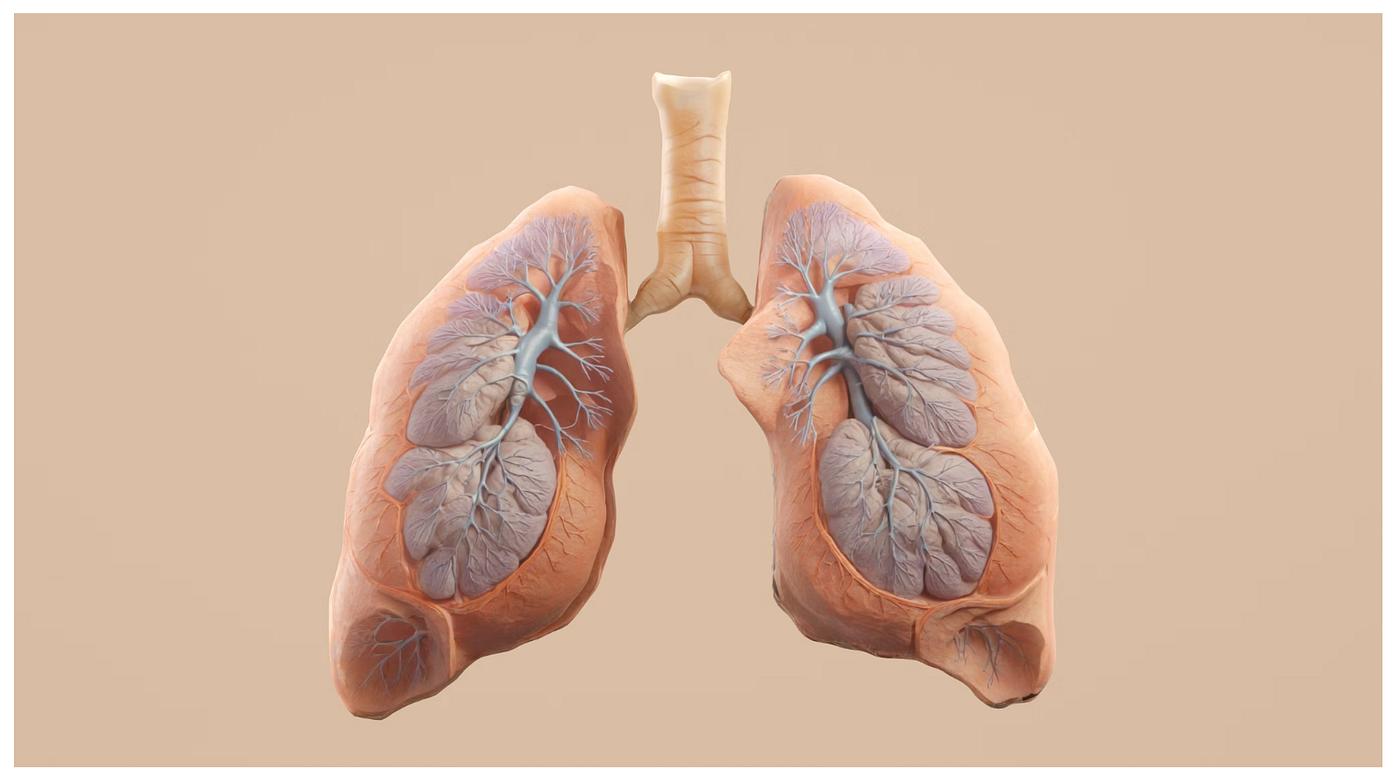
Human lungs with trachea shown. Courtesy Unsplash:https://unsplash.com/photos/heres-a-caption-for-the-image-human-lungs-with-trachea-shown-YhhrVdYgICc
SBGrid member Huanhuan Chen and colleagues at The University of Chicago explored the mechanism underlying pulmonary neuroendocrine cells’ (PNECs) response to oxidative stress. Since PNECs are not abundant in the lungs and are distinct from many other cell lines, studying them has proven challenging. The authors overcome this barrier by inducing hematopoietic stem cells, those which have not yet differentiated into specific cell types, to proliferate into PNECs. They also used antibodies coated with magnetic beads to isolate iPNEC exosomes from ex vivo lung cultures. From the induced PNECs (iPNECs), they studied exosomes to reveal their impact on neuronal iron homeostasis, oxidative stress, and mitochondrial function. The researchers found that after exposure to nicotine, iPNECs exosome release increased and were rich in the iron-carrying glycoprotein serotransferrin. Moreover, they found that neurons that took up the serotransferrin-enriched exosomes in turn expressed greater levels of α-synuclein and iron transporters transferrin receptor 1 (TFR1), divalent metal transporter 1 (DMT1), and duodenal cytochrome B (DCYTB), which was linked to ferritin accumulation. Finally, they found that the resultant α-synuclein accumulation was consistent with neuronal dysfunction, and the iron dysregulation triggered neuronal oxidative stress and ATP depletion. This study contributes insight into the process of PNEC-mediated neural damage post-nicotine exposure as well as a model for studying PNECs from hematopoietic stem cells.
Read more in *Science Advances*.
By Mudiare Ikoba (Mudia Ikoba), Meharry Medical College
Mudiare “Mudia” Ikoba is a second-year medical student at Meharry Medical College. She completed her B.A. in Biology with a Biochemistry Concentration and a minor in Social Inequalities at Dartmouth College. When she is not studying, she enjoys being outdoors, exercising, cooking, and spending time with family and friends.
메타데이터
- post_id
- 6d3034d3e15d
- slug
- uncovering-a-lung-to-brain-pathway-for-nicotine-induced-neural-stress-6d3034d3e15d
- url
- https://medium.com/sbgrid-community-news/uncovering-a-lung-to-brain-pathway-for-nicotine-induced-neural-stress-6d3034d3e15d
- canonical_url
- https://medium.com/sbgrid-community-news/uncovering-a-lung-to-brain-pathway-for-nicotine-induced-neural-stress-6d3034d3e15d
- author_url
- https://medium.com/@sbgrid
- status
- ok
- fetched_at
- 2026-06-09 15:37:30