Racing Toward the Impossible: My Journey to Lake Toba
There’s something profoundly transformative about committing to run 65.9 kilometers through mountainous terrain, knowing that every step…
Racing Toward the Impossible: My Journey to Lake Toba
There’s something profoundly transformative about committing to run 65.9 kilometers through mountainous terrain, knowing that every step will test not just your physical limits, but the very essence of who you believe yourself to be.
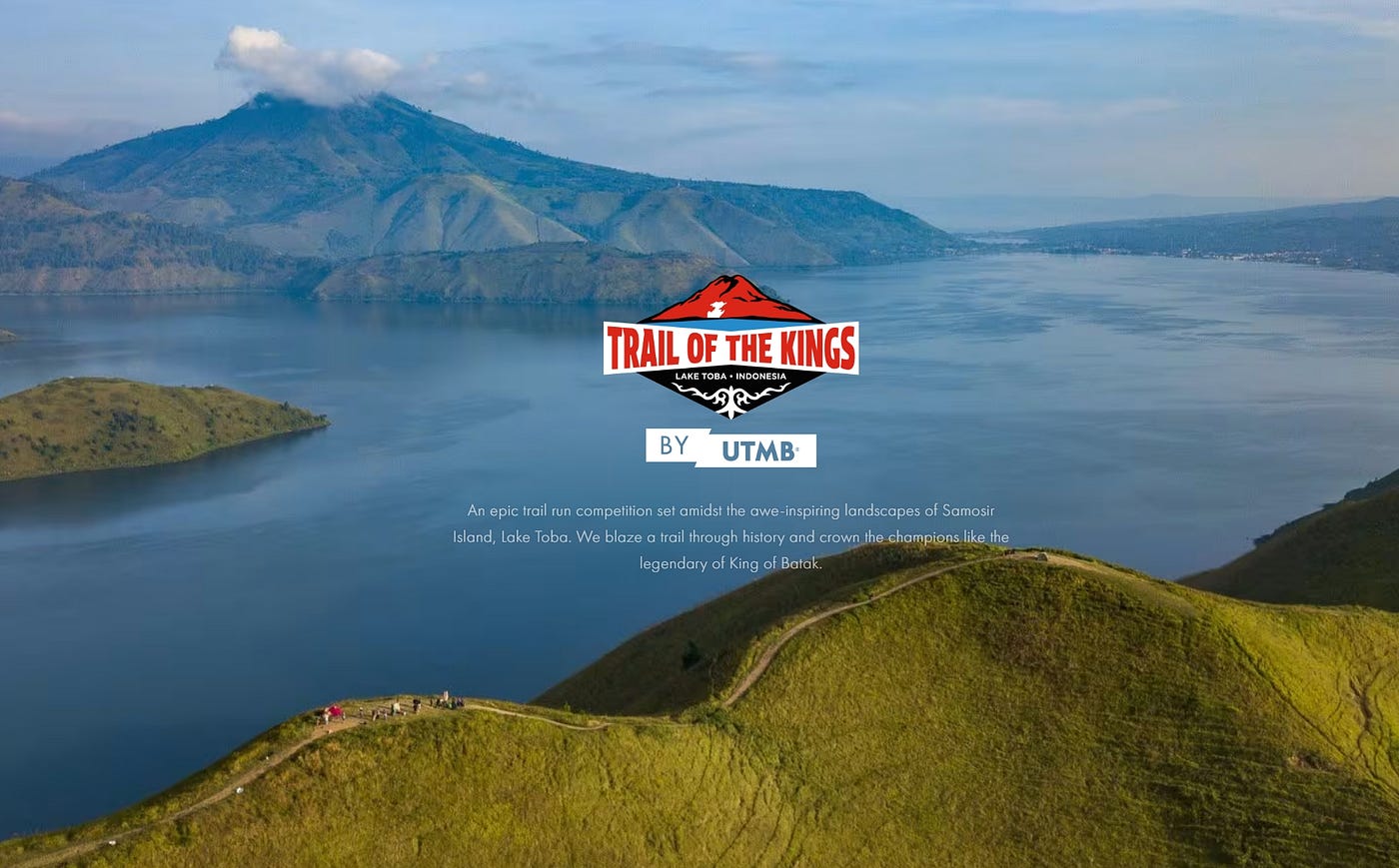
Trail of the Kings by UTMB (Samosir Island, Lake Toba)
Next week, I’ll stand at the starting line of the Trail of the Kings at Lake Toba, Indonesia — a UTMB race that promises over 3,348 meters of elevation gain and a journey that will likely stretch beyond twelve hours.
This isn’t just another race; it’s a culmination of lessons learned, mistakes embraced, and a year of discovering what my body and mind are truly capable of achieving.
The path to this starting line has been anything but conventional, much like the race announcement itself. When Trail of the Kings was revealed in around June or July this year, for an October race, the ultra-running community raised eyebrows.
In a world where runners typically plan their calendars months in advance, this short notice created an unusual opportunity. Many athletes had already committed to other events, and the timing coincided with Deepavali celebrations across various parts of the world.
Where others saw complications, I saw possibility. Perhaps fewer participants mean less congestion on narrow trails, more space to find my rhythm, and a more intimate connection with the raw beauty of Lake Toba. Sometimes the best opportunities arise not from perfect planning, but from embracing the chaos of imperfect timing.
This realization speaks to a larger truth about ultra-distance racing — and perhaps about life itself. We spend so much time waiting for ideal conditions, perfect preparation, and flawless circumstances. But growth rarely happens in comfort. It happens when we say yes to challenges that arrive on inconvenient timelines, when we adapt to logistical nightmares, and when we push forward despite the obstacles that would give most people permission to quit.
The logistical puzzle of this race has been its own kind of training ground. Navigating the geography of Lake Toba — with the race expo and start point at Pangururan Waterfront on Samosir Island’s western side, while most accommodations cluster around Tuktuk village in the east — has required strategic thinking worthy of a military operation. The flight options from Singapore presented their own dilemma: arrive very early on Singapore Airlines or just after lunch on Batik Airlines? Initially, the afternoon arrival seemed sensible, but deeper research revealed the reality of long drives and ferry crossings. The early morning inconvenience of Singapore Airlines suddenly became the wiser choice, teaching me that in ultra-running, as in life, the apparently harder path often proves smoother in the long run.
These logistical challenges aren’t frustrations to overcome — they’re integral parts of the journey. Every decision about flights and ferry schedules and accommodation is practice in problem-solving under pressure. When you’re at kilometer forty-five with your legs screaming and your mind begging you to stop, you’ll draw on the same resourcefulness you used to navigate travel logistics. Resilience isn’t built in a single moment; it’s accumulated through thousands of small decisions to figure things out rather than give up.
Let’s be honest about what I’m actually attempting here. The race is marketed as a 50K category, but the reality is 65.9 kilometers with over 3,348 meters of elevation gain. That’s not a 50K — that’s a beast disguised in modest clothing. This is where the mental game begins long before race day. I could feel deceived by the labeling, or I can recognize this as the universe’s way of preparing me for one of ultra-running’s most valuable lessons: expect the unexpected and then add twenty percent more difficulty.
My training for this moment has been unconventional in the best possible way. The recent Malaysia Ultra Trail wasn’t just another race — it was a laboratory for self-discovery. Every kilometer taught me something about refueling strategies, equipment choices, what works and what creates pain and problems. I learned that certain gels sit well in my stomach while others wage war on my digestive system. I discovered which shoes prevent blisters and which create hot spots that can derail an entire race. I figured out that hydration isn’t just about drinking water — it’s about timing, electrolyte balance, and listening to subtle signals from my body.
This is the beautiful paradox of ultra-distance racing: you can read every article, study every training plan, and absorb every piece of advice from experienced runners, but until you put yourself in that scenario — exhausted, depleted, questioning everything — it remains theoretical.
Knowledge without application is just information. Wisdom comes from experiencing discomfort and pushing through anyway.

Race Refuel Card
This understanding has shaped my approach to the Race Refuel Card I’ve prepared — a detailed breakdown of route distances, timing targets, and fueling strategy. Some might see this as over-preparation, but I see it as liberation. By making my race plan as “idiot-proof” as possible, I free my exhausted future self from having to make complex decisions when my brain is running on fumes. This card isn’t about rigidity; it’s about giving myself permission to stop overthinking and just execute, to reduce the mental load so I can actually be present and enjoy the journey.
Because that’s what this is really about — enjoying an experience that most people would consider suffering. Over twelve-plus hours on that course, my body will beg me to stop. My mind will present compelling arguments for why continuing is unnecessary, maybe even unwise. But somewhere in those mountains around Lake Toba, if I’ve prepared correctly — both physically and mentally — I’ll find moments of transcendent clarity. The kind of presence that only comes when you’ve stripped away everything unnecessary and all that remains is breath, movement, and the ancient rhythm of one foot in front of the other.
The key to avoiding a DNF (Did Not Finish) isn’t just physical preparation — it’s about creating optimal conditions for my body throughout the race. This means preventing abrasions and blisters through proper gear selection and body maintenance. It means avoiding stomach problems by sticking to proven nutrition strategies rather than experimenting on race day. It means respecting my body’s signals while also distinguishing between discomfort that’s dangerous and discomfort that’s simply part of the process.
All of this — the training runs, the Malaysia Ultra Trail experience, the equipment testing, the logistical planning — represents more than preparation for a single race. It represents a year of investing in myself, of prioritizing growth over comfort, of choosing to discover what I’m capable of achieving. This race will reveal whether those lessons have been absorbed, whether the positive habits have become ingrained, whether I’ve truly evolved as a runner and as a person.
But beyond personal achievement, I’m most excited about the human connection waiting on those trails. Ultra-running attracts a particular breed of beautiful madness — people who voluntarily subject themselves to extraordinary challenges for reasons that defy rational explanation. Next week at Lake Toba, I’ll share the trail with locals and fellow runners who understand this glorious insanity. We’ll push through pain together, encourage each other at aid stations, and share an experience that bonds strangers into a tribe.
And I’ll document this journey — the struggles, the triumphs, the moments of doubt, and the moments of transcendence — to share with others. Not because my story is unique, but because it’s universal. Every person who’s ever attempted something that scared them, who’ve pushed beyond what they thought possible, who’ve discovered strength they didn’t know they possessed — they’ll recognize themselves in this journey.
The Trail of the Kings awaits. The mountains of Lake Toba will test every aspect of my preparation. But I’m not just running toward a finish line — I’m running toward a fuller understanding of my own potential, toward connection with an incredible community, and toward proof that the impossible is just the possible waiting for someone brave enough to attempt it.
See you on the trails.
메타데이터
- post_id
- 11ca2d40d5d2
- slug
- racing-toward-the-impossible-my-journey-to-lake-toba-11ca2d40d5d2
- url
- https://medium.com/@pettypoh/racing-toward-the-impossible-my-journey-to-lake-toba-11ca2d40d5d2
- canonical_url
- https://medium.com/@pettypoh/racing-toward-the-impossible-my-journey-to-lake-toba-11ca2d40d5d2
- author_url
- https://medium.com/@pettypoh
- status
- ok
- fetched_at
- 2026-06-24 11:06:28