Loving A World That May Cease to Exist: Equestrian Show Jumping’s Dire Need to Address Elitism and…
As someone who has hardly left a horse’s back since the age of three, I know firsthand that a love for horses is intense, all-encompassing…
Loving A World That May Cease to Exist: Equestrian Show Jumping’s Dire Need to Address Elitism and Re-Evaluate “Tradition”
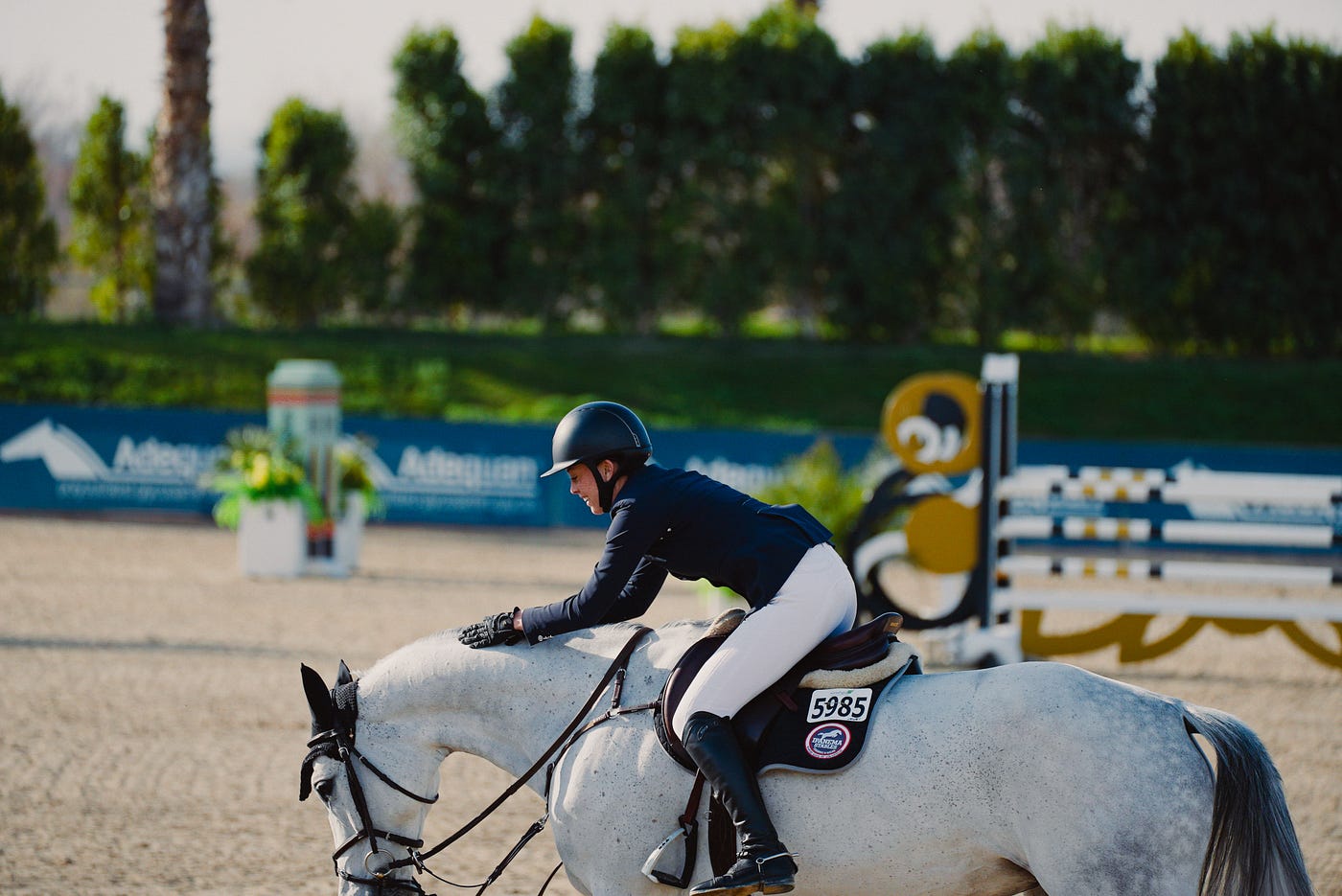
As someone who has hardly left a horse’s back since the age of three, I know firsthand that a love for horses is intense, all-encompassing, and life-long. The sport of equestrian showjumping, in particular, is a fascinating realm of dedicated, enthusiastic, and talented athletes united by their love for the horse. However, the sport’s development and culture remain hindered by its prominent elitism, resulting in a vast decrease in accessibility. The dangers presented to the sport by this issue, such as decreasing participation and accessibility at all levels, are significant enough. However, the underlying problem in the sport transcends this elitism and its harms. These issues simply reflect the sport’s deeply rooted values, embedded at the sport’s origin, now protected by the community behind a pretense of “preserving tradition.” Ultimately, I believe the showjumping community must address these issues and modernize if the sport is to continue.
Showjumping is an Olympic-level sport where horse and rider pairs compete against one another to complete a set course of obstacles with the fastest time. Following tradition, rider and horse pairs are ranked first by the number of fences knocked down and then sorted based on speed. Riders and their equine partners train for months, if not years, to prepare for regional, national, and international competitions. The modern sport evolved from hunting in England during the 18th and 19th centuries, which required riders on horseback to gallop over fences, hedges, and other obstacles. The practice became the enjoyable sport of steeplechase racing for the wealthy class during the 19th century, eventually transforming into the modern-day horse show. Unfortunately, while many of the sport’s practices reflect its origins from the 19th century, many of its values do as well. Despite modernizing in some ways, the elitist and conservative values from the time of the sport’s creation have remained attached to the practice, now causing significant concern about the sport’s future.
Although the sport has always been embedded with elitism, its lack of economic accessibility for amateur participants reinforces a dangerous cycle to the sport’s immediate future. Often called the “sport of kings,” showjumping is not an activity one can enter without a plethora of disposable financial resources, even at the entry level. With the most affordable range of riding boots averaging around $250, and the average helmet around $400, the costs of the sport before even sitting on a horse are absurd. Adding lesson fees, show fees, and the eventual cost of leasing or buying a horse, these costs quickly reach the tens of thousands. For example, the average equine partner for a rider wanting to compete at the 1.10m level ranges in the high five-figures. For riders wishing to compete in higher divisions, these costs easily range in the low to mid six-figures. Essentially, the price of a competitive, medium-level equine athlete can easily reach double or triple the median household income in the United States, reported to be $80,610 in 2023 (U.S. Census Bureau).
Compounding this issue is a concerning lack of awareness within the community about the true financial burden these costs represent. One rider criticized this in an article on Milestone Equestrian, writing that participants are “under the impression that it is “normal” or “middle class” to be able to drop high 5-figures on a horse and spend the cost of a full family vacation to send one child to [a horse show].” This assessment perfectly portrays that now, even at the entry levels of the sport, the community’s perception of wealth is significantly skewed. Not only is this perception inaccurate, but it further decreases the community’s willingness to expand accessibility by pushing the false narrative that these costs aren’t truly that extreme. Overall, at the non-professional level, the sport’s requirement for exorbitant funding is decreasing access, severely harming the ability of passionate equestrians to remain in the sport and of new riders to become involved.
The increasingly expensive landscape of the sport is not only impacting entry-level accessibility but is significantly altering the composition and nature of the sport’s top levels. To begin with, participation at the international level is already far more expensive than at the amateur level, with top-performing equine athletes (the horses) selling in the millions. However, as the cost of showjumpers has risen, a new category of top riders has emerged: those born into generational wealth. This has created a unique atmosphere at the highest level where multi-time Olympians are regularly competing against wealthy amateurs, such as Eve Jobs, Jennifer Gates, and Jessica Springsteen, some of the only individuals able to bear these high costs of participation. To compete with the financial resources of riders with such wealth, professionals from “regular” economic backgrounds must rely even more than before on sponsors and owners to purchase their equine partners. This has made the international landscape increasingly difficult to enter, as professional riders are competing with one another to retain their financial backing. Meanwhile, with the aforementioned generational wealth, their opponents continue to drive the prices of high-level horses up. Unfortunately, this inaccessibility at the professional level also trickles down to the amateur, regional level of the sport, as it drives the prices of all equine athletes up. Thus, the increased presence of generational wealth in the sport, another result of the sport’s elitism, has made the professional landscape harder to break into for aspiring young riders, increased the costs of the sport as a whole, and changed the composition of the top of the sport.
This change has also arguably shifted the sport away from talent- and skill-based towards wealth-based, slowly eliminating the sport’s meritocratic elements. This overemphasis on financial resources in the sport has been criticized as devaluing other aspects, such as talent and hard work. One example often highlighted is the partnership of Karl Cook, a rider for the United States, and the mare Caracole de la Roque. Cook is the son of tech billionaire Scott Cook, co-founder of the financial platform Intuit and currently ranked #512 on Forbes’ Billionaires list. When Cook purchased the mare in 2023, for likely in the tens of millions, she dominated the international circuit, having five consecutive wins with her previous rider at the sport’s top level. Within a year of partnership, Karl and Caracole earned over $692,000 in prize money and represented the United States in the 2024 Olympics. This partnership has received both admiration and criticism, often labeled as an example of “buying success” and diminishing meritocracy in the sport. However, even acknowledging that this pair possesses immense skill and talent, critics correctly identify that Cook’s financial circumstances must have played some role in great success. This is not to argue that you can “buy your way to the top” of the sport without determination, passion, dedication, and skill just yet. Instead, it simply illuminates that money is playing an increasingly significant role in participation and competition, making the top of the sport harder to reach and creating unfair disadvantages for those with lesser financial standing.
Ultimately, the rising costs of showjumping, a direct result of the unrestrained elitism, pose many threats to its future, particularly regarding the sport’s participation levels and relevance. At all levels, this sport only continues to become increasingly costly and thus, exclusive. The percentage of those interested in the sport who have the financial ability to participate continues to shrink, and there seems to be no end in sight. Additionally, the sport’s inaccessibility and disconnect with the everyday person harm the sport’s public perception, decreasing marketing and sponsorship opportunities that would encourage the sport’s modernization and relevance. Mark Bellisimo, who owns the Winter Equestrian Festival, one of the world’s largest and longest-running showjumping competitions, argues strongly that accessibility to the sport must be expanded to prevent its demise. He argues that multiple factors contribute to the lack of showjumping fan culture, sponsorship, and spectatorship, including its perception as a “fringe, elitist, inaccessible activity.” To prolong the sport’s existence, it must be rebranded as more accessible, requiring it to create “low-cost ways for access and participation across all socioeconomic groups.” However, expanding accessibility will remain impossible unless we override the sport’s culture of preserving tradition, a harmful romanticization of the sport’s history that actively ignores the harms caused by the sport’s long-standing elitism.
Given the severity of these risks to the sport and the simultaneous lack of action to combat them, one would assume that the community is unaware of them. Yet not only is the issue of elitism blatantly present in the sport, but it is also well-known by a majority of the community. In my WP2, “Exploring Perspectives on Wealth and Inequality in Show Jumping,” I surveyed close to thirty members of the showjumping community. This survey garnered responses from various roles, including trainers, junior riders, parents, and professionals. Several sets of answers reveal this seemingly contradictory knowledge of and ignorance of this wealth inaccessibility. For example, 72% of the survey respondents felt that the sport was “incredibly inaccessible unless you are wealthy or extremely wealthy.” Additionally, 72% of respondents answered that there are not enough initiatives needed to support and advocate for economic accessibility, and 96% of respondents indicated that generational wealth plays either a very significant or somewhat significant role in the ability of an individual to succeed in the sport. It is evident that, in general, participants and professionals in the sport are fully aware of this problem. This begs the question: why hasn’t real change occurred?
Concerns about the sport’s elitism and future are, thankfully, starting to be voiced. Noëlle Floyd, author and creator of the widely-read Noëlle Floyd equestrian magazine, reflected poignantly that there is a “very real possibility that elitist culture is rotting the sport in America from the inside out.” Katie Prudent, the 1986 World Champion and Show Jumping Hall of Fame member, also reflected this in an interview, stating, “unfortunately, because of money, the fearful, talentless amateur can rise to a certain level…” the sport has become “ how far can the amateur go by buying the greatest horse in the world.” Prudent’s statement reflects these concerns shared by many members of the community. Ultimately, the fact that these issues remain widely unchanged despite these prominent voices points to the true problem: it may be impossible to enact change without addressing the sport’s culture underlying these issues.
While there are some initiatives to combat the sport’s elitism and subsequent economic barriers, they are significantly limited in reach and ability due to the culture’s resistance to change. For example, Prudent and other legendary figures have created one program, Road to the Top, to mentor and financially support young, talented American riders to help them reach the sport’s top. Currently, the program is mentoring two upcoming young professional riders and will likely help them achieve their goals. However, a small program such as this is incapable of enacting the widespread, vast change truly needed. Notably, the sport’s governing body also has some programs to increase financial access. The United States Hunter Jumper Association’s (USHJA) website displays eight grants, each offering an average of $1,000 to one rider annually. However, in the context of the sport, these financial awards are insufficient to support riders from low- or medium-income backgrounds in any substantial way. The ineffectiveness of programs such as the USHJA grants highlights several questions about the organization’s true intentions. Are these grants simply a performative measure? How is it that we thus choose to enact some change, but ignore the scope of the real issue? While answers to these questions remain unknown, I theorize that the seemingly performative nature of these initiatives reveals the truth: that the sport doesn’t want to change.
Showjumping’s resistance to change, in reality, is caused by the community’s attachment to tradition, inextricably linked to the sport’s history as an elitist, racist, and sexist sport. These deeply-rooted values remain in the sport, and any modernization or change would force self-reckoning. Rather than embrace the sport’s adaptation and evolution, the community, knowingly or unknowingly, strongly resists this change to retain “tradition.” What this truly means is that the community seeks to protect the exclusive, elite, homogenous composition of the sport.
This drive for homogeneity and preservation of so-called “tradition” can be seen beyond economic barriers, evident when analyzing the sport’s other issues of sexism and homophobia. In my first writing project, “Not a ‘Girl Sport,’ Just a Sport: Showjumping’s Gender Gap and the Patriarchy,” I explored how patriarchal standards influence the sport in many ways. For example, sexist misconceptions of equestrian sport as a “girl sport” devalue the sport significantly, ignoring its existence as a sport requiring athletic ability, strength, and discipline. Additionally, gender-based stereotypes within the sport significantly harm young male riders, as they discourage male participation and allow for subtle, yet impactful, homophobia. Because of the labeling of the sport as “feminine” and “girly,” young boys who may have an interest in the sport often feel less masculine for participating, and often gravitate instead towards other “more athletic” or masculine activities. This results in a significant gender gap in the sport.
Also, these gender roles play into the sport’s performative acceptance of the LGBTQ+ community. Because of the sport’s labeling, boys and men who participate are often joked about as being gay. Although stated through lighthearted comments, these homophobic statements, common within the sport, again allude to the sport’s resistance to anyone outside of the homogenous, straight, wealthy group of participants. Many elements of sexism in equestrian sport are most compounded in the sport’s rampant issue with the sexual assault of young female riders and their male coaches. Ultimately, these results of the sport’s sexism and homophobia originate from the underlying conservative, “traditional” standards of gender and heteronormativity that only bring harm to the showjumping community.
These other significant harms of sexism and homophobia in the sport are simply further demonstrations of the sport’s reluctance to move away from its past, and the outdated, deeply-rooted values from it. Again, the sport would rather ignore these harms to those outside of its elite, privileged, primarily-white, wealthy bubble, and insulate itself. However, without an entire cultural change and willingness to modernize, the sport risks something far more “severe” than diversifying the sport: devolving into just a hobby for the select few.
Given that it is clear that the sport’s elitism is bringing many significant harms, it seems perplexing that a change to the sport is seldom advocated for. After my second writing project, I desired to know whether this inaction was caused by blissful ignorance and complacency or by some more sinister and intentional motivation. Unfortunately, the latter appears to be true. I believe the true intention is to maintain the showjumping community’s rigid and exclusive composition of elite, wealthy, primarily white, and upper-class participants. What can we do about it? Ceasing to participate in this elitist structure would only further perpetuate the cycle of dwindling participation in the show circuit. However, continuing without fighting for any change may lead to the sport’s demise. The answer on how to enact rapid change to an entire athletic community, as unique and special as the showjumping world, remains unclear. However, something significant must be done, and education about the core issue is one avenue to begin with.
The ugly truth is that the sport was built upon elitist, classist, and heteronormative structures, and the sport’s current conservative, pro-“tradition,” composition prevents those from changing. The reason for the contradiction of the community’s awareness of its issues and the lack of enacted change lies beyond the individual and instead with the institutions of the sport that truly have power, such as the USHJA and United States Equestrian Federation. It will remain challenging to genuinely override the culture of a community without targeting the problem at its root. Until the majority of members in these organizations and the showjumping community push for change, these structures will stay in place. It is uncertain where the sport is headed, but action must be taken to prevent its transition from a competitive, passion-driven sport to a competition of how much money one can spend on their equine partner. The beginning of this action is acknowledging that targeting elitism, sexism, or classism individually is insufficient. For significant, necessary change across showjumping in the United States, the sport’s value system must be entirely re-evaluated before it is too late.
Works Cited:
“A Conversation With Katie Prudent: U.S. Show Jumping Has Become Dummied Down.” The Chronicle of the Horse, 12 July 2017, www.chronofhorse.com/article/conversation-katie-prudent/.
Bellissimo, Mark. “How Can We Build U.S. Horse Sport So That Fans And Sponsors Will Come?” The Chronicle of the Horse, 3 Oct. 2016, www.chronofhorse.com/article/how-can-we-build-us-horse-sport-so-fans-and-sponsors-will-come/.
Dennis, Shelby. “Horse People Don’t Understand the Value of Money.” Milestone Equestrian, Milestone Equestrian, 22 Jan. 2019, milestoneequestrian.ca/blog/2019/1/22/horse-people-dont-understand-the-value-of-money.
Fedrizzi, Nina. “A Tale of Two Riders: Caracole de La Roque.” Horse Network, 24 June 2024, horsenetwork.com/2024/06/a-tale-of-two-riders-caracole-de-la-roque/.
Floyd, Noelle. “The Future of Show Jumping: It’s Time to Pick a Side.” NOËLLE FLOYD, NOËLLE FLOYD, 20 July 2017, noellefloyd.com/blogs/archives/the-future-of-show-jumping-it-s-time-to-pick-a-side.
Johannes, Ella. “Exploring Perspectives on Wealth and Inequality in Showjumping.” Medium, Writing 340, 22 Mar. 2025, medium.com/writing-340/exploring-perspectives-on-wealth-and-inequality-in-showjumping-4813b3fc6ff5.
Johannes, Ella. “Not A ‘Girl Sport,’ Just a Sport: Showjumping’s Gender Gap and the Patriarchy.” Medium, Writing 340, 2 Mar. 2025, medium.com/writing-340/not-a-girl-sport-just-a-sport-showjumpings-gender-gap-and-the-patriarchy-069910b6552b.
메타데이터
- post_id
- 1bf6f598bf9c
- slug
- wp3-revised-loving-a-world-that-may-cease-to-exist-equestrian-show-jumpings-dire-need-to-address-1bf6f598bf9c
- url
- https://medium.com/@ejohanne/wp3-revised-loving-a-world-that-may-cease-to-exist-equestrian-show-jumpings-dire-need-to-address-1bf6f598bf9c
- canonical_url
- https://medium.com/@ejohanne/wp3-revised-loving-a-world-that-may-cease-to-exist-equestrian-show-jumpings-dire-need-to-address-1bf6f598bf9c
- author_url
- https://medium.com/@ejohanne
- status
- ok
- fetched_at
- 2026-08-12 01:44:04