あけびの実 指にあまにが 夕まぎれ/akebi fruit — sweet-bitter on the fingers, dusk’s blur
The kitchen holds its breath after supper. A paper bag rests by the sink, still rough with market dust, the fold faintly damp. The air…
あけびの実 指にあまにが 夕まぎれ/akebi fruit — sweet-bitter on the fingers, dusk’s blur
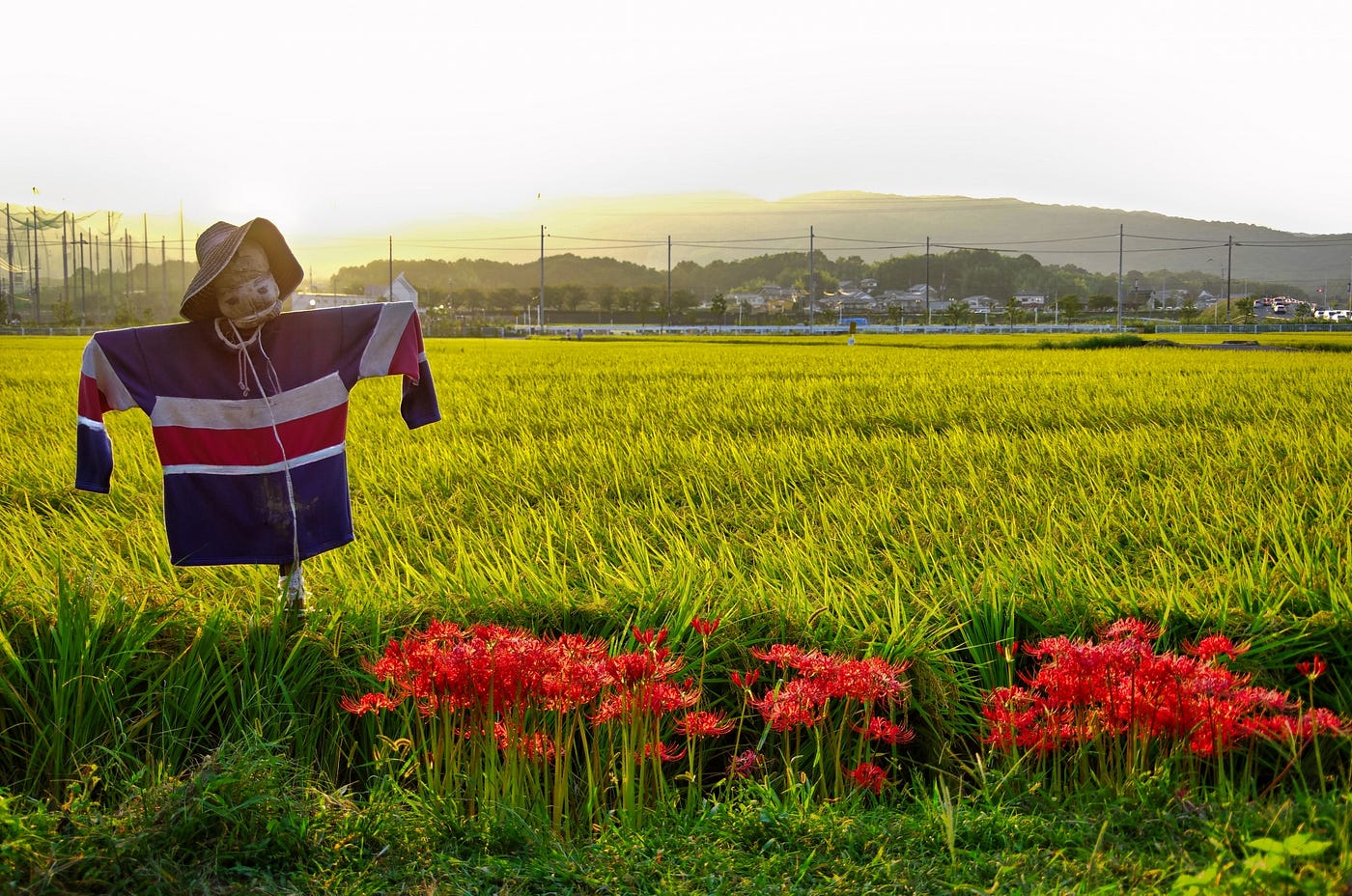
Photo by Seiya Maeda on Unsplash
The kitchen holds its breath after supper. A paper bag rests by the sink, still rough with market dust, the fold faintly damp. The air cools by half a degree, enough to notice on the wrists as the window draws in a thin thread of wind. Purple skins part with a quiet pull; a scent rises that is both green and ripe. Between touch and taste, the season loosens something small and sure.
Japanese (Original) あけびの実 指にあまにが 夕まぎれ
Latin alphabet akebi no mi yubi ni amaniga yūmagire
English Translation akebi fruit — sweet-bitter on the fingers, dusk’s blur
Key Elements:
- Kigo (季語): あけび (akebi)
- Location: Home kitchen, paper bag from the market
- Theme: The threshold between summer and autumn revealed through touch, taste, and fading light
The Haiku’s Story
A market errand leaves a small weather in the kitchen — the faint grit of a paper bag, the green-violet sheen of akebi, the after-heat of rinsed bowls fading from the wrists. The fruit waits in ordinary light, not staged, simply where it was set down. When the skin is parted, there is no drama, only a soft yielding and a clean thread of scent that climbs a little above the sink. The fingers become a register: cool, then slick with the pulp’s delicate sugar, then shadowed by the bitter trace that outlasts sweetness. In that sequence — a change of temperature, then texture, then taste — the room’s season tilts. Dusk does not fall all at once; it narrows. The window admits a higher note of air, and the edges of things blur in a way the tongue recognizes first. The poem holds that small shift, trusting the tactile to speak for the sky. Nothing is named beyond what is touched, so that the reader can arrive by their own hands.
Cultural Context
Akebi (akebi/通草・木通) is a classic autumn fruit in Japan, associated with mountain paths, hedgerows, and the quiet economies of foraging. Its twin nature — silvery sweet pulp and astringent rind — has long invited analogies to the season’s own doubleness: generosity and restraint, ripeness and withdrawal. In kitchens, akebi appears after the heat has broken, when windows open again and air begins to flow. The fruit’s scent is not loud; it sits close to the hand, which aligns with Japanese aesthetics that value smallness and nearness (chiisai mono) as vessels of depth. Rather than framing autumn as a spectacle of sky or color, the poem comes through taste and touch, honoring everyday textures as valid portals to the season. This reflects a wider cultural tendency to perceive change in fine gradations, naming the “step” in wind or the “breath” in water rather than the whole storm. Akebi’s link to hill country also carries a subtle nostalgia for sources — markets that still smell of soil, paper bags that keep a trace of the path, and rooms where dusk reads like a margin of time.
Between the Lines
The poem’s subject is less the fruit than the micro-transition the fruit enables. “Sweet-bitter” on the fingers is not a description of flavor only; it is a temporal hinge. Sweet appears first as a surface event — cool pulp, brief brightness — then bitterness remains as an after-image, akin to dusk’s persistence after light. The final phrase, “dusk’s blur,” avoids adjectives in favor of a felt phenomenon: edges soften not because the eyes tire, but because the day loosens its grip. Layered beneath is a quiet ethic of attention. By refusing to count, to list, or to name place, the poem resists owning the moment; it hosts it. The kigo functions as a key that opens an atmosphere rather than as a label. The reader is invited to touch what the poem touches, not to be told what to feel. That invitation is strengthened by the ordinary setting — a kitchen, a bag, a window — whose humility makes space for the season to move without announcement. The haiku suggests that transition is legible at the smallest scale, and that what lingers (bitterness, blur) may be the true sign of arrival.
Writing Techniques
The haiku employs a classic 5–7–5 cadence with a clear cut after the first line, allowing “akebi fruit — ” to stand as an announcement that opens more than it defines. The second line compresses sensation: “on the fingers, sweet-bitter” chooses a hyphenated counterpoint to signal simultaneity and sequence. Noun-based phrasing creates density without adjectives, letting taste and touch bear the image’s weight. The close in “dusk’s blur” enacts a soft pivot from tactile to visual, a shift in sense-field that extends the poem beyond the hand. Sound design is restrained: open vowels in “akebi,” liquid consonants in “yubi,” and the long vowel in “yūmagire” slow the reader’s breath. The refusal to specify number (“how many fruits,” “which kitchen”) keeps the poem generous and portable. Avoiding proper nouns preserves a universal key-image while honoring the kigo’s specificity. Overall, the technique trusts subtraction — cut, compression, and a single hinge word — to leave room for the reader’s own recognition of early autumn.
Reflection & Engagement
Where do you most clearly register the season’s turn — on the skin, on the tongue, or in the light? Consider your own kitchen, workshop, or commute. Is there an object that becomes different by a half-degree of air — a mug’s rim, a handrail, a page? Try holding the moment just before you would normally switch on the light, and let the room tell you how edges change. Then draft a haiku that uses one sense to open another: taste into sight, touch into sound. Keep place unnamed unless naming deepens the image; count less, feel more. If you try akebi, notice the sequence of sweetness and bitterness and what lingers. Share what remained — after the fruit, after the day. Often, what stays is the season’s truest signature.
Famous Haiku Examples
Author: Masaoka Shiki Japanese (Original) 老僧に 通草を貰ふ 暇乞
Latin alphabet rōsō ni akebi o morau itomagoi
English to an old monk — receiving akebi, a farewell
Author: Nomura Hakugetsu
Japanese (Original) 山烏 通草銜へて 飛びにけり
Latin alphabet yama-garasu akebi kuwaete tobinikeru
English a mountain crow — flying off with akebi in its beak
Closing Thoughts
Early autumn often enters by the hand before the sky. In the brief life of sweetness on the fingers and the longer, quieter bitter that follows, the day’s edge becomes tactile. Naming little and noticing much, the poem trusts a small change to carry an entire season. May your own rooms teach you where autumn arrives first — and what it leaves behind.
Sources
- Agency for Cultural Affairs (Bunkachō), “Kigo Dictionary” and standard saijiki references for autumn kigo including akebi (akebi/通草・木通).
- Haiku Kigo Ichiran, “季語/通草(あけび)を使った俳句” https://www.haiku-kigo-ichiran.net/akebi/
- Masaoka Shiki; Shiki Kushū (Collected Haiku); late 19th century.
- Nomura Hakugetsu; Collected Haiku; early 20th century.
메타데이터
- post_id
- 1d7b22ea6590
- slug
- あけびの実-指にあまにが-夕まぎれ-akebi-fruit-sweet-bitter-on-the-fingers-dusks-blur-1d7b22ea6590
- url
- https://medium.com/@sawawa891115/%E3%81%82%E3%81%91%E3%81%B3%E3%81%AE%E5%AE%9F-%E6%8C%87%E3%81%AB%E3%81%82%E3%81%BE%E3%81%AB%E3%81%8C-%E5%A4%95%E3%81%BE%E3%81%8E%E3%82%8C-akebi-fruit-sweet-bitter-on-the-fingers-dusks-blur-1d7b22ea6590
- canonical_url
- https://medium.com/@sawawa891115/%E3%81%82%E3%81%91%E3%81%B3%E3%81%AE%E5%AE%9F-%E6%8C%87%E3%81%AB%E3%81%82%E3%81%BE%E3%81%AB%E3%81%8C-%E5%A4%95%E3%81%BE%E3%81%8E%E3%82%8C-akebi-fruit-sweet-bitter-on-the-fingers-dusks-blur-1d7b22ea6590
- author_url
- https://medium.com/@sawawa891115
- status
- ok
- fetched_at
- 2026-06-24 13:29:15